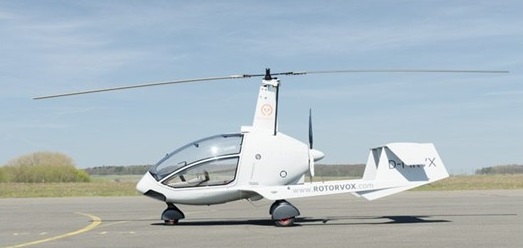
Rotorvox C2A

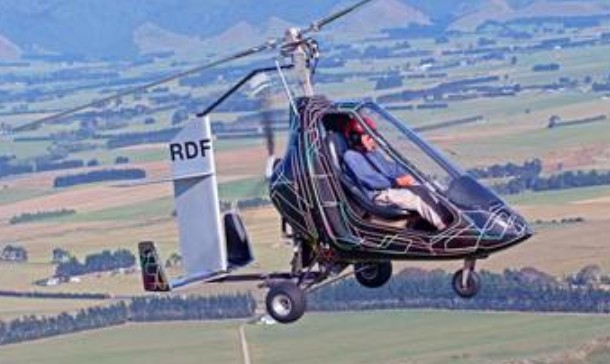
The Rotorvox C2A is a two-seat autogyro developed in Germany.

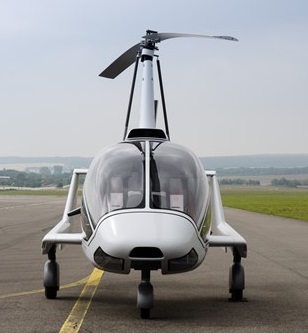
Structurally, the C2A is largely carbon-fibre monocoque. The fuselage pod contains a protective cell for the side-by-side seating behind a large, forward hinged, three piece canopy. A faired pylon, mounted immediately behind the cell supports a two blade aluminium rotor and behind it a 73 kW (98 hp) Rotax 914 liquid-cooled flat-four engine drives a pusher three blade propeller. The rotor is pre-rotated hydraulically.
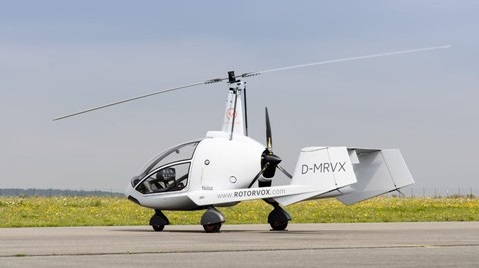
Flat-sided tail booms are held away from the fuselage on short stubs and each mounts a straight-tapered fin and rudder, their tips linked by the tailplane. There are shallow, long ventral fins. The C2A has a short-legged, wide track tricycle undercarriage with its mainwheels near to the forward end of the booms and a nosewheel under the forward fuselage.

First flown around 2009, at least two prototypes were flown over five years of development before C2A deliveries began in October 2014.
Engine: 1 × Rotax 914, 73 kW (98 hp) continuous
Main rotor diameter: 8.40 m (27 ft 7 in)
Blades: two aluminium, airfoil NACA 8H12
Length: 5.50 m (18 ft 1 in) fuselage; including rotors 8.40 m (27 ft 7 in)
Width: 2.21 m (7 ft 3 in) fuselage
Height: 2.85 m (9 ft 4 in)
Max takeoff weight: 560 kg (1,235 lb)
Fuel capacity: 90 l (20 imp gal; 24 US gal)
Propellers: 3-bladed Duc, 1.75 m (5 ft 9 in) diameter
Cruise speed: 145 km/h (90 mph; 78 kn)
Never exceed speed: 164 km/h (102 mph; 89 kn)
Range: 600 km (373 mi; 324 nmi)
Endurance: maximum 6 hr
Crew: Two
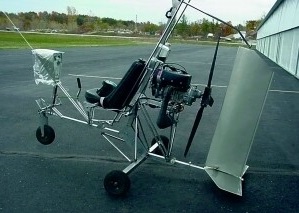
Rotor Hawk Sparrow

Correspondingly named, the Sparrow is the drop keel ultralight cousin of the Falcon. Its bolt-together aluminum frame carries a useful load of up to 240 pounds, depending on the engine (choice of Rotax 447 or 503, or Hirth 2704 or 2706). Cruising airspeed is 63 mph.

Bolt-together all-aluminum frame. Components done on CNC. Contains all fasteners, cables, wheels,
engine mount, rotor head, pod, tall tail and horizontal stabilizer, and joystick.

Kit for the Sparrow:
(Without engine, seat tank, propeller, rotors and instruments) 2001: $3795. Plans for the Sparrow 2001: $175

Engines: Rotax 447, 503; Hirth 2704
Propeller: 2 or 3-blade Warp Drive
Rotor Blades: Rotor Hawk 23 or 24 rotor disk
Width 64″
Height 84″
Length 9′
Min Speed 15-20 mph
Cruise 63 mph
Empty Weight 254 lbs
Useful Load up to 240 lbs
(depending on engine)

Rotor Hawk Falcon

Falcon

Both Falcon and Falcon II are accommodating to most aircraft engines, including Subaru, Rotax and Hirth, and both cruise at 60 to 70 mph with a top speed of 95 mph. But two passengers can ride side-by-side in the Falcon II while the Falcon only has room for one. Both are available with or without enclosure.

Falcon kit (without engine, propeller, rotor blades, instrument and seat tank) 2001: $3995
Falcon II kit (without engine) 2002: $11,950, but may cost less, depending on option choices.

The airframe is aluminium bolted together. Engine options include 70 hp Subaru, Rotax or VW. Rotor blades: 22-28’, 8 1/8” aluminium bonded and riveted.

Complete kit available as well as individual components and modification kits for upgrading Bensen-type machines to the Falcon configuration. Features main gear suspension using standard 2 x 2 Bensen axle tube. Full enclosure available. Kit contains everything less engine, prop, rotor blades, instruments and seat tank. Info pack: $3.00 Kit: $3,995 in 2009.

Engines: Subaru, Rotax, VW, or Hirth
Rotor Blades: RotorHawk 26′ diameter,8-1/8″ chord aluminum bonded and riveted.
Min Speed 20 mph
Cruise 60-70 mph
Top Speed 95 mph
Empty Weight 475 lbs
Useful Load 300 lbs
Gross Weight 775 lbs
Width 6’8″
Height 8’2″
Length 9′
Seats 2

Rotor Flight Dynamic Dominator Tandem

Rotor Flight Dynamic Tandem Dominator

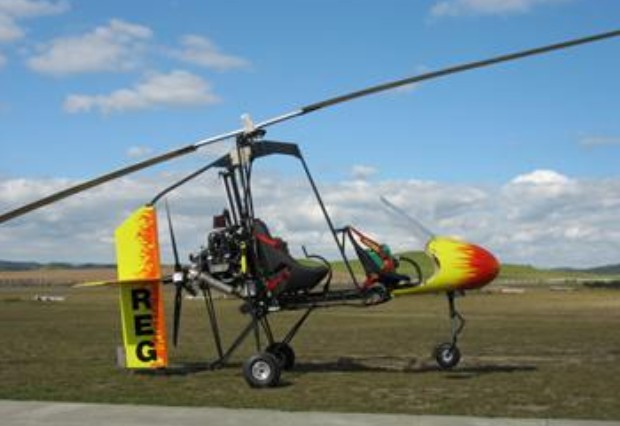
A two seat tandem autogyro. A high profile open-frame design utilising a T tail, full suspension landing gear and large propeller. Also available: parts, components, pre-welded airframe kit.

Engine: 74 hp Rotax 618 or Subaru EA81.
Prop: 70” Warp Drive.
Rotor blades: 27-28’ Dragon Wings, all aluminium, bonded skins.
Min Speed 20 mph
Cruise 40-75 mph
Top Speed 75 mph
Empty Weight 375 lbs
Useful Load 505 lbs
Gross Weight 1,000 lbs
Width 6′
Height 10′
Length 13′
Seats 2

Rotor Flight Dynamic Dominator

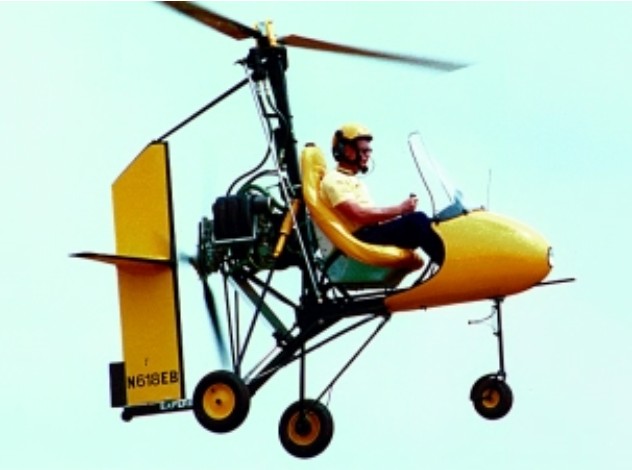
High-profile open-frame design built of 2 x 2 aluminum tubing bolted together and welded. Utilizes tall tail, full suspension landing gear with 9″ travel, large propeller. Also available: parts, components, pre-welded airframe kit.70-min video $27.95 Assembly manual now available.

Plans were available for the single-seater Dominator models in 2001: $175. Plans: US$175 in 2009.

Depending on model and engine size, Dominators are available fully assembled: $12,000 to $29,000 in 2001.

The craft also holds the official world altitude record in its class, at 24,463 ft.

Rotor Flight Dynamic Dominator Plans

Gallery

Engine: 52 hp Rotax 503, 66 hp Rotax 582 or 74 hp Rotax 618. Prop: 60” GSC or Warp Drive multi blade.
Rotor blades: 23’ x 7” Dragon Wings, all aluminium, bonded skins.
Single-seat open-frame autogyro
Engines: Rotax or Hirth
Propeller: 60″ GSC or Warp Drive multi-blade
Rotor Blades:23’X 7″ DragonWings all-aluminum, bonded skins
Specifications:
Min Speed 12 mph
Cruise 50+ mph
Top Speed 90+ mph
Empty Weight 310 lbs
Useful Load 310 lbs
Gross Weight 620 lbs
Width 5’6″
Height 8’1″
Length 10′
Seats 1

Engine: Rotax 582, 64 hp
Rotor span: 7.01 m
Blade area: 0.18 sq.m
MAUW: 280 kg
Empty weight: 140 kg
Max speed: 145 kph
Cruise speed: 80 kph
Minimum speed: 20 kph
Climb rate: 7 m/s
Seats: 1
Fuel consumption: 17 lt/hr
Plan price (1998): $175

Rotorcraft Grasshopper II

The Grasshopper 1 flew on March 11, 1962, but was considered to be underpowered. Only six months later the Grasshopper II emerged with two Walter Minor engines, and made its first hover on November 26 of that year. Its chief sponsor, F. G. Mitchell, died the same year and his heirs were unable to continue the financial support of the Grasshopper on their own.

Rotorcraft Grasshopper I

In 1951 J. S. Shapiro, formed a company, Servotec Ltd, to undertake R&D and contract design work for the aviation and light engineering industries. Shapiro had previously been with Sir Frank Whittle at Power Jets Ltd, where he came into contact with James Weir’s enthusiasm for personal helicopters. Aided by a loan from the Kemsley Flying Trust, Servotec began serious studies of small, foolproof helicopters and designed an experi¬mental model of the twin engined coaxial Grasshopper. These researches came to the notice of F. G. Mitchell, head of the Mitchell Engineering Group, who became fired with Weir’s and Shapiro’s enthusiasm.

Mitchell Engineering and Shapiro founded a new company in 1960, Rotorcraft Ltd, specifically to undertake the development of a helicopter which would embody the principles which had crystallised over the years. The construction was contracted to Servotec and two years later the company completed its first coaxial rotor helicopter, the Grasshopper 1.

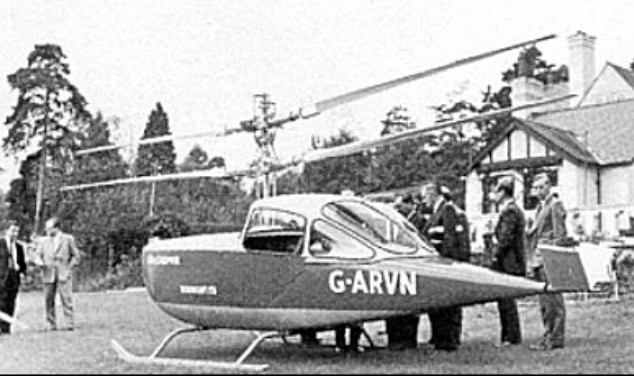
The “Grasshopper” in its definitive form had an enclosed fuselage sports car with a small v-tail and a skid undercarriage. It was powered by a pair of 65hp Walter Mikron piston engines mounted forward of the two seat cabin. These drove a pair of two-blade coaxial rotors mounted on a pylon which emerged just ahead of the cockpit windshield.

G-ARVN, the prototype, flew on 11 March 1962, but was withdrawn from use the following spring when funding was withdrawn following the death of the owner of Mitchell Engineering, and the project was abandoned. It was considered to be underpowered.