1915 Experimental. Seaplane
Engine: 1 x 150-h.p. R.A.F.4
Seats: 2
1915 Experimental. Seaplane
Engine: 1 x 150-h.p. R.A.F.4
Seats: 2
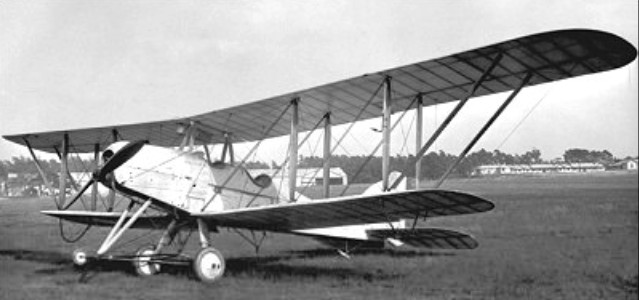
Used mainly by the RFC during 1916, the R.E.7 was a two-seat (later occasionally three-seat) bombing biplane powered by a 112kW RAF 4a engine. Other engines were also fitted.
Two hundred and fifty were completed. Maximum level speed was 137km/h.
Engine: 1 x. R.A.F.4a, 150-h.p / 112kW
Wingspan: 17.37 m / 57 ft 0 in
Length: 9.72 m / 32 ft 11 in
Height: 3.84 m / 13 ft 7 in
Wing area: 50.91 sq.m / 547.99 sq ft
Max take-off weight: 1565 kg / 3450 lb
Empty weight: 1036 kg / 2284 lb
Max. speed: 135 km/h / 84 mph
Ceiling: 1980 m / 6500 ft
Bombload: 150kg
Seats: 2
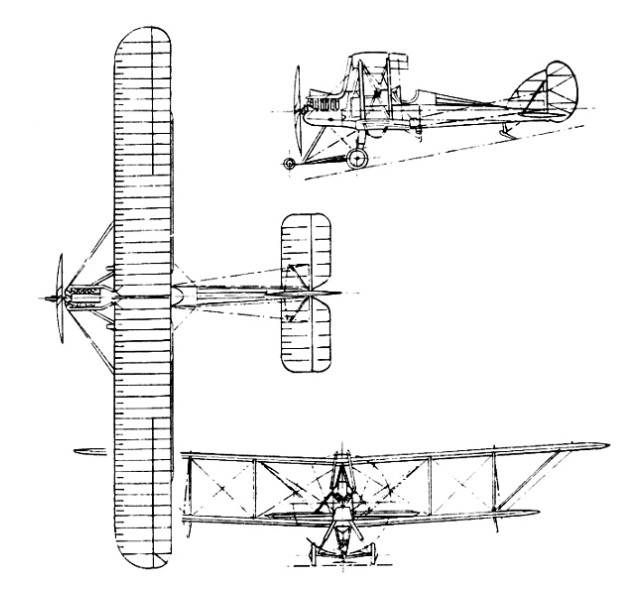
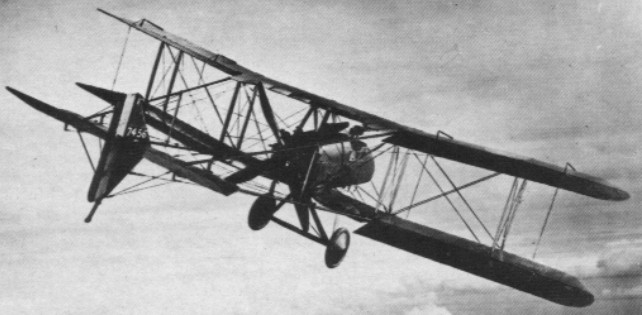
The next fighter after the F.E.2 in the F.E. line was the F.E.8 of 1915. Resembling the D.H.2, but designed before the de Havilland fighter, the F.E.8 was another two bay pusher biplane. Designed under the direction of John Kenworthy, the F.E.8 was the first single-seat fighter evolved at Farnborough.
Of pusher configuration to allow an uninterrupted forward field of fire for the 7.7mm Lewis gun, the F.E.8 was a two-bay equi-span biplane with a short fuselage nacelle to accommodate the gun, the pilot and a 100hp Gnome Monosoupape nine-cylinder rotary engine, and four slender booms to carry the cruciform tail unit. Construction of the nacelle was of welded steel-tube with aluminium sheet covering; the wings and tail unit used conventional wooden spars and ribs with fabric covering.
The prototype F.E.8 had a 100 hp Gnome Monosoupape engine and was armed with a remote¬ controlled Lewis firing through the nose of the all metal nacelle. This installation proved troublesome, however, and production of F.E.8s had the gun mounted at eye level. The first of two prototypes was flown on 15 October 1915 at Farnborough.
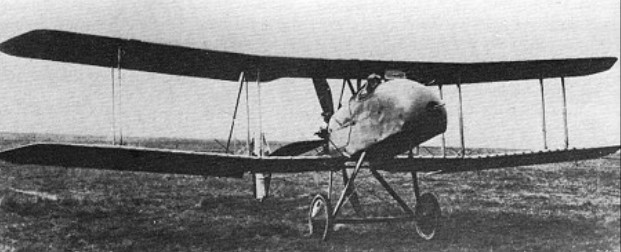
The prototype’s service trials, beginning in December 1915, were successful, but produc¬tion F.E.8s did not appear until May 1916. Trials with the second prototype in France in late 1915 led to a change in the gun installation, which was mounted within the nacelle nose and could be moved through a limited range by means of a control in the cockpit. Production F.E.8s, which began to appear in May and June 1916 from the factories of Darracq Motor Engineering at Fulham and Vickers at Weybridge, had a more practical gun mounting on the nose immediately ahead of the cockpit.
Production totalled 220 by Darracq and 50 by Vickers.
147 were sent to France from August 1916 and only two RFC squadrons, 40 and 41, were fully equip¬ped with F.E.8s. The second of these did not arrive in France until October 1916, by which time, in spite of some early successes, the type was completely outclassed by contem¬porary German fighters: the first production F.E.8 was shot down within a week of its arrival on June 22.
Trial installations of the 110hp Le Rhone and 110hp Clerget engines were made, but the Monosoupape remained the standard fit.
On March 9, 1917, nine F.E.8s of 40 Squadron were attacked by Manfred von Richthofen’s Jasta 11. Four were shot down, another four forced to land, and the pilot of the ninth was wounded and crash landed. In spite of this disaster, the last F.E.8s were not withdrawn until July 1917, one of their final operational uses being in ground strafing during the battle of Messines in June of that year.
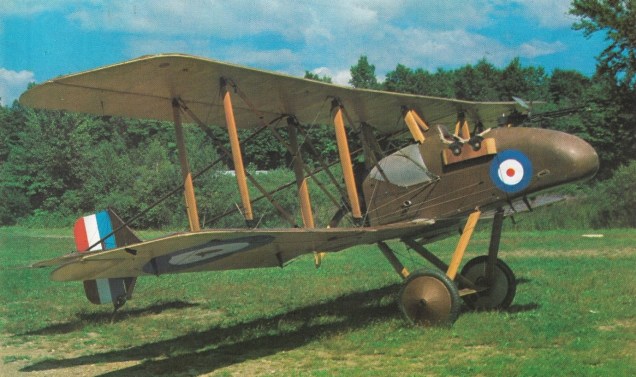
Engine: 1 x 100-h.p. Gnome Mono
Span: 9.6 m (31 ft 6 in)
Length: 7.21 m / 24 ft 8 in
Height: 2.79 m / 9 ft 2 in
Wing area: 20.25 sq.m / 217.97 sq ft
Gross weight: 610.5 kg (1346 lb)
Empty weight: 406 kg / 895 lb
Maximum speed: 151 kph (94 mph)
Ceiling: 4636 m / 15200 ft
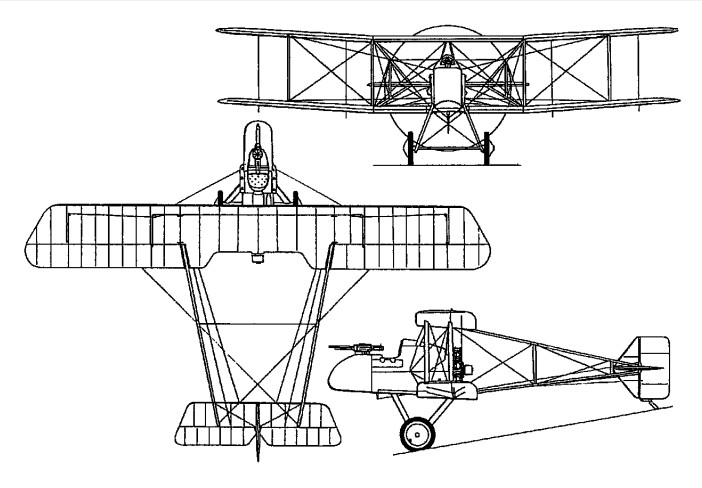
1915 Experimental.
Engine: 1 x 70-h.p. Renault
Span: 35ft 8.5in
Seats: 1
1915 Fighter. Gunner’s ‘pulpit’ cockpit in front of airscrew; one only
Engine: 1 x 90-h.p. R.A.F.1a
Span: 35ft 0in
Seats: 2
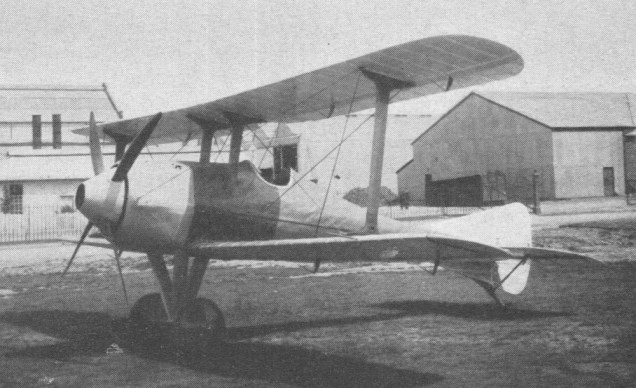
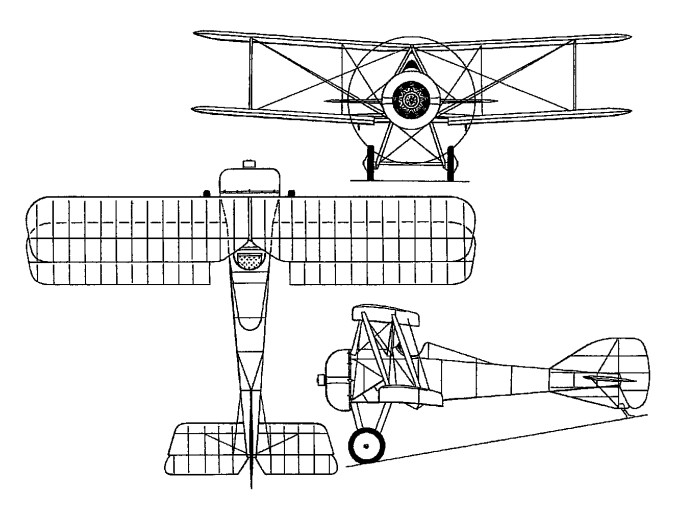
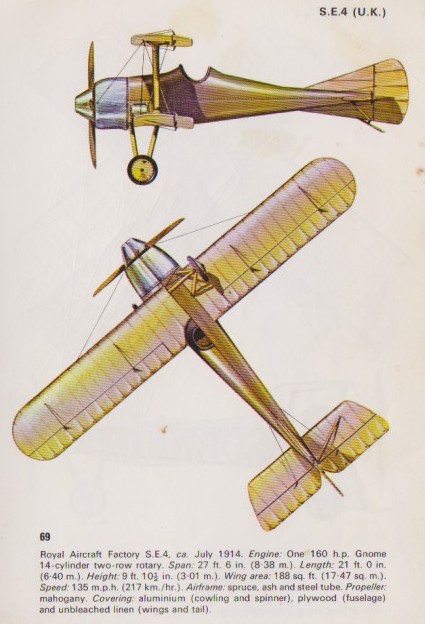
1914 Scout. At the Royal Aircraft Factory H. P. Folland’s S.E.4 scout set up an unofficial world speed record of 131 m.p.h. with a 160-h.p. Gnome. Its engine was fan-cooled; the variable camber wings could be used as landing flaps; and it had a celluloid cockpit cover, an N.A.C.A. cowling, single I type wing struts, streamlined bracing wires, and fairings on its axle and wheels and over the aileron, elevator and rudder gaps. Other engines were also fitted.
Designed at Farnborough by H P Folland at the end of 1914, the S.E.4a was one of a series of “Scouting Experimentals” used to study the interplay of stability and manoeuvrability. Unrelated, except in configuration and design authorship, to the high performance S.E.4 of mid-1914, the S.E.4a was a sturdy little single-bay biplane with equi-span wings incorporating 3.5 degrees of dihedral and having no centre section. The square-section fuselage was of conventional spruce construction with steel tubes to accept the loads from the lower wings, and, like the wooden wings and tail unit, was fabric-covered. Full-span ailerons were fitted to both sets of wings, and power was provided by an 80hp Gnome seven-cylinder rotary in a fully circular shortchord cowling.
The first of four S.E.4a’s built at the RAF flew there on 25 June 1915, and differed from its successors in having faired fuselage sides and an outsize spinner. The fourth and last S.E.4a flew on 13 August that year. The third, flown on 27 July, was at first fitted with an 80hp Le Rhone engine, the Gnome being substiprovided with an 80hp Clerget. In the hands of the RFC, at least one of the S.E.4a’s was armed with a 7.7mm Lewis gun mounted on the centre line above the upper wing to clear the propeller disc.
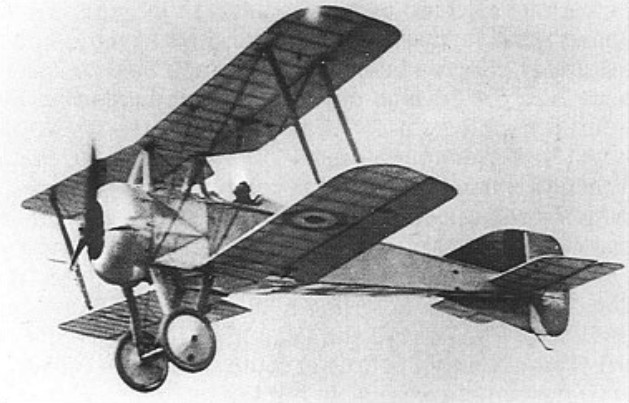
SE.4
Engine: 1 x 160-h.p. Gnome
Span: 27ft 6in
Speed: 135 mph
Seats: 1.
SE.4a
Engine: 1 x 80-h.p. Gnome
Span: 27ft 5.25in
Length: 6.37 m / 21 ft 11 in
Height: 2.87 m / 9 ft 5 in
Seats: 1
1914 Experimental.
Engine: 1 x 275-h.p. R.-R. Falcon
Seats: 3
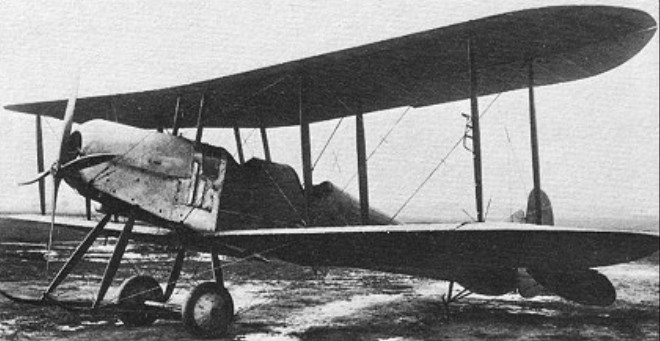
The R.E. designation indicated ‘Reconnaissance Experimental’ and the R.E.5, only 24 of which were built for the RFC, was operated successfully as a reconnaissance and light-bombing biplane during the early stages of World War I. Power was provided by an 89kW engine, giving a maximum speed of 125km/h.
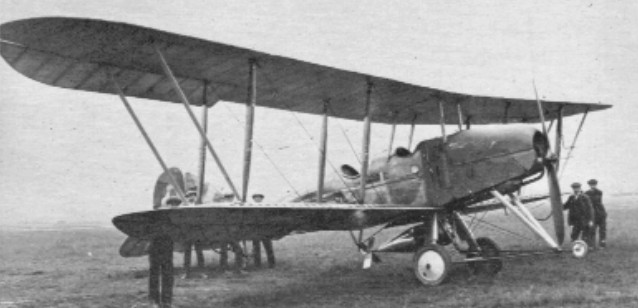
Engine: 1 x 120-h.p. Austro-Daimler
Span: 44ft 6in
Speed: 78 mph
Seats: 2
Engine: 1 x 120-h.p Beardmore
Span: 44ft 6in / 13.56 m
Length: 26 ft 2 in / 7.98 m
Height: 9 ft 9 in / 2.95 m
Max speed: 78 mph / 126 kph at SL
Bombload: 60 lb / 27.2 kg
Seats: 2
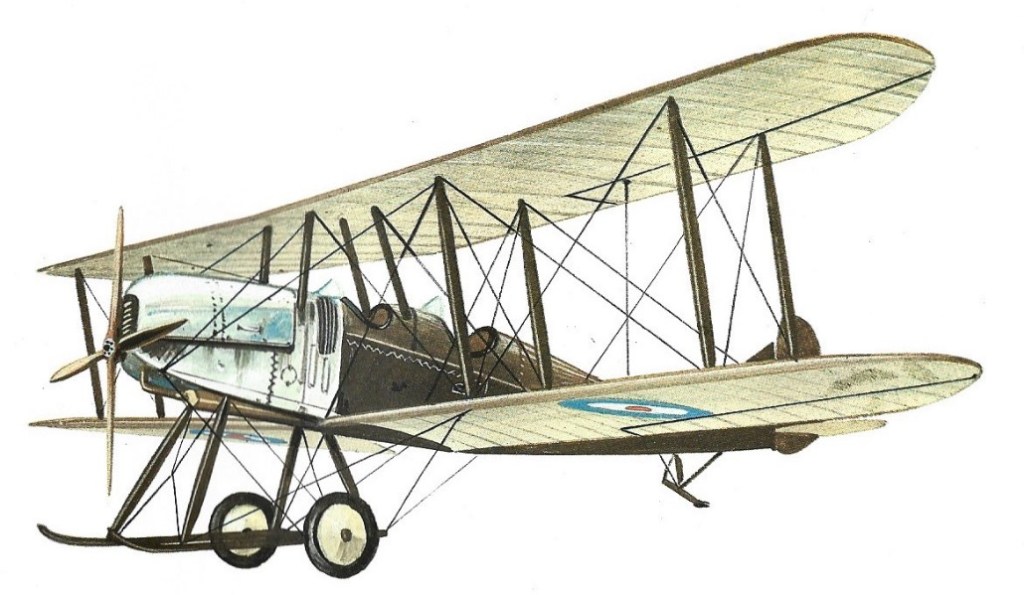
1914 Experimental.
Engine: 1 x 120-h.p. Austro-Daimler
Seats: 2
1914 Experimental. Development of HRE.2
Engine: 1 x 120-h.p. Austro-Daimler
Span: 45ft 3.5in
Seats: 2

