Santa Ana CA.
USA
1925:
J O York
Glendale CA.
USA
1928
Santa Ana Aircraft Co
Santa Ana CA
USA
1928 – Production rights sold to Grays Harbour Airways, Aberdeen WA.
Airplane builder
Santa Ana CA.
USA
1925:
J O York
Glendale CA.
USA
1928
Santa Ana Aircraft Co
Santa Ana CA
USA
1928 – Production rights sold to Grays Harbour Airways, Aberdeen WA.
Airplane builder
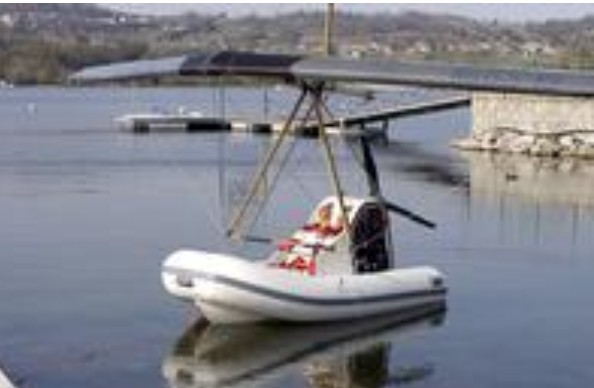
2009 Price: 34000 US$
Stall: 24 kt / 28 mph / 44 kmh
Cruise: 40 kt / 46 mph / 74 kmh
VNE: 75 kt / 86 mph / 139 kmh
Empty Weight: 218 kg / 480 lbs
MTOW Weight: 445 kg / 980 lbs
Climb Ratio: 1200 ft/min / 6 m/s
Glide Ratio: 9:1
Take-off distance (50ft obstacle): 200 ft / 61 m
Landing distance (50ft obstacle): 150 ft / 46 m
In 1930 members of the San Jose Flying Club Ltd rebuilt a wrecked Travel Air 3000 with a Hisso and reregistered it N837Y c/n 29.
1232 Martin Ave
San Jose CA.
USA
Circa 1930 airplane builder
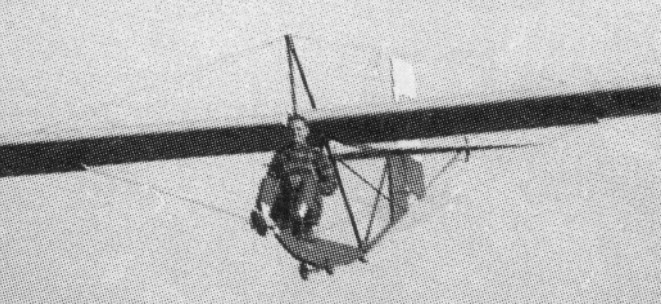
A replica 1929 Primary Glider
Features:
All Wood/Fabric Construction with minimum welding for fittings and control system
Easily disassembled for moving on trailer or auto roof rack
Downhill flyer or tow by auto
Much safer than hang gliders or ultralights
Excellent project for school or clubs
Plans Set consists of 2 highly-detailed 24″ by 36″ sheets, Materials Sheet and Safety Tips
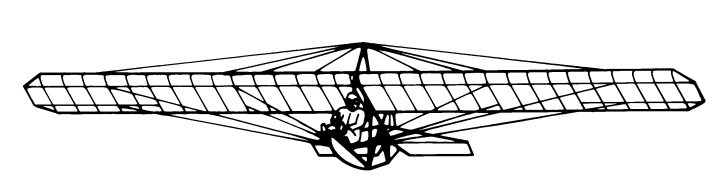
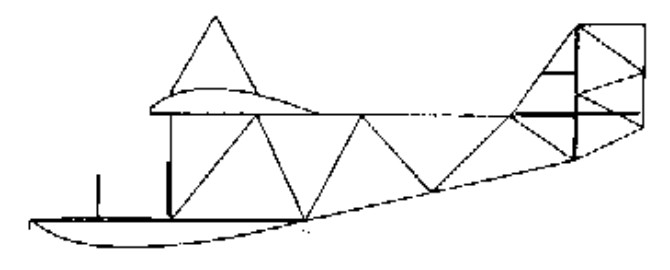
Fuselage Steel Tube Conversion available.
Wing Span: 32 ft
Chord: 60 in
Height: 7 ft
Wing Area: 157 sq.ft
Length (inc. rudder): 17 ft. 8 in
Take off Speed: 15 to 20 mph
Top Speed: 30 mph
Weight (empty) (wood construction): Approx. 150 lb
Seats: 1
Landing gear: fuselage skid
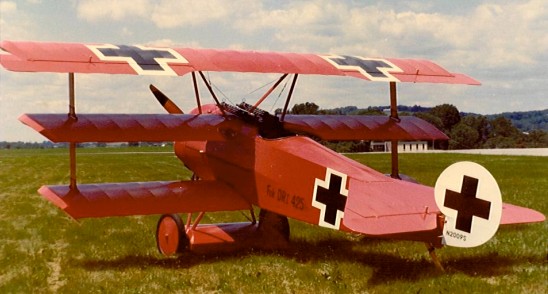
Ron Sand built a Fokker Dr.1 replica in 1970, then making plans available for home builders. A metal, wood, tube and fabric full-size replica with all the original detailing. Engine options include Warner 145-185hp and Lycoming 150-180 hp.
The replica drawings are high quality Construction prints, not to be confused with the average homebuilt drawing which usually lack detail on method and parts. The drawings are printed from ink on mylar tracings which result in excellent quality blueprints and show every part as close to full size as possible – with part numbers, specifications and descriptions.
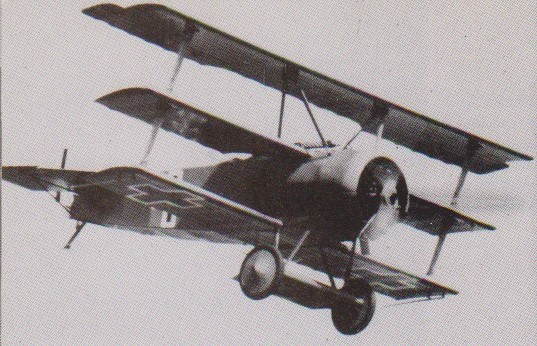
Complete set contains 31 sheets (24″ x 36″) highly detailed prints include a 14 page (8-1/2″ x 11″) materials list. The plans show the complete installations of LeRhone (rotary), Warner (radial) and Lycoming (opposed) engine. This allows that any engine can be removed and changed with a different type at any time by just removing the engine mount bolts and bolt in the other engine.
The drawings are complete with instructions on building the jigs required for construction of the wing spars and ribs, with step-by-step assembly instructions.
All of the original full size Fokker DR-1 details are shown. Many of these details never presented before or lost by previous artists. For example:
Complete LeRhone engine installation
Warner engine installation with all plumbing and controls
Lycoming opposed engine installation
Original Carl Bamberg compass
Spandau machine guns
Original control stick with throttle and gun-trip levers
Hydraulic brakes are shown for safety but the brake system has been designed not to interfere with the original appearance and is actually an add-on feature to the rudder-bar and can be removed at any time. Both the original tailskid and steer-able tail-wheel are shown for your choosing and safety.
The only changes made are in the interest of safety of the pilot and reliability of the aircraft. In addition to the brake system, some of the primary fittings and hardware have been increased in size without a weight penalty. Since we are not carrying 150 lbs. of guns and ammunition, it is wise to use some of the weight allowance in making the aircraft stronger and more reliable.
The replica Fokker DR-1 is not a difficult aircraft to build nor does it have to be an expensive project providing you don’t rush construction and use common sense in purchasing materials.
Wing Span: 23.50 ft
Length: 19.0 ft
Max. Gross Wt: 1,600 lb
Empty Wt: 1,150 lb
Fuel Capacity: 22.5 Usgal
Range: 250 sm
Takeoff Dist: 300 ft
Landing Dist: 200 ft
Vmax: 120 mph
Vcr: 110 mph
Vs1 (stall clean): 42 mph
Climb Rate @ msl: 1,800 fpm
Serv. Ceiling: 15,000 ft
Seats: 1
Cabin width: 28.0 in
Engine: LeRhone, 110 hp
HP range: 125-200
Height: 9.4 ft
Length: 19.02 ft
Wing span: 23.6 ft
Wing area: 201.8 sq.ft
Fuel cap: 22.5 USG
Weight empty: 949 lb
Gross: 1406 lb
Speed max: 120 mph
Cruise: 110 mph
Range: 250 sm
Stall: 42 mph
ROC: 1800 fpm
Take-off dist: 300 ft
Landing dist: 200 ft
Service ceiling: 15,000 ft
Seats: 1
Landing gear: tail wheel or skid
1996: Ron Sands, 89 Forrest Dr, Mertztown, PA 19539, USA.
Home built / LSA builder
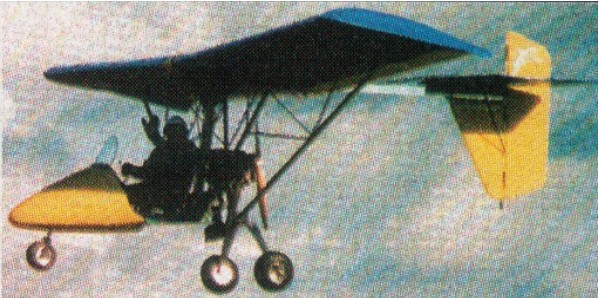
The Sandpiper XP-1, UL-1, and XP-2 kits includes engine, prop and instruments, and is equipped with full span ailerons and steerable nose wheel.
The Hirth engine was available with either gear or belt reduction.
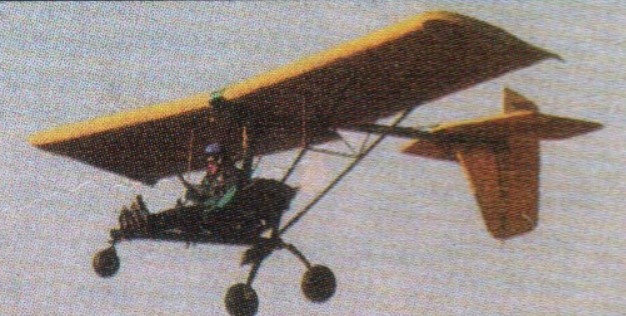

Sandpiper UL-1
Engine: Rotax 277, 28 hp
HP range: 28-65
Height: 8 ft
Length: 16 ft
Wing span: 26.5 ft
Wing area: 148.9 sq.ft
Fuel capacity: 5 USG
Empty weight: 243 lb
Gross weight: 650 lb
Top speed: 60 mph
Cruise: 55 mph
Stall: 26 mph
Rate of climb: 400 fpm
Takeoff dist: 45 ft
Landing dist: 40 ft
Seats: 1
Landing gear: tri
Sandpiper XP-1
Engine: Hirth 2702, 35 hp
HP range: 35-80
Height: 8 ft
Length: 16 ft
Wing span: 26.5 ft
Wing area: 148.9 sq.ft
Fuel capacity: 24 USG
Empty weight: 305 lb
Gross weight: 790 lb
Top speed: 90 mph
Cruise: 85 mph
Stall: 27 mph
Rate of climb: 1200 fpm
Takeoff dist: 35 ft
Landing dist: 40 ft
Seats: 1
Landing gear: tri
Sandpiper XP-2
Top speed: 85 mph
Cruise: 80 mph
Stall: 30 mph
Rate of climb: 940 fpm
Takeoff dist: 85 ft
Landing dist: 90 ft
Engine: Hirth FP23, 60 hp
HP range: 50-85
Fuel capacity: 24 USG
Empty weight: 380 lb
Gross weight: 900 lb
Height: 8 ft
Length: 16 ft
Wing span: 32.5 ft
Wing area: 182.5 sq.ft
Seats: 2
Landing gear: tri
1997: 23115 Airport Rd, NE Bldg. B, Box 4, Aurora, OR 97002, USA.
UL builder

The Sundog is a rigid wing that was designed by Californian Mike Sandlin. The Sundog is an evolution of the Skypuppy,
Sundog was a rigid wing built to test the usefulness of flaps on a hang glider. This version has full span flaps which fold under the wing for transport. There are spoilerons on the top surface of the wing for turning, actuated by side motion of the hang loop. The flaps were pulled down by a rope. The tail surfaces are just fixed stabilizers.
It was too heavy, at 90 lb and the static balance was non-existent (special launch procedures required), but it was fun to fly once you got it in the air. Full span flaps allow simple, easy landings, very similar to a drogue chute.
They were up-only ailerons, actuated from the hang loop, then returned to neutral by a bungee cord (like the spoilerons, which came later). A good system, but Sandlin wanted bigger flaps.
Low performance landings were the easiest and safest.

