Built by Sexton of Cicero IL., USA, in 1911. It was a single-place open cockpit, parasol monoplane. The aircraft featured a cantilever wing with underslung ailerons and open-frame fuselage.
Apparently, it flew only once but with dog as passenger.
Built by Sexton of Cicero IL., USA, in 1911. It was a single-place open cockpit, parasol monoplane. The aircraft featured a cantilever wing with underslung ailerons and open-frame fuselage.
Apparently, it flew only once but with dog as passenger.
Switzerland
Schweizerische Unternehmung fur Flugzeuge und Systeme Entreprise Suisse d’Aeronautique et de Systemes Impresa Svizzera d’Aeronautica e Sistemi (Swiss Aircraft and System Company), founded 1996 from amalgamation of former F + W and industrial division of Swiss Air Force Logistics Command and various departments of Federal Ordnance Office. Continues work on Hornet and Airbus programs, plus Boeing 717 and MD-80, Rafale auxiliary tanks, Ariane rocket nose fairings, and more.
Strato 26
Paraglider circa 1998.
Wing area: 24.6 sq.m
Certification: Afnor
Pilot weight: 75-95 kg
No. of cells: 52
Wing span: 11.43 m
Aspect ratio: 5.3
Min sink: 1.1 m/s
Max speed: 51 kph
Price (1998) 14800 Fr
Strato 28
Paraglider circa 1998.
Wing area: 27.2 sq.m
Pilot weight: 90-115 kg
No. of cells: 52
Wing span: 12.98 m
Aspect ratio: 5.3
Min sink: 1.1 m/s
Max speed: 51 kph
Price (1998) 19200 Fr
Strato 30
Paraglider circa 1998.
Wing area: 30 sq.m
Pilot weight: 105-130 kg
No. of cells: 52
Wing span: 12.98 m
Aspect ratio: 5.1
Min sink: 1.1 m/s
Max speed: 51 kph
Price (1998) 19500 Fr
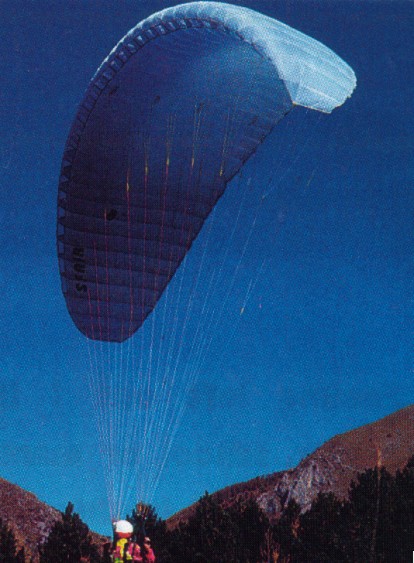
Tropo 24
Paraglider circa 1998.
Wing area: 23.7 sq.m
Pilot weight: 65-85 kg
No. of cells: 35
Wing span: 10.42 m
Aspect ratio: 4.58
Min sink: 1.2 m/s
Max speed: 37 kph
Price (1998) 15300 Fr
Tropo 26
Paraglider circa 1998.
Wing area: 26 sq.m
Certification: Afnor
Pilot weight: 78-100 kg
No. of cells: 35
Wing span: 10.91 m
Aspect ratio: 4.58
Min sink: 1.2 m/s
Max speed: 37 kph
Price (1998) 15300Fr
Tropo 29
Paraglider circa 1998.
Wing area: 28.7 sq.m
Pilot weight: 95-120 kg
No. of cells: 35
Wing span: 11.46 m
Aspect ratio: 4.5
Min sink: 1.2 m/s
Max speed: 37 kph
Price (1998) 15700 Fr
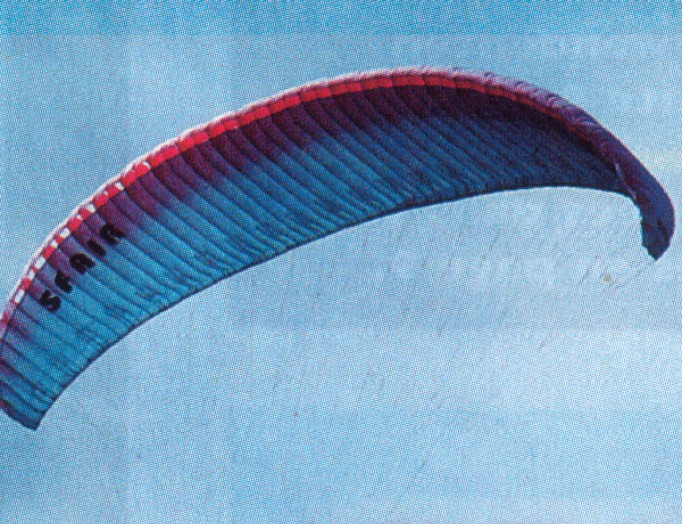
Iono 23
Paraglider circa 1998.
Wing area: 23.5 sq.m
Pilot weight: 68-88 kg
No. of cells: 76
Wing span: 11.84 m
Aspect ratio: 5.97
Min sink: 1.1 m/s
Max speed: 55 kph
Price (1998) 22400 Fr
Iono 25
Paraglider circa 1998.
Wing area: 25.5 sq.m
Pilot weight: 80-102 kg
No. of cells: 76
Wing span: 12.34 m
Aspect ratio: 5.97
Min sink: 1.1 m/s
Max speed: 55 kph
Price (1998) 22400 Fr
Iono 27
Paraglider circa 1998.
Wing area: 27.6 sq.m
Pilot weight: 92-116 kg
No. of cells: 76
Wing span: 12.84 m
Aspect ratio: 5.97
Min sink: 1.1 m/s
Max speed: 55 kph
Price (1998) 23000 Fr
Iono 42 BI
Paraglider circa 1998.
Wing area: 41.6 sq.m
Pilot weight: 150-195 kg
No. of cells: 51
Wing span: 14.86 m
Aspect ratio: 5.3
Min sink: 1.1 m/s
Max speed: 51 kph
Price (1998) 23000 Fr
1998: Veslaoska 15, CZ-63700 Brno, CZECH REPUBLIC
1998 designers were Frantisek Pavlovska and Benisek Milos.
Paraglider builder
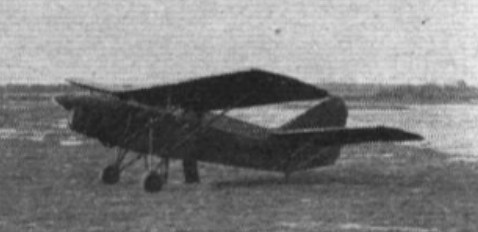
Societe Francaise De Constructions Aeronautiques / SFCA had license for Peyret “tandem monoplane” renamed and developed as Taupin.
The 1930 Taupin was essentially an enlarged, powered derivative of the Alérion glider. 2-seat tandem-wing.
The wing span was recorded as 7.2m but Sailplane & Glider 31 Mar 1933 says 8.4m main and 6.5m rear wing spans.
Engine: 1 x 50hp Beaussier
Also flown with 30 hp ABC Scorpion horiz-opposed 2-cylinder
The SFCA-Peyret Taupin, aka “Le Taupin” (flown 1937) was an amateur-construction Peyret VI with 1 x 30 hp flat-2 cylinder Mengin 2 A1.
A two-seat version appeared in 1937as the “Cinq-demi Taupin”, known as the Lignel 44.
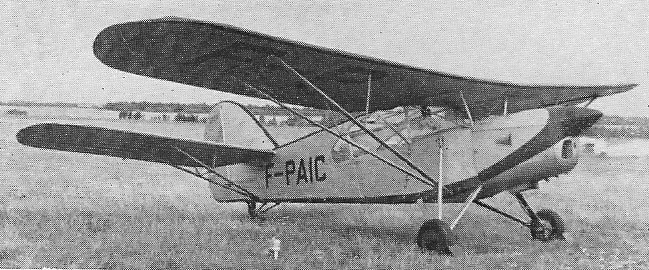
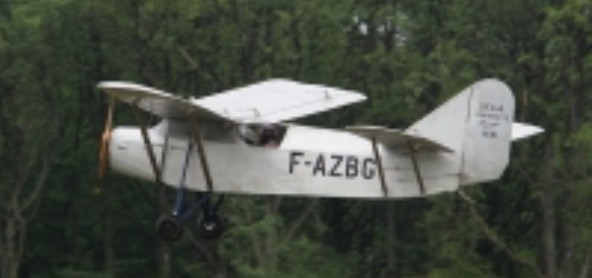
Lignel 44
Engine: Regnier 4-J0, 65 hp
Wing span: 28 ft 7 in
Forward wing area: 140 sq.ft
Rear wing area: 75.3 sq.ft
Length: 19 ft 10 in
Height: 8 ft 11 in
Empty weight: 543 lb
Loaded weight: 1276 lb
Max speed: 84 mph
Cruise: 74.5 mph
Service ceiling: 13,776 ft
Range: 310 mi
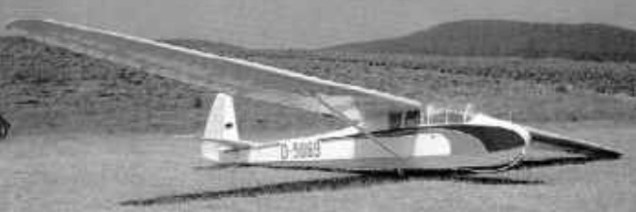
Designer: Edmund Schneider
No. Built: 8
Wing span: 16.03m
Wing area: 21.8sq.m
Aspect ratio: 11.79
Airfoil: Go 549
Empty Weight: 277 kg
Gross Weight: 480 kg
Wing Load: 22kg/sq.m
L/DMax: 24 70 kph
MinSink: 0.85 m/s 65 kph
Seats: 2
Edmund Schneider, who designed the Grunau Baby and manufactured at Grunau in Silesia, Germany before World War II, moved to Australia after the war with his two sons. With support from the Gliding Federtion of Australia, Schneider established the sailplane business there and produced several new sailplane designs.

The Schneider Henri-Paul four-seater night bomber was built at Schneider’s Harfleur plant in France. A four-engine biplane with sails supported on steel spars and a grid of aluminum alloy ribs. Equal span, the wings had a central rectangular section and external panels in an arrow. The fuselage was formed by a beam of dural tubes 55 mm in diameter assembled by riveted steel fittings. The front part of the fuselage received a metallic coating, the rear part being simply covered, supporting a fabric empennage. The engines were mounted in pairs on each side of the fuselage, installed in tandem in interplanetary pods, driving four blade propellers of 3.60 m in diameter.
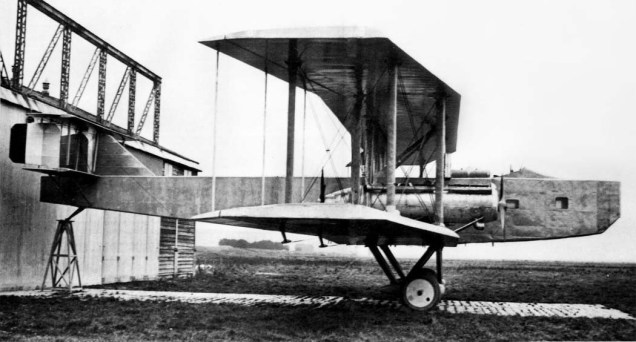
This aircraft made its first flight in September 1922 on the Le Havre-Bléville1 site. It was exhibited at the Grand Palais at the 8th Aviation Show in December 1922, but the program for which it was built had been abandoned.
Engines: 4 x Lorraine-Dietrich 12Da, 370 hp
Wingspan: 30,0 m
Length: 19.89 m
Height: 6.10 m
Wing area: 220.0 sq.m
Empty weight: 6500 kg
Maximum weight: 10,020 kg
Maximum speed: 160 kph
Ceiling: 5,000 m
Range: 750 km
Armament: 2 machine guns
Bombload: 120 kg
Crew: 5
Number built: 1

