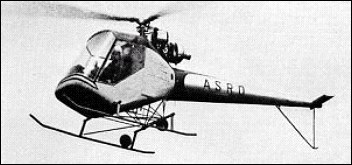
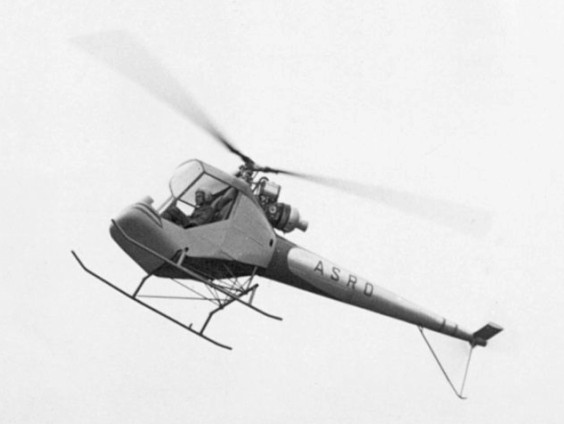
The ASRO-3 was used to develop the ultra-light side-by-side two-seater ASRO-4. Of welded steel tube construction covered with light-alloy, it had a fully enclosed fuselage pod and tapered tubular tailboom. It was fitted with an 130 shp BMW 6012 turboshaft mounted behind the rotor gearbox driving three-blade main and two-bladed tail rotors of composite construction.
The ASRO 4 was first displayed at the 1964 Hanover Air Show.
This machine flew in May 1964, and was tested for some while before being abandoned without achieving certification.
ASRO 4 Engine: BMW 6012, 100/130hp Rotor diameter: 7.22m Rotor disk area: 403.45 sq.ft (37.48 sq.m) Fuselage length: 5.78m Height: 7 ft 11 in (2.41 m) Empty weight: 840 lb Max takeoff weight: 1,360 lb Max speed: 99 mph / 160km/h Cruise speed: 90 mph (144 kmh) Climb: 985 ft (300 m)/min Service ceiling: 12,467 ft (3,800 m) Endurance: 1 hr 20 min
Alfons Siemetzki of Kirchdorf am Iller, privately-built the ASRO 3T ultra-light single-seater. This experimental helicopter was an open-frame steel-tube machine of conventional layout, with a rudimentary windshield to protect the pilot, a skid undercarriage and a 65 shp BMW 6002 turboshaft engine mounted amidships. A conventional rotor system, with two-blade main and tail rotors.
The single-seat ASRO 3-T was built by Alfons Siemetzki and made its first flight on 29 December 1961, piloted by USAF Captain Stanley Frick.
Germany Known also as Asro, and from Asro T-3 prototype single-seat turbine-powered helicopter (first flown December 1961) Siemetzki developed Asro 4 turbine-powered two-seater, ground tests of which began May 1964.
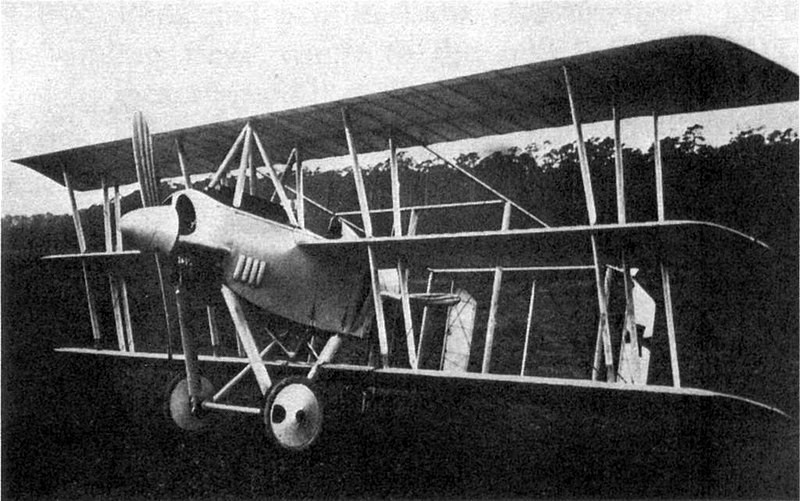
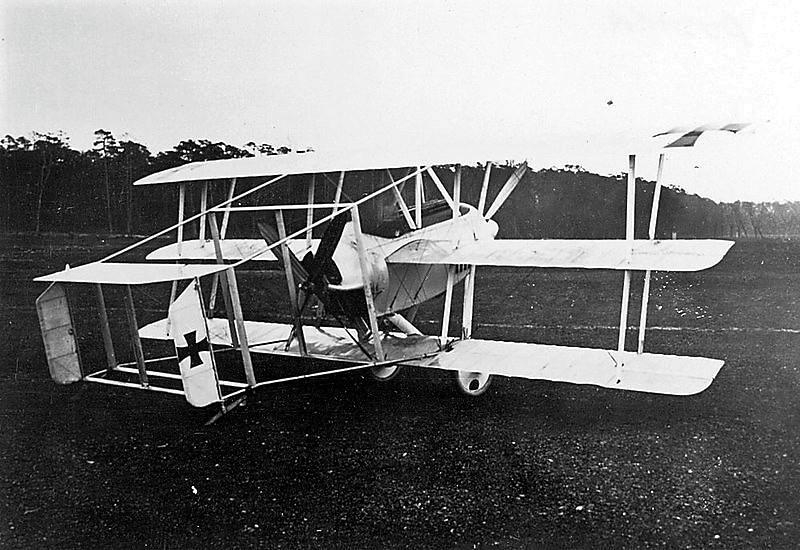
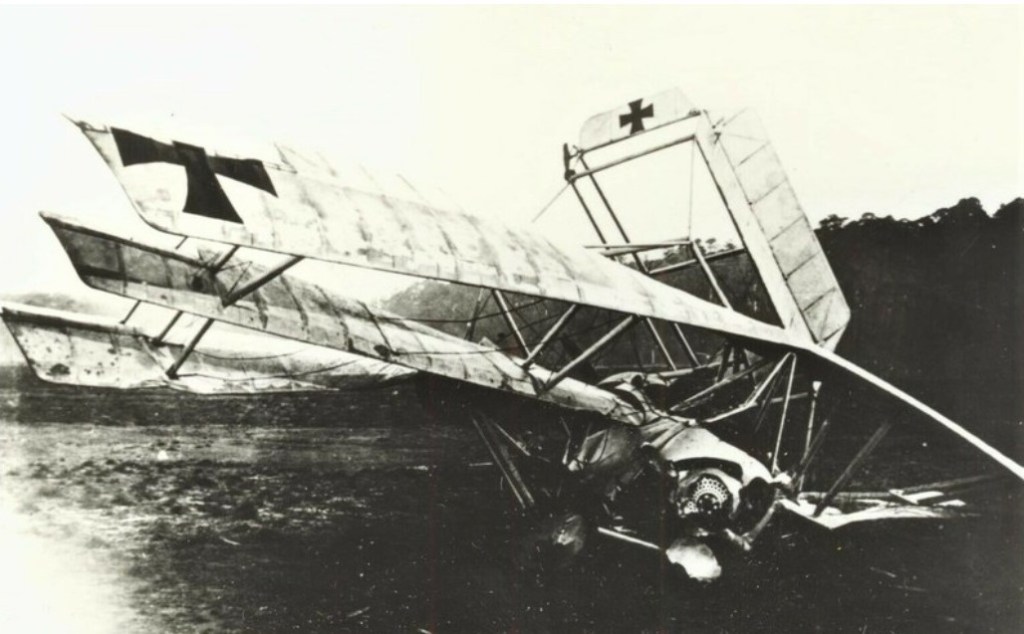
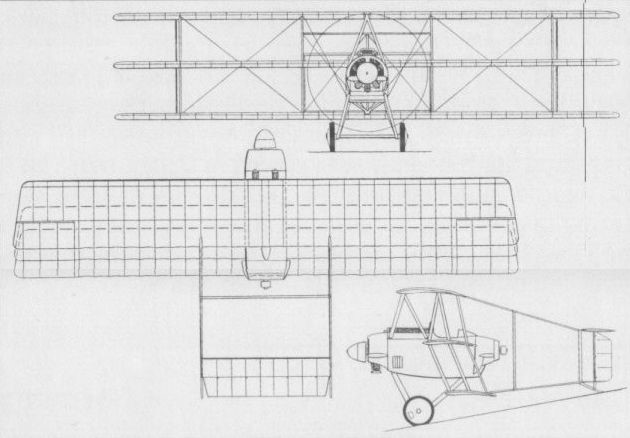
The Siemens-Schuckert DDr.I was a World War I German twin engine, push-pull configuration triplane fighter aircraft.
The DDr.I was one of the first aircraft to have two engines on the same centre line, one in tractor configuration and the other a pusher. It was a triplane with constant chord, straight edged, square tipped wings of equal span and marked stagger. These were divided into two bays by pairs of near-parallel interplane struts. The upper wing was braced over the fuselage with a pair of N-form struts, leaning inward from the upper fuselage to common mountings on the wing centre line. The middle wing of the triplane was positioned at shoulder height on the fuselage and the lower wing passed unbraced below. There were short span ailerons on each wing.
The smoothly faired and contoured short fuselage of the DDr.I positioned the open pilot’s cockpit between two 110 hp (82 kW) Siemens-Halske Sh.I nine cylinder rotary engines, one with a two blade tractor propeller and the other driving a four blade pusher turning just aft of the lower wing trailing edge. The empennage was mounted on four longitudinal, tubular outrigger beams, braced with vertical and transverse members. There were no fixed rear surfaces; the single piece, constant chord elevator reached between the two upper beams and a pair of similarly shaped rudder went from the upper to the lower beams, hinged further aft than the elevator but with their lower ends on a hinged frame that moved with it. The DDr.I had a fixed conventional undercarriage, with its mainwheels on a single axle mounted on wide spread V-struts attached to the lower fuselage at the lower corner points of each engine’s firewall.
Engine control problems and a lack of stability experienced in the first flight, made on 9 November 1917, led to a crash; the aircraft was not rebuilt and plans for a more powerful version, the DDr.II, powered by two 160 hp (119 kW), Siemens-Halske Sh.III eleven cylinder rotary engines were abandoned.
Powerplant: 2 × Siemens-Halske Sh.1, 82 kW (110 hp) each Propellers: 2/4-blade; the tractor propeller had two blades and the pusher four. Wingspan: 10.9 m (35 ft 9 in) Wing area: 30 m2 (320 sq ft) Length: 5.8 m (19 ft 0 in) Empty weight: 680 kg (1,499 lb) Gross weight: 910 kg (2,006 lb) Crew: One Armament: 2×7.9 mm (0.311 in) calibre LMG 08/15 (Spandau) synchronised machine guns
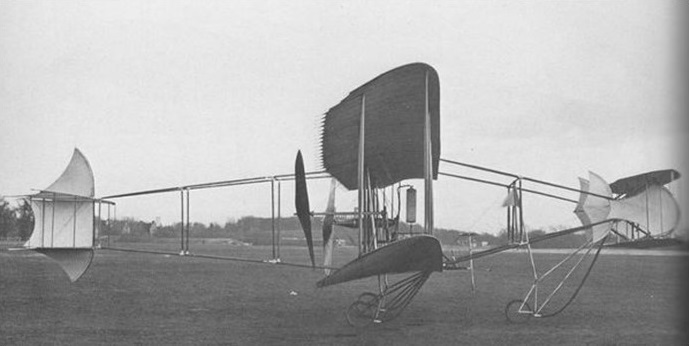
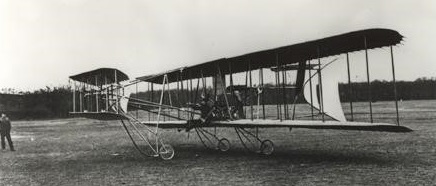
A 5-seater Siemens-Schuckert Werkes biplane designed by Max Bourcart with a combination steel tubing and wood construction, powered by a 50 hp Argus engine, and chain-driven to the two propellers. First flown on 9 march 1910, a 1000 m straight-line flight piloted by Bourcart. The second, and last flight, was made on March 11, piloted by Bourcart with two passengers, ending in a crash landing. Bourcart had patented such a construction on September 9, 1902 [German Patent 145547 – Flugmaschine mit zwei Luftschrauben, deren Flügel ineinandergreifen].
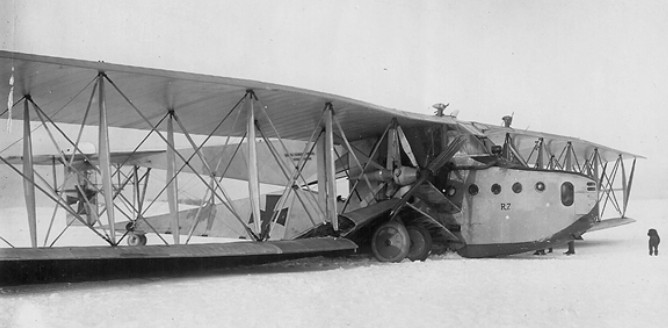
In October 1914 Siemens started design of four-engined aircraft similar to that of Sikorsky in Russia. As entirely new venture company sponsored designs by two Steffen brothers leading to giants R.I-VII of 1915-1917.
The then relatively low engine power required lightest construction. This in turn required precision and caution, especially when landing – where such giant wooden aircraft were extra-sensitive. Many crashed.
In October 1914 Siemens started design of four-engined aircraft similar to that of Sikorsky in Russia. As entirely new venture company sponsored designs by two Steffen brothers leading to giants R.I-VII of 1915-1917.
In October 1914 Siemens started design of four-engined aircraft similar to that of Sikorsky in Russia. As entirely new venture company sponsored designs by two Steffen brothers leading to giants R.I-VII of 1915-1917.
In October 1914 Siemens started design of four-engined aircraft similar to that of Sikorsky in Russia. As entirely new venture company sponsored designs by two Steffen brothers leading to giants R.I-VII of 1915-1917.
In October 1914 Siemens started design of four-engined aircraft similar to that of Sikorsky in Russia. As entirely new venture company sponsored designs by two Steffen brothers leading to giants R.I-VII of 1915-1917.