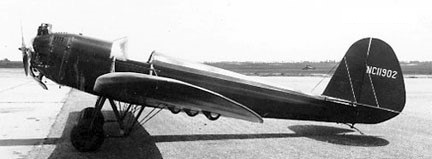
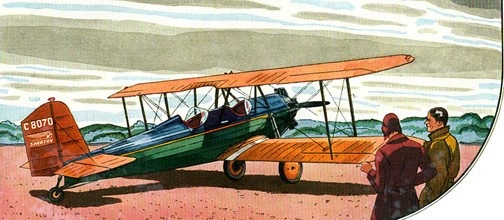
By 1931 Spartan was producing low-wing side-by-side 2-seaters, further developed as C2-60. Designed by Willis Brown and selling for $2,245, the prototype NC11000 was under ATC 2-370.
Sixteen C2-60 were built ATC 427; NC11000, NC11015 and NC11016, NC11021 to 11023, and NC11900 to NC11909.
Two, NC992N and NC993N (ATC 2-408), were built as C2-165 instrument trainers with 165hp Wright J-5 engines and hooded cockpits for the Spartan School of Aeronautics.
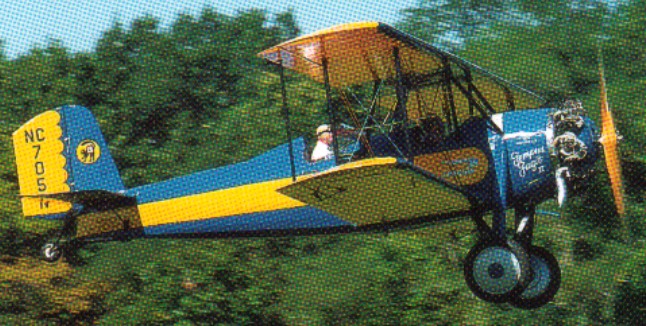
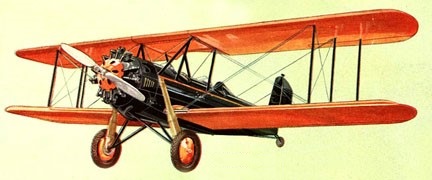
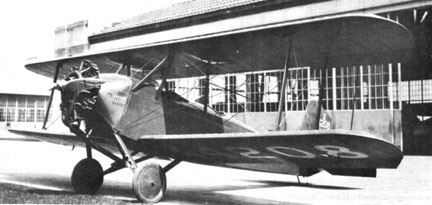
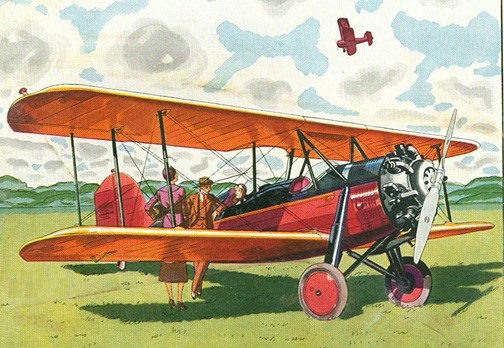
1927: Mid-Continent Aircraft Co, Tulsa OK. Early in 1927 Spartan G-3 three-seat open-cockpit biplane was built by Mid-Continent Aircraft Company.
Mid-Continent was reorganized as Spartan Aircraft Co in 1928 at Tulsa, Oklahoma.
Built C-3 with Ryan-Siemens engine. Continued to build biplanes but by 1931 was producing series of 4/5-seat cabin monoplanes; also low-wing side-by-side 2-seaters, further developed as C2-60. Spartan Executive 4/5-seat all-metal monoplane of 1936 converted in 1938 to Zeus 2-seat military type; a few of which supplied to China and Mexico. In 1940 U.S. Navy ordered 201 Spartan NP-1 biplane trainers for new Naval Reserve schools.
In 1945 production switched from airplanes to house trailers.
1968: Spartan interests sold to Automation Industries Inc.
(John Nicholas) Sparling Propeller & Aeroplane Factory E St Louis MO. USA
In 1912 the Sparling Propeller & Aeroplane Factory built a single-place, open biplane, personal representation of the Curtiss headless design with trailing-edge top-wing ailerons.
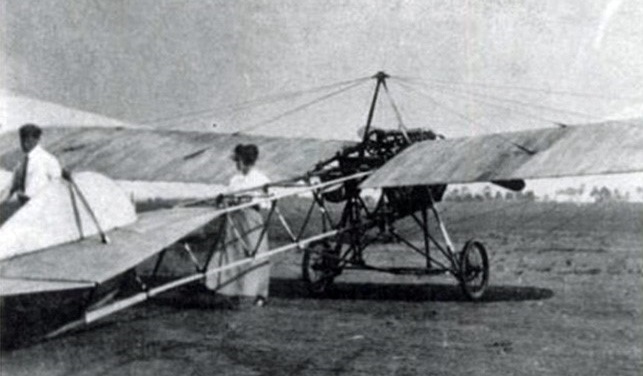
The monoplane of James S. Spainhour, of Pittsburgh, PA, had an unusual device for securing lateral control. The wings did not warp, or only very slightly. They were fixed to the fuselage by a floating bridge, and the angle of incidence of the whole of each wing could be altered by the movement of a pedal, one for each plane. When the angle of incidence of both the wings is increased the machine pitched up. The machine weighed 497 pounds, had a triangular fuselage and a span of 34 feet 5 inches. It was powered by a 40 hp four-cylinder Kowalsky engine, which had a self-starting crank. Spainhour made several short flights near Pittsburgh on a six-acre field, and moved to Mineola, Long Island, to get more room.
It apparently reached 1000′ high at speed of 50 mph