Spencer Aircraft Inc

Percival Hopkins “Spence” Spencer was born in Windsor, Connecticut, USA, on April 30, 1897, as the third child of then 63 year old inventor genius Christopher Miner Spencer. Percival always hated his name and preferred to be called “Spence”.
On April 11, 1911, Spence makes his first solo flight from Prospect Hill, when flying a hang glider built by himself from plans published in Popular Mechanics Magazine.
Spence makes his first flight in a motor powered airplane, flying a Curtiss-type flying boat from Connecticut River in Hartford, was on 15 May 1914.
In 1937, the Spencer-Larsen Aircraft Corporation is organized. Spencer and ex Sikorsky engineer Vincent A. Larsen design the single engine SL-12C amphibian.
Spencer leaves Spencer-Larsen in September 1940 and starts the work on his own S-12 Air Car amphibian design.
On 1 March 1941, the first parts are cut for the Spencer Amphibian Air Car.
In 1942 Spence starts working with Republic Aviation Corporation as a test pilot on their P-47 Thunderbolt fighters. Flight testing 134 Thunderbolts.
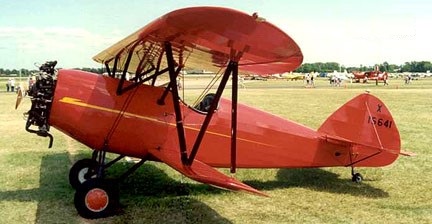
At 9:17 a.m, 1 December 1945, the first prototype Model RC-3 Seabee, NX87451, makes her first flight, taken to the air by designer and test pilot Percival H. Spencer from Republic Airport, Farmingdale.
1984: Spencer Amphibian Air Car, 8725 Cland Ave., Sun Valley, Calif. 91352, USA.

Offers plans and kits to construct the Amphibian Air Car four-seat pusher-engined amphibian, originally patented in 1950 and thereafter marketed until 1988 by Spencer Amphibian Air Car Inc.

1995: PO Box 327, Kansas, IL 61933, USA.

Percival H. Spencer died in 1995, aged 90.
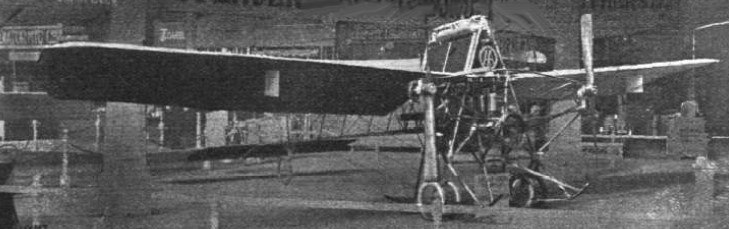
Spencer-Stirling 1910 monoplane

A tractor monoplane built by C. G. Spencer and Sons and displayed at the 1910 Aero Show at Olympia. It was designed by Herbert Spencer and W. Stirling, powered by a four-cylinder 40 hp British Aeroplane Syndicate R.H. engine, which drove by chains two propellers of 6 ft. 6 ins. diameter mounted on the leading-edges of the wings. A reverse gear was incorporated in one propeller bracket for opposite rotation. The fuselage was of the “A”-frame type. The machine was tested at Brooklands, but it was not successful and it was soon abandoned.

Spencer Airship

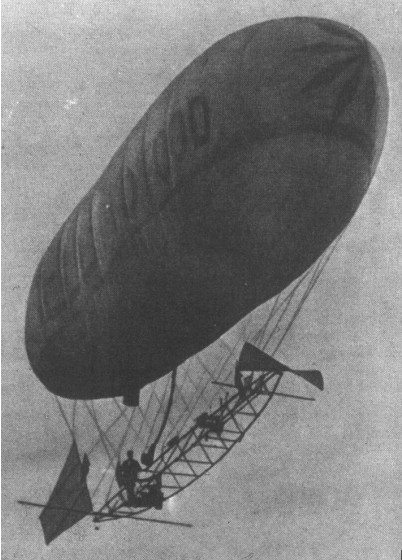
Stanley Spencer, with his brothers, ran a balloon factory at Highbury in North London. In 1902 they built a small 20,000 cu.ft capacity airship constructed along the lines of the Santos-Dumont craft.

The first successful navigable flight in Great Britain of a manned, powered aircraft took place on 22 September 1902, when Stanley Spencer piloting his airship No.1 flew from Crystal Palace via St Pauls to Eastcote Middlesex, a distance of 28 miles, in 94 minutes. It was intended to fly from Crystal Palace, round to St Paul’s and return to the starting point but contrary winds caused the airship to be driven to the north-west.

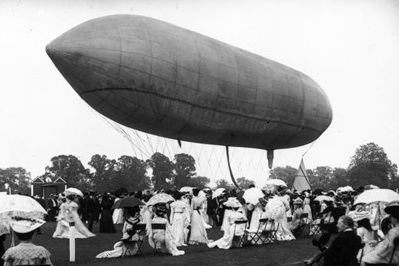
A Spencer Airship ascending at Ranelagh, watched by a fashionable crowd, 1903

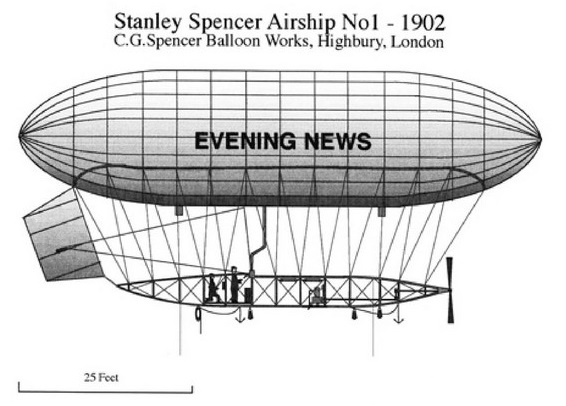
Spencer Airship No.1 1902
Capacity: 20,000 cu.ft
Gross lift: 0.580 ton
Disposable lift: 600 lb
Engine: 1 x JAP water cooled single cylinder, 3 hp
Speed: 20 mph
Crew: 1-2

Spencer, Stanley

Stanley Spencer, with his brothers, ran a balloon factory at Highbury in North London. In 1902 they built a small 20,000 cu.ft capacity airship constructed along the lines of the Santos-Dumont craft.

The first successful navigable flight in Great Britain of a manned, powered aircraft took place on 22 September 1902, when Stanley Spencer piloting his airship No.1 flew from Crystal Palace via St Pauls to Eastcote Middlesex, a distance of 28 miles, in 94 minutes.

Spencer built a series of airships, but more powerful, similar to the No.1, up to the outbreak of the war. Finance was in part by the use of advertising slogans on the envelopes: Boveril being one of the companies that utilised this advertising medium.

Stanley Spencer died from malaria in 1904.