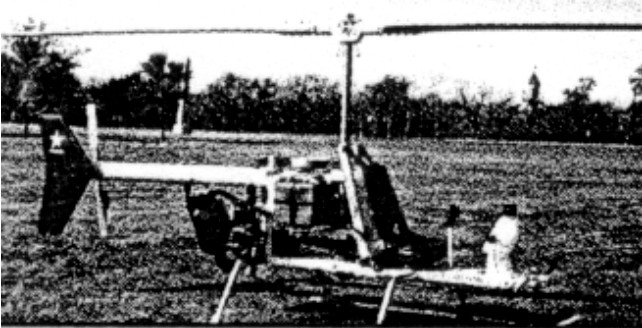
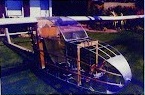
A single seat open frame helicopter first flown on 16 October 1990. Aluminium tube frame with all parts bolted or pop riveted together. Engine: 64-110 hp Rotax or Hirth.
Engine: 88 hp Max speed: 95 mph Cruise speed: 65 mph Range: 105 sm ROC: 1000 fpm Service ceiling: 9,000 ft Fuel cap: 8 USG Empty wt: 430 lbs Gross wt: 895 lbs Height: 7.33 ft Length: 13.5 ft Disk span: 20 ft Disk area: 314 sq.ft Seats: 1
The Star Aircraft division of Phillips Petroleum was formed at Bartlesville, Oklahoma in 1928. Designers E A “Gus” Riggs and William “Billy” Parker prepared plans for a two-passenger high-wing light private owner aircraft intended for the lower cost end of the market. The advertised cost was $3,450 with a 90hp Lambert R-266 engine. They were also advertised with a 60hp LeBlond or 75hp Velie engine for $2,985. Three Cavalier A planes were delivered in 1928.
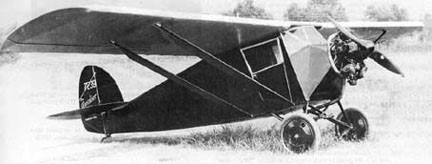
The Cavalier B (ATC 138) followed in 1929 fitted with a lower powered 55 hp Velie M-5 engine and 15 examples were sold at $2,895 to owners of more modest means. Some were fitted with 80hp Genet and 90hp Lambert R-266 engines. The fifteen included NC24B, NC263K, NC331H, NC350M and 351M, NC451, NC453, NC450, NC941E, NC960H, NC990H, NC7239 and N7249.
Cavalier B
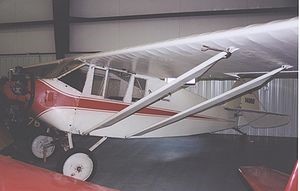
A single example of the Cavalier C (ATC 255) followed. The Cavalier C NC993H was powered by a 60hp LeBlond 5D engine for $2,985.
Star Cavalier C NC993H
Two examples of the 1929 Cavalier D (ATC 2-191) were built, powered by 80hp Genet engines.
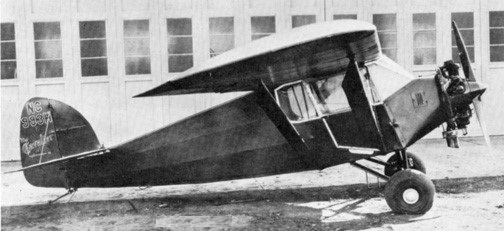
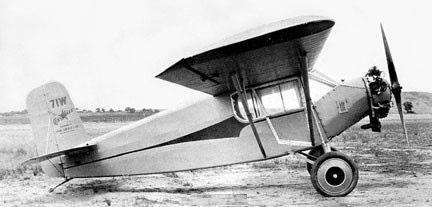
Star Cavalier E NC71W
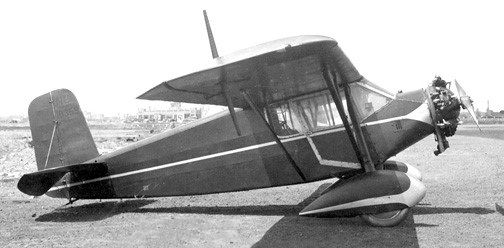
The next to secure modest success was the Cavalier E (ATC 321) of 1930 which had a 90 h.p. Lambert R-266 and was fitted with a taller, more angular, tail fin. Priced at $3,450 thirteen were sold (NC9E, NC13E, NC71W, NC350V, NC397V, NC636W, NC678W, NC980N, NC10359, NC10535, NC10583, NC10585, and NC11007).
Star Cavalier E Wing antennae NC10359
The last of the Cavalier series was the single 1930 F model N69W with a Warner Jr engine.
The several Cavalier models served private owners in the touring role until the curtailment of civil flying in the USA in late 1941. Five Cavaliers remain on the U.S. civil aircraft register in mid-2009. Cavalier B N14860 of 1930 was on public display, in airworthy condition, at the Historic Aircraft Restoration Museum at Dauster Field, Creve Coeur, Missouri near St Louis.
Cavalier B Engine: 1 × Velie M-5, 55 hp (41 kW) Wingspan: 31 ft 6 in (9.60 m) Wing profile: Clark Y Length: 19 ft 11 in (6.07 m) Useful lift: 538 lb ( kg) Maximum speed: 100 mph (161 km/h) Cruise speed: 85 mph (137 km/h) Stall speed: 40 mph (64 km/h) Range: 500 miles (800 km) Crew: 1 Capacity: 1 passenger
Cavalier B Engine: 80 h.p. Armstrong Siddeley Genet Seats: 2
Cavalier B Engine: 90 h.p. Lambert R-266 Seats: 2
Cavalier C Engine: 60 h.p. LeBlond 5D Seats: 2
Cavalier D Engine: 60 h.p LeBlond. Seats: 2
Cavalier D Engine: 80hp Genet Seats: 2
Cavalier E Engine: 90 h.p. Lambert R-266 Length: 19’8″ Useful load: 550 lb Max speed: 105 mph Cruise: 87 mph Stall: 38 mph Range: 360 mi Seats: 2
The Star Aircraft division of Phillips Petroleum was formed at Bartlesville, Oklahoma in 1928, the directors having connections with Phillips Petroleum Company. Designers E.A.Riggs and W.Parker prepared plans for a two-passenger high-wing Star Cavalier light private owner aircraft intended for the lower cost end of the market.
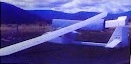
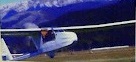
In early 1983, Charlie Stanton commenced a three-year project that would see him design and build the Stanton Sunbird powered glider.
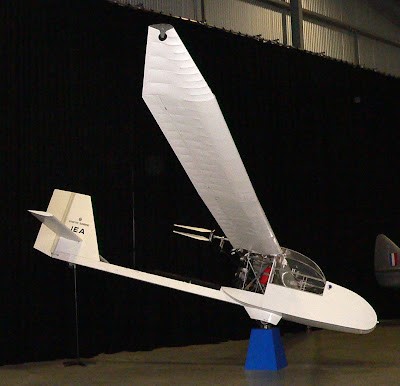
The 28 hp Rotax 277 engine enables a take-off and climb to a height sufficient for the engine to be stopped, the propellor automatically folded and the aircraft to fly as a conventional glider. The engine can be re-started in flight if needed.
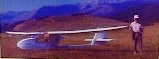
The single seat Stanton Sunbird motorglider ZK-JEA utilised various mechanical parts from Charlie’s earlier American Eaglet ZK-GOE.
It has a wingspan of 42 feet (12.8 metres) and was powered by a 27 HP Rotax 277 engine with a feathering propellor that could be restarted in flight if necessary. It was self-launching and flew successfully for over 10 years.
ZK-JEA (c/n 001) was registered as a Class 1 microlight to Charlie Stanton on 1 November 1994, and its first flight was on 26 February 1995 and over the next ten years Charlie made many flights including a maximum height of 13,000 ft and on another occasion a flight of 3 hr 30 min.
The registration was cancelled on 11 April 1997 as withdrawn.
Its final flight was on 16 April 2005.
On Sunday 4 December 2005, during the Ashburton Aviation Museum’s Christmas party, the Stanton Sunbird was donated to the museum by Charlie and his wife, Phyllis, where it is now on display.
Engine: 28 hp Rotax 277 Wingspan: 42 ft / 12.8 m Wing area: 100 sq.ft / 9.2 sq.m Wing loading: 5.3 lb/sq.ft / 26 kg/sq.m Airfoil: Epple 748 High Lift Empty weight: 313 lb / 142 kg Payload: 214 lb / 97 kg Max weight: 527 lb / 239 kg Vne: 81 mph / 132 kph Cruise: 45 mph / 90 kph Stall w/flaps: 32 mph / 52 kph Load factor: +- 4.4g Service ceiling: 15,000 ft
According to an article in The Kansas Citizen of 18 December 1928, Standard Steel Works were contractors to build 50 cabin biplanes from plans and a pattern aircraft from United Aircraft Co of Wichita.
The company also announced they were in the process of designing and building their own eight-passenger, all-metal, cantilever-wing monoplane.
The 1916 Standard Aircraft Corp model J was the first production model. A two-place, open cockpit biplane, they were powered by a 90hp Hall-Scott A-7 engine, and featured a pronounced overhang in the top wing.
An army contract model, many were sold surplus after WW1.
The Standard GD-24 (Gates-Day) of 1928 (ATC 2-38) was designed by Charles H Day and first flew on 24 August 1928, piloted by Clyde Pangborn.
A 3-4 seat (in three cockpits) biplane, three were built; NC193E c/n 102, NC442 c/n 103, and NX7286 c/n 101, and possibly also included NC2220. The first two become New Standard D-24.