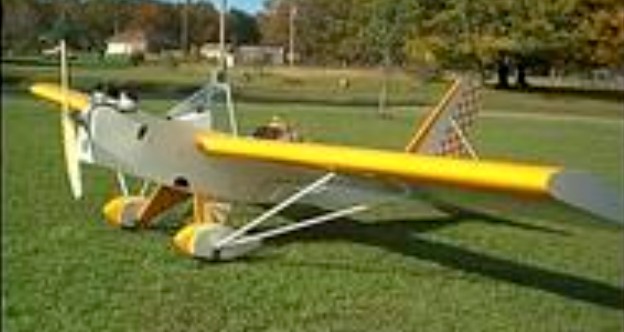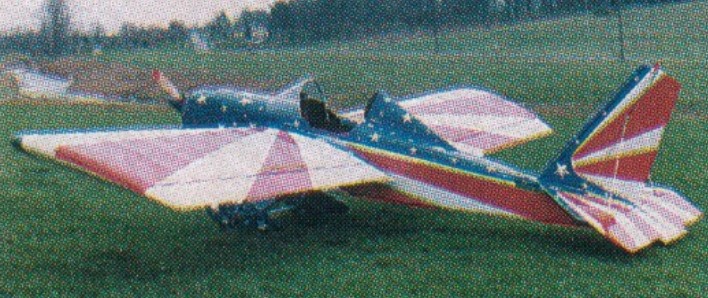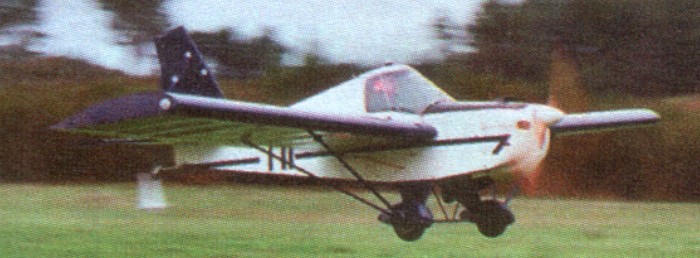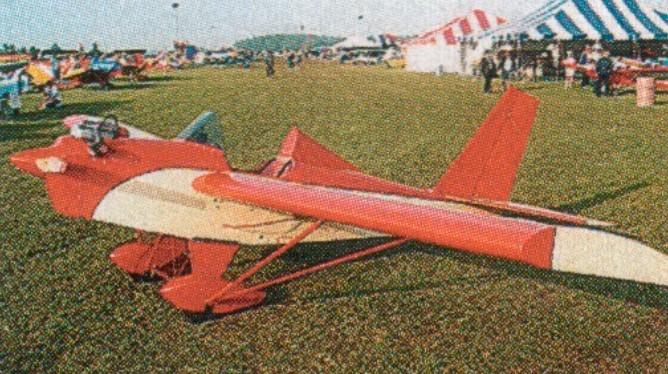
Team Rocket F.1 Rocket / Evo

F.1 EVO

Offered as a Quick Build Kit, these airframes are built by HPA International, a manufacturing subdivision in the Czech Republic. Their group of highly skilled engineers and aircraft assembly specialists have assisted to completely engineer the F-1 QB, paying particular attention to craftsmanship and ease of assembly. Complying with the FAA 51% rule, the Quick Build Kit is offered as a complete airframe. The F-1 QB is powered by a fuel-injected Lycoming IO-540 engine, commonly used in Piper Aztecs. Horsepower may range from 250 to 300+ and either a 2- or 3-bladed prop can be used. The engine is not included in the kit.
F.1 Rocket

All wing ribs and internal wing parts are anodized for corrosion protection. All wing skins are primed with epoxy chromate. The F-1 QB wings are delivered with the spars completed, all ribs riveted in place and the top skins riveted on. The customer will need to install the wiring necessary for landing lights (if desired) and strobe and position lights. The pitot tube bracket and pitot lines must also be installed. Once this has been completed, the bottom skins can be riveted in place.

The fuselage is delivered with all bulkheads completed and all skins riveted in place. All bulkheads and internal parts are anodized for corrosion protection. All skins have been primed with epoxy chromate for corrosion resistance. The ELT and battery trays are preformed and ready for your final assembly and installation. All fuselage floor and baggage compartment panels are pre-cut and pre-drilled ready to install. The customer will install the torque tube and control sticks, rudder pedals and cables, seats and seatback support, and instrument panel.

The F-1 QB finish kit is the most complete and comprehensive finish kit that can be provided. Most parts that are considered upgrades by other manufacturers, are standard in our kit. Fiberglass wing root fairings, fiberglass gear leg and gear leg intersection fairings, Rocket-tip wingtips with strobe and position light bulkheads pre-molded into place with Lexan plexiglass covers are all included as standard. Our cowl is delivered in three pieces for ease of installation. The oil door is pre-molded for ease of construction. The F-1 QB canopy is a slider canopy. The gear legs are manufactured from titanium and are pre-drilled to the engine mount. The wheels, brakes, tires, tubes, brake lines, pitot lines, master cylinders, and fuel lines are all included in the finish kit.

The empennage kit is not included in the Quick Build Kit and is considered a starter kit. This is done for two reasons: 1) This gives first time builders an opportunity to discover mistakes on parts that are not expensive rather than on areas that are very expensive. 2) When we went through the FAA 51% certification process, it was determined that we could do considerably more of the difficult construction on the wings and fuselage by making the tail its own kit.

Prices at 1 September 2006
Evo kit (w/emp) ..Lycoming Config – $49720
Evo kit (w/o emp)..Lycoming Config – $47720
Evo kit (w/emp)..TCM.IO-550.Config – $50700
Evo kit (w/o emp)..TCM IO-550.Config – $48700
Emp Kit – $2150

Sports QB kit (w emp kit) – $44270
Sports QB kit (w/o emp kit) – $42720

F-1 Rocket
Engine: Lycoming IO-540, 250 hp
HP range: 250-300
Length: 21 ft
Wing span: 22.6 ft
Wing area: 106 sq.ft
Fuel capacity: 52 USG
Empty weight: 1200 lb
Gross weight: 2000 lb
Cruise: 230 mph
Stall: 56 mph
Range: 1150 sm
Rate of climb: 3000 fpm
Takeoff dist: 300 ft
Landing dist: 700 ft
Seats: 2 tandem
Cockpit width: 30 in
Landing gear: tailwheel

F-1 Evo
Engine Lycoming IO-540 / Continental 550
HP Range 235-350
Length 21 ft.
Wing Span 24’10”
Wing Area 102 sq. ft.
Top Speed 265 m.p.h.
Fuel Capacity 52 gal
Empty Weight 1300 lbs
Gross Weight 2100 lbs
Cruise Speed (75% power@ 8000′ MSL) 240 m.p.h
Stall Speed 50 m.p.h.
Range @55%pwr 1150 sm
Rate of climb sea level 3500 fpm
Take off Distance 300ft
Landing Distance 700ft
Seats 2
Cockpit width 30 in
Landing Gear tail wheel
Building Material Metal
G. Limit +6 -3 g

F1 Sport wing
Engine Lycoming IO-540
HP Range 250-300+
Length 21 ft.
Wing Span 21′ 10″
Wing Area 104 sq. ft.
Fuel Capacity 52 gal
Empty Weight 1200lbs
Gross Weight 2000 lbs
Top Speed 250 m.p.h.
Cruise Speed ( TAS @ 10,000MSL @ 60% power) 230 m.p.h
Stall Speed 54 m.p.h.
Range @55%pwr 1000 sm
Rate of climb sea level 3500 fpm
Take off Distance 300ft
Landing Distance 700ft
Seats 2
Landing Gear tail wheel
Building Material Metal
G. Limit +6 -3 g
TEAM Air-Bike

Airbike RX-40

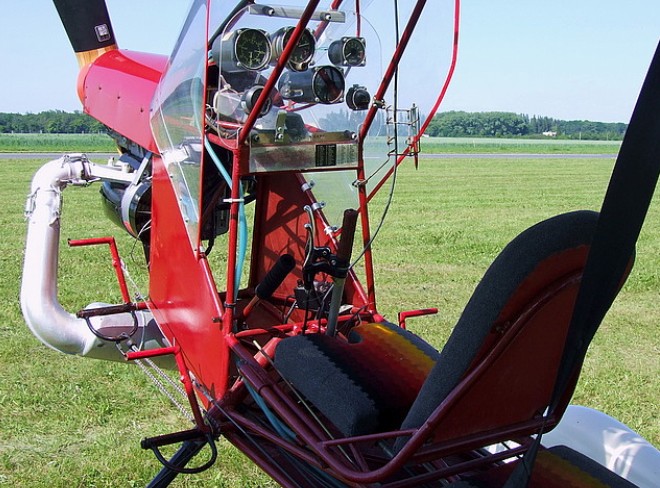
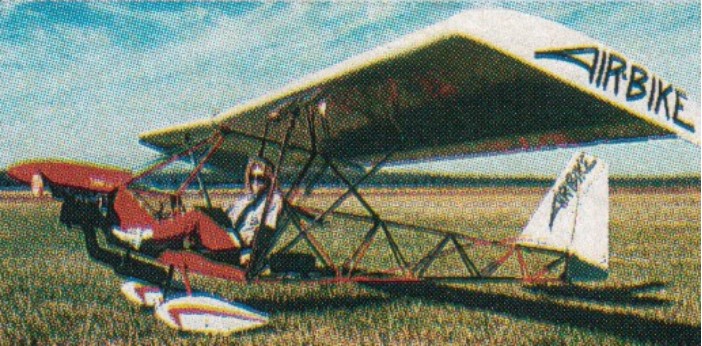
The Airbike has been in production since 1995. It mates a welded steel fuselage to an all wood wing.Standard features include an open cockpit, removable wings, steerable tailwheel, 4 point safety harness, fuel tank, factory welded fuselage and tail. Options include various engines, folding wings brakes, trim, wheel pants, wing tips bucket seat, extra fuel, plus various quick build and assembly packages.

Air-Bike has the strong, wood wings of the miniMAX but joins them to the tail by a welded structure. Since the Air-Bike has an open fuselage, a little more wing was necessary to make the Air-Bike fly like a mini-MAX. An extra bay was added to create a total span difference of one foot, however, the air-foil is the same.

TEAM first displayed their Air-Bike at Sun ‘n Fun ‘94. TEAM developed the new Enduro model of the Air-Bike.
Changes were made to the newest Air-Bike. The Enduro model showed increased roll rate found by changing linkages at the mixer point, the firewall came back three centimetres to accommodate heavier engines like the 447.
The rudder was enlarged slightly and control linkages were also improved to make the Enduro a better flying machine. The addition of two inches of area to the rudder (not stabilizer) harmonized the handling in a most beneficial way. Air-Bike Enduro comes with prebuilt spars and ribs, brakes, 5 USG wing tank, all-terrain wheels and droop wing-tips.

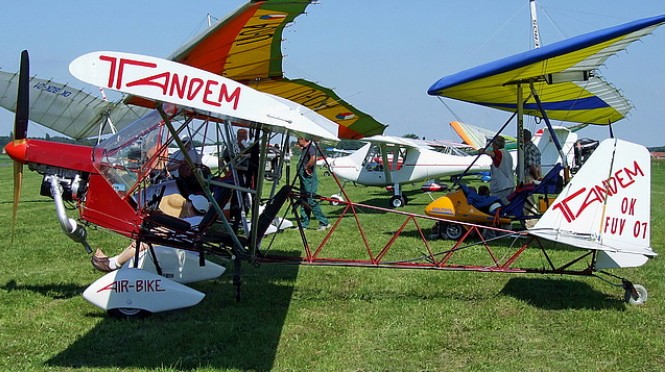
Team Aircraft Tandem Airbike

Gallery

Airbike
Engine: Zenoah G-25, 22 h¬p

Engine: Rotax 227

Airbike Enduro
Engine: Rotax 447, 42 hp
Speed max: 80 mph
Cruise: 63 mph
Range: 150 sm
Stall: 27 mph
ROC: 1200 fpm
Take-off dist: 100 ft
Landing dist: 200 ft
Service ceiling: 10,000 ft
HP range: 28-42
Fuel cap: 7.5 USG
Weight empty: 251 lbs
Gross: 560 lbs
Height: 5.5 ft
Length: 16 ft
Wing span: 26 ft
Wing area: 118 sq.ft
Seats: 1
Landing gear: tail wheel

Airbike RX-40
Engine: Rotax 447, 42 hp
Speed max: 80 mph
Cruise: 63 mph
Range: 150 sm
Stall: 27 mph
ROC: 1000 fpm
Take-off dist: 100 ft
Landing dist: 200 ft
Service ceiling: 10,000 ft
HP range: 28-42
Fuel cap: 2-10 USG
Weight empty: 257 lbs
Gross: 560 lbs
Height: 5.5 ft
Length: 16 ft
Wing span: 26 ft
Wing area: 118 sq.ft
Seats: 1
Landing gear: tail wheel

Airbike
Engine: Rotax 447, 42 hp
Wing span: 7.8 m
Wing area: 10.2 sq.m
MAUW: 242 kg
Empty weight: 107 kg
Fuel capacity: 38 lt
Max speed: 130 kph
Cruise speed: 90 kph
Minimum speed: 43 kph
Climb rate: 5 m/s
Certification: vVz
Seats: 1
Fuel consumption: 10 lt/hr
Plan price (1998): 1200 Fttc

Tandem Airbike
Engine: Rotax 503, 52 hp
Wing span: 9.54 m
Wing area: 13.11 sq.m
MAUW: 400 kg
Empty weight: 181 kg
Fuel capacity: 38 lt
Cruise speed: 115 kph
Minimum speed: 56 kph
Climb rate: 3 m/s
Seats: 2
Fuel consumption: 15 lt/hr
Plan price (1998): 1200 Fttc
Kit price (1998): 73 900 Fttc

TEAM 1700R Hi-MAX

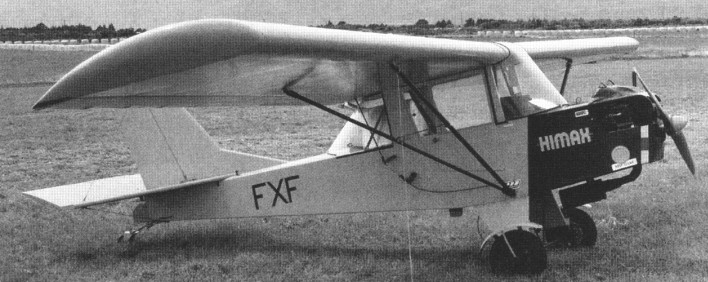
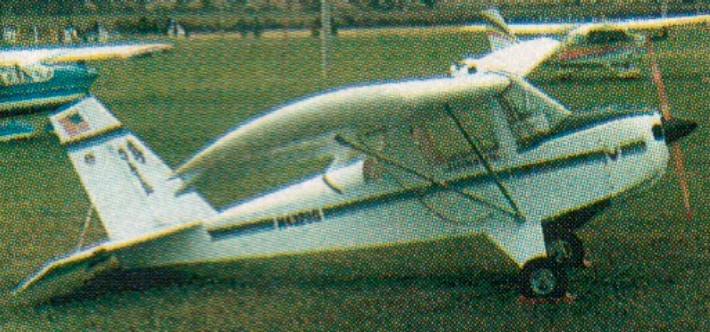
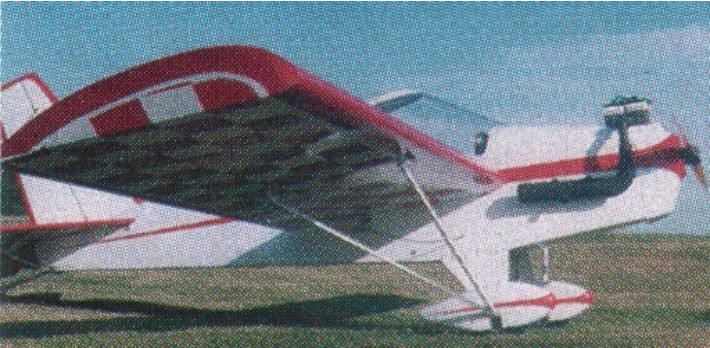
First flew in 1989. Take one or more parts from an already proven design, add a few parts for creature comfort and/or customer preferences, a wrap-around windshield of Lexan makes for excellent visibility and comfortable flying, and optional windows are removable for open-air flying in the summer. For power recommended is a Rotax 447, or any engine up to 45 hp.

Wood was chosen as the basic building material. It is easy to work with, dependable in its strength characteristics, and is not bothered by the vibrations associated with 2-cycle engines.

Construction techniques are of the old-fashioned, tried and true wood truss and plywood gusset method. It is very simple, and builds quickly. If you have ever built a balsa-wood model airplane, you have the experience required to build this “full-scale” model! While construction time will vary from builder to builder, approximately 300 hours is the average.

March 1999

1700R Hi-MAX Standard equipment:
Fiberglass engine cowl
Prop spinner
Quick removable wings
Shoulder harness/seat belt
Strut-braced tail
5 gallon gas tank
2009 Price: 5795 US$

Engine: Rotax 277
Empty wt.: 250 lbs
Max wt.: 500 lbs
Wing span: 25 ft
Wing area: 112.5 sq.ft.
Wing loading: 4.4 lbs/sq.ft
Power loading: 17.8 lbs/hp
Max speed: 60 mph
Cruise: 55 mph
Stall: 26 mph
Vne: 90 mph
Seats: 1

Engine: Rotax 447, 42 hp
HP range: 30-50
Speed max: 100 mph
Cruise: 70 mph
Range: 120 sm
Stall: 35 mph
ROC: 1200 fpm
Take-off dist: 100 ft
Landing dist: 210 ft
Service ceiling: 10,000 ft
Fuel cap: 5 USG
Weight empty: 319 lbs
Gross: 560 lbs
Height: 5.5 ft
Length: 16 ft
Wing span: 25 ft
Wing area: 112.5 sq.ft
Seats: 1
Cockpit width: 24 in
Landing gear: tail wheel
LSA: yes

TEAM 1550V V-MAX

First flown in 1987.

Engine: VW 1600cc, 50 hp
Hp range: 50-60
Height: 5 ft
Length: 16 ft
Wing span: 26.5 ft
Wing area: 118 sq.ft
Fuel cap: 5 USG
Weight empty: 400 lbs
Gross: 700 lbs
Speed max: 110 mph
Cruise: 75 mph
Range: 150 sm
Stall: 37 mph
ROC: 900 fpm
Take-off dist: 150 ft
Landing dist: 200 ft
Service ceiling: 10,000 ft
Seats: 1
Cockpit width: 24 in
Landing gear: tail wheel
LSA: yes

TEAM 1400Z Hi-MAX

First flown in 1990.

Engine: Zenoah G-50, 42 hp
HP range: 30-50
Height: 5.5 ft
Length: 16 ft
Wing span: 25 ft
Wing area: 112.5 sq.ft
Fuel cap: 5 USG
Weight empty: 323 lbs
Gross: 560 lbs
Speed max: 100 mph
Cruise: 70 mph
Range: 120 sm
Stall: 28 mph
ROC: 1200 fpm
Take-off dist: 100 ft
Landing dist: 210 ft
Service ceiling: 10,000 ft
Seats: 1
Landing gear: tail wheel

TEAM Minimax / Eros / JDT 1500R

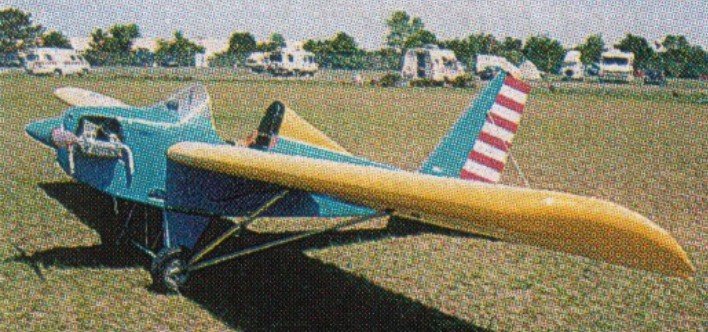
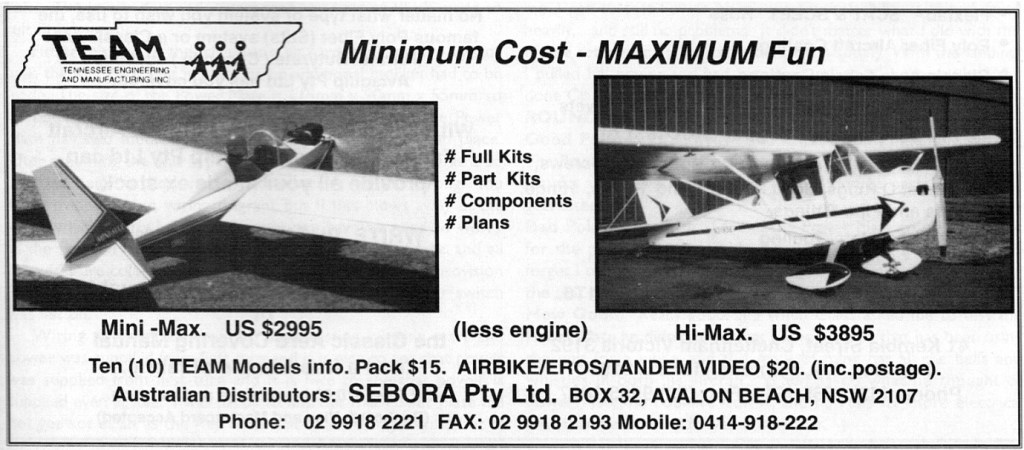
Mini-MAX 1100R

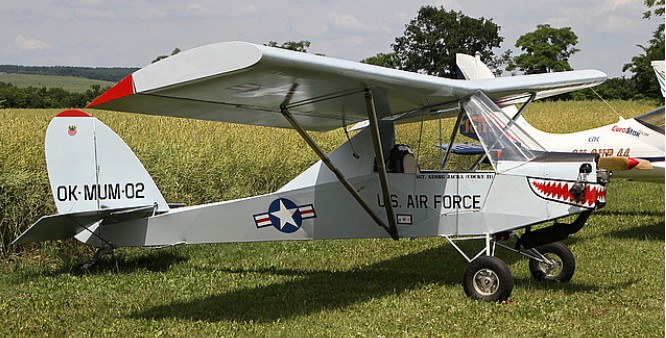
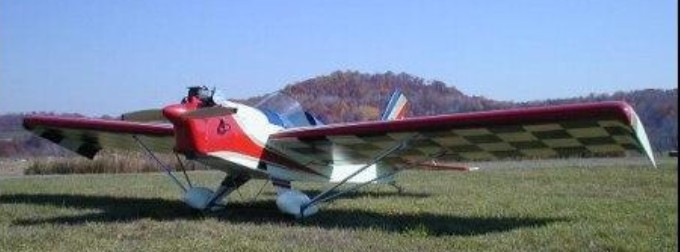
The Mini-MAX 1100R is a minimum cost aircraft, requiring a Minimum of building space, time or skill. A “Maximum” high of pure pleasure and performance.
Mini-MAX 1100R standard equipment:
Quick removable wings
Shoulder harness/seat belt
Full-span flaperons
Curved windshield
Strut-braced tail
5 gallon gas tank
2009 Price: 4795 US$

Tne Mini-MAX 1100R can be upgraded to models 1550R and 1260R.

Mini-MAX 1100R
1200Z

The 1200Z can be upgraded to the 1500R. First flown in 1984.

The TEAM 1300Z MiniMAX was first flown in 1991.

TEAM 1300Z

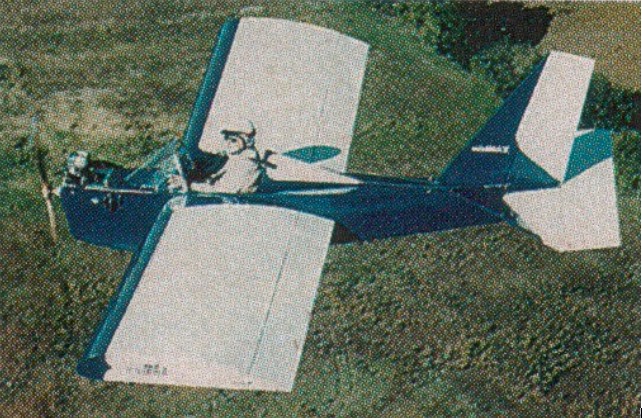
The 1500R was first flown in 1991. A Minimum-cost aircraft, requiring a Minimum of building space, time or skill. Wood was chosen as the basic building material. It is easy to work with, dependable in its strength characteristics, and is not bothered by the vibrations associated with 2-cycle engines.

1500R

1500R construction techniques are of the old-fashioned, tried and true wood truss and plywood gusset method. It is very simple, and builds quickly. If you have ever built a balsa-wood model airplane, you have the experience required to build this “full-scale” model. While construction time will vary from builder to builder, approximately 300 hours is the average.

March 1999

The 1500R was also marketed as the JDT 1500R.

1500R SPORT Standard equipment:
Fiberglass engine cowl
Prop spinner
Quick removable wings
Shoulder harness/seat belt
Curved windshield
Strut-braced tail
5 USgallon gas tank
2009 Price: 5290 US$

The TEAM1600R first flew in 1993.

TEAM1600R

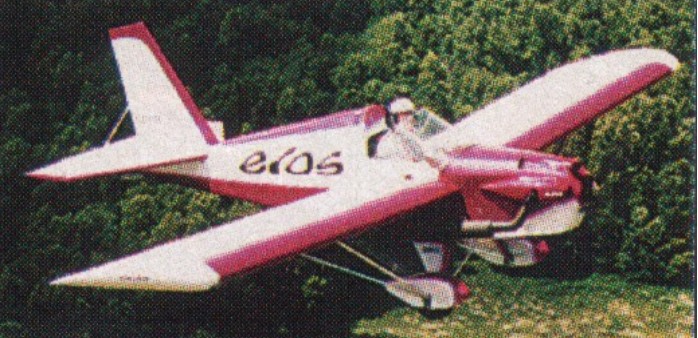
The 1650 Eros first flew in 1987.

1650 Eros

Gallery

1100F “Ultralight”
Engine: Hirth F-33
Flight controls: 3-Axis
Wingspan: 25′ 0″
Wing area: 112.5 sq. ft.
Wings: Removable
Length: 15′ 6″
Empty weight: 237 lbs.
Gross weight: 560 lbs.
Design load factors: +4.4 -1.8
Top speed: 70 mph
Cruise speed: 55 mph
Stall speed: 27-30 mph
Climb rate: 650 fpm
Vne: 90 mph
Take-off roll: 150 ft.
Landing roll: 180 ft

JDT Mini-Max 1100R
Engine: Rotax 447, 42 hp
Height: 5 ft
Length: 16 ft
Wing span: 25 ft
Wing area: 113 sq.ft
Fuel cap: 5 USG
Empty Weight: 121 kg / 267 lbs
MTOW Weight: 254 kg / 560 lbs
VNE: 87 kt / 100 mph / 161 kmh
Speed max: 86 mph
Cruise: 56 kt / 65 mph / 105 kmh
Range: 120 sm
Stall: 24 kt / 28 mph / 45 kmh
ROC: 1000 fpm / 5 m/s
Take-off distance (50ft obstacle): 100 ft / 30 m
Landing distance (50ft obstacle): 210 ft / 64 m
Service ceiling: 10,000 ft
Seats: 1
Landing gear: tail wheel
LSA: yes

Team 1100R miniMAX
Engine: Rotax 447, 42 hp
Wing span: 8 m
Wing area: 11 sq.m
MAUW: 220 kg
Empty weight: 130 kg
Fuel capacity: 20 lt
Max speed: 140 kph
Cruise speed: 120 kph
Minimum speed: 55 kph
Climb rate: 5 m/s
Certification: PFA
Seats: 1
Fuel consumption: 8 lt/hr
Plan price (1998): 1125 Fttc
Kit price (1998): $3825

1200Z
Engine: Zenoah G-50, 42 hp
HP range: 30-50
Height: 5 ft
Length: 16 ft
Wing span: 25 ft
Wing area: 112.5 sq.ft
Fuel cap: 15 USG
Weight empty: 278 lbs
Gross: 560 lbs
Speed max: 100 mph
Cruise: 65 mph
Range: 150 sm
Stall: 28 mph
ROC: 1200 fpm
Take-off dist: 100 ft
Landing dist: 210 ft
Service ceiling: 12,500 ft
Seats: 1
Landing gear: tail wheel

TEAM 1300Z
Engine: Zenoah G50C, 42 hp
HP range: 30-50
Height: 5 ft
Length: 16 ft
Wing span: 25 ft
Wing area: 113 sq.ft
Fuel cap: 5 USG
Weight empty: 300 lbs
Gross: 560 lbs
Speed max: 86 mph
Cruise: 75 mph
Range: 200 sm
Stall: 35 mph
ROC: 1000 fpm
Take-off dist: 150 ft
Landing dist: 200 ft
Service ceiling: 10,000 ft
Seats: 1
Landing gear: tail wheel

1500R
Engine: Zenoah G-50, 42 hp
HP range: 30-50
Height: 5 ft
Length: 16 ft
Wing span: 25 ft
Wing area: 112.5 sq.ft
Fuel cap: 5 USG
Weight empty: 269 lbs
Gross: 560 lbs
Speed max: 100 mph
Cruise: 65 mph
Range: 150 sm
Stall: 28 mph
ROC: 1200 fpm
Take-off dist: 100 ft
Landing dist: 210 ft
Service ceiling: 10,000 ft
Seats: 1
Landing gear: tail wheel

JDT Mini-Max 1500R Sport

JDT Mini-MAX 1500R Open cockpit
Engine: Rotax 447, 42 hp
HP range: 30-50
Length: 16 ft
Wing span: 25 ft
Wing area: 112.5 sq.ft
Fuel capacity: 10 USG
Empty Weight: 122 kg / 269 lbs
MTOW Weight: 254 kg / 560 lbs
VNE: 87 kt / 100 mph / 161 kmh
Stall: 24 kt / 28 mph / 45 kmh
Cruise: 56 kt / 65 mph / 105 kmh
Range: 170 sm
Rate of climb: 1000 ft/min / 5 m/s
Take-off distance (50ft obstacle): 100 ft / 30 m
Landing distance (50ft obstacle): 210 ft / 64 m
Landing dist: 210 ft
Seats: 1
Cockpit width: 24 in
Landing gear: tailwheel
LSA: yes

1600R
Engine: Rotax 447, 42 hp
HP range: 30-50
Speed max: 100 mph
Cruise: 72 mph
Range: 180 sm
Stall: 28 mph
ROC: 1200 fpm
Take-off dist: 100 ft
Landing dist: 200 ft
Service ceiling: 10,000 ft
Fuel cap: 5 USG
Weight empty: 301 lbs
Gross: 560 lbs
Height: 5 ft
Length: 16 ft
Wing span: 25 ft
Wing area: 112.5 sq.ft
Seats: 1
Landing gear: tail wheel

JDT Mini-Max 1600R
Engine: Rotax 447, 42 hp
HP range: 30-50
Cruise: 72 mph
Range: 210 sm
Stall: 28 mph
ROC: 1200 fpm
Take-off dist: 100 ft
Landing dist: 210 ft
Fuel cap: 10 USG
Weight empty: 301 lbs
Gross: 560 lbs
Length: 16 ft
Wing span: 25 ft
Wing area: 112.5 sq.ft
Seats: 1
Landing gear: tail wheel
Cockpit width: 24in

1650 Eros
Engine: Rotax 503, 52 hp
HP range: 40-52
Height: 5 ft
Length: 16 ft
Wing span: 26.5 ft
Wing area: 118 sq.ft
Fuel cap: 5 USG
Weight empty: 345 lbs
Gross: 640 lbs
Speed max: 110 mph
Cruise: 85 mph
Range: 125 sm
Stall: 35 mph
ROC: 1600 fpm
Take-off dist: 125 ft
Landing dist: 225 ft
Service ceiling: 12,000 ft
Seats: 1
Cockpit width: 24 in
Landing gear: tail wheel
LSA: yes

TEAM 1030R Max 103UL

1030R Max 103UL

The 1030R Max 103UL featured an open cockpit with swing over canopy.

JDT 1030F MAX 103
Engine: Hirth F-33
Flight controls: 3-Axis
Wingspan: 25′ 0″
Wing area: 112.5 sq. ft.
Wings: Removable
Length: 16′ 0″
Empty weight: 250 lbs.
Gross weight: 500 lbs.
Design load factors: +4.4 -1.8
Top speed: 63+ mph
Cruise speed: 55 mph
Stall speed: 26 mph
Climb rate: 650 fpm
Vne: 90 mph
Take-off roll: 150 ft.
Landing roll: 180 ft

1030R Max 103UL
Engine: Rotax 277, 28 hp
Fuel cap: 5 USG
Weight empty: 250 lbs
Gross: 500 lbs
Height: 5 ft
Length: 15.5 ft
Wing span: 25 ft
Wing area: 113 sq.ft
Speed max: 62 mph
Cruise: 55 mph
Range: 120 sm
Stall: 26 mph
ROC: 650 fpm
Take-off dist: 150 ft
Landing dist: 180 ft
Service ceiling: 10,000 ft
Seats: 1
Cockpit width: 22 in
Landing gear: tail wheel
LSA: yes

TEAM Inc / ISON Aircraft

Tennessee Engineering and Manufacturing

1995-8: 10790 Ivy Bluff Rd. K, Bradyville, TN 37026, USA.

Markets plans and/or kits to build a range of aircraft, including Air-Bike single-seat and open-frame microlight, Hi-MAX single-seat cabin monoplane, and miniMAX single-seat mid-wing monoplane.

ISON Aircraft (formerly TEAM Aircraft) won prestigious awards at Oshkosh and Sun ‘n Fun, and Wayne Ison and were EAA Ultralight Hall of Fame Inductees.

Production of the TEAM Inc Mini-MAX and Hi-MAX lines has moved to the JDT facility at the Nappanee, Indiana Airport (Hangar M). Who do not own the rights to any other Ison designs.

Tchan-Tia-Kou Lie-Fang No.1

When during the 1950s the Chinese People’s Republic decided to revive the country’s sporting gliding movement it was to Poland that they turned for help, and with the aid of instructors, technicians and designers from the Polish SZD organisation a central Gliding School was organized at An-Yan and large gliding establishments were set up at Tchan-Tia-Kou. It was here that a Chinese glider design office was formed towards the end of 1956 under the direction of Dipl Ing Niespal of the Polish SZD, and a Glider Manufacturing Centre was organized for the licence production of Polish types such as the ABC, Salamandra, the SZD-8 Jasolka, the SZD-12 Mucha 100 and the SZD-9 Bocian, examples of which had already been purchased from Poland; production of these types began during 1955-56.

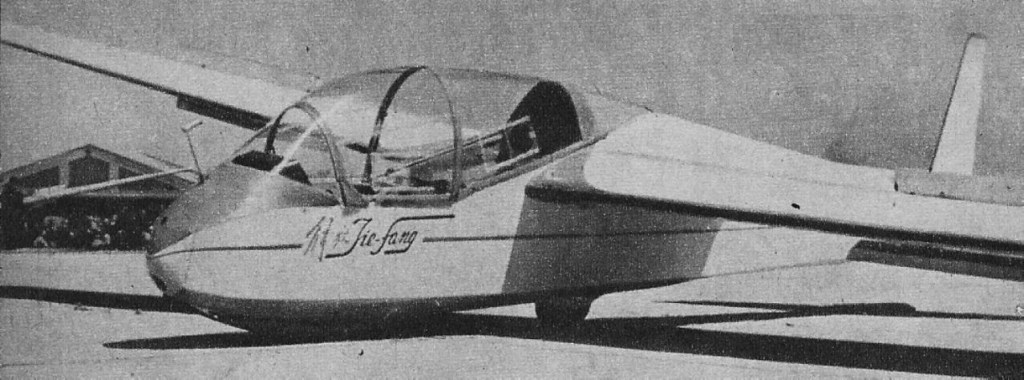
It was at Tchan-Tia-Kou that the first Chinese glider of original design, the Lie-Fang (or Liberation) two seater intermediate trainer, was created. The design of the Lie-Fang, one of the first gliders to originate in China, was led by the Polish J. Niespal. He was assisted by two Chinese engineers, Tchen-Kuei-Wen and Li-Ti-Tuin.

Niespal used the 1953 SZD-12 Mucha 100 as a starting point. There were many differences between the Mucha and the Lie-Fang, partly because the latter was a two-seat aircraft and therefore longer, with a much modified nose and more strongly forward-swept wings; the Lie-Fang’s fuselage was a simpler, flat sided structure compared with the Mucha’s oval section monocoque and the empennage was more angular.

The Lie-Fang 1 (English: Liberation 1), some sources Jeifang 1, is wood framed, with some use of the local “poton” wood and with a mixture of plywood and fabric covering. It has a high mid mounted single spar wing with a plywood covered torsion box leading edge, Behind the spar the wing is fabric covered. In plan it is straight tapered with unswept leading edges, resulting in forward sweep of 2° at one quarter chord. There is 4° of dihedral and 2° of washout. Its ailerons are slotted and fabric covered and spoilers, mounted behind the spar at about one third span, open above and below the wing.

The wooden slotted ailerons are also fabric covered and there are spoilers on both top and bottom wing surfaces. The fuselage is a plywood monocoque with a light alloy nose-cap, and the cantilever tail unit is of wood with fabric covering.

The fuselage is a flat sided monocoque which tapers gently to the rear, with the straight tapered tailplane mounted on top of it and forward of the fin. The rear surfaces are fabric covered. The straight edged rudder extends to the keel and moves in a cut-out between the elevators, one of which has a trim tab. The cockpit, mostly ahead of the wing leading edge, seats pupil and instructor in tandem with a single set of instruments that they can both see. The fixed, two part forward canopy reaches almost to the nose; a rear transparent section opens sideways for access to both seats. The Lie-Fang lands on a fixed monowheel undercarriage under the wing, fitted with brakes and aided by a short, rubber sprung nose skid and a tail bumper.

The landing gear consists of a non-retractable monowheel with brake, and a rubber-mounted skid under the forward fuselage. The two pilots are seated in tandem under a large sideways-opening Perspex canopy.

The prototype made its first flight on 10 May 1958. It was cleared for cloud flying and classed as semi-aerobatic. It went into production at the Tchan-Tia-Kou manufacturing centre, Shenyang, and was intended that pupils should graduate from the Lie-Fang to the single-seat SZD Mucha, which it resembles in appearance, for their first solo flights and the Lie-Fang went into small-scale production for the Chinese gliding centres.

Wingspan: 15.00 m (49 ft 3 in)
Length: 8.00 m (26 ft 3 in)
Wing area: 18.5 m2 (199 sq ft)
Aspect ratio: 12.4
Airfoil: Göttingen 549 over most of the span, NACA 4412 at tip
Height: 1.35 m (4 ft 5 in)
Empty weight equipped: 242 kg (534 lb)
Max takeoff weight: 420 kg (926 lb)
Stall speed: 55 km/h (34 mph, 30 kn)
Never exceed speed: 165 km/h (103 mph, 89 kn)
Rough air speed max: 138 km/h (85.7 mph; 74.5 kn)
Aerotow speed: 140 km/h (87.0 mph; 75.6 kn)
Winch launch speed: 100 km/h (62.1 mph; 54.0 kn)
Terminal velocity: with full airbrakes 165 km/h (103 mph; 89 kn)
g limits: +4.5
Max l/d: 22 at 53 mph / 86 km/h / 46.4 kn
Min sinking speed: 0.8 m/s / 160 ft/min / 2.62 ft/sec at 38.5 mph / 62 km/h / 33.5 kn
Min sink: 2.6 ft/sec at 38.5 mph
Crew: Two