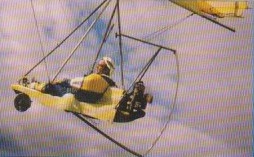
This composite trike with retractable undercarriage was designed to power hang glider wings. In flight the rear undercarriage (which weighs only 6.5 kg) folds back along the cockpit sides.
Empty weight: 60 kg Wing span: 10 m Wing area: 15 sq.m Engine: Zanzottera MZ 134, 26 hp MAUW: 150 kg Seats: 1 Cruise speed: 65 kph Minimum speed: 32 kph Climb rate: 4 m/s Fuel consumption: 3 lt/hr
A novice single surface hang glider first built in 1985, through 1998.
Built for beginners with light handling and very forgiving due to its floating crossbar. They have tight turning circles and are easy to land in small fields. Although it can be flown in almost any kind of weather, attention should be paid to the fact that you won’t move ahead much against strong headwind and it also gets bumpy in thermals. When pulling the bar, you move down, not forward.
The finish is ok, but with minimalistic rigging, and the crossbar tensionnig wire wears out very quickly. Also, be careful that the crossbar doesn’t pop out in your face while derigging, a frequent cause of accidents.
Medium 13 Wing area: 13.5 m² Wing span: 9.1 m Aspect ratio: 6 Minimum pilot weight: 50 kg Maximum pilot weight: 65 kg Nose angle: 124°
Medium 15 Wing area: 15.5 m² Wing span: 9.6 m Aspect ratio: 6 Hang glider weight: 21 kg Minimum pilot weight: 60 kg Maximum pilot weight: 80 kg Nose angle: 124°
Medium 17 Wing area: 16.5 m² Wing span: 10 m Aspect ratio: 6 Hang glider weight: 23 kg Minimum pilot weight: 70 kg Maximum pilot weight: 95 kg Nose angle: 124°
Medium 21 / Biplace Wing area: 20.8 sq.m Certification: DHV Pilot weight: 100-170 kg Wing span: 10.8 m Nose Angle: 124 deg Aspect ratio: 5.7 Hang glider weight: 32 kg Packed length short: 4.5 m Number of battens: 12 Price (1998) 20650 Fr
An intermediate Hang glider first built in 1992, through to circa 1998.
Assembly in 2 minutes.
Medial 13 Wing area: 13 sq.m Pilot weight: 40-70 kg Wing span: 9 m Nose Angle: 124 deg Aspect ratio: 6.2 Price (1998) 14.950 Fr
Medial 16 Wing area: 15.8 sq.m Certification: DHV Pilot weight: 55-80 kg Wing span: 9.6 m Nose Angle: 124 deg Aspect ratio: 6 Hang glider weight: 23 kg Minimum speed: 25 km/h Maximum speed: 60 km/h Max glide ratio (L/H): 8.5 Minimum sink rate: 1 m/s Packed length short: 4.5 m Price (1998) 14950 Fr
Medial Biplace Hang glider circa 1998. Wing area: 20.5 sq.m Pilot weight: 100-170 kg Wing span: 10.8 m Nose Angle: 124 deg Aspect ratio: 5.7 Hang glider weight: 32 kg Maximum speed: 55 km/h Packed length short: 5 m Price (1998) 20650 Fr
This hang glider is not very light for its category but it has remarkable caracteristics in spiral stability, immediate response, the trajectory in turn, and of slow flight. The quality of manufacture, the completion, the aspect of sail making and the structure are very “clean” and simple. The wing tips are free which facilitates the turning. It parachutes well if we pushed (really) too early. It can accelerate a little, but doesn’t reach the 70 km / h of the Vne.
A spin is difficult but possible, loop impossible. No spiral instability at 82 kg of pilot weight hooked under the 160, and even a slight tendency to leave the curve at this wing load. Limits: when pulling (progressive force but important), the wing descends more than it accelerates. The rate falls over 45-50 km / h, so the transitions are slow.
Mambo 135 Wing span: 9.6 m Wing area: 13.5 sq.m Pilot weight: 45-58 kg Nose Angle: 124 deg Aspect ratio: 6.7 Hang glider weight: 24 kg Maximum speed: 70 km/h Max glide ratio (L/H): 10 Max glide ratio speed: 35 km/h Minimum sink rate: 1 m/s Number of battens: 16 Packed length short: 3.4 m Price (1998) 16980 Fr
Mambo 150 Wing area: 15 sq.m Pilot weight: 55-75 kg Wing span: 10 m Nose Angle: 124 deg Aspect ratio: 6.7 Hang glider weight: 27 kg Maximum speed: 70 km/h Max glide ratio (L/H): 10 Max glide ratio speed: 35 km/h Minimum sink rate: 1 m/s Packed length short: 3.6 m Number of battens: 16 Price (1998) 16980 Fr
Mambo 160 Wing area: 16 sq.m Pilot weight: 70-90 kg Wing span: 10.4 m Nose Angle: 124 deg Aspect ratio: 6.7 Hang glider weight: 28 kg Maximum speed: 70 km/h Max glide ratio (L/H): 10 Max glide ratio speed: 35 km/h Minimum sink rate: 1 m/s Packed length short: 4 m Number of battens: 16 Nose angle: 124° Price (1998) 16980 Fr
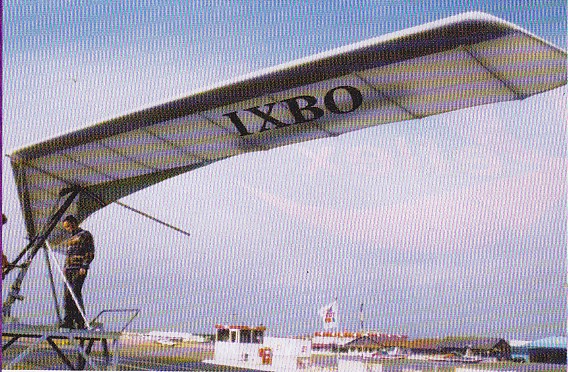
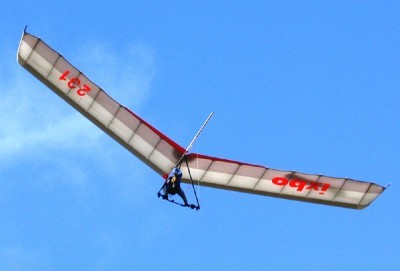
Hang glider first built in 1998 designed and built by Michel Mallinjoud.
The Ixbo is reported to have amazing spiral stability and performances modest (below flexible except in speed where it is quite level). Very below the rigid types.
With quick assembly / disassembly, it is the ideal rigid to start with this type of wing. The IXBO is very healthy without surprises for the pilot except the new sensations linked to the rigid profile.
The rear part of the keel serves as a fuse to absorb landing shocks and avoid damage or to constrain the front part as well as the leading edges.
If the front cables are slack when the wing is lying on the keel, the rear part is curved and should be replaced it immediately.
Weight: 42 kg Wing span: 12.15 m Wing area: 14.7 sq.m Vne: 100 km Stall: 30 kph Vzmin: 0.75 m/sec Glide Ratio: 17.5 Price (1998) Fr 49,000
IXBO 147 Wing area: 14.7 m² Wing span: 12 m Aspect ratio: 9.8 Hang glider weight: 43 kg Minimum pilot weight: 60 kg Maximum pilot weight: 100 kg Minimum speed: 30 km/h Maximum speed: 100 km/h Max glide ratio (L/H): 17 Max glide ratio speed: 60 km/h Minimum sink rate: 0.75 m/s Nose angle: 127°
The FX 136 and FX 142 were available without kingposts and featured and featured a square-section spar of riveted aluminium.
FX 136 Wing area: 13.6 sq.m Pilot weight: 60-80 kg Wing span: 10.3 m Nose Angle: 130 deg Aspect ratio: 7.8 Price (1998) 27300 Fr
FX 136 Wing area: 13.6 m² Wing span: 10.3 m Aspect ratio: 7.8 Hang glider weight: 31 kg Minimum pilot weight: 60 kg Maximum pilot weight: 75 kg Maximum speed: 100 km/h Max glide ratio (L/H): 13 Max glide ratio speed: 46 km/h Minimum sink rate: 0.9 m/s Packed length short: 4 m Number of battens: 24 Nose angle: 127°
FX 142 Wing area: 14.2 sq.m Certification: DHV Pilot weight: 75-90 kg Wing span: 10.6 m Nose Angle: 130 deg Aspect ratio: 7.8 Price (1998) 27300 Fr
FX 142 Wing area: 14.2 m² Wing span: 10.6 m Aspect ratio: 7.9 Hang glider weight: 31 kg Minimum pilot weight: 70 kg Maximum pilot weight: 85 kg Maximum speed: 100 km/h Max glide ratio (L/H): 13 Max glide ratio speed: 46 km/h Minimum sink rate: 0.9 m/s Packed length short: 4.2 m Number of battens: 26 Nose angle: 127°
FX 148 Wing area: 14.8 sq.m Pilot weight: 80-100 kg Wing span: 13.0 m Nose Angle: 130 deg Aspect ratio: 7.9 Price (1998) 27300 Fr
FX 148 Wing area: 14.8 m² Aspect ratio: 7.6 Hang glider weight: 34 kg Minimum pilot weight: 80 kg Maximum pilot weight: 105 kg Maximum speed: 100 km/h Max glide ratio (L/H): 13 Max glide ratio speed: 46 km/h Minimum sink rate: 0.9 m/s Packed length short: 4.2 m Number of battens: 26 Nose angle: 127°
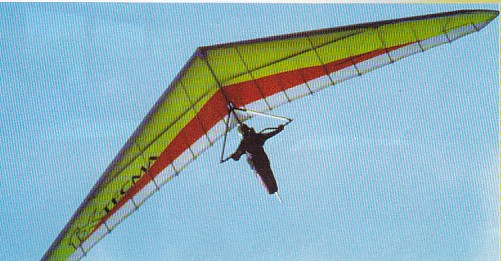
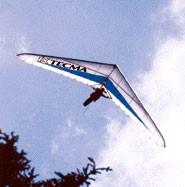
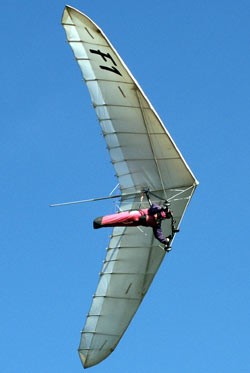
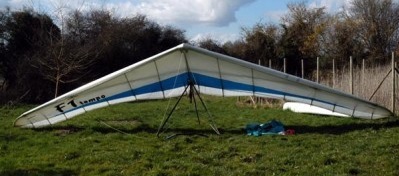
FI Tempo Hang glider circa 1992-8, for advanced pilots. Described as excellent in all respects, except the final push not obvious.
During the second half of the 90s the 1994 F1 Evolution was extremely popular.
F1 Evolution
The F1 tempo, the public and accessible version of the F1 evolution (less slats and much lighter). A wing that pushes more than one should pull (sensitive to the lace as soon as one pulls a little strong). A real treat in thermal, the overdrive adds about 10km of speed.
F1 Tempo
F1 130 Wing area: 13 m² Wing span: 10 m Aspect ratio: 7.7 Minimum pilot weight: 55 kg Maximum pilot weight: 75 kg Number of battens: 32 Nose angle: 127°
F1 142 Wing area: 14.2 m² Wing span: 10.6 m Aspect ratio: 7.9 Minimum pilot weight: 65 kg Maximum pilot weight: 100 kg Number of battens: 32 Nose angle: 127°
F1 Evolution 130 Wing area: 13 m² Wing span: 10 m Aspect ratio: 7.7 Hang glider weight: 32 kg Minimum pilot weight: 65 kg Maximum pilot weight: 75 kg Minimum speed: 33 km/h Maximum speed: 100 km/h Max glide ratio (L/H): 12 Max glide ratio speed: 45 km/h Minimum sink rate: 0.9 m/s Packed length: 4.9 m Number of battens: 22 Nose angle: 130°
F1 Evolution 136 Wing area: 13.6 m² Wing span: 10.3 m Aspect ratio: 7.8 Hang glider weight: 32 kg Minimum pilot weight: 70 kg Maximum pilot weight: 85 kg Minimum speed: 33 km/h Maximum speed: 100 km/h Max glide ratio (L/H): 12 Max glide ratio speed: 45 km/h Minimum sink rate: 0.9 m/s Packed length: 5.05 m Number of battens: 24 Nose angle: 130°
F1 Evolution 142 Wing area: 14.2 m² Wing span: 10.6 m Aspect ratio: 7.9 Hang glider weight: 33 kg Minimum pilot weight: 80 kg Maximum pilot weight: 100 kg Minimum speed: 33 km/h Maximum speed: 100 km/h Max glide ratio (L/H): 12 Max glide ratio speed: 45 km/h Minimum sink rate: 0.9 m/s Packed length: 5.2 m Number of battens: 24 Nose angle: 130°
FI Tempo 130 Wing area: 13 sq.m Pilot weight: 45-70 kg Wing span: 10 m Nose Angle: 130 deg Aspect ratio: 7.7 Price (1998) 25900 Fr
F1 Tempo 130 Wing area: 13 m² Wing span: 10 m Aspect ratio: 7.7 Hang glider weight: 28 kg Minimum pilot weight: 45 kg Maximum pilot weight: 65 kg Maximum speed: 80 km/h Max glide ratio (L/H): 11 Max glide ratio speed: 40 km/h Minimum sink rate: 0.9 m/s Packed length: 4.9 m Number of battens: 20 Nose angle: 127°
FI Tempo 136 Wing area: 13.6 sq.m Pilot weight: 60-80 kg Wing span: 10.3 m Nose Angle: 130 deg Aspect ratio: 7.8 Price (1998) 25900 Fr
F1 Tempo 136 Wing area: 13.6 m² Wing span: 10.3 m Aspect ratio: 7.8 Hang glider weight: 30 kg Minimum pilot weight: 60 kg Maximum pilot weight: 75 kg Maximum speed: 80 km/h Max glide ratio (L/H): 11 Max glide ratio speed: 40 km/h Minimum sink rate: 0.9 m/s Packed length: 5 m Number of battens: 20 Nose angle: 127°
FI Tempo 142 Wing area: 14.2 sq.m Pilot weight: 75-90 kg Wing span: 10.6 m Nose Angle: 130 deg Aspect ratio: 7.9
F1 Tempo 142 Wing area: 14.2 m² Wing span: 10.6 m Aspect ratio: 7.9 Hang glider weight: 33 kg Minimum pilot weight: 70 kg Maximum pilot weight: 85 kg Maximum speed: 80 km/h Max glide ratio (L/H): 11 Max glide ratio speed: 40 km/h Minimum sink rate: 0.9 m/s Packed length: 5.2 m Number of battens: 20 Nose angle: 127°
Russia Established 1991 and in 1992 put four-seat Yak-18T into production. Produces SM-92 Finist as six-passenger or seven-paratroop light STOL transport (first flown December 1993; can be armed), SM-94 six-seat multipurpose development of Yak-18T, and SP-95 aerobatic competition aircraft with interchangeable single- and two-seat cockpit. SS-98 is projected agricultural monoplane, SM-95 is under development as a twin-engined version of Finist for patrol, Miniakro is a projected aerobatic ultralight, and Ronata is a four-seat wing-in-ground-effect aircraft.