Thunder Balloons

Dick Wirth was an architecture student when he teamed up in the early 1970s with fledgling architect Tom Donnelly, and the two recruited businessman Kenneth Simmonds to form Thunder Balloons, Ltd. David Barker recalls that production took place at 75 Leonard St, London (should be ‘long about here). “Thunders were on the first and second floors of a warehouse building and everything had to be lifted up and down using an outside hoist. Thunders production commenced in late 1972 when Jumping Jack was registered; it made its debut at the Icicle meet, January 1973.”

The firm built what grew into a line of attractive, well-performing aerostats that quickly amassed market share around the world. The early “Series One” Thunders were distinctive for their bulbous gores and sharply tapering profile. Thunder began production of the smooth-envelope A-Type in 1974, and with the introduction of the Z-Type in 1977, had a thoroughly modern aircraft – lightweight and with a narrow shape favored for its performance in turbulence and at high rates of ascent and descent (presaging the narrow “competition balloons” now all the rage on the rally circuit). Thunder innovated constantly, introducing gimbaled burners, turning vents and the (production) parachute rip to the British market. Wirth penned what is perhaps the greatest ballooning book ever, Ballooning – A Complete Guide to Riding the Winds in 1980, and died in an infamous crash in Albuquerque in 1982. With much of its soul torn out, Thunder continued, having merged with Colt in 1980. ThunderColt continued production of Colt balloons, bringing the marque’s ultimate output to 99 before production ceased, but was ultimately bought by rival Cameron. Solid as the product was in its later years, the vigor and innovation of the Dick Wirth era will surely be the company’s lasting legacy.

1982: Thunder Balloons, 114 Sandalwood Court, Santa Rosa, California 95401, USA.

Thunder offered hot air balloons ranging in size from 19,000 to 140,000 cubic feet, with a capacity of one to eight passengers. Prices start at $6,384 and continue to $16,127 in 1982. Standard equipment includes a basket, instruments, two tanks, a bag and a burner.
AB Enoch Thulins Aeroplanfabrik (AETA)

1922 logo

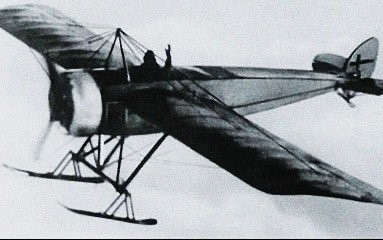
Title from 1914 of the former AVIS (Aeroplanvarvet i Skane) company formed 1913 by Dr Enoch Thulin and Oskar Ask. Licence built Le Rhone engines.

Enoch Thulin Article

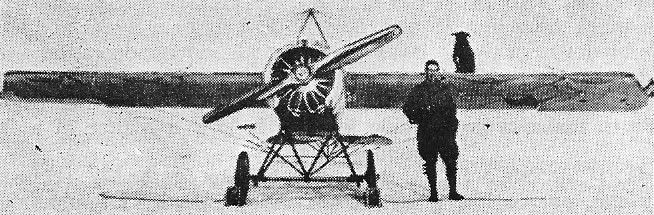
Models A, B, C and D were respectively Swedish versions of the Bleriot monoplane, Morane-Saulnier monoplane, Albatros B.II and Morane-Saulnier parasol. Thulin designs included the Type E, FA, G, GA, H, K, L, LA, N and NA. Total factory output was 99 aircraft, of which 32 produced in 1918. By the end of 1918 had produced nearly 100 aircraft of 11 different types, 7 their own design.

Dr Thulin died in flying accident in 1919 and the company closed its doors lacking the leadership of the early pioneer. ABThulinverken, a company which was formed a year later, is not connected with aviation.

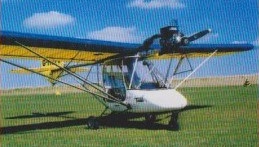
Thruster Aircraft Services T.600 Nova / Commandair

Commandair

A two-seat microlight developed from T.300.

Originating in Australia, by 1998 the tube and fabric design had been built in the UK for a number of years, and marketed in the UK as the Nova T600 N.

A tricycle version on the Commandair was exported from Australia to the UK as the Nova T600 T.

T600 T

Nova T600 T
Engine: Rotax 503, 52 hp
Wing span: 9.60 m
Wing area: 15 sq.m
MAUW: 360 kg
Empty weight: 150 kg
Fuel capacity: 40 lt
Max speed: 130 kph
Cruise speed: 100 kph
Minimum speed: 65 kph
Climb rate: 5 m/s
Certification: BCAR S
Seats: 2
Fuel consumption: 13 lt/hr
Price (1998): £12,350

Commandair
Engine: Rotax 503, 52 hp
Wing span: 9.60 m
Wing area: 15 sq.m
MAUW: 360 kg
Empty weight: 15- kg
Fuel capacity: 40 lt
Max speed: 130 kph
Cruise speed: 100 kph
Minimum speed: 65 kph
Climb rate: 5 m/s
Certification: BCAR S
Seats: 2
Fuel consumption: 13 lt/hr
Price (1998): £13,350

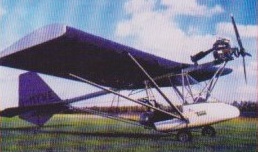
Thruster Aircraft Thruster / Cohen Thruster

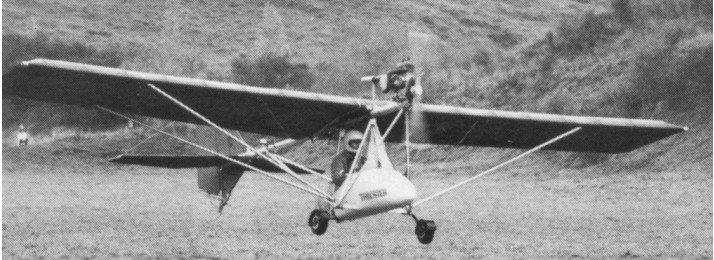
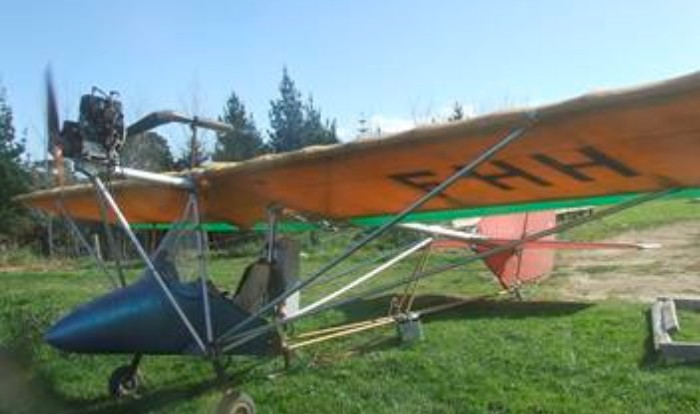
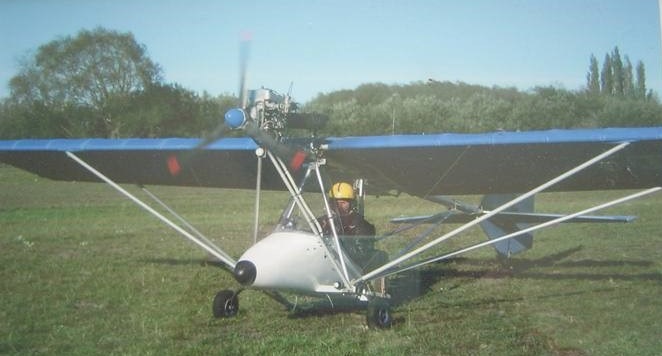
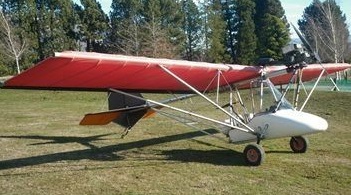
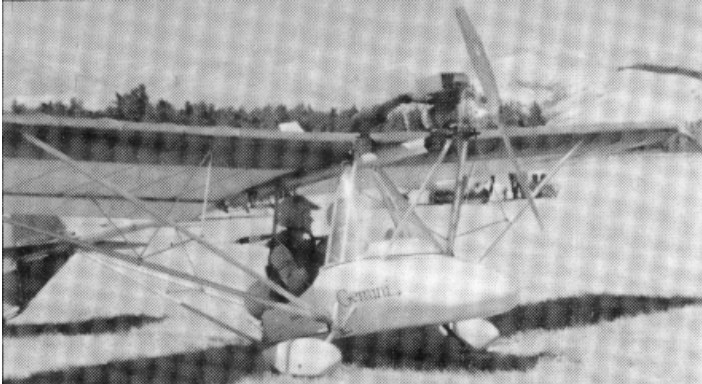
The fifth design of Steve Cohen, first appearing in 1982. A unique wing design allows each wing to rack and fold inside the double surface dacron skins for trailering. A fibreglass pod keeps the pilot warm on wintery days and the strut braced high wing tail dragger design makes it a good rough strip performer. A two-place/utility version is available which sports a new pod for passenger and pilot and power is supplied from a 60 hp Rotax 503 via a geared reduction drive.

Thruster Gemini 503TC

The Thruster 85 has a shorter wing span and the fabric of the lower wing sewn onto the ribs. Conventional 3 axis controls, single or two place.

In 1998 the two seat Thruster returned to production.

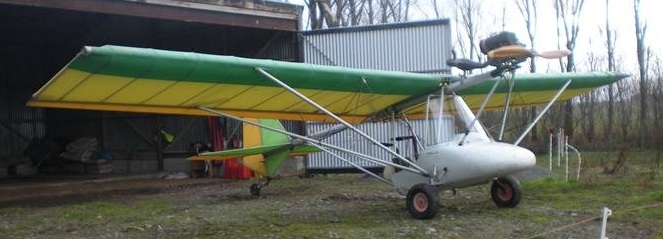
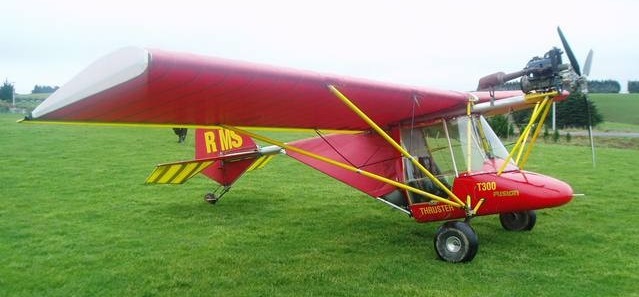
The T.300 is a side-by-side two-seat open microlight, and T.500 derivative with enclosed rear fuselage.

Thruster Single Seat
Thruster T300

Gallery

Thruster
Engine: Fuji Robin 440, 50 hp
Wing span: 29 ft 5 in / 8.97 m
Length: 18 ft 5 in / 5.61 m
Wing area: 150 sq.ft / 13.94 sq.m
Empty wt: 260 lbs / 117.9 kg
Fuel capacity: 25 ltr
Cruise speed: 50 kts@ 50% power
Stall: 27kts
ROC: 1000-1500 fpm
Range: 150 sm

Thruster 85
Engine: Rotax 377, 40 hp
Wing span: 7.8m
Length: 5.3m
Empty wt: 135 kg
MTOW: 227 kg
Range: 306 km
Seats: 1
Fuel capacity: 25 ltr
Cruise: 55kts
Stall: 33 kts

Engine: Rotax 503
Seats: 1
Wing span: 7.8m
Length: 5.3m
Fuel capacity: 25 ltr

T300
Engine: Rotax 582
Prop: Warp Drive 3 Blade Ground Adjustable
Seats: 2
Tyres: 8.00 x 6

T500
Engine: Rotax
Seats: 2

Thruster TST
Engine: Rotax 503, 58 hp @ 6300 rpm
Wing span: 31 ft 6 in / 9.6 m
Length: 18 ft / 5.5 m
Height: 6 ft 6 in / 2.0 m
Empty weight: 331 lb / 150 kg
MTOW: 788 lb / 358 kg
Cruise 90%: 63 mph / 55 kt
Cruise 70%: 52 mph / 45 kt
Stall: 40 mph / 35 kt
Vne: 92 mph / 80 kt
TO dist 50 ft: 360 ft / 110 m
Rate of climb: 500 fpm / 150 m/min
Landing roll: 327 ft / 100 m
Fuel capacity: 9 Imp Gal / 40 lt
Fuel burn: 15-22 lt/hr
Endurance w/res; 1.5 hr
Max X-wind: 15 kt

Thrush Aircraft Inc

Thrush Aircraft, Inc. acquired the production rights for the Ayres product line in June 2003. The headquarters and production facility are located in Albany, Georgia, with a 227,000 square foot office/manufacturing complex. The factory is equipped with a full complement of machinery including water jet, laser cutter, CNC brake, CNC machining centers, turning centers, roll form, hydro form, punch presses, heat treat, age, chemical treat processing, and much more.

Thrush Aircraft operate under the FAA-approved Production Certificate 5S0 and meet Mil-I-45208 inspection system requirements, Mil-Q-9858A quality system requirements and Mil-Standard-45662 calibration system requirements.

A number of aircraft projects have been produced under contract at the Albany facility, including the Myers 200, Lark Darter, CalAir A9 and A9B, Rockwell 112, and all Thrush aircraft since 1970. Subcontracts have been for several aerospace companies including the FedEx cargo conversion kit for Boeing 727, Lockheed aft quarter panels for the P3 Orion program, helicopter fuselages for the MD500, MD520, and MD600, British Aerospace 146 cargo door details, Aeronautical Engineers cargo door tooling and details for the 727 and 737, Pats, Inc. fuel tank inspection covers for Boeing, formed parts for Aeronca and Commander, and the design, tool development, and manufacture of kits for the OV10 for Dyncorp. The prior operations have also produced detail parts and tooling for Boeing to support the 727, 737, 747, 757, and 767 production lines.

The Albany Repair Station/Service Center was also responsible for the engineering, tooling development, parts manufacture, and installation of Stage 3 hush kits for the DC9, 727 and 737 aircraft. This program was performed for Airborne, US Air, TWA, Northwest, Southwest, Midwest, Canadian Air, Scandinavian, Value Jet/Air Tran, Federal Express, and Air France.

Thrush Aircraft has exclusively teamed with General Electric to produce the Thrush 510G powered by the GE H80 turbine engine. The H80 provides increased temperature margins to enhance hot-day takeoff performance and high-altitude cruise speeds. GE chose Thrush to launch this new engine.
Thrush Aircraft announced on October 10, 2012, that the Federal AviationAdministration had issued Type Certification for the new Thrush 510G. The 510G features the new GE H80 turboprop engine – a first for general aviation.

Certification marks the culmination of more than two years work by both Thrush and GE Aviation in concert with the FAA’s regional office in Atlanta. Final certification work for the dual cockpit version of the 510G was to get underway shortly after.