Martinsburg WV
USA
A Taiwan-US investment group established in 2000 for the continuance of Grumman-American planes in IFR versions for $215,000.
Martinsburg WV
USA
A Taiwan-US investment group established in 2000 for the continuance of Grumman-American planes in IFR versions for $215,000.
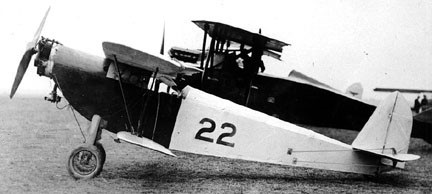
The 1924 Tiffany Sport, due to very short wingspan and low power, it had some difficulties taking off. It was entered in the 1925 Dayton Lightplane Air Race without much success.
Engine: Harley-Davidson, 18.5hp
Seats: 1
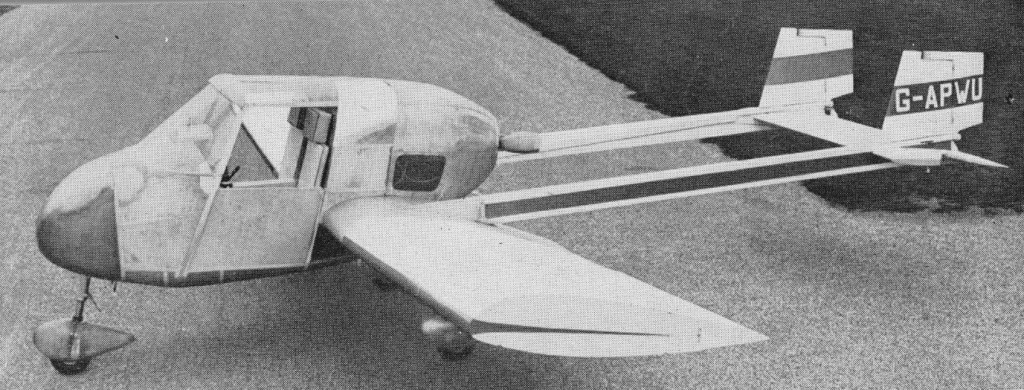
An attempt to produce a cheap new British lightplane, the Owl was designed by Tony Creedon and Eric Thurston, and built at Stapleford Tawney in Essex.
It had a 75 hp Porsche engine and a metal and plastic airframe.
The first flight, on 22 April 1960, ended in a forced landing. Registered G-APWU c/n TA,1-1, it was put into store, firstly at Stapleford then Stendon and later offered for sale.
Engine: Porsche 678/4, 75 hp
Wingspan: 24.00 ft
Length: 19.06 ft
Seats: 2 side-by-side
Designed circa 1995 as a ten-place cabin, high-wing monoplane amphibian.
Engines: 2 x Allison 250-B17F, 450hp
Wingspan: 53’0″
Length: 39’0″
Useful load: 3740 lb
Max speed: 220 mph
Cruise speed: 175 mph
Stall: 60 mph
Range: 1100 mi
Seats: 10

David B. Thurston, veteran amphibian aircraft designer was completing certification requirements for his four-place waterbird, the TA16 Trojan, to be called the Seafire when FAA-certified. This means that home-builders will have a proven, FAA-certi¬fied amphibian structure if they follow the plans with care. The proto-type Seafire is scheduled for flight testing in July 1981, while 45 home-builders already have Trojans under construction. Thurston, designer of the Colonial Skimmer (still produced as the Lake Amphibian) and the Teal Amphibian, estimates that the Tro¬jan/Seafire can be built in 3000 hours by anyone with previous airframe construction experience. This time can be reduced by using subassem¬blies and parts currently available from Underwood Aircraft, 18440 South Broadway, Gardena, CA 90248. The Trojan/Seafire has a radius of ac¬tion in excess of three hours and can operate from water, land, snow or ice.
The prototype N16SA first flew on 10 December 1981 and about 45 were under construction by 1982.
Construction, aluminum alloy with fiberglass bow deck skin and windshield enclosure
Power 160 – 250 hp
TA-16 Seafire
Engine: Lycoming O-540-A4D5, 250 hp
Span: 37’ 0”
Wing Area: 183 sq.ft
Length: 27’ 1.59”
Gross Weight: 3000 lb
Empty Weight: 1850 lb
Fuel: 80 U.S. gal
Vmax: 175 mph
Cruise: 155 mph
Stall: 60 mph
Range: 1000 mi
Climb: 1000 fpm
Endurance: 6-10 hours
Seats: 4

Thurston Aircraft Corp designed and manufactured the TSC-1A1 Teal two/three-seat light amphibian later acquired by Schweizer and later Teal Aircraft Corporation.
The TSC-1A Teal prototype N1968T first flew in June 1968 and, selling for $17,150, fifteen went to the USN. The improved TSC-1A1 Teal flew in 1972.
The TSC-1A2 Teal II N2020 first flew in October 1972. The TSC-1A2 Teal II was an improved version featuring slotted trailing-edge flaps, new wing leading-edge fuel tanks, optional hull fuel tank, and independent retraction of the tail wheel.
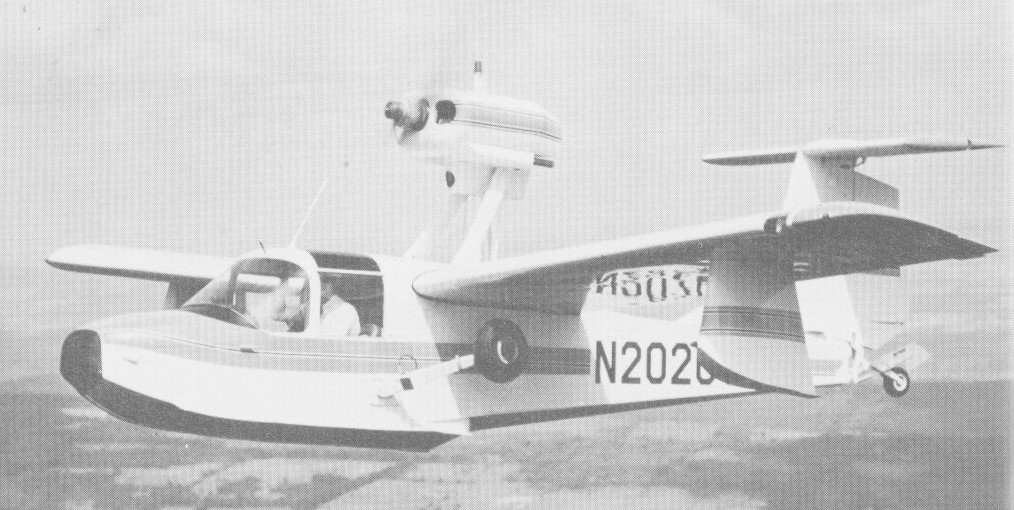
From 1976 Teal Aircraft Corp held manufacturing and tooling rights for the Thurston Teal, which was previously owned by Schweizer Aircraft Corporation. It was being produced by Teal Aircraft in St. Augustine, Florida, at the rate of 24 a year. For about $40,000, they’ll put you into the 150 horsepower Teal II, which cruises at 102 knots and carries a 765 pound equipped useful load. For $2,000 more, they’ll sell you the same airplane with a 180 hp engine the Teal III. The TSC-1A3 Teal III first flying in September 1991.
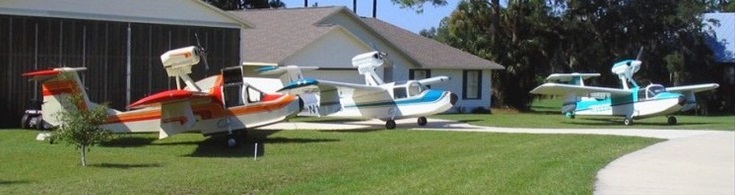
Thurston Aeromarine Corp superseded International Aeromarine; initially to produce two-seat Teal III amphibian (delivered from 1995), then expected to be followed by Seafire four-seat amphibian.

TSC-1A Teal
Engine: Lycoming O-320-A3B, 150hp
Wingspan: 31’11”
Length: 23’7″
Useful load: 600 lb
Max speed: 125 mph
Cruise speed: 108 mph
Stall: 54 mph
Range: 400 mi
Seats: 2
No built: 15
TSC-1A1 Teal
TSC-1A2 Teal II
Engine: Lycoming O-320-A3B, 150hp
Wingspan: 31’11” / 9.73 m
Length: 23’7″ / 7.19 m
Empty weight: 1435 lb / 651 kg
MTOW: 2200 lb / 998 kg
Useful load: 565 lb
Max cruise 5000ftt/1525m: 116 mph / 101 kt / 187 kph
Stall: 52 mph
ROC: 650 fpm / 198 m/min
Service ceiling: 12,000 ft / 3660 m
Range econ cruise 96kt/110mph/177kph 45min res: 472 mi / 410 nm / 759 kph
Range econ cruise 96kt/110mph/177kph 45min res opt fuel: 748 mi / 650 nm / 1203 kph
Seats: 2
Baggage capacity: 230 lb / 104 kg
Price 1974: $22,475
TSC-1A3 Teal III
Engine: Textron Lycoming O-360-1F6D, 180hp
Wingspan: 36’0″
Length: 23’10”
Useful load: 800 lb
Max speed: 116 mph
Cruise speed: 112 mph
Stall: 55 mph
Range: 500 mi
Seats: 2
Teal Aircraft Corp TSC 1A3 Marlin
Engine: Lycoming O-360-A1F6D, 180 hp
Seats: 2/4
Wing loading: 14.7 lb/sq.ft
Pwr loading: 12.8 lb/hp
Max TO wt: 2300 lb
Empty wt: 1435 lb
Equipped useful load: 782 lb
Payload max fuel: 350 lb
Range max fuel/ 75% pwr: 561 nm/ 5.3 hr
Range max fuel/ 55% pwr: 739 nm/ 7.7 hr
Service ceiling: 14,000 ft
75% cruise: 104 kt. 55% cruise: 96 kt
Stall: 45 kt
1.3 Vso: 59 kt
ROC: 700 fpm
Min field length land / water: 1000 / 1300 ft

David Thurston
(David) Thurston-Erlandsen Corp (TEC)
Thurston Aeromarine Corp
1966: Thurston Aircraft Corp
Sanford ME.
USA
Thurston Aircraft Corp was organized in July 1966 by David B. Thurston to develop marine aircraft. It designed and manufactured the TSC-1A1 Teal two/three-seat light amphibian later acquired by Schweizer and later Teal Aircraft Corporation.
Thurston Aeromarine Corp superseded International Aeromarine; initially to produce two-seat Teal III amphibian (delivered from 1995), then expected to be followed by Seafire four-seat amphibian. Also then anticipated was eight-seat Seamaster with two turboprop engines.
In 1972 Schweizer Aircraft Corp acquired all rights to the Teal Amphibian (Thurston became engr mgr).
In 1976 Teal Aircraft Corp, St Augustine FL, bought Teal production rights from Schweizer (D Thurston as vice-pres).
Intl Aeromarine Corp, Sanford FL, partly owned by Thurston Aeromarine Corp, Cumberland Foreside ME.
1975: Thunder Wings, div Thunder Development Inc, Scottsdale AZ.
In the late 1970s, “Thunder Wings” was a company that originated in Vancouver B.C. by Wolfe Nottelman. According to Wolfe, through his connections, he obtained a government grant of 1.5 million. He contracted a company in Scottsdale, Arizona to develop flying prototypes of the FW-190, Spitfire and P-40. They had done some work on a “secret” project of a fighter trainer with a cheap buzz-jet engine of their own design. At the time of the contract it looked like everything would be OK. It was stipulated that the money must be spent in Canada so the US company opened an office in Vancouver. After they obtained the money, they transferred all the funds to Arizona. They got the contract on their “experience”. At that time they had a 3/4 replica of a FW-190 flying. It was built the classic way; tubular structure, covered with fibreglass skins, the same way they built the P-40. On the first test flight, their test pilot was killed. The official version is the man who bought one of them did not take off according to procedure on the maiden flight.
On their marketing material they offered the Spitfire too. In Phoenix in the early 80’s it looked like a good, hard working company. There was an unfinished prototype of an all-composite Spitfire. They said the prototype was sold to someone in England and it was flying over there. They declined to give any info.
The story on the Spitfire in England was a big lie. Friends of mine bought this unfinished prototype (tubular structure covered with skins) from someone in the US a few years later. They changed the design from tubular to composite. They never changed their moulds so many parts did not fit. (For example, the rear wing spars were 1/2 inch higher than rib at the root). Parts were moulded poorly; the main spar had a 2 inch bend. The company never provided plans for the composite model. The plans that were provided were for the tubular structure. Even the manual was only 30% complete. They never finished the project. They were selling unproven kits and they falsely advertised the Spitfire test flights. We paid for the wing skins and spars and they were not delivered. Thanks a lawyer, some managed to obtain the ownership of the moulds, which were exchanged with Wolfe for the moulded parts.
Thunder Wings of Phoenix was folded and re-opened under a new name: Thundergroup, using the original Thunder Wings of Canada money. They screwed about 70 customers who bought the kit from Scottsdale. All the moulds were in storage in Vancouver (Spit, FW-190, and P-40). Wolfe died and there is no details after that.
Papa51 Co. Ltd., the original manufacturer of the Thunder Mustang is no longer in business. The Thunder Builders Group L.L.C. acquired the assets required to manufacture the Thunder Mustang through foreclosure on a loan. We have posted these assets for sale. Discussions are ongoing with several interested parties but at this time we have not finalized an agreement that will see this incredible aircraft back in production. The TBG is focused on finding the right mix of passion and money to make this happen.
Thunder Wing had claimed to build in 1980:
Curtiss P-40C
4/5-scale replica
Two seat, retracting undercarriage
Engine: 300hp Lighting Merlin V-12
Wingspan: 30´0″
Length: 25’0″
Useful load: 574 lb
Cruise speed: 200 mph
Range: 500 mi
Focke-Wulf Fw.190A
4/5-scale replica
Single seat, retracting undercarriage
Engine: 240hp Contentinal W670
Wingspan: 28’0″
Length: 23’0″
Useful load: 600 lb
Cruise speed: 185 mph
Range: 627 mi
Supermarine Spitfire Mk IX
4/5-scale replica
Two seat, retracting undercarriage
Engine: 300hp Lighting Merlin V-12
Wingspan: 27’0″
Length: 23’0″
Useful load: 600 lb
Cruise speed: 225 mph
Range: 812 mi
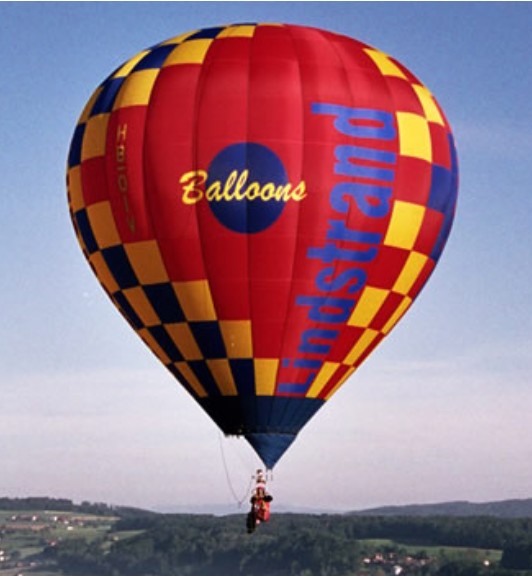
The original (circa 1980) Thunder & Colt Cloudhopper is a 21,000 cu ft single seater, weighing only 56 kg and carries the pilot strapped to the LPG cylinder. Designed for one person, the Cloudhopper has a 10 Imp.Gal propane tank. The harness also provides restraint when using an emergency parachute system.
The single-person hot air Cloudhopper balloons are easy to handle, take off and land in small areas, and are easy to transport – packs into an estate car.
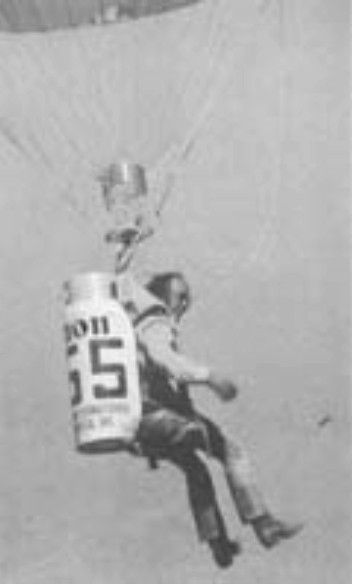
The Lindstrand Cloudhopper is constructed from a tubular stainless steel frame fitted with padded fold flat seat, backrest, harness, footrest and removable mirror. Standard V30 & V40 cylinders can be used with the Lindstrand Cloudhopper.
The burner has been specially developed for the cloudhopper and provides attachment to the main framework and to the envelope flying wires.
Features of the cloudhopper burner:
Main and liquid fire burner igniter and pressure gauge
May be quickly removed and stored in a separate bag
Can be supplied with independent or locked rotation
The Lindstrand Cloudhopper is supplied with a choice of envelope sizes; 21A, 25A, 31A, 35A.
The design changes incorporate an easy to store inflation handle, wheel option for easy removal from the landing site, and hip protection for those more exciting landings.
Thunder & Colt Cloudhopper
Capacity: 21,000 cu ft
Seats: 1
Weight: 56 kg
Fuel capacity: 10 Imp.Gal propane
Lindstrand Cloudhopper
Capacity: 14,000 cu.ft
Seats: 1
T&C produced the GA-42 non-rigid helium airship which was capable of carrying two people and featured state of the art fly by wire controls. The rights to the GA-42 design were acquired by the American Blimp Corporation when T&C was acquired by Cameron in 1995.

