Timber Tiger Aircraft Early Bird Jenny

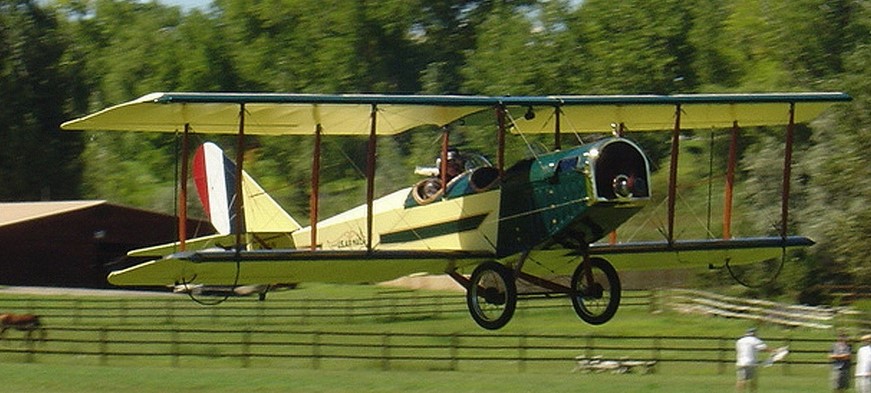
Timber Tiger Aircraft has made the Curtiss Jenny available to homebuilders. They have purchased the rights to sell Dennis Wiley’s Early Bird Jenny design as a kit, but with a twist. While Wiley’s Early Bird Jenny was a 67% scale replica, the kitted Jenny from Timber Tiger will be 75% scale.

Nick Pfannenstiel, Timber Tiger Aircraft President, said the basic kit is a welded steel fuselage with blueprints for the remainder of the airframe. Recognizing that a growing number of builders wish to do less work, additional kits will be offered to reduce build time and each builder can effectively build their kit à la carte, selecting the add-on kits they want without being forced to purchase items they don’t. “We’re trying to bring back a community of Early Bird Jenny builders. In addition to having a slightly larger fuselage, our kits will have CNC-machined components and improved hardware. To differentiate between the original plans-built version and our kit we are calling ours Gen 2.

Engineering and a structural analysis for the increased gross weight are complete and, while no factory prototype will be built before kits will ship, Pfannenestiel said there are no significant changes necessary to the existing, proven design.
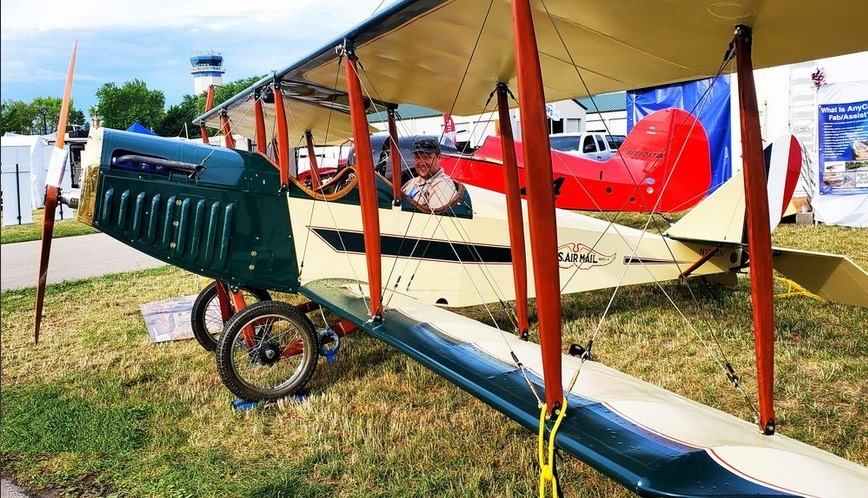
Timber Tiger’s gross weight increase over the Gen 1 means you can now take larger passengers (just make sure you have at least 70 hp), and have dual controls.
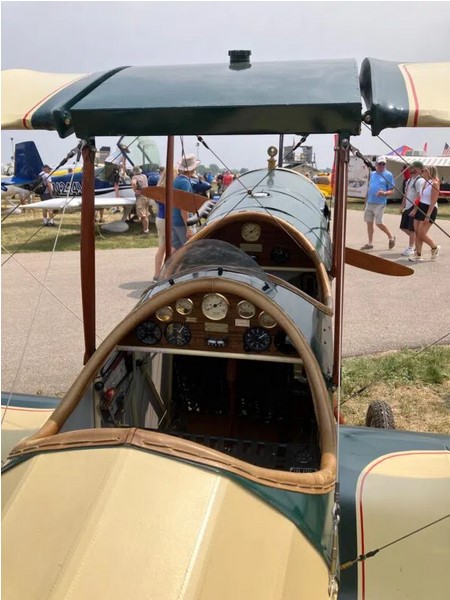
The Gen2 has revised lines, with the contours pulled directly from original Curtiss drawings.

Simple aluminum tube spars, pre-stamped ribs, pre-routed wood struts, and more are all available, whether you prefer a more plans-built route (Basic Kit) or a more Deluxe Kit route (just add the options as you see fit).
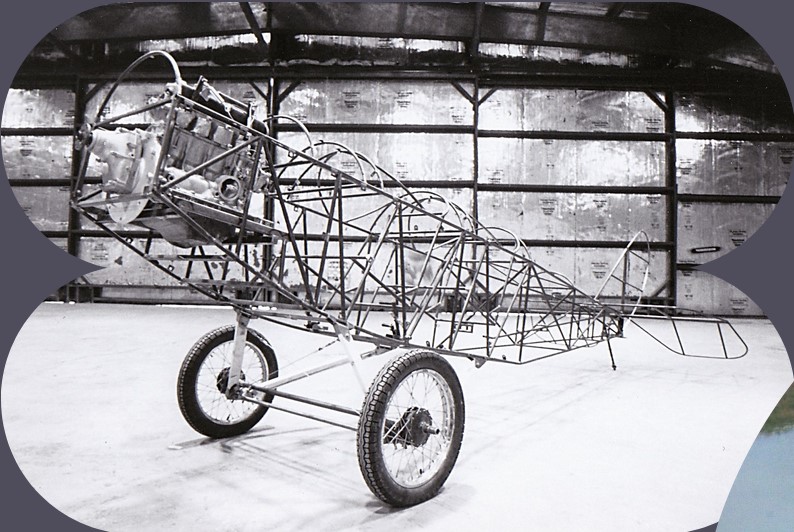
The fuselage comes pre-welded in even the Basic Kit, meaning you have a massive jump start on your project. If you aren’t much of a welder, Timber Tiger Aircraft can finish all other welding for you, too.

Timber Tiger Aircraft will not support any airplanes built without a serial number from Early Bird Aircraft (Gen 1) or Timber Tiger Aircraft (Gen 2).

Gen2
Engine: 70-100 hp
Wingspan: 30 ft
Length: 20 ft 6 in
Empty weight: 600-700 lb
MAUW: 1200 lb
Cruise: 70 mph
Stall: 35 mph
ROC: up to 1000 fpm
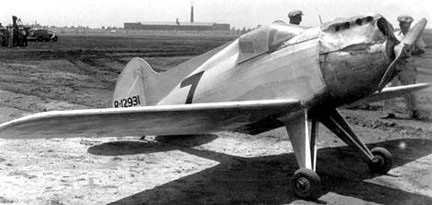
Tilbury SF-1 Flash

Tilbury SF-1 NR12931

Designed by Owen Tilbury, the 1932 SF-1 Flash was a racer for the Nationals registered NR12931 and piloted by Art Carnahan.

It was stored in a barn in 1935, recovered in 1975 and restored by the Bloomington (IL) EAA Chapter, to go on exhibit at the McLean County Museum of History in Bloomington.

Engine: Church-Henderson, 45hp
Wingspan: 14’8″ (later increased to 17’10”)
Length: 11’10” (later 12’5″)
Seats: 1

Tijuana Aircraft Co Tijuana / BC-1 / BC-2 / BC-3

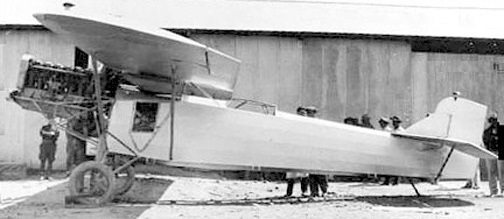
William Waterhouse was a respected structural analyst and engineer who “… undertook an assignment late in 1927 for the Mexican Government, which wanted to [produce] its own aircraft. Two monoplanes were constructed by Tijuana Aircraft Co, headed by Gov Abelardo Rodriquez of Baja California. Plans were furnished by the Mexican War Department and adapted by Waterhouse.

The planes, completed in early 1928. In test flights of the first, an observation type, a German BMW engine was used, but the second ship, expected to carry 380 gallons of fuel and make a non-stop flight to Mexico City, was scheduled for a Wright Whirlwind.”

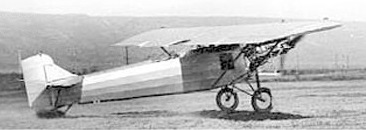
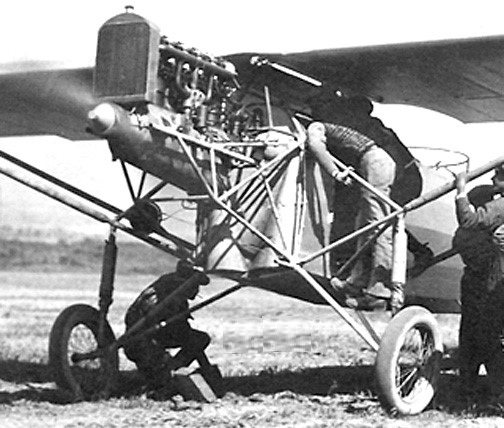
It was flown by Luis Farell Cubillas, who on 8 March 1928 took off from the Tijuana factory enroute to Mexico City. The temporary-fitted 185hp BMW IIIa quit between Hermosillo and Navajoa, and Farell crash-landed on mountainous terrain. He was uninjured but the BC-1 was destroyed.

Tijuana BC-1 BMW installation

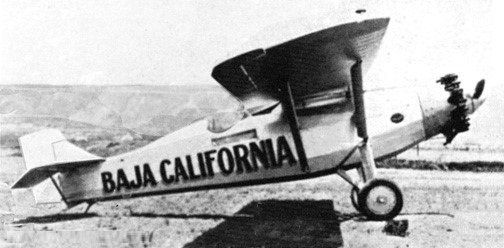
An article in Air Pictorial 27/2 by Jose Villela Jr, showed a photo of a parasol monoplane with a 185hp BMW, except the observer’s cockpit has been replaced with the pilot’s cockpit and power is a radial engine. That ship had “BC-2” on its Waterhouse-like vertical tail, and “BAJA CALIFORNIA” painted on the rear fuselage; photo caption: “Col. Fierro in ‘Baja California No. 2’ lands in the Canal Zone after his flight to Panama in 1928.” In his article Villela says, “Later Colonel Roberto Fierro in the Mexican-built ‘Baja California 2’ made the first non-stop flight between Mexico City and Havana in 14 hours, 50 minutes.”

The rear cockpit looks like it has a ring for a machine gun.

Tijuana BC-2

There was a later BC-3 described in Wagner’s article with a photo that has a family resemblance to the others, including the Waterhouse vertical tail.

BC-1
Engine: 185hp BMW
Wingspan: 43’0″
Length: 30’0″
Max speed: 122 mph

BC-2
Engine: Wright J-5C
Wingspan: 46’6″
Length: 28’6″
Max speed: 136 mph
Stall: 48 mph
Seats: 1

BC-3