Shigesaburo Torigai was a manager of an imported automobile sales and repair business in Yuraku-cho, Tokyo. Because of his new-found interest in aviation as a hobby, he organized the Nihon Hiko Kenkyukai (Japan Flight Research Association). Under this name, and to satisfy his own interest in aviation, he voluntarily managed and promoted exhibition programmes for Einosuke Shirato who flew the Narahara No.4 Ohtori-go Aeroplane on tours throughout Japan, and his ambition was to have an aeroplane of his own. To achieve this, he asked Toyokichi Daiguchi, who was associated with Narahara, for technical assistance in the building of his own aeroplane.
Era
Toresi
1998:
Ujezd 474
569 61 Dolni
Czech Republic
LSA builder
Topa Aircraft Scout
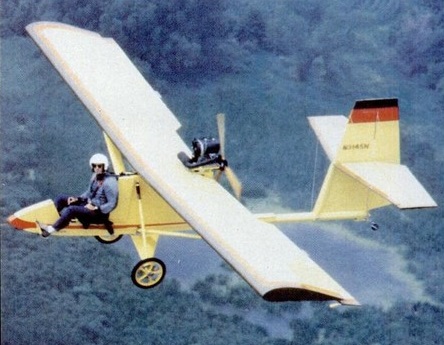
The 1983 Topa Aircraft Scout ultralight was designed for pop-rivet construction. Plans sold for $100. It cruised at 45 mph on 47 hp.
Topa Aircraft Co
1983
1401 Offshore
Oxnard
California
USA
UL builder
Topliff Quail / Model A
In 1936 Oliver Topliff built the Quail or Model A ultralight N14834. The single-place open (later closed) cockpit monoplane was powered by a 15hp Saxon engine.
Topliff, Oliver
Springfield IL.
USA
Light plane builder in 1936.
Tonini-Bergonzi-Negri Italia-1 / Italia-2
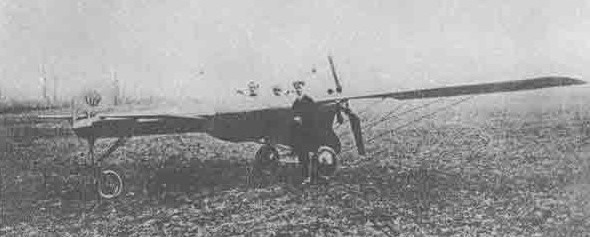
An earlier canard monoplane, the more streamlined Italia-1, was designed for the Italian 1913 trials but became badly damaged by Alessandro Tonini during a landing.
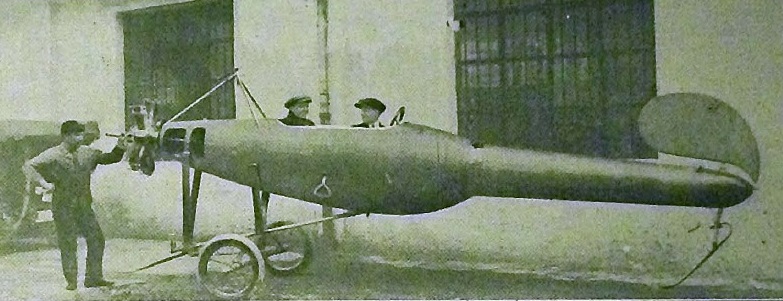
Due to a lack of funds and an underpowered airframe, Tonini shifted to a more “rough” and lighter configuration as a replacement: the Italia-2. According to Tonini’s son, the aircraft never flew.
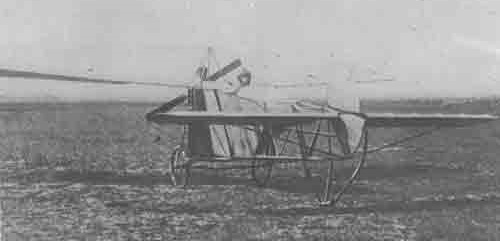
The Tonini-Bergonzi-Negri “Italia II” was a lighter airplane with a smaller engine, and also a canard. This did not take off – the partners experienced serious financial problems because Negri lost the money in cards, and their team broke up.

Italia-2
Engine: 35 hp
Span: 6m
Weight: 340 kg
Tonini Monorebus

Tonini Monorebus monoplane of 1911 was designed by Alessandro Tonini, and powered by a REBUS engine. The name of the machine was a contraction of both, becoming Monorebus. Tonini had initiated the firm Officine Mechaniche REBUS in Milan, which specialized in “Aeroplani, Motori per Aeroplani, Costruzioni Aeronautiche and Construzioni Mecchaniche”. After the Monorebus was successfully flown in June 1911, Tonini started designing revolutionary canard machines and later became chief constructor with Nieuport-Macchi.
Tondokoro Type 2
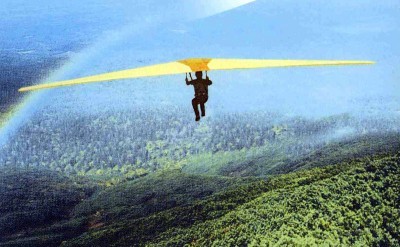
A 1974 hang glider.
Tomak SD-4 Viper
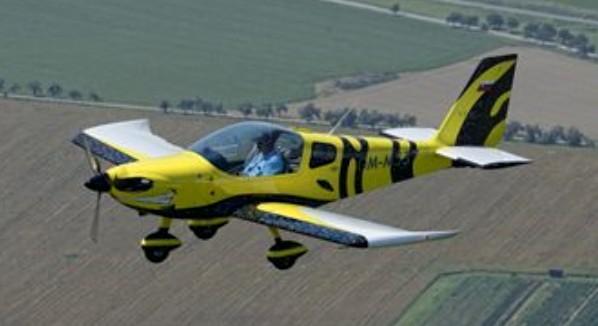
Viper is an all-metal microlight plane designed for sport, recreational flying and glider towing. The control of the aircraft is helped by LCD flight, navigation and communication systems. Viper SD-4 was developed and is made by aviation and mechanical engineering specialists at Tomark s.r.o., based in Slovakia. Modern technologies and CAD systems are used in its manufacture. Individual parts are cut by laser or machined on CNC machines for maximum precision. 2009 Price: 66000 EURO
This aircraft has:
DUC SWIRL Propeller
Ballistic recovery system 600kg
Dynon Flightdeck D180
GPS AVmap Geopilot plus
Garmin SL-40 radio
Garmin GTX 327 Transponder
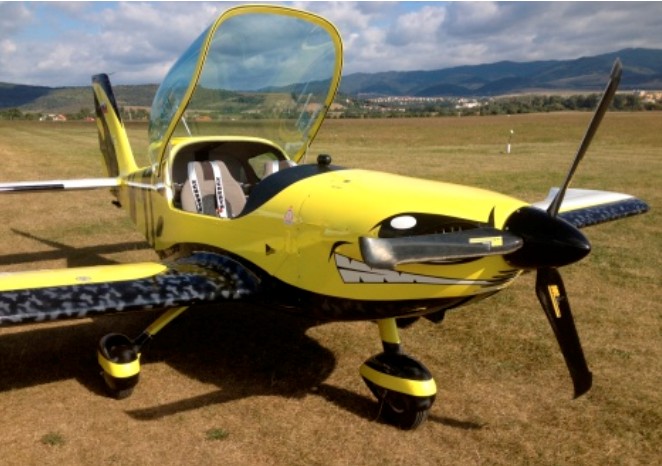
Engine 4-stroke Rotax 912 ULS, 100 HP
Wing span 8.4 m
Length 6.4 m
Height 2.2 m
Empty Weight: 285 kg / 628 lbs
Maximum take-off weight 472,5 kg
Cruising speed: 108 kt / 124 mph / 200 kmh
Never exceed speed: 130 kt / 149 mph / 240 kmh
Stall speed: 35 kt / 40 mph / 65 kmh
Climb rate: 1200 ft/min / 6 m/s
Ceiling 5,000 m
Take-off distance 150 m / 180 m
Landing distance 140 m / 160 m
Take-off distance (50ft obstacle): 820 ft / 250 m
Landing distance (50ft obstacle): 920 ft / 280 m
Fuel tank volume 70 lt
Range 750 km

