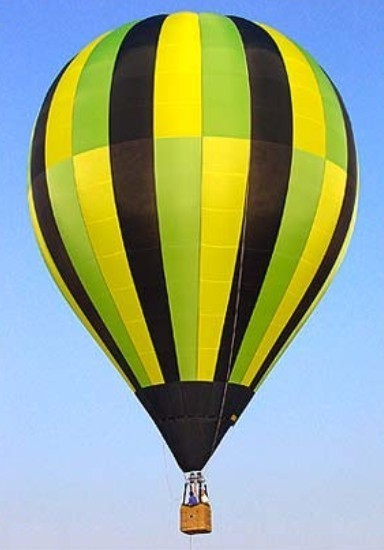
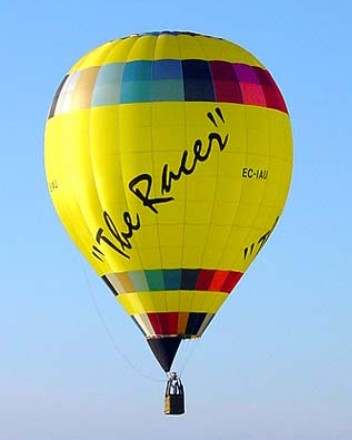
In 1996 Ultramagic made a step forward in the world of competition ballooning – MV series (The Racer). This was the first time that a balloon had been designed, developed and produced especially for the demanding requirements of balloon competition. The goal was to produce a balloon with such a shape so as to perform the maximum rate of ascent and descent whilst avoiding deformation of the envelope, thereby improving the precision on approaching the target.
Safety was also an important factor in the design equation with clear windows and Ultralast fabric on the top of the balloon being part of the standard specification. The final design and shape was the result of considerable development work with a great deal of testing and then analysing precise flight data. Many test hours were logged both by Uwe Schneider as well as Josep and Carles Llado Costa who all fly competition with a passion.
The Racer has been produced so far in 3 sizes to suit all pilot and competition task requirements. These sizes are 56, 65 and 77,000 cu ft.
24 vertical load tapes, Full 1.5m height Nomex base, choice of 22 standard colours. Ultralast fabric to parachute and top 5 panels as standard. 6 clear windows as standard. Scoop as standard. Deflation system: Parachute.
Optional: Extra Ultralast fabric, special colours, Fast deflation System (FDS) and 6 extra clear windows.
The Racer Story – by Uwe Schneider
“I flew the most slimline, because in my experiments I found out, that not the shape nor the diameter of the envelope have a big influence on the climb and decend rate of a balloon but the height of the envelope. We sat down at the design computer and Josep streched their standard 65 by 5%. It was not much difference. He did 10%, then we skipped 15 and streched it by 20%.
Then he reduced the volume to get back to a 65 and put one image on top of the other. The result was 2 m less in diameter and almost 4 m more in height. I told them that this was a shape I would try to test and they built it. I flew it for the 1st time at the preworlds in Japan. The “racer” performed very good in climb and decend. At the beginning, coming from a “normal” shaped balloon I felt I needed more concentration to fly it but soon I realised that it was showing exactly the same response as a normal balloon of the same shape. The only difference was the rate of climb and decend. It was just 30% more what I read on the instrument, but the interval of burning to keep it steady in the air as well as the length of burning to recover it after a while not heating was almost the same. So I told all pilots testing it not to look on the instrument but just flying it by the feeling, that helped. Of course, flying it level just above the ground requires a little bit more concentration, but I got used to it after 1 or 2 flights. I developed a testing method for the performance of balloons with an electronic instrument including a barograph. After a flight I downloaded that data and evaluated it. There were several data: The max. variometer reading which was usually far higher than all other (so I didn’t use it). Then on the variograph there were some peaks in the rate of climb and descend rate. I got this as an “instant” value. Then I went to the barograph which has a minimum time scale of 1 minute. So I took the altitudes at the crossing of the 1 minute bars and divided the difference by 60 getting the meters per second for a steady climb or descend of 60 seconds. The last measurement for me is the one I use to evaluate envelopes. I tested all balloons since I fly the racer and have quite a useful list. In addition I brought the balloon into a controlled cold descend from high altitude (4 m/s respectively max. descend rate with envelope in full shape). When crossing a round number on the altimeter I switched on one burner and left it running until the variometer went to zero descend. That “altitude difference necessary to recover from cold descend with one burner” is a value of comparison of burners as well as for envelopes.
After having tested the racer 20% I asked UM to build a 25% in order to see if it would be even more faster or if the “bottle effect” would increase i.e. the balloon will spin at higher climb and descend speeds and the mouth will close at high descend rates. The result was that the racer 25 was showing almost the same figures as the racer 20. For me this was an indication that with the “shot” of 20% we almost hit the optimum which maybe in between 20 and 25 and afterwards (30%) it will decrease.”
MV-56 Volume: 1.590 cu.m / 56.000 cu.ft Diameter: 13,8 m Height: 17,3 m Persons: 2
MV-65 Volume: 1.850 cu.m / 65.000 cu.ft Diameter: 14,7 m Height: 18,6 m Persons: 2 / 3
MV-77 Volume: 2.200 cu.m / 77.000 cu.ft Diameter: 15,5 m Height: 19,8 m Persons: 3 / 4
The versatile all purpose balloon. This smooth horizontal cut series is particularly suitable for the application and inclusion of artwork and logos. Its specially computer aided design enables many adaptations to be made whilst minimising fabric stress and eliminating wrinkles completely. The wide range of sizes available makes it a good option, whatever the intended use.
24 vertical load tapes, Full 1.5m height Nomex base, choice of 22 standard colours. Ultralast fabric to parachute and top panel as standard. Optional: fast deflation system (FDS), rotation vents, extra Ultralast fabric, special colours, clear windows, velcro for banners. Skirt or scoop.
Type Certificate: BA.014 Issued by: European Aviation Safety Agency
M-56 Volume: 1.600 cu.m / 56.000 cu.ft Diameter: 15,2 m Height: 14,9 m Persons: 2
M-65 Volume: 1.850 cu.m / 65.000 cu.ft Diameter: 16,0 m Height: 15,9 m Persons: 2 / 3
M-77 Volume: 2.200 cu.m / 77.000 cu.ft Diameter: 16,9 m Height: 17,0 m Persons: 3 / 4
M-90 Volume: 2.550 cu.m / 90.000 cu.ft Diameter: 17,4 m Height: 17,6 m Persons: 4
M-105 Volume: 3.000 cu.m / 105.000 cu.ft Diameter: 18,8 m Height: 19,0 m Persons: 5
M-120 Volume: 3.400 cu.m / 120.000 cu.ft Diameter: 19,2 m Height: 19,6 m Persons: 5 / 6
M-130 Volume: 3.680 cu.m / 130.000 cu.ft Diameter: 20,2 m Height: 20,5 m Persons: 6
M-145 Volume: 4.105 cu.m / 145.000 cu.ft Diameter: 20,6 m Height: 21,0 m Persons: 6 / 7
M-160 Volume: 4.550 cu.m / 160.000 cu.ft Diameter: 21,6 m Height: 22,1 m Persons: 7 / 8
Basis for the “Magic Pack”, the fast delivery complete balloon offer. This slightly bulbous 12 gore envelope is designed and manufactured for maximum safety yet it is lightweight and highly manoeuvrable. It makes it ideal for competition or weekend flying.
12 vertical load tapes, Full 1.5m height Nomex base, choice of 22 standard colours. Ultralast fabric to parachute and top panel as standard. Deflation system: parachute.
Optional: rotation vents, extra Ultralast fabric, special colours, clear windows, Velcro for banners. Skirt or scoop.
Rugged yet lightweight, this series is ideal for general sport ballooning, training and syndicate use.
Type Certificate: BA.014 Issued by: European Aviation Safety Agency
H-31 Volume: 900 cu.m / 31.000 cu.ft Diameter: 12,8 m Height: 12,4 m Persons: 1
H-42 Volume: 1.200 cu.m / 42.000 cu.ft Diameter: 13,8 m Height: 17,3 m Persons: 1
H-56 Volume: 1.600 cu.m / 56.000 cu.ft Diameter: 15,5 m Height: 15,1 m Persons: 2
H-65 Volume: 1.850 cu.m / 65.000 cu.ft Diameter: 16,3 m Height: 16,0 m Persons: 2 / 3
H-77 Volume: 2.200 cu.m / 77.000 cu.ft Diameter: 17,3 m Height: 17,0 m Persons: 3 / 4
Starting balloon flying in 1978 with a used balloon, after this they designed and built a much bigger balloon for an expedition to Africa. This trip in 1980, lasting 11 months, involved 40 flights and was from Zanzibar (Tanzania) to Kisiangani (Zaire). After this trip they started designing and building an Ultralight aircraft and created Ultramagic S.A. However during the Ultralight period, news had spread about the building of a balloon for the Africa adventure and more and more people started asking if they could build one for them. They had the experience of building balloons still had the sewing machines and had the Aeronautical organisation, so for strategic reasons, Ultramagic Ultralights became Ultramagic Balloons. This was the beginning and they have now built hundreds of balloons including many special shapes.
The annual production has now increased to between 80 and 100 balloons with approximately 80% being for export. Exporting to every part of the world including Japan, North America, South America, Europe and of course where it all began, Africa. In 1993 Ultramagic Balloons started a division for cold air inflatables which quickly became successful with over 4000 built. The annual production of inflatables is averaging over 500.
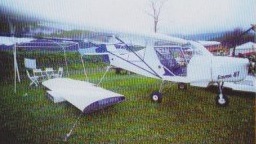
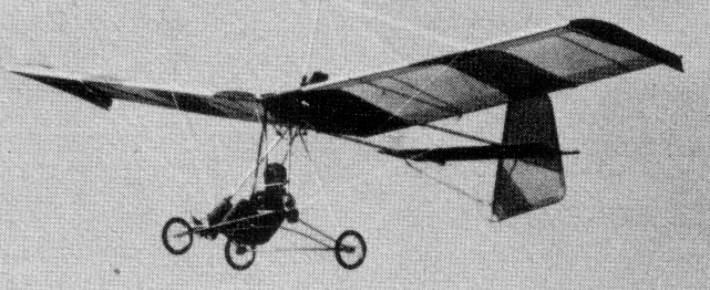
The Wizard W-1 was a single seat single engined high wing mono¬plane with weight shift control. Wing has unswept leading and trailing edges, and constant chord; cruciform tail. Control inputs through weight shift for pitch/yaw/roll. Wing braced from above by kingpost and cables, from below by cables; wing profile; largely single surface. Undercarriage has three wheels in tricycle formation with additional tailskid; torsion bar suspension on all wheels. No ground steering (optional: Steerable nosewheel independent from yaw control). Optional brakes. Aluminium tube framework, without pod. Engine mounted below wing (above wing, optional) driving pusher propeller.
The basic Wizard W-1 uses purely weightshift control without control surfaces and has a very similar configuration to the early Quicksilvers, though it differs greatly in terms of structure, not least because it was designed from the outset to be an ultralight. Adjustable torsion bar suspension is standard on the W 1; options include floats, steerable nosewheel (the standard nosewheel castors), brakes, and an engine mounting above the wing for certain power packs. It is sold as a kit requiring 45 min assembly and in March 1983 cost $1800 in standard form without engine. The June 1983 price for a complete aircraft with Yamaha engine is $3495. Power packs may be purchased separately at the following prices (all March 1983): Yamaha KT100S $1500, Rotax 277 $1800, Rotax 377 (34 hp) $2050, Rotax 503 (46 hp) $2225, Kawasaki TA440A $2225. Units delivered by June 1981 650.
The Wizard J 2 is identical to the W 1 except that it has control surfaces in two axes to assist the pilot’s weight shift. Linked to the pilot’s swing scat are spoilers for roll control and a trim tab (it is really too small to be called an elevator) for pitch. There is no rudder. Price (March 1983) without engine is $1900. The June 1983 price for a J 2 with Rotax 277 engine is $3895.
The Wizard J 3 was a single seat single engined high wing mono¬plane with conventional three axis control. Wing has unswept leading and trailing edges, and constant chord; cruciform tail. Pitch control by fully flying tail; yaw control by fully flying rudder with additional fin; roll control by spoilerons (Wizard J 3), ailerons (Wizard J 3 Magnum); control inputs through stick for pitch/roll and pedals for yaw. Wing braced from above by kingpost and cables, from below by cables; wing profile; largely single surface. Undercarriage has three wheels in tricycle formation; with additional tailskid; torsion bar suspension on all wheels. No ground steering (optional: push right go right nosewheel steering connected to yaw control). Brake on nosewheel (optional brakes on main wheels). Aluminium tube framework, with optional pod. Engine mounted below wing (above wing, optional) driving pusher propeller.
Though very similar in concept to the W 1 and J 2, the Wizard J 3 has a number of changes compared to these models. Being a conventional three axis model, the pilot’s seat is fixed and a normal centre stick and rudder pedals are fitted. Also, the tail is redesigned making the J 3 easily recognisable by the inverted L shape of its vertical tail surfaces.
The J 3 comes as standard with a nosewheel brake, main wheel brakes being optional. Also optional is the J 3 Magnum specification, which involves replacing the spoilerons with ailerons. Other options are as for the W 1. Price of the J 3 in kit form requiring 25 h assembly is $2500 without engine (March 1983). The June 1983 price for the J 3 with Kawasaki engine is $4720.
The Wizard Sky Tractor is a crop spraying version of the Wizard J 3. Revealed at Sun ‘n’ Fun in March 1983, the Sky-Tractor is still an ultralight thanks to an empty weight of 222 lb (101 kg) without its special equipment, which means that it can still be flown without a pilot’s licence in the USA. It can be fitted with crop spraying equipment using two atomisers under each wing, but both its specification and its price depend upon the requirements of the client. It is fitted in standard form with the Rotax 503 engine of 46 hp.
The Wizard T 38 was a side by side two seat single engined high wing monoplane with conventional three axis control. Wing has unswept leading and trailing edges, and constant chord; cruciform tail. Pitch control by elevator on tail; yaw control by fully flying rudder with additional fin; roll control by one third span spoilers; control inputs through stick for pitch/roll and pedals for yaw. Wing braced from above by kingpost and cables, from below by cables; wing profile NC; largely single surface. Undercarriage has three wheels in tricycle formation with additional tailskid; torsion bar suspension on all wheels. Push right go right nosewheel steering connected to yaw control. Aluminium tube framework, without pod. Engine mounted below wing driving pusher propeller.
The prototype of the two seat Wizard made its first flights at the end of 1982 and since January ’83 has been sold under the name of T 38. Being a two seater, this aircraft is classed as an experimental aircraft in the USA. The T 38 is sold as a kit requiring 1 h 30 min for assembly and is available in two versions with two separate seats and dual controls for $4800 or with single controls and a bench seat for $4600. The price does not include the engine unit, which for this model is the Rotax 503.
Wizard J-2 Engine: Rotax 277, 28hp at 6000rpm Propeller diameter and pitch 58 x 30 inch, 1.47 x 0.76 m Toothed belt reduction, ratio 2.4/1 Max static thrust 185 lb, 84 kg Power per unit area 0.17hp/sq.ft, 1.9 hp/sq.m Fuel capacity 4.3 US gal, 3.5 Imp gal, 16.1 litre Length overall 17.0 ft, 5.18 m Height overall 10.4 ft, 3.17 m Wing span 32.3 ft, 9.86 m Constant chord 5.0ft, 1.52 m Dihedral 12 deg Sweepback 0 deg Total wing area 162 sq.ft, 15.0 sq.m Wing aspect ratio 6.5/1 Nosewheel diameter overall 16 inch, 41 cm Main wheels diameter overall 16 inch, 41 cm Empty weight 175 lb, 79 kg Max take off weight 450 lb, 204kg Payload 273 lb, 124kg Max wing loading 2.79 lb/sq.ft, 13.6 kg/sq.m Max power loading 30.0 lb/hp, 13.6kg/hp Max level speed 40mph, 64kph Never exceed speed 65mph, 105kph Cruising speed 35mph, 56kph Stalling speed 19 mph, 31 kph Max climb rate at sea level 500 ft/min, 2.5 m/s
Wizard J-3 Engine: Kawasaki TA440A, 38.5hp at 6000rpm Propeller diameter and pitch 58×30 inch, 1.47×0.76m Toothed belt reduction with centrifugal clutch, ratio 2.4/1 Max static thrust 245 lb, 111kg Power per unit area 0.24 hp/sq.ft, 2.56 hp/sq.m Fuel capacity 4.3 US gal, 3.5 Imp gal, 16.1 litre Length overall 17.0 ft, 5.18 m Height overall 10.2ft, 3.09m Wing span 32.3ft, 9.86m Constant chord 5.0ft, 1.52m Dihedral 12 deg Sweepback 0 deg Tailplane span 9.0ft, 2.74m Total wing area 162 sq.ft, 15.0 sq.m Total spoiler¬on area 7.6 sq.ft, 0.70 sq.m Rudder area 12.0sq.ft, 1.11 sq.m Tailplane area 18.0 sq.ft, 1.67 sq.m Total elevator area 8.0 sq.ft, 0.74sq.m Wing aspect ratio 6.5/1 Wheel track 6.6 ft, 2.00 m Wheelbase 6.0 ft, 1.83 m Nosewheel diameter overall 8 inch, 20 cm Main wheels diameter overall 8 inch, 20 cm Empty weight 250 lb, 113kg Max take off weight 550 lb, 249kg Payload 300 lb, 136kg Max wing loading 3.39 lb/sq.ft, 16.6 kg/sq.m Max power loading 14.3 lb/hp, 6.5kg/hp Max level speed 50 mph, 80 kph Never exceed speed 65 mph, 105 kph Max cruising speed 40 mph, 64 kph Economic cruising speed 35mph, 56kph Stalling speed 20 mph, 32 kph Max climb rate at sea level 900 ft/min, 4.6 m/s Min sink rate 500 ft/min at 30 mph, 2.5 m/s at 48 kph Best glide ratio with power off 9/1 at 30 mph, 48 kph Take off distance 50 ft, 15 m Landing distance 50 ft, 15 m Service ceiling 12,500 ft, 3800 m Range at average cruising speed 100 mile, 161 km
Wizard J-3B Engine: Kawasaki or Rotax, 28-47 hp Wingspan 32’ Wing area 161 sq.ft Empty weight 252 lbs MTOW: 550 lbs Cruise: 35-40 mph Stall: 21 mph Vmax: 45-50 mph ROC: 600-800 fpm TO run: 50-100 ft Ldg roll: 50-100 ft
Wizard T-38 Engine: Rotax 503 Max power 46hp at 6500rpm Propeller diameter and pitch 60 x 30 inch, 1.52 x 0.76 m Toothed belt reduction with centrifugal clutch, ratio 2.4/1 Max static thrust 325 lb, 147 kg Power per unit area 0.24 hp/sq.ft, 2.6 hp/sq.m Fuel capacity 4.3 US gal, 3.5 Imp gal, 16.1 litre Length overall 17.0 ft, 5.18 m Height overall 10.3ft, 3.14m Wing span 38.0ft, 11.58m Constant chord 5.0ft, 1.52m Dihedral 12 deg Sweepback 0 deg Tailplane span 9.0ft, 2.74m Total wing area 190 sq.ft, 17.7 sq.m Total spoiler¬on area 7.6 sq.ft, 0.70 sq.m Rudder area 12.0sq.ft, 1.11 sq.m Tailplane area 18.0 sq.ft, 1.67 sq.m Total elevator area 8.0 sq.ft, 0.74sq.m Wing aspect ratio 7.6/1 Wheel track 6.6 ft, 2.00 m Wheelbase 6.0 ft, 1.83 m Nosewheel diameter overall 10 inch, 25 cm Main wheels diameter overall 10 inch, 25 cm Empty weight 330 lb, 150kg Max take off weight 750 lb, 340kg Payload 420 lb, 190kg Max wing loading 3.94 lb/sq.ft, 19.2 kg/sq.m Max power loading 16.3 lb/hp, 7.4kg/hp Max level speed 45 mph, 72 kph Never exceed speed 65 mph, 105 kph Max cruising speed 40 mph, 64 kph Economic cruising speed 35mph, 56kph Stalling speed 26 mph, 42 kph Max climb rate at sea level 600 ft/min, 3.1 m/s Min sink rate 600 ft/min at 35 mph, 3.1 m/s at 56 kph Take off distance 150 ft, 45 m Landing distance 75 ft, 23 m Service ceiling 10,000 ft, 3050 m Range at average cruising speed 50 mile, 80 km
Wizard T-38B Engine: Rotax, 47 hp Wingspan 38’ Wing area 191 sq.ft Empty weight 347 lbs MTOW: 800 lbs Cruise: 35-40 mph Stall: 26 mph Vmax: 50 mph ROC: 600 fpm TO run: 125 ft Ldg roll: 50-125 ft
Wizard W-1 Engine: Yamaha KT100S, 15hp at 10,000rpm Propeller diameter and pitch 48×20 inch, 1.22 x 0.51 m Belt reduction, ratio 3.0/1 Power per unit area 0.09 hp/sq.ft, 1.0 hp/sq.m Fuel capacity 3.2 US gal, 2.7 Imp gal, 12.1 litre Length overall 17.0 ft, 5.18 m Height overall 10.4 ft, 3.17 m Wing span 32.3 ft, 9.86 m Constant chord 5.0ft, 1.52 m Dihedral 12 deg Sweepback 0 deg Total wing area 162 sq.ft, 15.0 sq.m Wing aspect ratio 6.5/1 Nosewheel diameter overall 16 inch, 41 cm Main wheels diameter overall 16 inch, 41 cm Empty weight 167 lb, 76 kg Max take off weight 450 lb, 204kg Payload 283 lb, 128kg Max wing loading 2.79 lb/sq.ft, 13.6 kg/sq.m Max power loading 30.0 lb/hp, 13.6kg/hp Max level speed 42mph, 68kph Never exceed speed 65mph, 105 kph Max cruising speed 35 mph, 56 kph Stalling speed 17 mph, 27 kph Max climb rate at sea level 300 ft/min, 1.5 m/s Best glide ratio with power off 9/1 Take off distance 100ft, 30 m Landing distance 50 ft, 15 m Service ceiling 12,500 ft, 3800 m
Wizard Sky-Tractor Engine: Rotax 503 Max power 46hp at 6500rpm Propeller diameter and pitch 60 x 30 inch, 1.52 x 0.76 m Toothed belt reduction with centrifugal clutch, ratio 2.4/1 Max static thrust 325 lb, 147 kg Power per unit area 0.28 hp/sq.ft, 11 hp/sq.m Fuel capacity 4.3 US gal, 3.5 Imp gal, 16.1 litre Length overall 17.0 ft, 5.18 m Height overall 10.3ft, 3.14m Wing span 32.3ft, 9.86m Constant chord 5.0ft, 1.52m Dihedral 12 deg Sweepback 0 deg Tailplane span 9.0ft, 2.74m Total wing area 162 sq.ft, 15.0 sq.m Total spoiler¬on area 7.6 sq.ft, 0.70 sq.m Rudder area 12.0sq.ft, 1.11 sq.m Tailplane area 18.0 sq.ft, 1.67 sq.m Total elevator area 8.0 sq.ft, 0.74sq.m Wing aspect ratio 6.5/1 Wheel track 6.6 ft, 2.00 m Wheelbase 6.0 ft, 1.83 m Nosewheel diameter overall 10 inch, 25 cm Main wheels diameter overall 12 inch, 30 cm Empty weight 300 lb, 136kg Max take off weight 600 lb, 272 kg Payload 300 lb, 136 kg Max wing loading 3.72 lb/sq.ft, 18.1 kg/sq.m Max power loading 13.0 lb/hp, 5.9kg/hp
This clipped wing, single-engine monoplane has kingpost and cable braced wings and a cruciform tail. Conventional three-axis controls have stick-activated ailerons and elevator, and rudder pedals. POWERPLANT: Twin-cylinder, liquid-cooled Kawasaki 440 with 2.4 reduction is mounted in the center below the wing. Drive shaft runs pusher prop of 50-inch hardwood. LANDING GEAR: Tricycle gear has 16-inch main wheels, wheel pants, a steerable nosewheel and disc brakes. Gear has adjustable torsion bar suspension.
Ultralite Soaring was founded by Bruce Gray, who began his activities in ultralight aviation by building undercarriages for Quicksilver hang gliders. In 1983, this company offers a full range of machines which share the name Wizard and all are of similar configuration and technology. This variation on a theme allows the aircraft to be modified to suit the requirements of the owner. The range begins with the basic model, the weight shift Wizard W4 (often known as Wizard I), and encompasses next the hybrid control Wizard J 2, then the three axis Wizard J 3, fourthly the Sky Tractor agricultural aircraft and finally the Wizard T 38 two seater, all the others being solo machines. All machines of types W 1, J 2 and J 3 can be fitted with a variety of engines, principally Yamaha, Rotax or Kawasaki, though there are also some Zenoah and Lloyd engined aircraft around. Ultralite Soaring tends to give the aircraft title a suffix to indicate the engine used, so that for example a Wizard W 1 with Yamaha engine becomes a W 1Y, while a Kawasaki engined J 3 is dubbed Wizard J 3K. The standard engine mounts suit various power packs and engine changes can be made in under 5 min, using complete assemblies as sold by the company, which include propeller, reduction drive, fuel tank and (where applicable) electric start and battery.
1983: Ultralite Soaring (US) Inc, 3411 NE 6th Terrace, Pompano Beach, Florida 33064, USA.