3670 Milwaukee Ave,
Chicago IL.
USA
Airplane builder 1928-9.
3670 Milwaukee Ave,
Chicago IL.
USA
Airplane builder 1928-9.
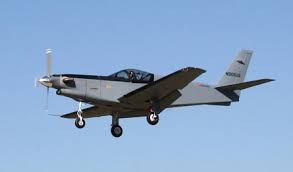
Start-up US Aircraft changed direction in its plans to develop a low-cost counter-insurgency aircraft for use in Afghanistan, Iraq and elsewhere. After funding design of the A-67 Dragon by US warbird restoration specialist Golden Aviation, it began working with Brazil’s Geometra on an aircraft based on a design by Josef Kovacs, former chief designer of Embraer’s EMB-312 Tucano trainer.
The original A-67 made its only flight in October 2006 in Missouri. The aircraft flew from Cassville, Missouri to Golden’s base at Monett Municipal Airport, ending with a landing gear collapse.
The Ohio-based company planed to base its A-67 on a scaled-up version of Kovacs’ K52, a general-aviation aircraft strongly resembling the Tucano, after testing a Brazilian-built prototype. US Aircraft planned to combine features from both designs, but where the original A-67 had side-by-side seating, the new design uses a tandem set-up.
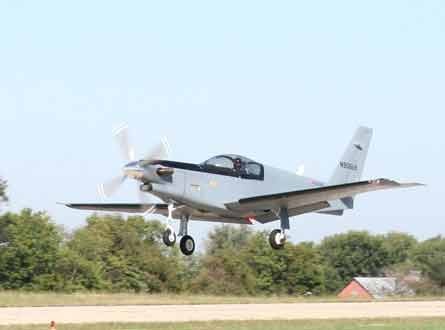
Powered by a 1,250shp (930kW) Pratt & Whitney Canada PT6A-68 turboprop, the 4,620kg (10,200lb) gross-weight A-67 has an estimated maximum cruise speed of 381kt (706km/h) at 20,000ft (6,100m). Endurance will be 10h and external payload 1,620kg.
A subsidiary of US Technology, which produces the plastic media used for stripping paint from aircraft, US Aircraft was funding design work on the A-67, but sought private investors to complete development and begin production.
A-67 prototype
Engine: 1 × Pratt & Whitney PT6A-67 turboprop, 1,250 shp (930kW)
Prop: four-blade
Wingspan: 38 ft (11.6 m)
Wing area: 211 ft² (19.6 m²)
Empty weight: 4,800 lb (2,200 kg)
Max. takeoff weight: 10,200 lb (4,640 kg)
Maximum speed: 371 knots (427 mph, 687 km/h) at 20,000 ft
Range: 1,880 mi (3,008 km)
Service ceiling: 35,000 ft (11,000 m)
Rate of climb: 4,882 ft/min (1,488 m/min)
Wing loading: 35.1 lb/sq ft
Crew: 2
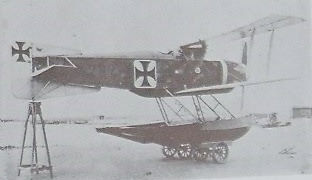
The floats were retracted during flight. 1916-17
120 hp Daimler prototype
160 hp Benz Production

In 1909 Engineer Oscar Ursinus of Frankfurt formed a team to promote the application of motorless flight. This team, mostly technical high school teenagers, studied early Otto Lilienthal theory and his bold experiments. After fabricating a glider of their own design they transported it to Rhön for trials. Oscar Ursinus became the first person to successfully fly a glider from the cliffs of Wasserkuppe.
The Toadstabber was built in 1934 by Alfred H Urness & Henry J Hanson of Cashton WI. USA.
A single place, open monoplane, it was powered by a 36hp Ford engine and registered N13652 c/n HU-2.
Alfred H Urness & Henry J Hanson
Cashton WI.
USA
Airplane builders in 1934.
Romania
Sovromtractor was the pre 1950 set-up of former lAR/Regia under Soviet occupation.
Further products under URMV- 3 title included the STOL utility transport. See also IAR and IAR-SA Brasov.

The second design of Vilém Urbánek (sometimes identified as Urbánek II) which was exhibited at the Prague Automobile Salon of 1910 in an unfinished form. The aim of Urbánek was to design an “automatic” device for lateral control.
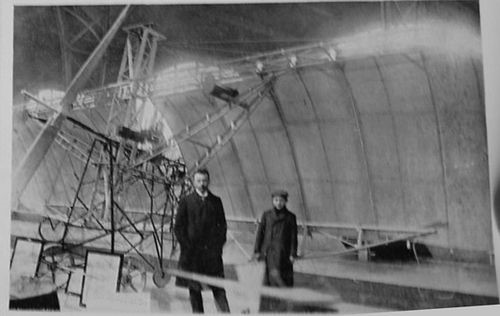
In the available photographs of the machine can be seen a long construction of lattice fitted before the wing used in such a way that when one wing half dropped (or rose) the other wing half would automatically compensate in the opposite direction. The machine was never finished, so it was never determined whether the automatic stability system devised by Urbánek would work in actual flight.
A piston-engined wooden two-seat lightplane (first flown 1988) in rhe Philipines.
Philipines
Developed piston-engined Defiant 300 wooden two-seat lightplane (first flown 1988) and later turboprop-engined Defiant 500 metal lightplane.

