Aircraft first flown August 1956
Era
UTVA
UTVA, Fabrica Aviona
Jugoslavia / Serbia
Utva Aircraft Industry (commonly known as UTVA) is a manufacturer of general aviation aircraft, located in Pančevo, Serbia. Utva in Serbian is the Ruddy Shelduck.
Utva was founded on 5 June 1937 in Zemun (a small town in former Austrohungarian empire), and produced simple gliders. In 1939 Utva began manufacturing light piston engine aircraft.
Four out of five Yugoslav aircraft plants were in close proximity to each other, built in and around Belgrade: Ikarus, Rogožarski, Zmaj and Utva. The fifth one was DFA (Državna Fabrika Aviona – State Aircraft Factory) which was located in Kraljevo. The plant was relocated to Pančevo (a town a few kilometers away from Belgrade, in Vojvodina autonomous province) in 1940. Until the April war, it mainly produced light gliders but it also produced 148 Bucker Jungmann Bu-131D-2 training planes and one acrobatic Bucker Jungmaister Bu-133. The plant escaped the devastation of the other aircraft plants (Ikarus, Rogožarski and Zmaj) and began producing it’s prewar gliders Čavka (Daw) and Ždral (Crane – the bird) and school airplanes Trojka (Three) and Aero 3. Utva also built a lot of Ikarus designs, notably the 212 and 213 models.
Utva produced light utility aircraft, including the Utva 56 four-seater, first flown in 1956, and thereafter developed through a number of U60 air-taxi/tourer/freight/agricultural/ ambulance and floatplane versions. The Utva 65 was originally an agricultural aircraft, developed as the U66 to serve various utility roles and including the armed U66V version. The Utva 75 two-seat trainer/glider-tug/agricultural aircraft entered production in late 1970s. Lasta 1 tandem two-seat piston-engined trainer first flew September 1985 but was superseded before production by the design of the refined Lasta 2. Development started of Utva 95 agricultural aircraft, probably based on Utva 75. Formerly fabricated components for the IAR-93/J-22 Orao and Super Galeb programmes, and produced items for various Boeing airliners.
During the NATO bombing of Yugoslavia in 1999, the factory was bombed several times and severely damaged.
The factory was heavily bombarded in 1999 and certain parts of it were still off limits due to the unexploded ordnance in 2012. All five original lasta 95 prototypes were destroyed in the factory and the only existing Supergaleb G4MD prototype was lightly damaged. 2012 was back to the basics for Utva. The plant produced Lasta 95 basic trainer and was developing Kobac (sparrow hawk) light COIN aircraft (first flight is expected in 2013).
In 2011, Utva Pančevo was a public company with the headquaters in Pančevo, Serbia, serving 301 employees.
U-Turn Thriller
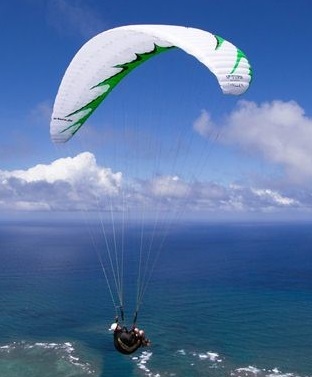
An acro wing circa 2012
U-Turn Flat Top

The Flat Top paramotor fixed has an incredibly strong and well designed cage & frame. Not a single cage strike has ever occurred with a Flat Top. The cage can’t be flexed into the prop unless you fold it in half with a major crash.
The Flat Top paramotor has also set the world records for speed, distance and altitude. 18,182 ft without assistance from thermals, 280 miles on only 3.5 gallons of gas and a cruise speed of 50 mph.
Flat Top 160 (Simonini Mini 4) Price 2009: US$6,900.00
Flat Top 200 (Simonini Mini 2 plus) Price 2009: US$6,900.00
U-Turn Emotion
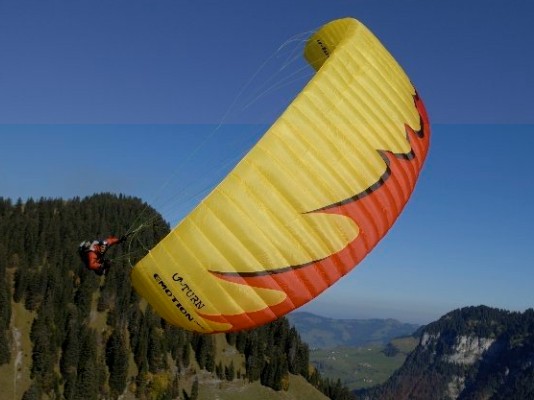
This DHV-1 canopy not only provides lots of fun in the air, but also much, much passive safety due to the AFS-system.
The aspect ratio of the Emotion has been slightly reduced in comparison to the Bodyguard, the reference model among the safest category 1 paragliders. Nevertheless constructor Ernst Strobl has decreased the curvature at the wing ends. The Emotion gains agility and improved handling reaction because of this. The AFS system provides the safety and security: The Automatic Flight Stabilization influences all cells and prevents in the majority of all cases unpleasant asymmetric deflations already during their initial phase.
The Emotion is delivered from the factory with a conventional harness. The Emotion can be made available optionally with the divided riser system. With this the Emotion can perform the B-stall safely, that is sinking at a rate of around 5m/s while still being fully manoeuverable with a glide ratio of 1:3,5. This for example makes it easier for inexperienced pilots to land on small landing areas which is more difficult to manage when the maximum gliding ratio has to be used without the B-stall technique. In any case the Emotion is very suitable for instruction purposes with both harness systems.
Another feature available for the Emotion is the MYLAR-FIX-system, the unique folding system to protect the sensitive leading edges and air intakes.
The Emotion was available in four colors and in the sizes XS (55 80kg), S (70 – 90kg), M (85 – 110kg) and L (100 -130kg).
Price 2009: US$3,500.00
U-Turn Obsession

The Obsession paraglider is from designer Ernst Strobl, with an aspect ratio of 5.55. The DHV 1-2 Obsession has the automatic flight stabilization system (AFS). The dynamic basic design of the glider canopy allows room for an increase in the AFS effectivity without the danger of losing enjoyment or performance potential. The wing area upon which the AFS system is effective has been increased by 20% in comparison to the Infinity II. This increase in the effectivity and further enhanced stability in turbulent conditions is successfully realized without degrading the fine tuned reactivity of the system.
Price 2009: US$3,700.00
The Obsession is situated between DHV 1-2 and DHV 2. It defines the cross-over point between maximum performance and the security level of DHV 1-2. The fantastic glide ratio, available even at full speed, is one of the significant properties of the glider. The obsession possesses the typical U-Turn long accelerator travel for exact control and high final speed. In addition the agility and manoeverability are second to none. All of the know-how from the development of the Acro-reference G-Force 360 has been applied to the very dynamic and direct handling of the Obsession. Very flat yet confined thermalling is the gliders trademark and the Obsession’s turning sink rate is extremely low.
The Obsession has a large number of upper cascade lines. The upper cascades are 40cm long, extremely thin 0.6mm Liros lines. This causes a better distribution of the forces across the paraglider canopy and a reduction of the single force per line and connection point. Ernst Stroble explains, “This higher count of topmost lines costs some slight performance reduction because of their air resistance, nevertheless by their employment I was able to construct the wing to have significantly higher performance with the same good resistance to collapse, so that these losses are more than overcompensated. Because of this design feature the OBSESSION is particularly resistant to collapses. Should a dangerous situation arise and the large secure performance region be exceeded then the canopy will give a corresponding feedback beforehand.
Strobl decided to use the glider fabric for the series production which had been tested so convincingly during the Trans Speed Europe by Mad Mike Küng at highest stress rates. It was clear after exhausting tests with several prototypes of different sizes: “An even lighter material did not show improvements neither during start, flying or landing” Strobl says. The selected material from Porcher Marine offers superior UV-resistance and overall mechanical stress resistance. In order to ensure the longevity of the paraglider and its second-hand value, not to mention the easy start behaviour, the Obsession also has the Mylar Fix System, which is implemented in the Infnity II and which has been universally applauded. Any unwanted creasing of the leading edges is prevented with a fixing loop system the paraglider stays in form and keeps within the original performance criteria.
The Obsession is not intended for beginners and it is not suitable for learning/beginners training purposes.
The Obsession was available in the sizes S (65-90 kg to be confirmed during the DHV-tests that are scheduled in the next weeks), M (80-110 kg) and L (100-130 kg). The characteristic U-Turn motif has been restyled and this gives the paraglider a very sporty, dynamic appearance.
US Voiles
In 1997 US Voiles was revived as Storm.
Usuelli U.1

A 3970 cu.m non-rigid airship designed by Celestino Usuelli, 51 meters long with a maximum diameter of 9.8 meters. Construction of the U.1 was started in 1909 although it probably didn’t make its first flight until 1910 at Turin. Powered by one SPA of 100 hp driving two propellers.
US Light Aircraft Hornet
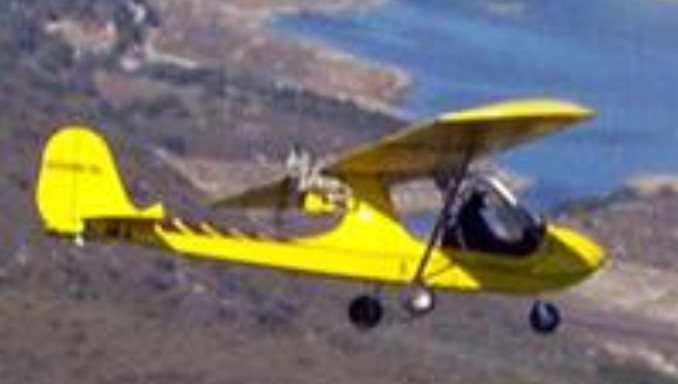
The entire airframe is completed by the factory, assembled in precise factory jigs, with over 7,000 rivets.
The Hornet components are manufactured by computer automated equipment, especially designed by U.S.L.A.C. to produce the most precise, highest-quality aircraft possible. 2009 Price: 18950 US$
The Hornet has pneumatic suspension on all three wheels, electrically actuated flaps and horizontal staliser. First flown in 1993. The Hornet qualifies under the 51% rule.
Engine: Hirth, 55 hp
HP range: 55-70
Fuel cap: 10 USG
Weight empty: 490 lbs
Gross: 454 kg / 1000 lbs
Height: 6 ft
Length: 20ft
Wing span: 27.5 ft
Wing area: 137 sq.ft
VNE: 104 kt / 120 mph / 193 kmh
Cruise: 61 kt / 70 mph / 113 kmh
Range: 400 sm
Stall: 35 mph
ROC: 700 fpm
Glide Ratio: 9:1
Take-off distance: 175 ft / 53 m
Landing distance: 150 ft / 46 m
Service ceiling: 12,000 ft
Seats: 2
Landing gear: Nose wheel
US Light Aircraft
1996-7: 27080 Rancho Ballena Ln, Ramona, CA 92065 USA.
LSA builder

