Since early 1960s Vecto Instrument Corp marketed Vecto Geronimo, an uprated-engine and refined airframe/equipment version of standard Piper Apache. About 31 conversions completed by spring 1965; after death of Vecto’s owner later that year, assets purchased by Geronimo.
Era
Vecto Instrument Corp
USA
Since early 1960s has marketed Vecto Geronimo, an uprated-engine and refined airframe/equipment version of standard Piper Apache. About 31 conversions completed by spring 1965; after death of Vecto’s owner later that year, assets purchased by Geronimo.
Vaxmistrov AVF-8
During his student years at the Air Fleet Academy, Valdimir Vaxmistrov was swept away by the enthusiasm for glider manufacturing that existed at the institution.
In 1924 Vaxmistrov designed a single-seater training glider. Designated ” Kondor ” by its constructor, it received the consecutive 8 in the control of the academy. It was built on the transport base of the Sovnarkom in Moscow.
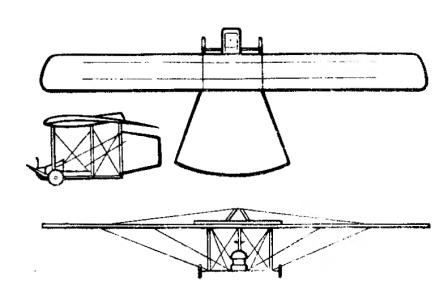
The Vaxmistrov AVF-8 “Kondor” (Russian: Вахмистров АВФ-8 «Кондор») was designed as a strut-braced monoplane with a triangular tail unit and a large-area rectangular rudder. The structure was made of wood with a fabric covering.
This single-seat glider first flew on September 22, 1924. It was damaged during the II National Sailing Competitions.
AVF-8 “Kondor”
Wingspan: 13.8 m
Wing area: 22.6 m²
Aspect ratio: 8.4
Length: 4.6 m
Height: 2.6 m
Empty weight: 70 kg.
Wing loading: 6.2 kg / m²
Elevator area: 3 m²
Rudder surface area: 1.2 m²
Accommodation: 1
Vaxmistrov, Vladimir Sergueyevich

Vladimir Vaxmistrov was born on June 27, 1897 in Moscow. In 1915 he finished his studies at the Royal School in Moscow. At the age of 17 he voluntarily entered the army and was posted to the Mikhailovsk Artillery School (Petrogradsky). At the age of 19 he participated in several combats, but his interests were far from artillery. In 1916 he managed to be admitted as an aviation observer (partly thanks to his brother Boris who commanded a brigade in this group.
With the triumph of the October Revolution he joined the Red Army. He already participated as a pilot in battles over Orenburg and later the aviation group in which he served was sent to Turkistan. In 1921 he was able to continue his studies, initially at the Turkistan State University and later at the Air Fleet Academy.
The study stage coincided with the period of development of gliding in the USSR. His first design was the AVF-8 “Kondor” of 1924. Together with MK Tijonrarov he built the AVF-22 “Zmei Gorinich” glider in 1925. This glider was so effective that it was selected to participate in international flying competitions in Penske, Germany.
From that year on, Vaxmistrov participated in all competitions in Crimea. In 1927, together with Dubrovin and Tijonrarov, he presented the “Zhar-Ptitsa” glider, which established a 15 km range record in the competitions of that year. A year later these three friends presented the “Gamayún” glider in which for the first time in the USSR the pilot AB Yumashiev soared in a thermal over the plain for 375 meters. The “Skif” glider, also built by the trio, established in the VI National Competitions in 1929a Soviet altitude record at 1,520 meters and an improved version of the “Zhar Ptitsa-2” glider set a new range record of 32 km with return.
Between February and April 1926 Vaxmistrov participated as a crew member during the state tests of the Túpolev R-3 (ANT-3) reconnaissance aircraft, which were flown by MM Gromov.
Upon finishing his studies at the Air Fleet Academy in 1930, VS Vaxmistrov went on to work at the NII VVS, where he was able to develop his idea of combined aircraft. The first step in this direction came through a competition for an aerial target promoted by the institute and in which the idea presented by Vaxmistrov was the winner. The aerial target was fixed to a Polikarpov R-1 and at the precise moment it was released. The mother plane left the firing zone as the target began gliding.
The idea of transporting a small plane on a larger plane gradually took shape and became the famous “Zvenó” or “Chains”. In the next few years Vaxmistrov’s work was directly linked to the development of these combined flying structures that were used successfully in some missions during the initial stage of the Great Patriotic War.
In 1937 after the arrest of Mikhail Tukhachevsky the project of the “Zvenó” was stopped. Vaxmistrov was able to escape the process with only a demotion from principal constructor to brigade chief in KB-29 itself. Between 1937 and 1940 new versions of the “Zvenó” were developed. A version known as SPB was used successfully at the beginning of World War II in the attack against a bridge of strategic value in Romania.
In the pre-war years the KB-29 under the leadership of Vaxmistrov also developed a novel idea of fighting against enemy bomber formations known as PTP. It was a three kilogram bomb tied to a 100 meter rope that ended in a parachute. These bombs were to be dropped in large quantities to meet the bomber formation. When the enemy plane’s wings or fuselage met the rope, the resistance of the parachute caused the rope to move upwards. Making contact with the body of the plane activated the fuse that made the bomb explode. Despite satisfactory results in state tests, this method was never used.
From 1940, Vaxmistrov went to work in the OKB of NN Polikarpov, being soon appointed his replacement in aircraft development group and directed parallel the repair of I-16.
Between 1943 and 1945 Vaxmistrov worked on two new composite aircraft projects. The first known as TP (Transport Glider) was composed of gliders linked by fighters that guaranteed the motive power and the second included fighters linked with bomb planes.
After the Great Patriotic War, Vaxmistrov kept working in the aeronautical industry. In 1949 he worked on the development of an in-flight refuelling system.
He died in 1972 in Moscow.
Aeronautical production
Stage at the Air Fleet Academy
AVF-8 “Kondor” Glider (1924)
Glider AVF-22 “Zmiei Gorinich” (1925)
Glider “Zhar-Ptitsa” (1927)
Glider “Gamayún” (1928)
Glider “Skif” (1928)
Glider “Konsomolskaya Pravda” or “Zhar Ptitsa-2” (1929)
Glider “Skif-2” (1931 ).
Stage at TsAGI and KB-29
Zvenó or Zvenó-1 (1931).
Zvenó-1A (1933).
Zvenó-2 (1932) Project.
Zvenó-2A (1934)
Zvenó-3 (1934)
Zvenó-4 (1934)
Zvenó-5 (1935)
Zvenó-6 (1935)
Zvenó Aviamatka PVO (1935)
Zvenó-SPB (1937)
Vaxmistrov I-Ze (1937) Project.
Zvenó-7 (1938)
Other projects
An unrealized project of Vaxmistrov’s composite aircraft based on a TB-7 bomber.
Vladimir Vaxmistrov designed even other more complex versions such as the I-16 8-fighter transport project(Two fighters under the wing, and the other 6 in special structures located on the wing structure). Five of these fighters had to fly with the engines running to ensure the necessary power thrust. To avoid wasting its own fuel, the feeding was conceived directly from the tanks of the mother plane. The patrol time of this version was estimated at 6.5 hours, which was quite high for the time. Once the mission was over, the planes made contact with the bomber at a speed of 150 – 170 km / h. The bomber crew had to manually ensure the fixation of the fighter to the attachment point on the structure. The fighter-bomber contact system was tested in 1938 by the experienced NII VVS test pilots. Stepán Suprún and Piotr Stefanovski , demonstrating the feasibility of the system. However this version of 8 fighters was never built.
In the first half of the 1930s VS Vaxmistrov presented the preliminary design of a flying aircraft carrier which he also called Aviamatka. Vaxmistrov’s Aviamatka was designed as a monoplane with a parabolic-shaped flying wing scheme. 10 M-34FRN engines were placed in pairs on the wing leading edge moving 5 traction propellers. The parasitic fighters were located semi-inserted in the thick wing and were raised to the extraction by means of elevators, as is customary in aircraft carriers. This gigantic aircraft was also envisioned as a transport and tanker aircraft.
After the successful realization of the SPB project, Vaxmistrov conceived other improved variants of “Zvenó” SPB among which the following stand out:
A Pe-8 bomber (ANT-42 or TB-7) loading two I-16 SPBs or two more modern MiG-3 or Lavochkin-Gorbunov-Goudkov LaGG-3 fighters with two FAB-250 bombs each. The maximum takeoff weight of this configuration did not exceed 33,500 kg and the maximum speed had to reach 405–420 km / h at 6,000 meters of altitude working the six engines at nominal speed, with a range of 1,320–1450 km. The Petlyakov Pe-8 was withdrawn from production in 1942 and the project was left on paper.
A flying boat GST (version the Consolidated PBY Catalina in the USSR ) carrying an I-16SPB on each wing.
An MTB-2 (ANT-44) heavy hydrofoil with two fighters.
Other projects included:
A composite transport glider raised by fighters installed under the wings and designed to guarantee the change of base of fighter squadrons in the absence of transport aircraft.
A double empennage glider attached to a fighter with two 1000 kg FAB-1000 ropes, one on each tail cone (a concept generally similar to the German Mistel of the final stage of the war).
A missile with delta wing configuration propelled by a ramjet and combined with a fighter.
None of these projects went beyond the drawing board. Vaxmistrov never managed to realize his idea of winged aircraft carriers.
Vasserot Mouette Géante / Giant Seagull
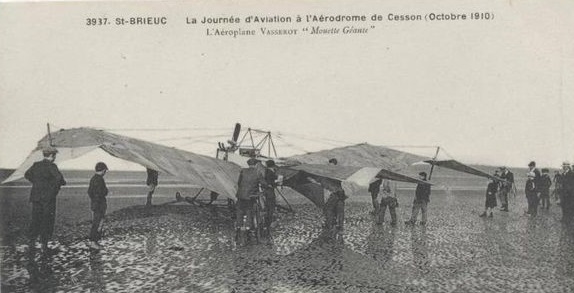
Built in 1910 by Jean-Marie Vasserot with the assistance of a carpenter named Louis Houard, who also designed the engine. There is apparently no evidence that it flew successfully, although it is reported by Opdycke to have flown 100 meters at the beach at Cesson on November 13, 1909 as the Vasserot-Delassor Monoplane. Opdycke was most likely mistaken; confusing it with Vasserot’s glider model which made several flights in 1909 from the cliffs at Cesson. M. Delassor is unknown at this time.
Vashon Ranger
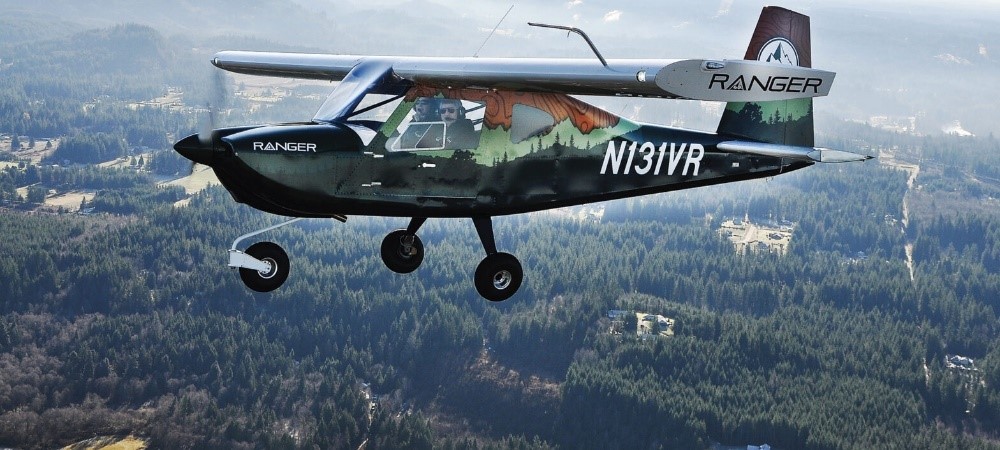
Vashon Aircraft’s first airplane, the Ranger, is a high-wing LSA category aircraft. Ken Krueger, who spent many years designing airplanes for Van’s Aircraft, is Vashon’s design engineer.
At the Woodinville factory, co-located with Dynon in an industrial park, Vashon produces structural components and puts fuselages and wings together. The parts are then transported to a hangar at the Paine Field Airport (KPAE) in Everett, where final assembly takes place down the street from Boeing’s massive facility.
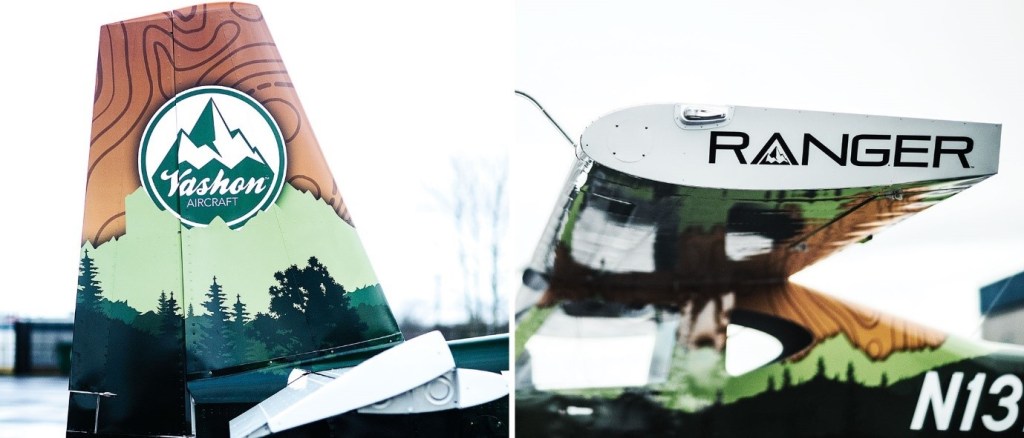
Vashon turned to a local vinyl-wrap supplier, Wicked Wraps. In addition to being lighter, the wrap allows for cool designs to be applied to the fuselage that would be cost prohibitive if done in paint.
The Ranger has a beefy landing gear, strong enough for the rigors of the training environment, with 6.00-6-size wheels and tires.

With a base price tag just below $100,000 (2021), the Continental O-200 powered Ranger R7 LSA features glass-panel technology, optional autopilot and second SkyView screen.
Climbing into the Ranger is slightly challenging. The right leg has to find its way to the other side of the stick, which curves its way from the floor to just above the seat. The rudders adjust, but must be locked with a pin. It would be impossible to adjust once in the seat. Vashon chose a five-point seat-belt system.
The width of the cockpit is nearly 47 inches, about 7 inches wider than the Cessna 172 Skyhawk’s. There is plenty of elbow and shoulder room, and headroom to spare. Additionally, there is massive space behind the seats, which can hold up to 100 pounds as long as you stay below the total weight limit and within the center-of-gravity envelope.
The seats fold nearly flat, providing plenty of space. The oversize windows provide excellent visibility, with a large section on each side that opens up for fresh air or a camera lens. There is no speed limit for keeping the windows open.
Taxiing the Ranger is easy because the castering nosewheel allows for tight turns. Pushrods connect the ailerons and elevator to the stick, and cables control the rudder.
The stick has an electric trim button on top and a trigger on the back for the push-to-talk. Two additional buttons on the grip help switch the standby frequency to the active position on the separate comm unit and ident the ADS-B Out-capable transponder, both of which are Dynon products.
SkyView includes full engine instrumentation, including CHT and EGT gauges for each cylinder, fuel flow, remaining fuel in time and distance, carburetor temperature and more. The system will even warn you if there is potential for carb ice based on the current temperature and dew-point spread. Angle of attack is included along with the standard flight parameters on the PFD.
Flaps are electrically actuated with a button — one push for 20 degrees, then another for 40 degrees. The fuel tanks are contained in removable sections in the wings for easy, quick replacements.
Despite being a clean-sheet design from a brand-new company, the Ranger comes with a three-year warranty.
Vashon is creating its own supply chain by producing the majority of the parts in house, the exception of which are parts such as brake pads, engines and propellers.
The fully loaded Ranger I, with autopilot and two SkyView screens, rolls out of the factory for $114,500. The base model was $99,500 in 2021.
Vashon Ranger R7
Engine: Continental O-200-D, 100 hp
Engine TBO: 2000 hrs
Prop: Catto fixed pitch 2-blade
Wingspan: 29 ft 6 in
Wing area: 135.6 sq.ft
Length: 21 ft 9 in
Height: 8 ft 4 in
MTOW: 1320 lb
Empty weight: 875 lb
Payload: 279.4 lb
Useful load: 445 lb
Max usable fuel: 27.5 USG / 144 lb
Wing loading: 9.7 lb/sq.ft
Power loading: 13.2 lb/hp
Max operating altitude: 12,000 ft
Max ROC: 1035 fpm
Max speed: 120 kt
High cruise: 117 kt
Max range: 430 nm
Stall flaps up: 50 kt
Stall full flap: 46 kt
TO to 50 ft: 1150 ft
Ldg from 50 ft: 1060 ft
Interior width: 46.65 in
Seats: 2
Vashon Aircraft
Vashon Aircraft is a company named after a small island in the Puget Sound region of Washington state, off the coast of Seattle’s metropolis. The company’s first airplane is the Ranger,
At the Woodinville factory, co-located with Dynon in an industrial park, Vashon produces structural components and puts fuselages and wings together. The parts are then transported to a hangar at the Paine Field Airport (KPAE) in Everett, where final assembly takes place down the street from Boeing’s massive facility.
Varga Aircraft Corp
In 1965 this company acquired from Shinn Engineering Inc full manufacturing rights, tooling and spares for Shinn Model 2150A. Put into production by Varga in 1977 as Model 2150A Kachina. Design originated from Morrisey Nifty of 1957, built by a former Douglas test pilot.
Varga Kaplar (Káplár)
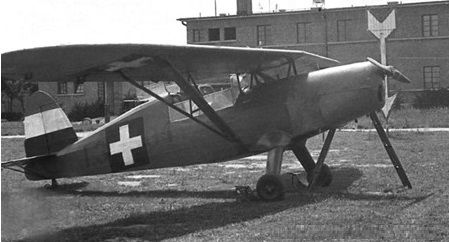
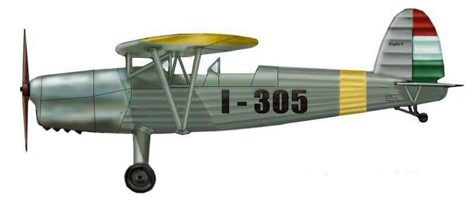
Varga “Káplár” was designed in the 1930’s by a team of engineers led by Laszlo Varga. Not departing from the general principles of the time the plane was a parasol monoplane with a double-open cockpit and Hirth HM-504\A2 engine. The aircraft to be used as a liaison and training.
The first flight of the prototype Varga “Kaplar” made in 1940.
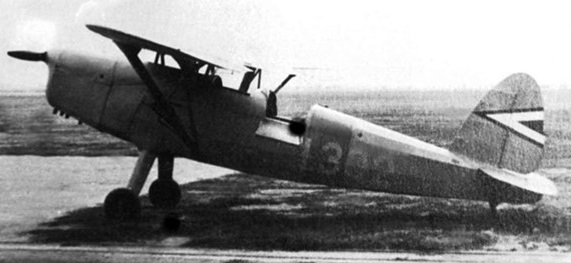
The Hungarian Air Force have expressed some interest in “Kaplar”, ordering a trial batch of aircraft to conduct evaluation tests. The contract for the construction of these machines were given to Aero-Ever and Szekesfehevar-Sosto, for four aircraft. Szekesfehevar-Sosto aircraft were designated “Kaplar I” and received a registrations I.301 – I.302. The remaining three aircraft – I.303, I.304 and I.305, are called “Káplár II”.
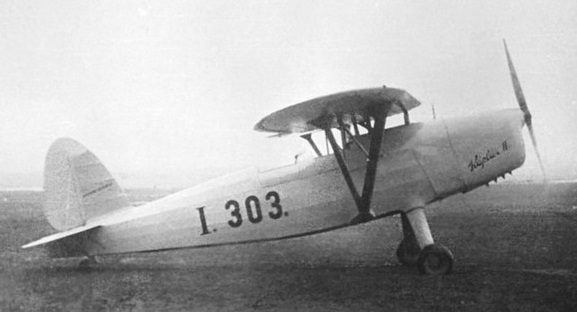
In general, this were simple enough to use, but the performance characteristics were not up to par. In the end, the Hungarian Air Force opted for serial production of Fabian “Levente”, which served until 1945. Although officially “Káplár” were not taken during the war, they were used for some time for auxiliary purposes.
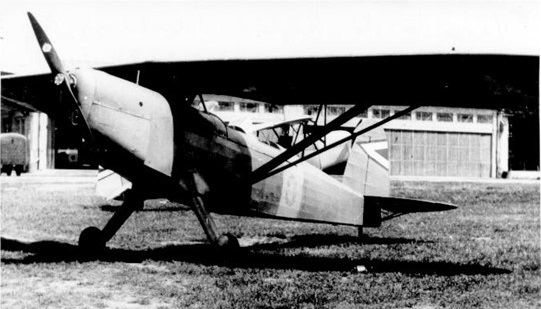
Engine: Hirth HM-504 \ A2
Wingspan: 10.51 m
Length: 6.8 m
Height: 2.5 m
Maximum speed: 180 km \ h
Crew: 2
Armament: none
Van White Whirlwind
A Van White, Lubbock TX., in 1959, built the two place cabin, high wing monoplane “Whirlwind”.
First flown on 25 June 1959, the aircraft was registered N126V.
Engine: Lycoming O-235-C1, 108hp
Wing span: 20′ 0″
Length: 20′ 0″
Max speed: 160 mph
Cruise speed: 140 mph
Stall: 60 mph
Range: 400 mi
Seats: 2

