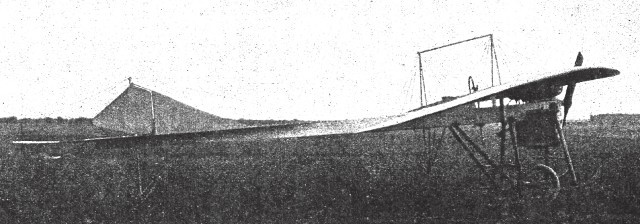
The Walter Stein Aeroplanbau in Teltow/Berlin built two or three disserent designs, depending on how you count. The first was built by Rumpler in the spring of 1910. It was followed by a distinct reconstruction by Stein himself. The machine retained the Aeolus engine but got a sturdier undercarriage and new Taube-like wings. As with his first design, Stein was struggling to get the machine in the air during Autumn 1910. In 1911 Stein built a second Eindecker, fitted at first with a Rumpler Aeolus engine and later modified with a Gregoire-Gyp-Motor. This was the challenge machine. It was later modified, probably in 1912, with a tailwheel and an additional strut to the lower king-post.
In 1982, Larry Walters decided to try his flying idea in a homemade airship made of an ordinary patio chair and 45 helium-filled weather balloons. His intention was to float over the Mojave Desert and then use a pellet gun to burst some of the balloons in order to land.
In mid-1982, Walters and his girlfriend at the time, Carol Van Deusen, purchased 45 eight-foot (2.4 m) weather balloons and obtained helium tanks from California Toy Time Balloons. They used a forged requisition from his employer, FilmFair Studios, saying the balloons were for a television commercial.
Lawnchair similar to that used for the Lawnchair Larry flight.
On July 2, 1982 Walters attached the balloons to his lawn chair, filled them with helium, put on a parachute, and strapped himself into the chair in the backyard of a home at 1633 West 7th Street in San Pedro. For stability, the chair was weighted with water bottles and tilted backwards about 40 degrees. He took his pellet gun, a CB radio, sandwiches, beer, and a camera. When his friends cut the cord that tied his lawn chair to his Jeep, Walters’s lawn chair rose rapidly to a height of about 16,000 feet (4,900 m) and was spotted from two commercial airliners. He slowly drifted over Long Beach and crossed the primary approach corridor of Long Beach Airport.
He was in contact with REACT, a citizens band radio monitoring organization, who recorded their conversation: REACT: What information do you wish me to tell [the airport] at this time as to your location and your difficulty? Larry: Ah, the difficulty is, ah, this was an unauthorized balloon launch, and, uh, I know I’m in a federal airspace, and, uh, I’m sure my ground crew has alerted the proper authority. But, uh, just call them and tell them I’m okay.
After 45 minutes in the sky, Walters shot several balloons, taking care to not unbalance the load. He then accidentally dropped his pellet gun overboard. He descended slowly, until the balloons’ dangling cables got caught in a power line at 432 45th Street in Long Beach. The power line broke, causing a 20-minute electricity blackout. He landed unharmed on the ground.
Walters was immediately arrested by waiting members of the Long Beach Police Department. Regional safety inspector Neal Savoy was reported to have said, “We know he broke some part of the Federal Aviation Act, and as soon as we decide which part it is, some type of charge will be filed. If he had a pilot’s license, we’d suspend that, but he doesn’t.” Walters initially was fined $4,000 for violations under U.S. Federal Aviation Regulations, including operating an aircraft within an airport traffic area “without establishing and maintaining two-way communications with the control tower.” Walters appealed, and the fine was reduced to $1,500. A charge of operating a “civil aircraft for which there is not currently in effect an airworthiness certificate” was dropped, as it was not applicable to his class of aircraft.
Just after landing, Walters spoke to the press, saying: It was something I had to do. I had this dream for twenty years, and if I hadn’t done it, I think I would have ended up in the funny farm.
The aircraft was dubbed Inspiration I. Lawn Chair Larry was awarded the title of “At-Risk Survivor” in the 1993 Darwin Awards.
After his flight, Walters was briefly in demand as a motivational speaker, and quit his job as a truck driver. He was featured in a Timex print ad in the early 1990s, but never made much money from his fame.
The lawn chair used in the flight was reportedly given to an admiring boy named Jerry, though Walters regretted doing so when the Smithsonian Institution asked him to donate it to its museum. Twenty years later, Jerry sent an email to Mark Barry, a pilot who had documented Walters’ story and dedicated a website to it, and identified himself. The chair was still sitting in his garage, attached to some of the original tethers and water jugs used as ballast. The chair was on loan to the San Diego Air and Space Museum, on exhibition through 2014.
The flight attracted worldwide media attention and inspired a later movie and imitators.
Lawrence Richard Walters (born April 19, 1949 Los Angeles, California) had often dreamed of flying, but was unable to become a pilot in the United States Air Force because of his poor eyesight. He first thought of using weather balloons to fly at age 13, after seeing them hanging from the ceiling of a military surplus store. He had a career as an American truck driver.
A 45-minute successful flight of Larry Walters on July 2, 1982 was in a homemade airship made of an ordinary patio chair and 45 helium-filled weather balloons.
After his flight, Walters was briefly in demand as a motivational speaker, and quit his job as a truck driver. He was featured in a Timex print ad in the early 1990s, but never made much money from his fame.
Later in his life, Walters hiked the San Gabriel Mountains and did volunteer work for the United States Forest Service. He later broke up with his girlfriend of 15 years and could only find work sporadically as a security guard.
On October 6, 1993, at the age of 44, Walters committed suicide by shooting himself in the heart in Angeles National Forest. He left no suicide note. His remains are interred at the Forest Lawn Memorial Park Cemetery in the Hollywood Hills, in the Columbarium of Valor. Walters had no children.
The 1932 Dale RD-9 was a two-place cabin biplane pusher with folding wings, reportedly scaled up from model airplane plans.
One was built, registered N12526 c/n CW-1, powered by an 80hp LeRhône rotary. Built 15 May 15/32, it reported to CAA as “not in service” on 12 November 1932, then “junked” 27 January 1934. The registration was cancelled on 18 June 1934.
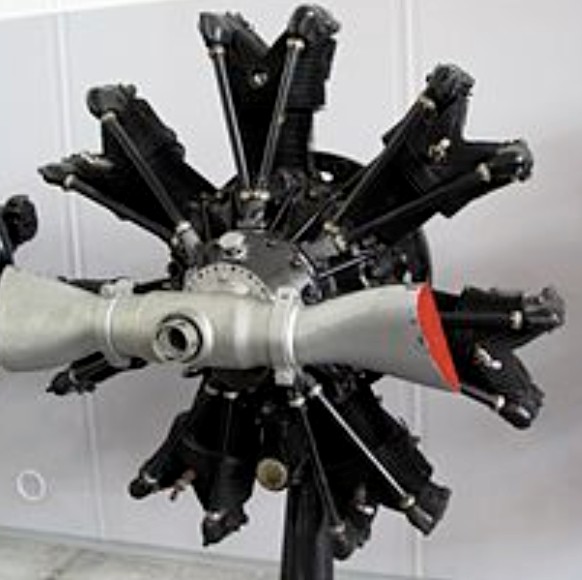
The Walter Scolar was a Czechoslovakian nine-cylinder, aircooled, radial engine for powering light aircraft that first ran in 1936. With a displacement of 8 litres (490 cu in), it produced 132 kW (180 hp) at 2,500 rpm.
Applications: Beneš-Mráz Beta-Scolar
Specifications: Scolar Type: 9-cylinder radial piston engine Bore: 105 mm (4.13 in) Stroke: 100 mm (3.94 in) Displacement: 7.8 L (488 cu in) Dry weight: 155 kg (342 lb) Valvetrain: One intake and one exhaust valve per cylinder Fuel system: Carburettor Fuel type: Petrol Cooling system: Air-cooled Power output: 132 kW (180 hp) at 2,500 rpm Compression ratio: 5.4:1 Power-to-weight ratio: 0.85 kW/kg (0.52 hp/lb)
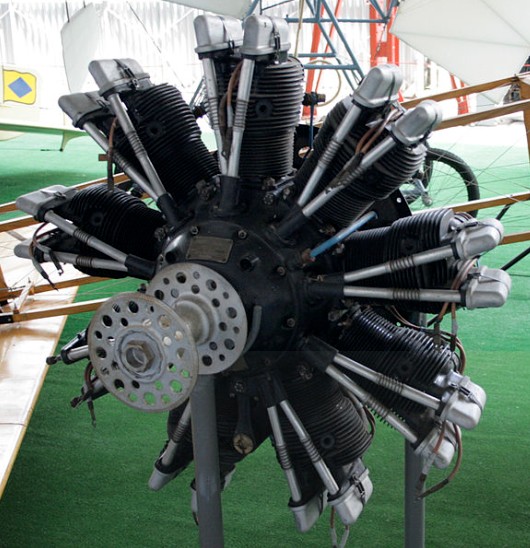
The Walter Castor was a Czechoslovakian seven-cylinder, aircooled, radial engine for powering aircraft that was first run in 1929. The Super Castor was a nine-cylinder development.
Applications: Aero A.35 Aero A.304 (Super Castor) Airspeed Envoy Breda Ba.25 Dornier Do K Fizir F1V Hopfner HV-6/28 Letov Š-28 Rogozarski AZR Savoia-Marchetti S.71
Specifications: Castor Type: 7-cylinder radial piston engine Bore: 135 mm (5.3 in) Stroke: 170 mm (6.7 in) Dry weight: 248 kg (547 lb) Valvetrain: One intake and one exhaust valve per cylinder Fuel system: Zenith carburettor Fuel type: Petrol Cooling system: Air-cooled Power output: 194 kW (260 hp) at 1,850 rpm (maximum power) Compression ratio: 6:1 Power-to-weight ratio: 0.78 kW/kg (0.48 hp/lb)
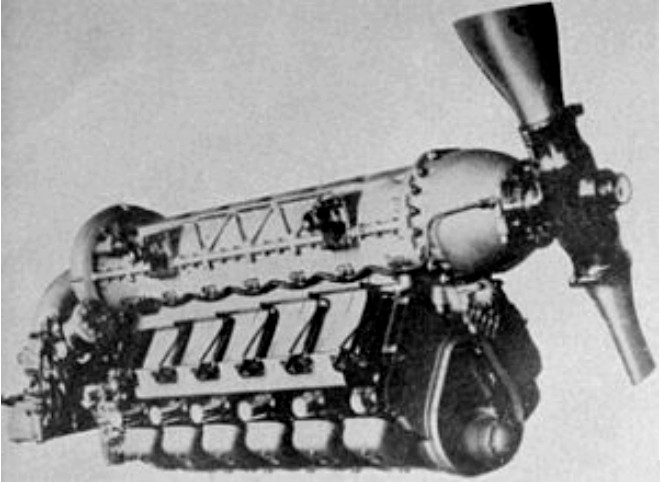
The Walter Sagitta was a Czechoslovakian, air-cooled, inverted V-12 engine that first ran in 1937. With a displacement of 18.4 litres (1,123 cu in), it produced up to 373 kW (550 hp) at 2,500 rpm.
Variants: Sagitta I-MR 550 hp (410 kW) at 2,500rpm at 2,500 m (8,202 ft) – rated height
Sagitta I-SR 535 hp (399 kW) at 2,500rpm at 3,800 m (12,467 ft) – rated height
Sagitta II R.C. Fully supercharged, 388 kW (520 hp).
Specifications: Sagitta I-SR Type: 12-cylinder inverted vee piston engine Bore: 118 mm (4.65 in) Stroke: 140 mm (5.51 in) Displacement: 18.4 l (1,122.84 cu in) Length: 19,140 mm (753.54 in) Width: 725 mm (28.54 in) Height: 796 mm (31.34 in) Dry weight: 372 kg (820 lb) – Direct drive, 385 kg (849 lb) – Geared 2:3 Valvetrain: enclosed push-rod operated rockers, two valves per cylinder closed by triple springs Supercharger: 8.7 times crankshaft speed Fuel system: Automatic boost and mixture control by a horizontal carburrettor Fuel type: 85 Octane Aviation Gasoline Oil system: Dry sump, one pressure pump and two scavenge pumps Cooling system: Air-cooled Power output: Take-off: 460 hp (343 kW) at 2,500rpm Rated power: 535 hp (399 kW) at 2,500rpm at 3,800 m (12,467 ft) Maximum Power: 540 hp (403 kW) at 2,600rpm at 4,000 m (13,123 ft) Specific power: 24.29 kW/l (0.534 hp/cu.in) Compression ratio: 6.25:1 Specific fuel consumption: 0.315 – 0.328 kg/kW/hr (0.525 – 0.548 lb/hp/hr) Oil consumption: 0.004 – 0.0067 kg/kW hr (0.0067 – 0.11 lb/hp hour) Power-to-weight ratio: 1.046 kW/kg (0.636 hp/lb)
Sagitta I-MR Type: 12-cylinder inverted vee piston engine Bore: 118 mm (4.65 in) Stroke: 140 mm (5.51 in) Displacement: 18.4 l (1,122.84 cu in) Length: 19,140 mm (753.54 in) Width: 725 mm (28.54 in) Height: 796 mm (31.34 in) Dry weight: 372 kg (820 lb) – Direct drive, 385 kg (849 lb) – Geared 2:3 Valvetrain: enclosed push-rod operated rockers, two valves per cylinder closed by triple springs Supercharger: 10.2 times crankshaft speed Fuel system: Automatic boost and mixture control by a horizontal carburrettor Fuel type: 85 Octane Aviation Gasoline Oil system: Dry sump, one pressure pump and two scavenge pumps Cooling system: Air-cooled Power output: Take-off: 560 hp (418 kW) at 2,500rpm Rated power: 550 hp (410 kW) at 2,500rpm at 2,300 m (7,546 ft) Maximum Power: 600 hp (447 kW) at 2,500rpm at 1,750 m (5,741 ft) Specific power: 24.29 kW/l (0.534 hp/cu.in) Compression ratio: 6.25:1 Specific fuel consumption: 0.315 – 0.328 kg/kW/hr (0.525 – 0.548 lb/hp/hr) Oil consumption: 0.004 – 0.0067 kg/kW hr (0.0067 – 0.11 lb/hp hour) Power-to-weight ratio: 1.046 kW/kg (0.636 hp/lb)