Castel-Mauboussin

Pierre Mauboussin joined forces with glider designer Robert Castello in 1942, their designs being known under the Castel-Mauboussin name and assigned CM designations. Fouga had been producing designs by Mauboussin since 1936 and, in 1944, made Mauboussin their Director of Aviation Services working alongside Robert Castello.

Fouga retained the CM designation sequence (which was distinct from their earlier Castel C- numbers). In May 1958, Fouga was bought by Potez which also retained CM designations for Castello-Mauboussin designs and their derivatives.
Castel C311P

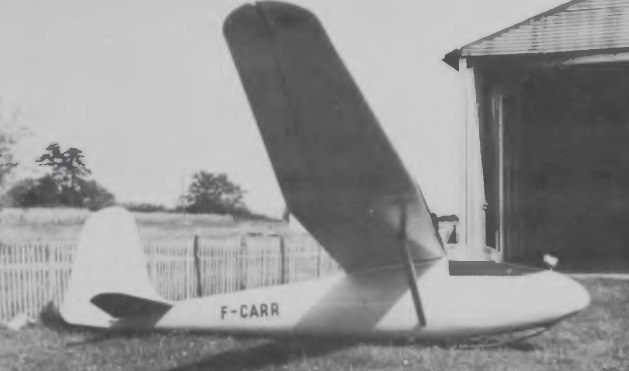
This single-seater first flew in 1950 and was intended for training in performance and distance flying, and for pilots who aimed to qualify for the French ‘D’ licence.

It is a semi-cantilever high wing monoplane with a small bracing strut each side for the singlespar wooden wing, which is covered partly with plywood and partly with fabric. The air brakes consist of two staggered rows of three semi-circular metal plates on each side of the wing just outboard of the bracing strut; these rotate on their axes to protrude above and below the wing surface or to be withdrawn into the wing section. No flaps are fitted, And the oval-section fuselage is of all-wood construction with the pilot sitting under a small canopy. The landing gear consists of a fixed monowheel with a sprung nose-skid and a tailskid, and the tail unit is also of wooden construction.

There were still about seven examples of the C 311P on the French register in 1979.

Castel C311P
Span: 45 ft 11 in
Wing area: 158 sq ft
Aspect ratio: 13.3
Empty weight: 345 lb
Max weight: 537 lb
Speed at best gliding angle: 40.3 mph
Min sinking speed: 2.1 ft/sec

Castel

Since 1936 the French firm of Etablissements Fouga et Cie operated an Aircraft Department which built aircraft to the designs of its Director, Pierre Mauboussin, and the Technical Director, Robert Castello, as Castel-Mauboussin or just Castel and later as Fouga designs. These included a number of sailplanes culminating in the postwar CM 10 military glider which could carry up to 35 fully armed troops or two jeeps, and the V-tailed CM 8R-13 and CM 8R-15 Sylphe each powered by a dorsally-mounted Turbomeca Pimene jet for flight testing and research; the two latter types led directly to the Fouga CM 170R Magister jet trainer.

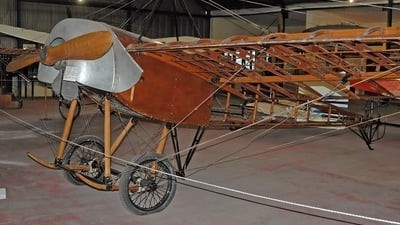
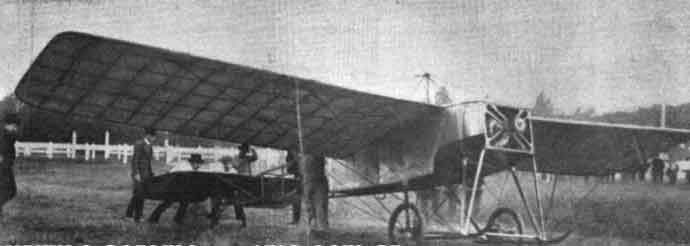
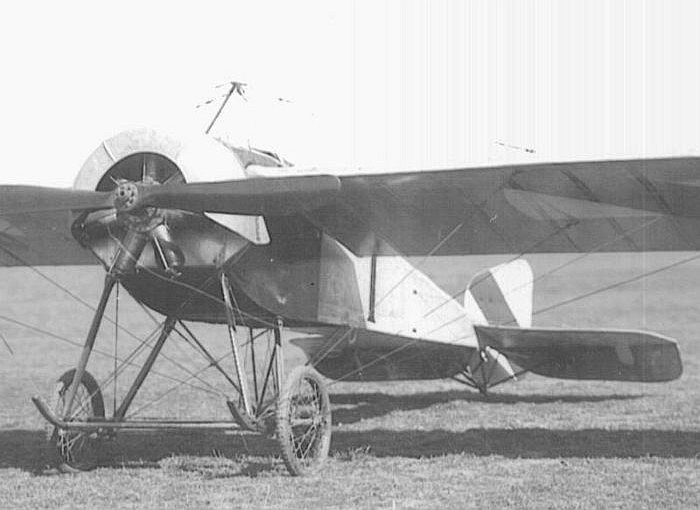
Castaibert 1911 Bleriot-Hanriot type

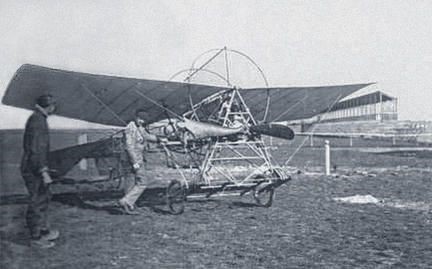
The Castaibert II was Pablo Castaibert’s second aircraft, powered by a 25 hp (19 kW) Anzani 24.5hp 3-cyl fan engine and reached 46.5 miles per hour (75 km/h). Built by Pablo Castaibert, the 1911 Castaibert Bleriot-Hanriot type monoplane reportedly flew well.

Engine: Anzani, 25 hp / 19 kW
Span: 29 feet (8.80 m.)
Area: 206 sq. ft. (19-20 m².)
Length: 26½ feet (8.15 m.)
Total weight: 705 lbs. (320 kgs.)
Speed: 75 km/h (47 mph, 40 kn)

Castaibert Monoplano 1910-I

Pablo Castaibert’s monoplane 1910-I was modelled on the Santos-Dumont Demoiselle. Fitted with a 35 hp Anzani, it was not able to fly. It is claimed that the machine would not fly because of a balance problem that could not be resolved after several modifications although it was probably also due to the absence of flight experience by Castaibert himself. At the end of 1910 Castaibert saw a Blériot flying which prompted him to switch designs resulting in his rather more successful series of monoplanes.