Cicaré CH-7       

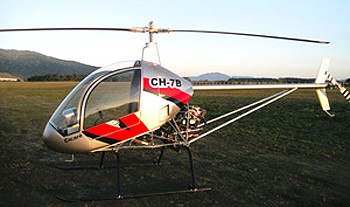
Augusto Cicare CH-7B

The Cicare CH-7B is yet a further refinement of the CH-7 single seat kit helicopter designed for sport and recreational use.

Flying the Cicaré CH-7 Angel

It is an evolution of the Ch-6 and CH-7 Angel helicopters with a notable increase in performance with the new refined version having been repowered with the Rotax 912 ULS 100HP four stroke engine adding to endurance, performance and reliability.

The CH-7B helicopter also features minor cabin changes along with engineering improvements. Quality Aeronautical components are used throughout its construction.
Augusto Cicare CH-7 2000VL

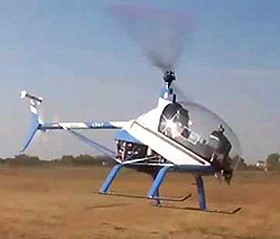
In 1996 Augusto Cicare created the Cicare CH-7 2000VL. It was later presented to the public in 2010.
This was an ultralight helicopter with two separate and independent engines that can land with only one of the engines operating, thus giving greater security and minimizing risks from engine failure during flight.

CH-7B
Powerplant: Rotax 912 uls (100 hp)
Empty Weight: 250 kgs (550 lbs)
Gross Weight: 430 kgs (950 lbs)
Vne: 105 kts / 194 kmh / 120 mph
Cruise Speed: 80 kts / 150 Kmh / 94 mph
Climb Rate: 7 m/s / 1380 ft/m
Service Ceiling: 3500 m / 11,500 ft
Endurance: 2.5 hrs
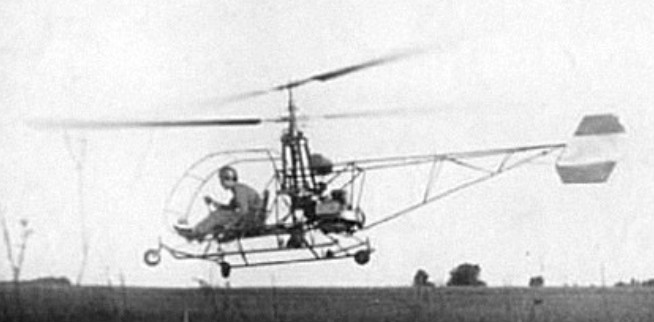
Cicaré CH-14 Aguilucho

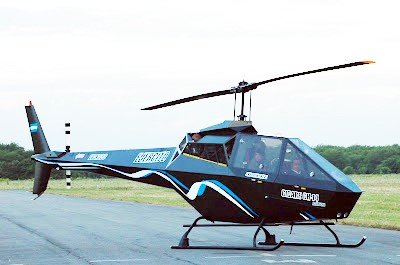
The Augusto Cicare CH-14 light two-seat tandem helicopter development began in January 2005 under an Argentine Army request in conjunction with CITEFA, La Plata University and Army Aviation Maintenance Batallion.

First revealed Nov 23, 2007 during the Army Aviation Day and is intended to be used in both civilian and military applications.

Powerplant: Rolls Royce Allison 250-C20-B, 420 hp
Maximum Continuous Power: 370 hp
MTOW: 1450 kg
Empty Weight: 750 kg
Useable Load: 700 kg
Vne: 240 km/h
Cruise Speed: 210 km/h
Range: 630 km
Climb Rate: 8 m/s
Service Ceiling: 4500 m

Cicaré 4C2T

The Cicaré 4CT2 is an Argentine air-cooled, four-cylinder, horizontally opposed, two-stroke, piston engine designed and built by Cicaré Aeronáutica as a light low cost engine. First run in 1973.

Application:
Cicaré Helicopter # 1
Cicaré CK.1

Specifications:
Type: Air-cooled four-cylinder horizontally opposed two-stroke piston engine
Bore: 74 mm (2.91 in)
Stroke: 76 mm (3.00 in)
Length: 810 mm (31.89 in)
Width: 660 mm (25.98 in)
Height: 550 mm (21.65 in)
Dry weight: 68 kg (150 lb)
Valvetrain: 1 inlet and 1 exhaust valve per cylinder
Fuel system: Updraught flow-type carburettor
Fuel type: Mixture of 40 parts 80-octane to 1 part SAE40 oil
Cooling system: Air-cooled
Power output: 69 hp (67 kW) at 4,5000 rpm
Compression ratio: 7.2:1

Cicaré CH-1

The first (1961) helicopter designed and built by Augusto Cicare is a single-seat single-engine with two counter-rotating coaxial rotors. Each rotor has two blades. The cyclic control varies the inclination of the rotors axis. The airframe is made of steel tubes. The four stroke, four opposite cylinders engine was also designed and built by Augusto.

Cicare CH-1
Engine: 1 x Cicare 4-cylinder air-cooled piston engine, 45kW
Rotor diameter: 6.0m
Length with rotors turning: 6.80m
Height: 2.15m
Width: 1.60m
Max take-off weight: 330kg
Empty weight: 225kg
Max speed: 129km/h
Cruising speed: 95km/h
Hovering ceiling, OGE: 1500m
Crew: 1

Cicaré, Augusto / Cicaré Aeronautica / Cicaré Helicópteros

Founded by Fernando Cicaré in 1972 in Argentine, Cicaré Helicópteros S.A. (originally Cicaré Aeronáutica S.A.) is an Argentine helicopter manufacturer.

From late 1960s Cicare designed and built the Cicare I and II experimental light helicopters. Followed September 1976 by C.K.1 (originally CH-III) two/three-seat light helicopter for training and agricultural use, aimed mostly at the South American market.

A number of prototypes were constructed, including one under contract from the Argentine Air Force, but no great successes were achieved until the CH-7 light sporting helicopter in the 1990s. In March 2007 the first prototype of Cicaré CH-14 a light helicopter for the Argentine army was ready.

On March 18, 2010 they presented the CH-7B and CH-12 during the EAA Argentina Annual Meeting.

Church Aeroplane Co 1910 glider

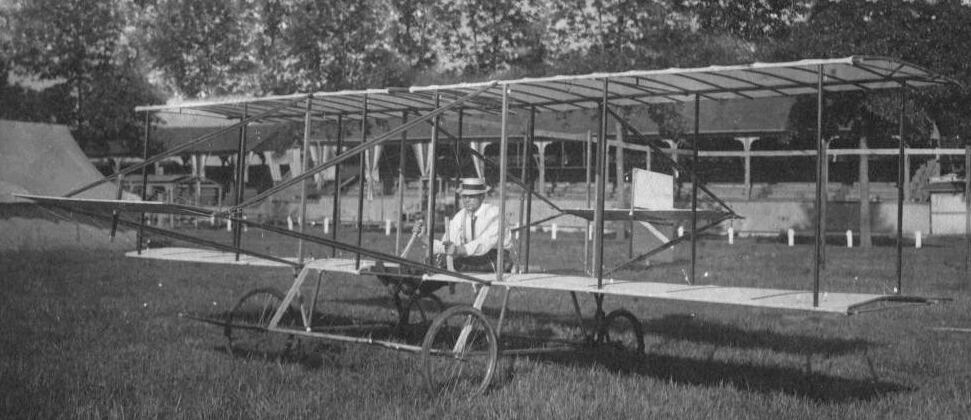
Daniel A. Kreamer was a railroad engineer from Freeport, Illinois. In 1910 he bought a glider from the Church Aeroplane Co. of Brooklyn, NY, in which he made some very successful flights, towed by an automobile and cutting loose when 75 or 80 feet high and gliding several hundred feet to the ground. He apparently considered installing an engine in the glider, but instead bought a Curtiss-type biplane built by Everette K. Barnes and Harold H. Havens of Rockford, IL. Kreamer lost his life at the Chicago Aero Club’s field on July 13th, 1911, when he lost control during a turn while trying for his pilot’s license.