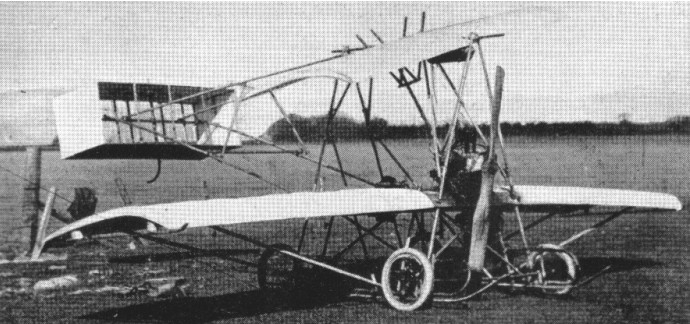
In 1902 Scotsman Preston Watson is said to have fitted a Santos-Dumont engine to a biplane glider and flown it successfully. The improved version is said to have made many successful flights in 1908.
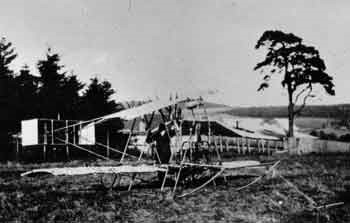
Engine: 30 hp Humber
In 1902 Scotsman Preston Watson is said to have fitted a Santos-Dumont engine to a biplane glider and flown it successfully. The improved version is said to have made many successful flights in 1908.
Engine: 30 hp Humber

Built by Preston Watson, it was controlled by tilting the pivoted top wing.
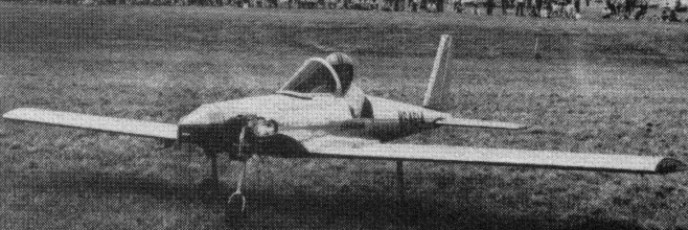
The original Wind Wagon was built in Texas by Gary Wilson and was based on the Teenie Two and used the similar wing ribs that slipped onto the “C” spar. The fuselage was a tapered tube from the seat backward and from the seat to the firewall. The aircraft was equipped with tricycle undercarriage and a ½ VW.
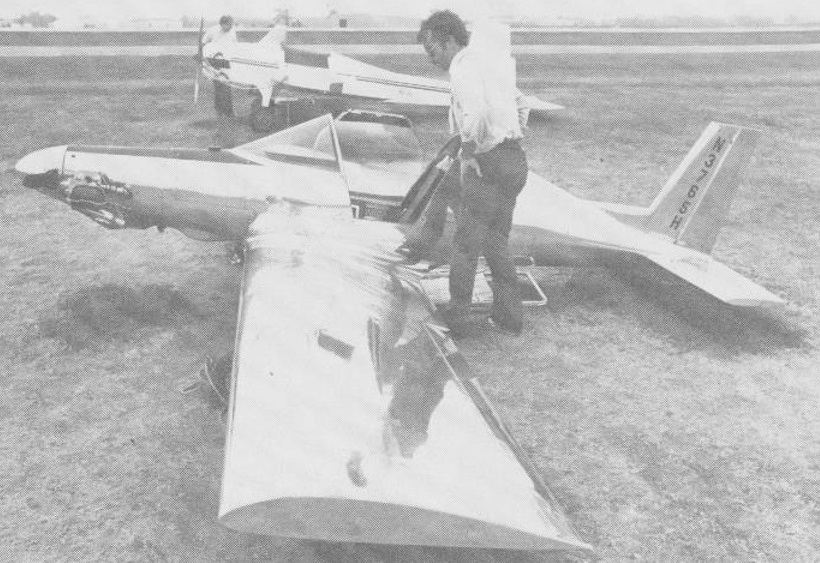
First flown on 19 April 1977 (N64614), the Windwagon measures 18 feet from wingtip to wingtip and it features all-aluminum construction with pop rivets. The tricycle gear are nonretractable, but the wings are removable for storage or transportation. The powerplant is a 900 cc half-Volkswagen modified engine and drives a four-blade propeller. On just two cylinders tip speed is 110 mph, and climb rate is 450 to 500 fpm. The wing features a Clark Y wing section with constant chord. There are conventional ailerons and no flaps. The fuselage is a conventional semimonocoque structure made from pop-riveted aluminum. Morry Hummel introduced a few changes.
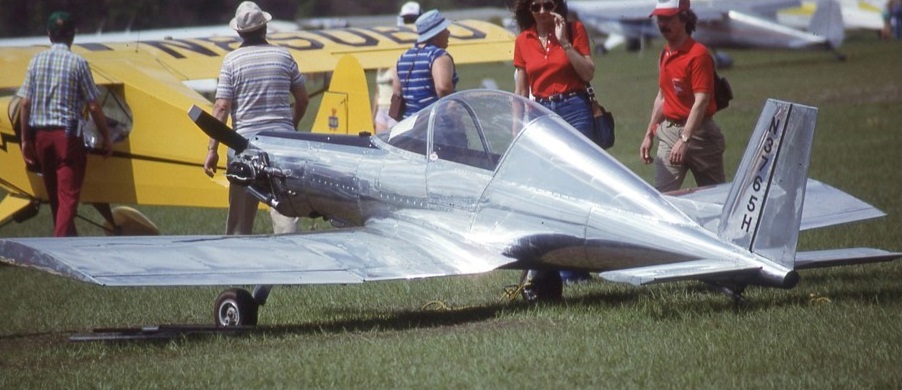
In 1980 full size plans were available for US$50.
Engine: ½ VW, 30 hp
Speed max: 140 mph
Cruise: 100 mph
Range: 200 sm
Stall: 40 mph
ROC: 400 fpm
Take-off dist: 250 ft
Landing dist: 250 ft
Service ceiling: 12,000 ft
Fuel cap: 4 USG
Weight empty: 273 lbs
Gross: 486 lbs
Height: 4 ft
Length: 13 ft
Wing span: 18 ft
Seats: 1
Landing gear: nose
Engine: VW, 35hp
Wing span: 18’0″
Length: 12’5″
Useful load: 210 lb
Cruise speed: 100 mph
Stall: 40 mph
Seats: 1
1980-95: Gary Watson, Route 1, Box 50, Newcastle, TX 76372, USA.
LSA builder
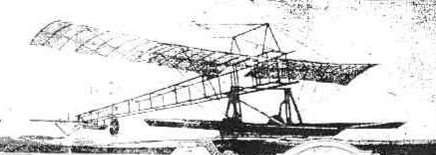
Designed and constructed by Reyburn Watres of Scranton, Pennsylvania, in 1910. Powered by a vertical type motor of four cylinders.
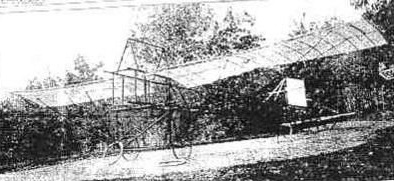
Watres flew his aircraft a number of times, primarily at his airfield in the Lake Wallenpaupack region.

Reyburn Watres
Scranton
Pennsylvania
In 1910 Reyburn Watres built the monoplane ‘The Grass Cutter’.
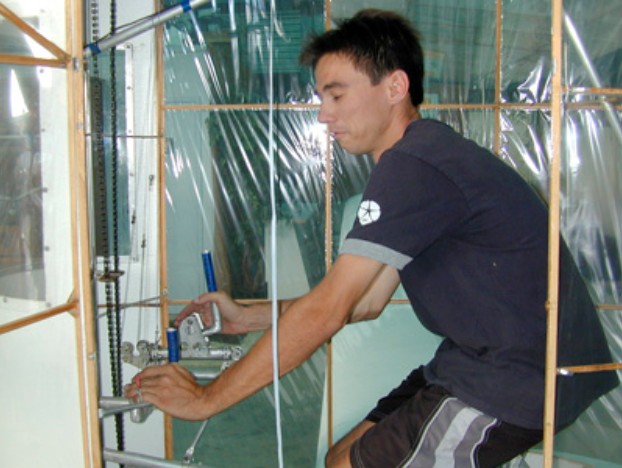
It is was the third full size aircraft Bill Watley has constructed since 1945.
The Mayfly 3 is a very large Biplane: each wing is 50 ft in span and height of 10ft. (approx).
The variable pitch propeller is made of blue foam and is 12 ft in diameter, turning at 100 RPM.
Bill Watley constructed the aircraft over a period of three years full time, working almost every day. It had taken at least 6000 hours. The structure is normal commercial pine and white polystyrene covered with Mylar. The cockpit frame for the pilot is commercial aluminium.
All parts of the aircraft were carefully drawn and the dimensions carefully adhered to.
A water level was used at all times to ensure the diagonals were all correct
The Mayfly 3 did achieve flight in Kooralbyn, Australia, after a number of structural amendments, including a redesign of the undercarriage and wheel diameter.
Wingspan: 50 ft
Length: 26 ft
Propeller: blue foam 12 ft diameter
Bill Watley constructed three full size aircraft has since 1945. The first, HM 290 (The Flying Flea) recorded 2 flights at 100 ft, each flight about 2 miles in length. The second aircraft, a Jodel D9, took four and a half years to build (2140 hours) and flew from Gatton, Queensland, Australia, for 15 years (about 1000 hours). The third was the Mayfly III.
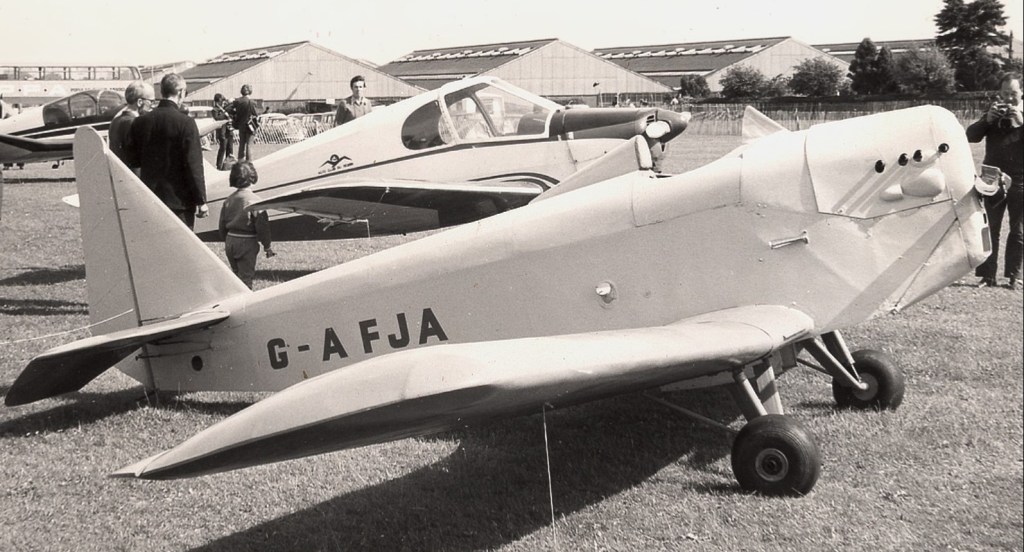
The Watkinson Dingbat was a 1930s British ultralight monoplane designed by E.T. Watkinson and C.W. Taylor.

The Dingbat, otherwise known as the Taylor Watkinson Ding-Bat, was a low-wing monoplane powered by a 30 hp (22 kW) Carden-Ford engine. It had a single-seat open cockpit and a fixed conventional landing gear. It was built at Teddington in Middlesex and registered G-AFJA snDB.100 it was first flown at Heston Aerodrome in June 1938.

It was stored during the Second World War, but rebuilt to flying condition by J.H.Pickrell and D.O.Wallis in 1959.
It lapsed again into disuse and was stored at Overton Strip, Hannington, until restored by A.J.Christian, First flying again in early 1974.
After a crash at Headcorn on 19 May 1975, it was rebuilt, and was still registered in 2010.

Powerplant: 1 × Carden Ford water-cooled 4-cylinder piston engine, 32 hp (24 kW)
Wingspan: 28 ft 0 in (8.53 m)
Wing area: 125 sq ft (11.6 m2)
Length: 16 ft 0 in (4.88 m)
Height: 6 ft 3 in (1.91 m)
Empty weight: 460 lb (209 kg)
Gross weight: 700 lb (318 kg)
Maximum speed: 90 mph (140 km/h, 78 kn)
Cruise speed: 80 mph (130 km/h, 70 kn)
Stall speed: 39 mph (63 km/h, 34 kn)
Range: 200 mi (320 km, 170 nmi)
Crew: 1

The CG-4 was the third manpowered ‘cyclogyroplane’ built by Mr. Herbert Watkinson of Bexhill in his effort to win the $50,000 Kremer prize for man powered flight. By March 1977 the CG-4 was nearing completion, and permission to carry out flight trials at Lydd Airport in Kent had been granted. Then in 1977, Mr. Watkinson was diagnosed as terminally ill and died at Bexhill in October 1977. After going into storage, this machine, together with all the surviving documentation and photographs of the cyclogyroplane story, were donated to the Helicopter Museum for preservation as a tribute to one man’s attempt to fly with the birds.

