Colditz Cock

The town of Colditz in eastern Germany is the home of Oflag IV-C, the most secure prison camp in the Third Reich. Housed in an 11th Century castle, 500 Allied officers – including Sir Douglas Bader and SAS founder David Stirling – had little chance of escape.

The castle walls were more than 6ft thick and prisoners’ cells were built around a central courtyard, its only exit blocked by three sets of heavily guarded gates. There was one guard for every prisoner.

Tunnelling seemed impossible because the castle sat on an outcrop of volcanic rock. Even so, Allied prisoners made 186 escape attempts before the camp was liberated on April 16, 1945. The first of 11 Britons to make a ‘home run’ was former Northern Ireland Secretary Airey Neave, who disguised himself as a German officer and walked out of the camp during a theatrical production through a trap door prisoners built under the stage.

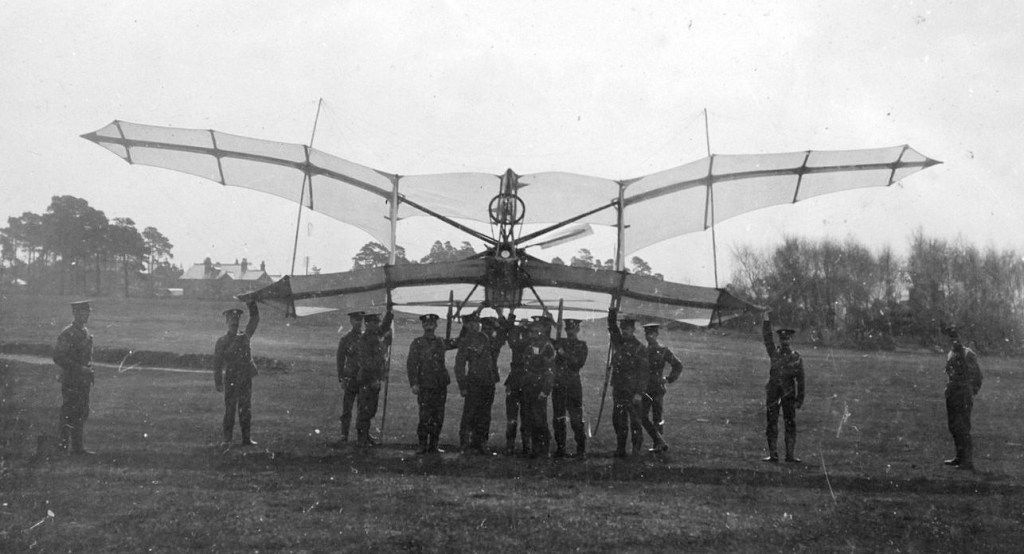
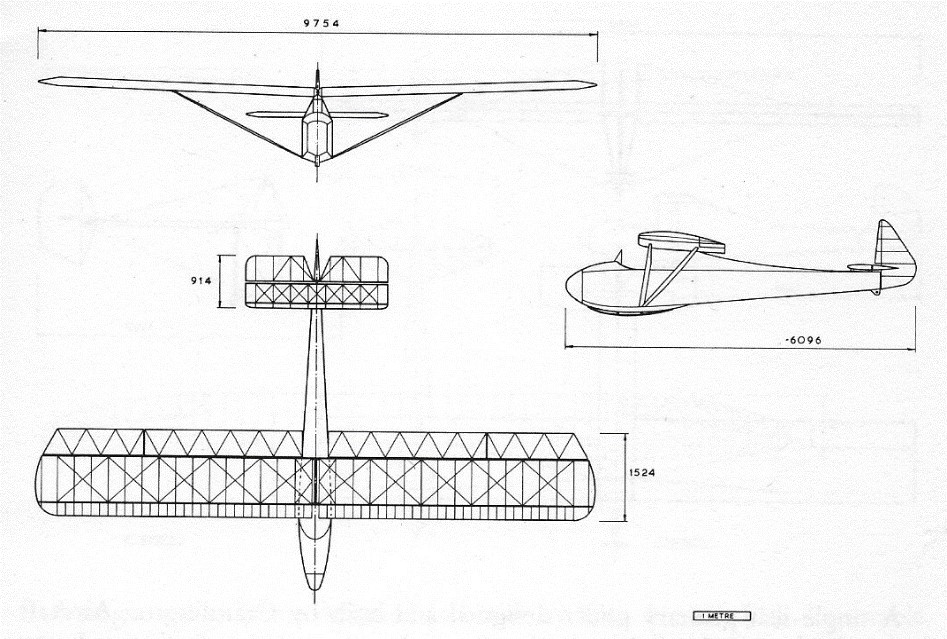
They managed to construct a glider designed by W.Goldfinch, from materials including bedsteads, floorboards, cotton sheets and porridge. Sixteen British prisoners had built the two-man glider behind a false wall in the prison attic, in a space just 20ft by 7ft. Forty more acted as lookouts. ‘Forty guys collected their rations during the period of the project to glue the glider together,’ said Tony Hoskins, the engineer in charge of the reconstruction.

They fashioned tools from bedsteads and iron window bars and made the wing spars from floorboards, the glider skin from cotton sheets and the control wires from electric cable. The finished glider spanned 33ft 9in and was 19ft 7in long.

The prisoners planned to construct a runway on the castle’s sloping roof. The idea was to knock a hole through the roof from their workshop under cover of darkness. They were then going to haul the glider out and attach its wings before launching from the runway by catapulting it with the aid of a bathtub, weighted down with concrete.

The glider, though, was never tested because the castle was liberated by the Americans before the prisoners had a chance to try.

Only one photograph and one crude A4 sketch exists of the glider, which townspeople believe was burnt as firewood.

But engineers and historians have long questioned whether their two-man machine would actually fly. It left the question of could British prisoners have succeeded in their attempt to fly off the roof of the Colditz Castle and make their escape in a glider?

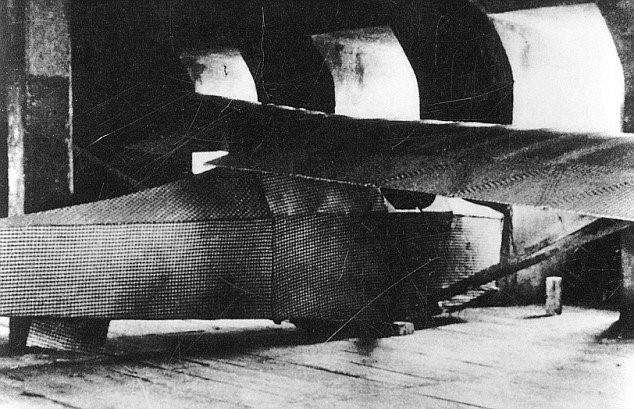
In 2012, a Channel 4 crew created a replica in the attic where it was originally conceived – from similar materials with modern tools. They were able to complete it in two weeks, compared with the ten months it took the prisoners.

The replica glider cost £3,500 in materials, including 27 sheets of pine wood, ten 16ft lengths of beech and 525ft of gingham. It was assembled with 700 panel pins, 300 wooden screws and door and window hinges. The ‘skin’ of the original glider had been starched with a ‘porridge’ made from the prisoners’ rations. The engineers copied the original mixture, which was made from millet seed. The hardest thing for us was that there was no formula for the porridge. They started with 22lb of millet in a big pot and tried every method and consistency until they got it right.

The original glider was built to carry two prisoners, but in 2012 a polystyrene dummy, nicknamed Alex, sat in the cockpit while the aircraft was steered by remote control.

D-Day for the replica Colditz glider came on March 17 2012. The team gathered at 5.45am to assemble the glider on the platform on the apex of the castle roof. The fuselage, tail, rudder and wings, wrapped in a fabric sling for protection, were all lifted individually round the clock tower and on to the roof using a system of ropes.

Amid the sound of chapel bells and rousing cheers from spectators, including the Mayor of Colditz, Matthias Schmiedel, and the German aviation official who signed off the flight, the glider finally rose into the sky at 2.30pm and achieved its first goal – it flew, crossing the River Mulde.

Travelling at 36mph, it then swooped down along the river before turning steeply and crash landing – wing tip first – in the middle of a field after flying 984ft.
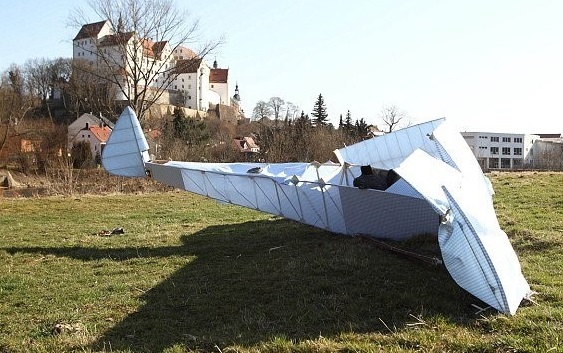
‘She came off there like a treat,’ said Pat Willis, 53, who controlled the military-standard radio transmitter. ‘The crash landing was deliberate. I was running out of space so I dumped the glider about 50ft short. There was no way I was going to go through people’s property.’

The flight was monitored on a live video link from the cockpit. ‘We’ve proved that the concept worked,’ said Mr Hoskins. ‘We launched it and it had ample speed as it left the roof. The problem was on arrival. The rudder was fairly ineffective, so when it went to instigate a right-hand turn it was very slow in coming round.

Alexander, the polystyrene dummy, was decapitated.

Wingspan: 9.75 m / 32 ft 0 in
Length: 6.10 m / 20 ft 0 in
Wing areaL 15.05 sq.m / 162 sq.ft
Aspect ratio: 6.4
Wing section: Clark Y-H
Empty weight: 108.86 kg / 240 lb
AUW: 254.02 kg / 560 lb
Wing loading: 16.84 kg/sq.m / 3.45 lb/sq.ft
Max L/D: 12
Stall: 50 kph / 31 mph
Undercarriage: main skid
Cody Cathedral

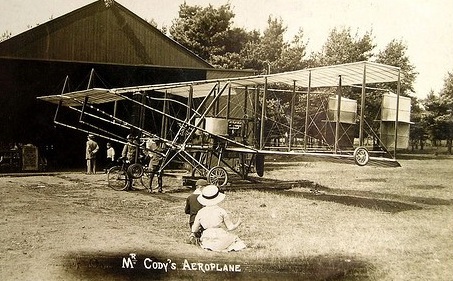
Using personal funds and a borrowed airship shed, Cody built a huge sturdy pusher biplane of 52 foot span, weighing 1,200 pounds. Size and strength were Cody trademarks; he was observed tying knots in bracing wires with his bare hands and was the only one able to spin the biplane’s 50 hp V8 to life. A reporter took one look and dubbed it “the Flying Cathedral.” The nickname stuck.
While he had seen pictures of American and French machines, Cody saw no reason to alter his kite with an engine concept, which, by the way, he carried entirely in his head. There were no blueprints or lists of materials because Cody had never learned to read and write. (He eventually mastered a huge “S.F. Cody” for official paperwork, holding the pen like a trowel.)
The finished product included a shock-mounted landing gear with steerable tailwheel, ground adjustable wing camber and propeller pitch plus ailerons, this being the first aircraft to use separate surfaces for banking. Cody did not invent ailerons, but he was the first to make practical use of them. Oddly enough, he abandoned them later in favor of wing warping.
In the summer of 1908, Cody’s aircraft was towed to Laffan’s Plain, a rough, rolling pasture surrounded by trees. One up¬hill run to test the controls left a 234 foot gap in the tire tracks, a greater distance than the Wright’s first hop, but Cody dismissed it as “just a jump.”
On October 16, with reporters watching, he gave it full throttle, rose quickly to 40 feet and flew 1,390 feet, crashing when he dragged a wingtip in an attempt to avoid some trees. The big man emerged from the pile of bamboo and linen bruised but smiling. The illiterate genius had become the first man to fly an airplane in England.

Winner of the 1912 War Office military trials at Salisbury Plain was Cody’s Cathedral, which collected a total of £5,000 prize money, but was clearly of no use to the newly formed Royal Flying Corps and was not put into production.

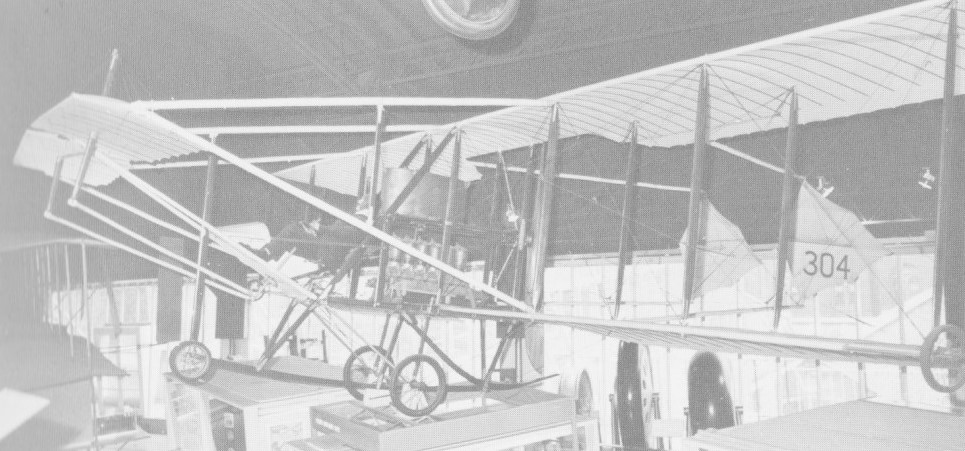
One example, built in 1912 at Farnbough, was similar in configuration to the 1911 Biplane and was again evaluated for military application. It was evaluated by the Army at Cambridge in September 192 and subsequently purchased. The Army number 304 was allocated.

304 at Science Museum, South Kensington

It was little flown and passed to the Science Museum in 1913.

Engine: Austro-Daimler, 120 hp.
Span 43 ft
Length 34 ft. 4 in
Wing chord 5 ft. 6 in
Wing area 430 sq. ft
Weight, empty about 1,900 lb
Weight loaded 2,680 lb
Max. speed 73 mph.
Stalling speed 48.5 mph
Take off run 960 ft
Range 336 miles.

Army 304
Engine: Austro-Daimler, 120 hp.
Span 52 ft
Length 44 ft
Weight loaded 2,900 lb
Max. speed 65 mph.

Cody Army Aeroplane No.1 / Cody 1 / Cody II / Cody III

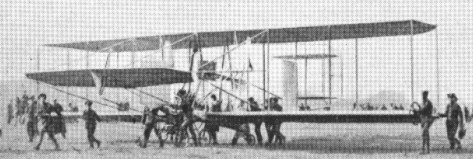
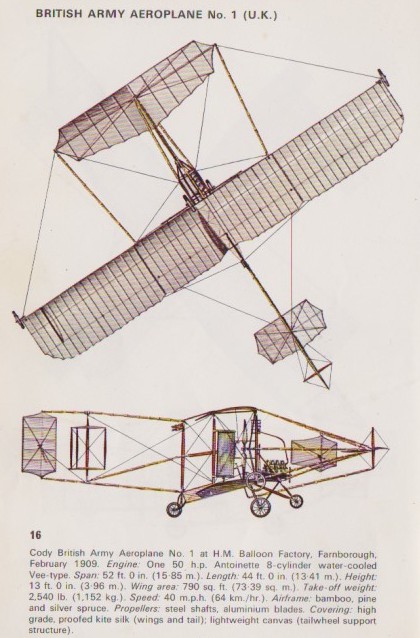
The next step was to build a full size piloted version of the glider. In December 1907, Cody began to build his first biplane at Farnborough, and since Nulli Secundus was rebuilding (to emerge as Nulli Secundus II the following summer) he was allowed to use her 50 h.p. Antoinette engine to power the machine of bamboo and wire. He arranged it to drive two pusher propellers; the result looked something like the Wright biplane.

It was in this aircraft that Cody made his first hops in May, 1908, on Laffan’s Plain. On October 5 or 16th 1908 he made the first official flight in a piloted aeroplane in Great Britain a measured distance of 496 yards at a height of 50-60 ft over Laffan’s Plain (it lasted 37 seconds), Farnborough, and this was the first powered aeroplane flight in Britain; but Cody was American at the time, and did not take out naturalisation papers until 1909.

Cody Army Aeroplane No.1A

Cody 1 – Initial Prototype; fitted with Antoinette 50 hp. Later, with ailerons
Cody 2 – Revised Cody 1 airframe
Cody 3 – Cody 2 prototype fitted with ENV Type F engine of 60 horsepower.

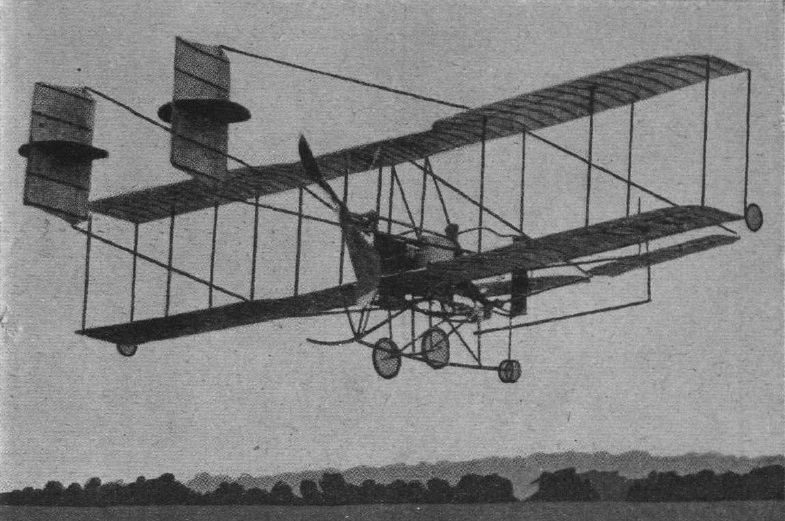
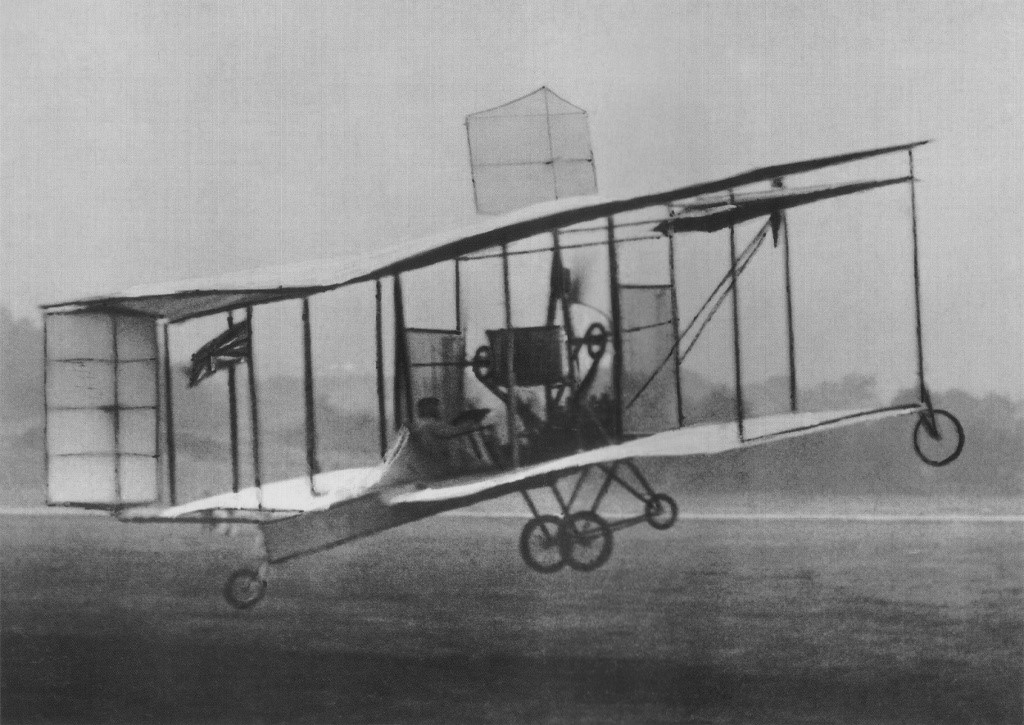
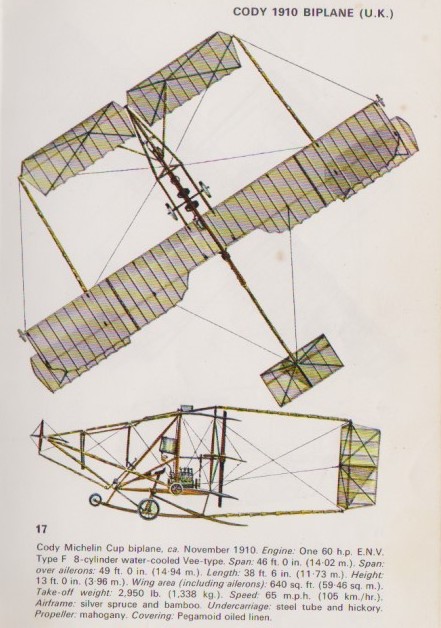
The Cody II was a Michelin Cup machine in which he flew 4 3/4 hours on December 31, 1910 to win the trophy. Clear differences to the earlier machine were the one large propeller installed at the rear in place of the two forward propellers and a 60 hp Green engine fitted in place of the ENV.

Cody II

The Michelin Cup machine in which he flew 4 3/4 hours on December 31, 1910 to win the trophy. Clear differences to the earlier machine were the one large propeller installed at the rear in place of the two forward propellers and a 60 hp Green engine fitted in place of the ENV.

1910 Cody No. II

Gallery

Engine: 1 x Antoinette, 50 hp
Length: 38.48ft (11.73m)
Wingspan: 52.00 ft (15.85m)
Height: 13 ft (3.96m)
Maximum Take-Off Weight: 2,950lbs (1,338kg)
Maximum Speed: 65mph (105kmh; 57kts)
Accommodation: 1

1910 Cody No. II
Span: 46′
Length: 38’6″

Cody Glider 

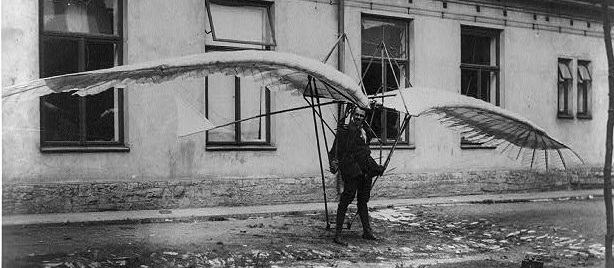
Turning his back on a 15 year stage career, Cody closed the road show and spent months on kite and airship matters. He built gliders in his spare time, but Cody was more interested in aeroplanes and before long had fitted a 12 h.p. Buchet engine to one of his kites.

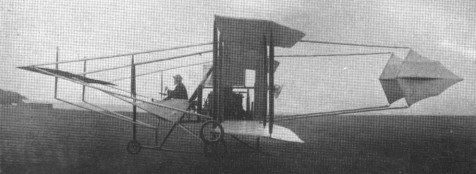
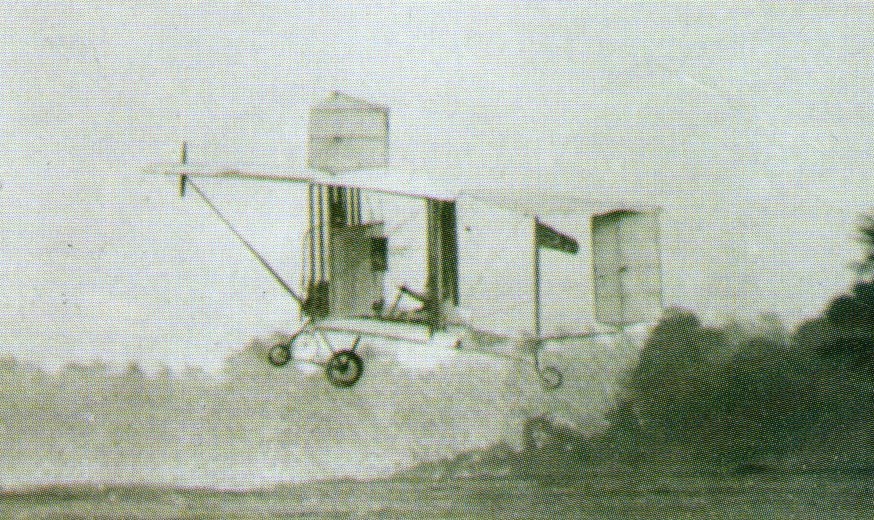
The motor kite was constructed at Farnborough in 1907, though possibly started in 1906. It was a pilotless biplane, similar to a Cody kite but with additional control surfaces and a three-cylinder 12 hp Buchet engine powering a propeller situated behind the wings. The span of the upper wing is estimated to 35 feet. The undercarriage was fitted beneath the central box section and two long skids were mounted beneath the twin tail rudders. The machine had a horizontal tailplane and at one stage biplane elevators/balancing planes were fitted on the front.

It was tested both on the ground and suspended from a cable rigged between two 100 ft masts, but there is no evidence that it ever made a free flight. Cody said, when presenting slides of the machine to a meeting of the Aeronautical Society, “This is a kite; I am just starting the engine and I try to get out of the way to let it run. It was supposed to be let loose, but the authorities were afraid I might do some damage by letting it go up in the sky.”

Cody, Samuel F.

Born in Iowa, USA, in 1867 as Samuel Franklin Cowdery, he took on the name Cody to take advantage of the success of William Frederick ‘Buffalo Bill’ Cody of’Wild West’ fame. S F. Cody arrived in the UK in 1889 and set up a touring show. Part of the many ‘acts’ within this travelling ‘circus’ was the flying of substantial kites. Cody became fascinated by flight and developed his own cellular (or box) kites and in November 1902 patented his man-lifting design. The UK military became very interested in these devices as an observation system that was than cheaper and more efficient than balloons.

Samuel Cody Article

From 1906, Cody was appointed Chief Kite Instructor to the Balloon Factory at Farnborough, Hampshire. As well as kites, he assisted in the construction of the airship Nulli Secundus (Second to None) which first flew in September 1907, powered by a 50hp (37kW) Antoinette V8.
In 1908, Cody turned his attention to building a heavier-than-air flying machine inspired by the Wright Brothers’ designs. Fitted with the same Antoinette that had powered the airship, his British Army Aeroplane No.1 took to the air for the first time on October 16,1908, and put Cody into the history books. He became a British subject in October 1909.
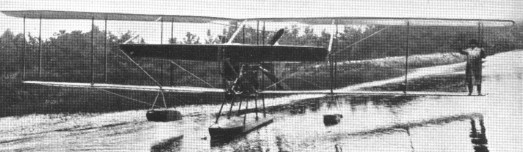
He built another biplane in 1910 in which he took the Michelin Prize with a flight of 185 miles (297km) in a closed-circuit. He gained Royal Aero Club Aviator’s Certificate No.9 on June 7,1910.
Cody developed his Circuit of Britain Biplane in 1911, entering it for the Daily Mail 1,010-mile contest of the same name. He came fourth in that and won two Michelin Cups for close-circuit flying, becoming well known for flying passengers.
In 1912, he flew a short-lived tractor monoplane, which was destroyed in a collision with a cow that July. The same year saw the birth of the Military Trials Biplanes, which resulted in a pair being ordered for service with the Royal Flying Corps. (The second of these biplanes, No.304, was presented to the Science Museum in November 1913 and is today displayed at South Kensington, London.)
His final design was the large (even by Cody’s standards) Hydro-Biplane designed to enter the coastal Daily Mail Circuit of Britain of 1913. Cody and his passenger W H B Evans were killed in this machine, in landplane form, on August 7,1913. Pioneer Cody had become the 32nd British pilot fatality.

Cockatoo Dockyard & Engineering Co Ltd

Australia
Cockatoo Dockyard & Engineering Co Ltd. opened an experimental aviation department in the early 1930s, under the guidance of Wg. Cdr. L. J. Wackett, formerly in the RAAF. In 1933 designed and built a twin-engined monoplane, the Codock, for Sir Charles Kingsford-Smith, who had made the first Pacific air crossing in 1928. A six-seat monoplane of the cantilever-wing Fokker type, it was powered by two 165 hp Napier Javelin engines.