The Dayton-Wright Company TA-3 (designated with an “A” for its air-cooled engine operation) was delivered by request with an uprated Le Rhone engine of 110 horsepower. Still further evaluation models were ordered, this time with the requested Wright-Hispano I V-8, 150 horsepower engine of increased power (designated TW-3 with the “W” standing for its water-cooled engine process) finally culminating in an official order by the USAAS.
Production rights for the trainer were secured by the newly-created Consolidated Aircraft Company (established by Reuben Fleet of the Gallaudet firm) as General Motors was reviewing their commitment to aircraft production in a post-war world and would eventually shut down operations at Dayton-Wright altogether. The TW-3 was delivered by 1923 and became the first notable variant of the “Trusty” production line.
Era
Consolidated Aircraft Corp
Gallaudet Airplane Corp was dissolved 1923 and factory acquired by Consolidated Aircraft Corporation with Reuben H.Fleet.
Original factory was quickly outgrown by the company formed May 29,1923 and moved to Buffalo, NY, in 1924, leasing part of a wartime Curtiss factory. In the 1920s and 1930s produced small numbers of civil types, but main output was military and between 1924-1932 included more than 770 PT-1 /311 and NY primary training biplanes for the USAAC and Navy, plus a small batch of similar 0- 17s for observation duties.
The creation of the civil Model 14 “Husky”trainer led to the creation of the Fleet Aircraft Division in 1929.
Thomas Morse Aircraft acquired 1929. In the 1930s Consolidated specialized in marine aircraft, P2Y twin-engined patrol flying-boats being built 1931-1933; followed by P-30 single-seat fighter monoplanes for the Army in 1933-1935.
In autumn 1935 company moved to San Diego, California, gaining a harbor for testing its maritime designs, which continued with the P3Y/PBY Catalina family. During a ten-year production life 2,400 Catalinas were built by Consolidated and hundreds more by other companies. Production of PB2Y Coronados began in 1939. In 1940 Hall Aluminium Co acquired. Company began a five-year program of building more than 11,000 B-24/C- 87/PB4Y/RY Liberator and Privateer bomber, transport, and patrol aircraft for the U.S. Services and the RAF. Liberator production was also undertaken by Ford, Douglas, and North American. Final wartime product was the TBY Sea Wolf. A 34 percent controlling interest in Consolidated acquired December 1941 by Vultee Aircraft Inc., and management links from then led to merger of the two companies on March 17,1943 as Consolidated Vultee Aircraft Corporation.
Amalgamation from March 17,1943 of Consolidated Aircraft Corporation and Vultee Aircraft Inc., whose wartime production programs are listed under these separate headings. By the end of Second World War Consolidated Vultee was largest aircraft manufacturing organization in the U.S.A., with factories at San Diego and Vultee Field, California; Fort Worth, Texas; Nashville, Tennessee; Wayne, Michigan; New Orleans, Louisiana; Miami, Florida; and Allentown, Pennsylvania; plus modification centers at Tucson, Arizona; Elizabeth City, North Carolina; and Louisville, Kentucky.
Late-war/early post-war programs included B-32 Dominator long-range bomber, L-13 liaison/observation aircraft and multi-engined B-36 intercontinental bomber. The company entered the commercial field with first flight, in summer 1946, of twin-engined Model 110, from which later stemmed well-known 240/340/440 Metropolitan series of medium-sized shorthaul airliners. Various noteworthy military prototypes included the XB-46 jet bomber, XP-81 single-seat mixed-power escort fighter, XF-92 rocket-powered interceptor, XA-41 close-support aircraft, and XF2Y Sea Dart hydro-ski fighter. A small number of R3Y Tradewind four-engined transport flying-boats Were built for the U.S. Navy. In the early 1950s Consolidated Vultee began calling its products “Convair” types, and on April 30,1954 it became the Convair Division of General Dynamics Corporation, which was then the major shareholder.
Consolidated Aeronautics Inc
USA
Parent company after 1962 of Lake Aircraft, producer of LA-4-200 Buccaneer four-seat amphibian.
Conroy Stolifter
A single-turboprop conversion of Cessna Super Skymaster flown 1969, with upward-opening aft fuselage.
Conroy CL-44-O Guppy
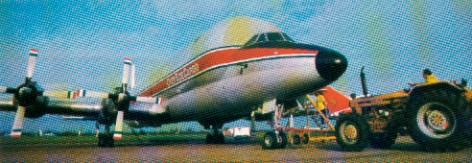
California-based Conroy Aircraft converted at least one CL-44 to an over sized ‘Guppy’.
Conroy Aircraft
USA.
Formed 1968-1969 by Jack M. Conroy at Santa Barbara airport, California, offering aircraft and services for the petroleum and other “bulk” cargo industries. First ventures included turboprop conversions of Douglas DC-3 (Conroy Turbo Three) and Fairchild C-119 Flying Boxcar. Conroy developed original Guppy series of giant transports (see Aero Spacelines); also converted Canadair CL-44D- 4 swing-tailed, long-range freighter as Conroy CL-44-0, with enlarged-diameter fuselage (flown November 1969); and Stolifter (flown 1969) single-turboprop conversion of Cessna Super Skymaster, with upward-opening aft fuselage. Turboprop conversion of Grumman Albatross amphibian flown February 1970; company ceased trading shortly afterwards.
Condor Flugzeugwerft 1912 biplane
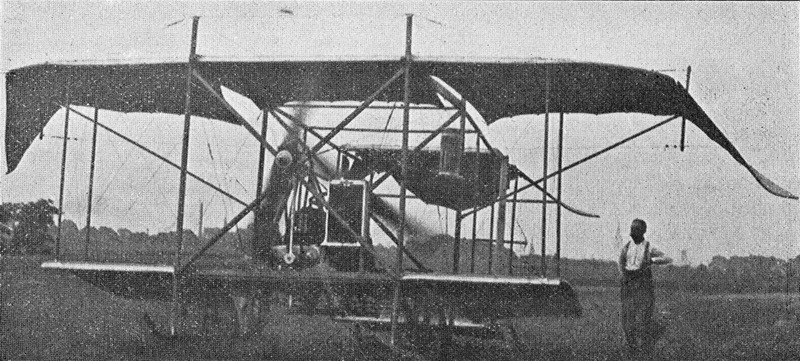
This 1912 design is claimed as the third design of Kommissar Hans von Klösterlein from Cologne (Cöln).
The design was built by the Condor Flugzeugwerft and according to Flugsport a 60 PS Basse & Salve engine was fitted. This is a single engine machine, where the engine drive two propeller – set on a rod fore and aft – via a chain.
The machine hopped or flew a little on the military exercise field on the Merheimer Heide in Köln-Merheim.
Condor Flugzeugwerft Pteranodon
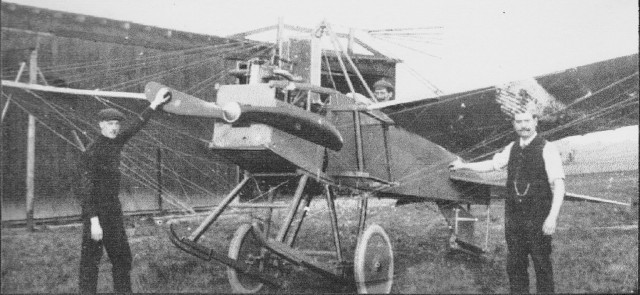
This was the last aeroplane designed by the Polizeikommissar von Klosterlein at the Condor-Flugzeugwerft in Köln-Niehl. The Pteranodon, named after a flying dinosaur, was built in 1912 or 1913 and was powered by a 55 hp Basse & Selve engine.
Condor Flugzeugwerft
Kommissar Hans von Klösterlein from Cologne (Cöln) was a high-ranking police officer in the Cologne department with a passion for flying.
His designs were built by the Condor Flugzeugwerft, which was founded by Klösterlein circa 1910.
Condor Aircraft Condor
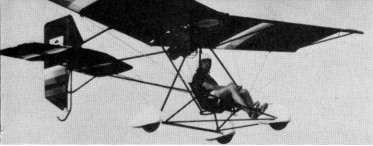
The Condor II is a single seat single engined high wing mono¬plane with conventional three axis control. Wing has unswept leading and trailing edges, and constant chord; cruciform tall. Pitch control by elevator on tail; yaw control by fully flying rudder; roll control by one third span spoilerons; control inputs through stick for pitch/roll and pedals for yaw. Wing braced from above by kingpost and cables, from below by cables; wing profile; single¬ surface. Undercarriage has three wheels in tricycle formation; torsion bar suspension on nosewheel. No ground steering. No brakes. Aluminium¬ tube framework, with optional pod. Engine mounted below wing driving pusher propeller.
All rigging wires are stainless steel with a vinyl coating and double swaging, and the aluminium tubing is ano¬dized clear and ‘covered with stabilised Dacron’.
Lift off and landing speeds are quoted as 20 24 mph (32 39 kph) and 20 25 mph (32¬40kph) respectively.
Options include floats, ballistically de¬ployed parachute, strobe, pod and electric start; normally, starting is by recoil, with an in flight restart facility. Price in 1982 of $5245.
Condor Aircraft describe the Condor III as a beefed up version of the Condor II, designed for heavier payloads, and accordingly the company quotes a much higher maximum take off weight for this side by side two seater with single centre stick.
The Condor III+2 is a two-seat version. Dual stick and rudder three-axis controls, dual throttle.
Condor II
Engine: Kawasaki TA440, 40 hp at 6000 rpm.
Prop¬eller diameter and pitch 56×36 inch, 1.42×0.91m.
Toothed belt reduction, ratio 2.0/1.
Max static thrust 238 lb, 108 kg.
Power per unit area 0.24hp/sq.ft, 2.6 hp/sq.m .
Fuel capacity 5.0 US gal, 4.2 Imp gal, 18.9 litre.
Length overall 10.0 ft, 3.05 m.
Height overall 9.7ft, 2.96m.
Wing span 32.0ft, 9.75m.
Constant chord 5.3 ft, 1.60 m.
Sweepback 0 deg.
Total wing area 168 sq.ft, 15.6sq.m.
Wing aspect ratio 6.3/1.
Empty weight 240 lb, 109kg.
Max take off weight 545 lb, 247kg.
Payload 305 lb, 138kg.
Max wing loading 3.24 lb/sq.ft, 15.7 kg/sq.m.
Max power loading 13.6 lb/hp, 6.2 kg/hp.
Load factors +5.0, 3.0 design.
Max level speed 55 mph, 88 kph.
Never exceed speed 60 mph, 97kph.
Max cruising speed 55mph, 88kph.
Economic cruising speed 42mph, 68kph.
Stalling speed 19 mph, 31 kph.
Max climb rate at sea level 775 ft/min, 3.9 m/s.
Best glide ratio with power off 7/1.
Take off distance 40 ft, 12 m. Landing distance 75 ft, 23 m.
Condor III
Engine: Kawasaki 440 A or B, 40 or 50 hp.
2:1 reduction drive to 56×36 prop.
Wing span 33.0ft, 10.06m.
Constant chord 5.1 ft, 1.55 m.
Total wing area 168 sq.ft, 15.6sq.m.
Wing aspect ratio 6.5/1.
Empty weight 252 lb, 114kg.
Max take off weight 657 lb, 298kg.
Payload 405 lb, 184kg.
Max wing loading 3.91 lb/sq.ft, 19.1kg/sq.m.
Max power loading 16.4 lb/hp, 7.5kg/hp.
Never exceed speed 65 mph, 105 kph.
Max cruising speed 51 mph, 82 kph.
Economic cruising speed 38 mph, 61 kph.
Stalling speed 24 mph, 39 kph.
Max climb rate at sea level 600ft/min, 3.0m/s.
Take off distance 60ft, 18m.
Landing dis¬tance 90 ft, 27 m.
Condor III+2
Wingspan 32’.
Wing area 168 sq.ft.
Length 10’.
Empty weight 286 lbs.
Gross weight 684 lbs.
Cruise speed 45 mph.
Stall speed 25 mph.
Vmax 55 mph.
Vne 75 mph.
Takeoff roll 90’.
Landing roll 90-120’.
Fuel capacity 5 USG.
Engine: Kawasaki 440
2:1 reduction drive to 56×36 wood prop.
50- or 75-hp version was available.

