USA
Randolph F. Hall, with other ex-employees of Thomas- Morse Aircraft Corporation, formed this company at Rochester, NY, in 1928, in collaboration with the U.S. automobile company James Cunningham, Son & Co. First aircraft was a six-seat passenger transport (twin-engined PT-6), but only two built. Followed by Model X-90(N) tandem two-seat biplane with special high-lift wings, entered for 1929 Guggenheim Safe Airplane Competition. A developed version (also high-lift wings) led to GA- 21M all-metal monoplane in 1934, which reappeared after a year or so as GA-36 with Super Scarab engine. In 1937 built PT-6F biplane light freighter, a two-seat development of PT-6 with 512kg payload and Wright Whirlwind engine. Company ceased building complete aircraft and produced subcontract aircraft components for other firms during Second World War. It was dissolved in 1948.
Era
Cunliffe-Owen W.10
Cunliffe-Owen Aircraft built in 1947 the prototype W.10 helicopter for Cierva; this project shelved too, and shortly afterwards company abandoned its aviation interests.
Cunliffe-Owen Concordia
In 1946 began design of airliner, the Concordia 10-seat passenger transport, first flown May 1947. Prototype and one other built, but work suspended November 1947 owing to insufficient orders.
Cunliffe-Owen O.A.1
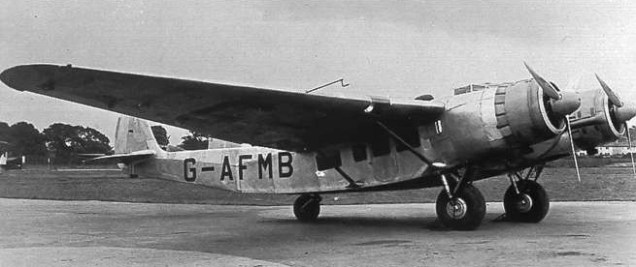
First product was improved version of Burnelli UB-14 known as O.A.1 (two crew, 15 passengers). Second version (three crew, 20 passengers) designed as O.A.2, but not produced owing to outbreak of war. France acquired O.A.1 and used it in Africa during the war.
Cunliffe-Owen Aircraft Ltd
UK
Cunliffe-Owen Aircraft Ltd was founded 1938 at Southampton Municipal Airport, Eastleigh, Hampshire, to build “flying wing” (lifting fuselage) aircraft based on Burnelli concept. First product was improved version of Burnelli UB-14 known as O.A.1 (two crew, 15 passengers). Second version (three crew, 20 passengers) designed as O.A.2, but not produced owing to outbreak of war. France acquired O.A.1 and used it in Africa during the war. Extensive subcontract work for Air Ministry undertaken, mostly “anglicizing” U.S. Consolidated Vultee, Lockheed, and Martin Lend-Lease aircraft for RAF. Late 1945 converted a number of Lancaster B.lll bombers for air/sea rescue. In 1946 began design of airliner, the Concordia 10-seat passenger transport, first flown May 1947. Prototype and one other built, but work suspended November 1947 owing to insufficient orders. Also built that year the prototype W.10 helicopter for Cierva; this project shelved too, and shortly afterwards company abandoned its aviation interests.
Cunard Steamship Co
UK
Cunard built factory at Aintree late 1917/early 1918 after receiving contract on November 22,1917 to build 500 Bristol Fighters. Production began March 1918, although in the previous month factory had been taken over by Ministry of Munitions and renamed National Aircraft Factory No 3. Production ended after only 126 aircraft completed.
Culver 1911 monoplane
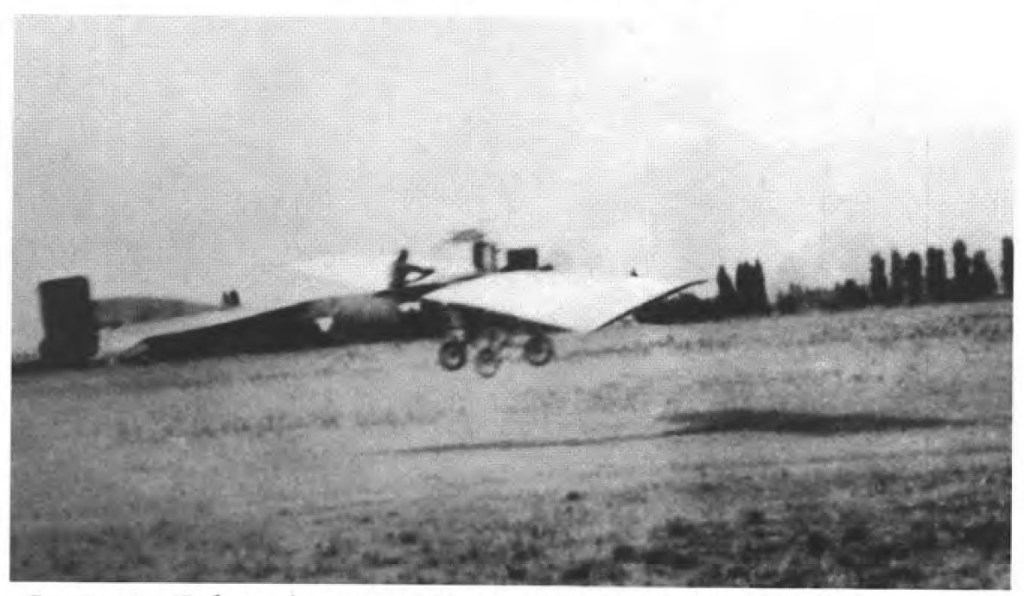
Lagar Culver of Salt Lake City started a monoplane in December 1910. It reportedly flew several times at the Lagoon race track up to August 1911, but wasn’t satisfactory.
Culver XPQ-15 / XTD3C
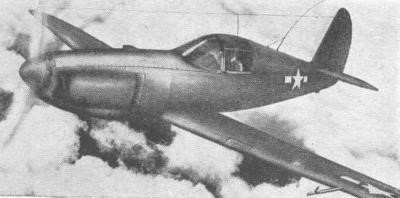
The Culver XPQ-15, also known as the XTD3C-1, was an American target drone developed by the Culver Aircraft Company late in World War II. The XPQ-15 was a low-wing monoplane of conventional design. It was powered by a Franklin O-405 opposed piston engine. Design work began in 1943.
Four examples of the XPQ-15 were built for evaulation by the United States Army Air Forces in 1945; two additional aircraft were tested by the United States Navy as the XTD3C-1. No production contract was placed.
Variants:
XPQ-15
USAAF variant; four produced.
XTD3C-1
USN variant; two produced, BuNos 29665-29666.
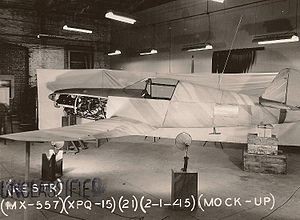
XPQ-15
Engine: 1 × Franklin O-405, 200 hp (150 kW)
Maximum speed: 220 mph (354 km/h; 191 kn)
Culver Rigid Midge
The Rigid Midget glider, designed in 1941, was the direct devolopment of the Culver / Crown Screaming Wiener with span increased by two feet and a different airfoil. Ray Parker finished third in it at the 1947 U.S. Nationals at Wichita Falls, TX where he made one 375 km/ 235 mile flight. One belongs to the National Soaring Museum.
John Hess Auction Service Inc, Manheim, PA 17545, United States, consigned a Nelson-Bowlus BB-1 Dragonfly N33687 Glider and Culver Rigid Midge N215 jr. Racing Glider in May 2015.
Wing span: 11.58m / 38ft
Wing area: 9.29sq.m / 100sq.ft
Empty Weight: 166kg / 365lb
Payload: 84kg / 185lb
Gross Weight: 250kg / 550lb
Wing Load: 26.91kg/sq.m / 5.5lb/sq.ft
MinSink: 0.88 m/s / 2.9 fps / 1.72 kt
L/DMax: 27 at 88 kph/ 48 kt./ 55 mph
No. of Seats: 1
No. Built: 2
Aspect ratio: 14.5
Structure: wood/fabric wings and tail, wood fuselage
Culver V / XPQ-15

Last Culver design started life on paper in 1942. This was the Model V (for Victory) which borrowed from the LCA and the LAR but differed quite considerably in fuselage layout, first flown September 1945. A Simpli Fly control system was fitted to make flying as easy as driving a car, but the aircraft was overweight and the control system prone to failure. It failed to compete in the post war market and only 378 were built before Culver went bankrupt.
Wings were similar in planform to earlier models, but had extra dihedral added to the outer wings. Power was provided by an 85hp Continental C 85 12 which gave a maximum speed of 135mph, a climb rate of 660 ft/min, a service ceiling of 13100 ft and a range of 625 miles. The fuselage had a forward opening canopy and the cockpit was level with the leading edge of the wing, giving the characteristic Y look.

Final model, the V 2, was designed to overcome some of the failings of the V. This grossed 1680 lbs, compared with 1600 lbs for the V, and performance was slightly down. Structurally, the V differed from earlier models in having a wing of semi monocoque structure, covered in plastic bonded plywood. Manually operated flaps were fitted, larger on the V than the V 2.
Four were built as drones designated XPQ-15.
The Culver V was put back into production briefly, in 1956 by the Superior Aircraft Co, and a further six aircraft built, powered by the 95hp Continental, but that was the end of the line. In 1987, of the 380 odd built, some thirty remain on the register.
Engine: Continental, 85 hp
Wingspan: 29 ft
Length: 20 ft 8.5 in
Height: 6 ft 9.5 in
Wing area: 125.9 sq.ft
Empty weight: 1070 lb
Loaded weight: 1600 lb
Cruise: 125 mph
ROC: 600 fpm
Service ceiling: 13,100 ft
Range: 700 mi

