Harry Wells
Cicero IL.
USA
Circa 1915
Harry Wells
Cicero IL.
USA
Circa 1915
In 1983 Eugene W Wells of Hawaii built the Shama WWI two place open cockpit biplane.
Eugene W Wells
Hawaii
USA
Circa 1983
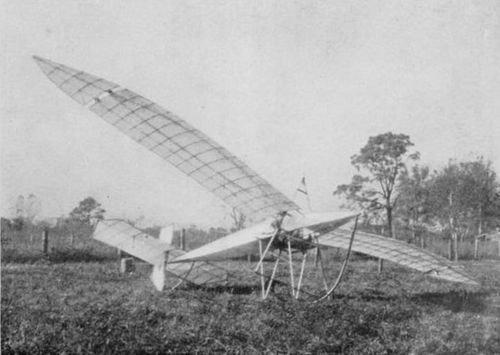
An aerodynamic design built by Daniel D. Wells of Jacksonville, Florida, during 1909/1910. Wells, an early inventor, patented the skid (US Patent 935075) and claimed to have made models with wing-warping already in 1897.
An aerodynamic design, designed and jointly built by a local mechanic, Daniel D. Wells, and a 21 year old machinist of the Seaboard Airline Railroad, Robert Kloeppel, who had just come to Jacksonville from Germany a few years earlier.
Unable to afford an aircraft engine at the time, they installed a Franklin automobile engine.
Kloeppel had received no flying instructions except those he read in a mechanics magazine, yet he shortly prepared the flimsy craft for takeoff. Flexing his piano wire controls he applied power and the plane moved rapidly about 75 feet and rose briefly four or five feet in the air, but when he sought to gain altitude by applying full power, the crankshaft suddenly broke and the plane settled down to earth, a complete wreck. Kloeppel was uninjured but never again built another plane or attempted to fly one.
In 1915 designed and built the Reo, a small single-seat biplane. Went into liquidation 1917, but production continued under Sir Samuel Waring.
UK
London company based at Whiteheads Grove, Chelsea. Built 50 Airco D.H.9s under contract to Waring and Gillow, plus 100 Sopwith 1 1/2-Strutters. In 1915 designed and built the Reo, a small single-seat biplane. Went into liquidation 1917, but production continued under Sir Samuel Waring.
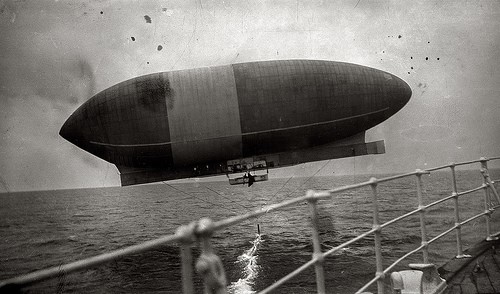
A 108 foot long semi-rigid airship of 200,000 cu.ft was built in 1907 in Paris for journalist-adventurer Walter Wellman and the engineer Melvin Vaniman. This airship, the America, powered by two 50 hp engines, was shipped to Spitsbergen the same year for an attempt on the North Pole, but was forced to return after only a few hours’ flight with engine trouble.
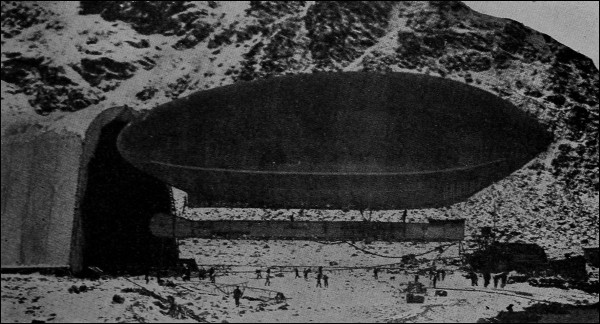
Originally the 1906 Godard-designed, French-built polar exploration airship, the “America” had already been rebuilt and enlarged twice by the time it was lost at sea. It was lost at sea in 1910 due to engine failure during an attempted transatlantic crossing. Walter Wellman, aero-pioneer Melvin Vaniman, four crewmen (and one ship’s cat) were recovered by RMS Trent near Bermuda 72 hours and 1000 miles into the Trans-Atlantic voyage; no losses.

The 1966 Sport Mk 1 Pup two place open cockpit biplane was originally powered by a 160hp Kinner R-540, and later a 220hp Continental W-670.
Only the one was built, registered N2312C.
Wingspan: 26’0″
Length: 19’9″
Useful load: 630 lb
Max speed: 118 mph
Cruise speed: 103 mph
Stall: 50 mph
Range: 350 mi
Harry Wellington
Ontario CA.
USA
Circa 1966
In 1930 R C Lusk & R M Weller partially built the Model 1 monoplane with a 100hp Kinner engine. Apparently it was not completed but registration was applied for and issued as N334V c/n EX-1, but cancelled on 4 March 1930.

