Circa 1920s engine builder
Dayton
Ohio
USA
Circa 1920s engine builder
Dayton
Ohio
USA
USA.
Founded 1990 and bought rights to Jamieson D light aircraft.
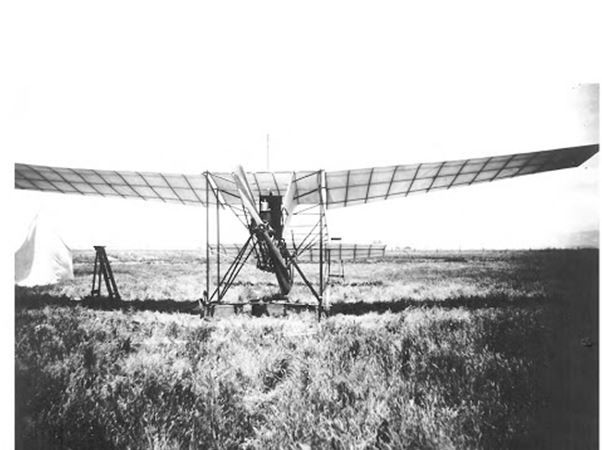
Glenn L Martin and Charles H Day built their first aircraft in 1909, in Long Beach, California. When they took the machine out for testing, the engine stopped while it was being taxied. The individual taxiing it decided to try to re-start the engine himself and was successful, but with no one in the cockpit the machine went off by itself and ran around the field until it hit something and was totally wrecked.
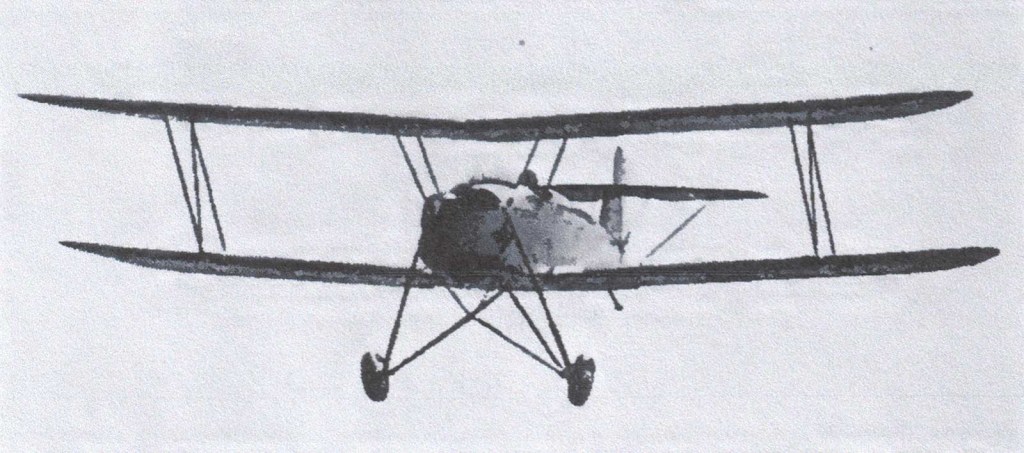
The Day Model A Special was planned originally for pilots with limited experience by offering them a safe, easy to fly aircraft. An early light plane around-the-world-flight was successfully achieved by Charles Healy Day with his wife Gladys in 1931. They completed a 24,000 mile global tour in an open cockpit, side by side biplane he designed.
Day was a highly respected aeronautic engineer. He designed the Standard J-1 in 1914 which was used to teach World War I cadets to fly. It was also a favorite of barnstormers during the 1920’s. He also designed the later five-place New Standard GD-24 and D-25.
The 34 foot span airplane was powered with a 120 hp Martin D-333 engine. Their seven month tour included flights over 20 countries with visits to 74 cities and covered 16,000 miles flown over land and 8,000 miles with their aircraft loaded aboard ship for crossing the Atlantic and Pacific oceans.
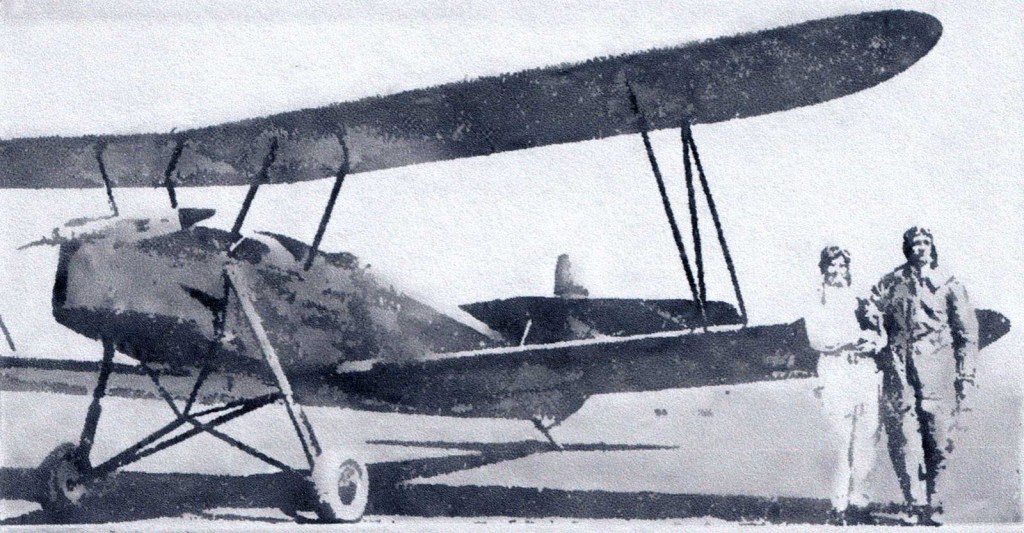
The only damage this aircraft suffered throughout the world tour was a bent tail skid mount caused by ground-looping across a ditch in Foo-Chow, China.
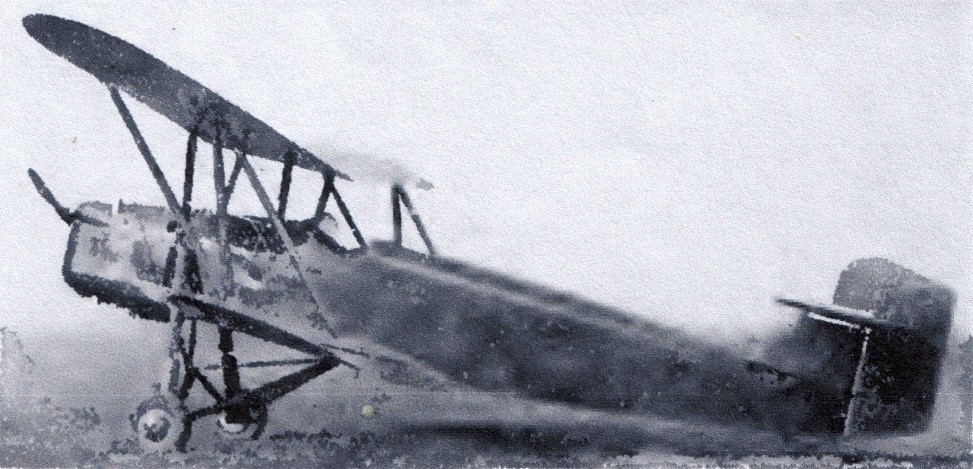
Fuel capacity was only 24 gallons. An additional 24 gallon tank was installed for the world flight. This extended range for over land flights but 48 gallons was insufficient for flying over the oceans.
The 1909 25hp 5-cyl air-cooled engine built by Charles H Day was used on his plane by Day at the Dominguez Hills air meet.
Born at Salamanca NY, December 29, 1884. Died at Pacific Palisades CA, May 26, 1955.
Charles Healy Day built his first aircraft in 1909, working with Glenn L Martin. Day is credited with developing the technique of using laminated wood to make propellers, thus increasing their strength. In 1910 he built and flew the nation’s first tractor biplane, an aircraft of his own design. He worked off and on with Martin until 1915, when he was made vice-president and chief design engineer of the Sloane Airplane Company, soon to become the Standard Aircraft Corporation. There he designed and built several aircraft leading to the famous Standard J-1 used extensively for pilot training in World War I, flying the mail, and for barnstorming in the 1920s. The J-1’s large forward cockpit held two passengers to double the pilot’s revenue per flight. It was also the aircraft used by Otto Timm in 1922 to give a young Charles Lindbergh his first taste of flying.
In the early 1920s, Day worked as an aviation consultant, and for a short time with Elektron Metals Corporation of America, developing and promoting the use of magnesium alloys in the US aircraft industry. For two years he was a consultant on light metals to the German Chemical Trust, then in 1926 he teamed up with Ivan Gates, of the Famous Gates Flying Circus, to form the Gates-Day Aircraft Company in Paterson NJ, reorganized in 1928 as the New Standard Aircraft Corporation. During that time, Day designed his most famous and enduring aircraft, the GD-24, which evolved into the D-25 and many variants, all of which had a huge front cockpit capable of carrying up to five passengers or a big load of bootleg whiskey. Needless to say, it became a mainstay of barnstormers and smugglers. The last variant of the design was built in 1942 by White Aircraft Corporation for the Department of Agriculture, and a few are still flying today.
In 1931 Day resigned his position as president of Standard Aircraft, built a small open-cockpit trainer he called the Day Model A and with his wife, Gladys, flew it around the world—excepting oceans, where it went more logically by boat. Then in 1934, after a couple of years of consulting, he accepted an offer from Chiang Kai-Shek, head of the Canton Government in China, to organize and operate an aircraft factory at Shiuchow. He got the factory up and operating in minimum time, but by 1937 it was being targeted by Japanese bombers. To defend against the bombings, Day moved his manufacturing equipment into bamboo sheds, scattered several miles into the forest. Operating under those primitive conditions, he was able to continue production of the Fushin trainer, Curtiss Hawks under license, and Russian I-15 pursuits. Practically all of the 400 employees of that factory had no previous experience with aircraft and had to be trained by Day and his staff.
In 1940, after many harrowing experiences, the factory was cut off from supplies needed to continue operation, and the Days left China. Back in New York, he was a recognized aircraft production expert. That, coupled with his recent experiences in China, put him in great demand for the lecture circuit. He wrote articles and made several speeches on the Japanese Air capabilities. Late in 1940, he became Supervisor of Aircraft Production, Department of Munitions and Supply, Ottawa, Canada.
After Pearl Harbor he was commissioned a major in the Army Air Corps and was stationed at Wellston Air Depot, now Robins AFB, GA. He resigned his commission in November 1942 to head the Glenn L Martin Modification Center at Omaha, where he remained until 1945. By that time he was having some health problems, but continued working as an aviation consultant until his death at his home.
Alex Dawydoff in the U.S. acquired plans for the Slingsby Kirby Cadet and built the slightly modified UT-1, still with mainskid and no wheel, first flying in 1943. The sole UT-1 now belongs to the National Soaring Museum.
Designed by Lee Bowman, the 1929 Dawn Aircraft Motors Inc Duplex was a five-cylinder, air-cooled radial, copy of the French Gobron-Brille with two pistons in each cylinder head.
Los Angeles CA.
USA
Built the Dawn Duplex engine in 1929.
USA.
Formed in 1920 at Santa Monica, California, by Donald W. Douglas, with finance from Davis, to produce the first Douglas design, the 1921 Cloudster. Formerly chief engineer of the Glenn L. Martin Company, Donald W. Douglas was to found the Douglas Aircraft Company in 1928.

