de Havilland DH 16

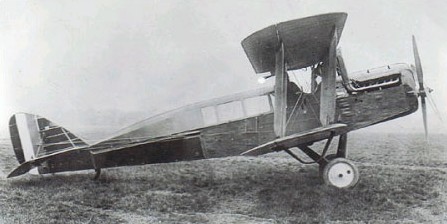
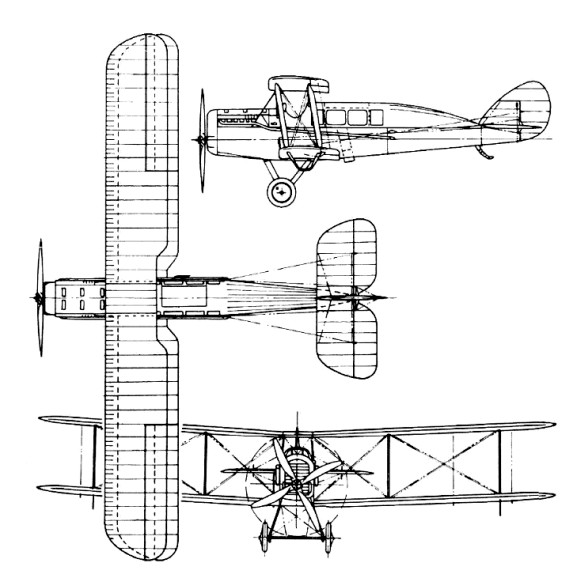
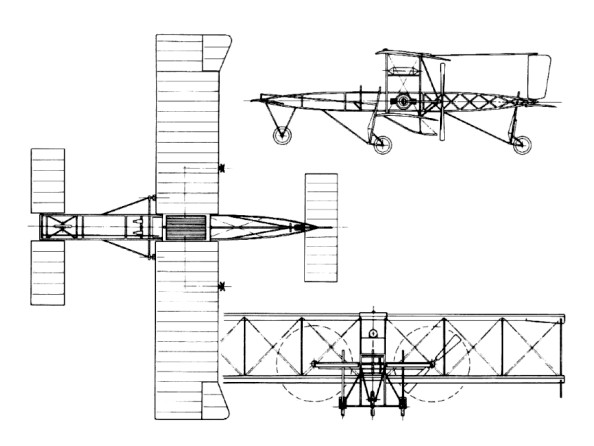
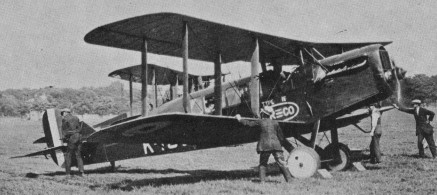
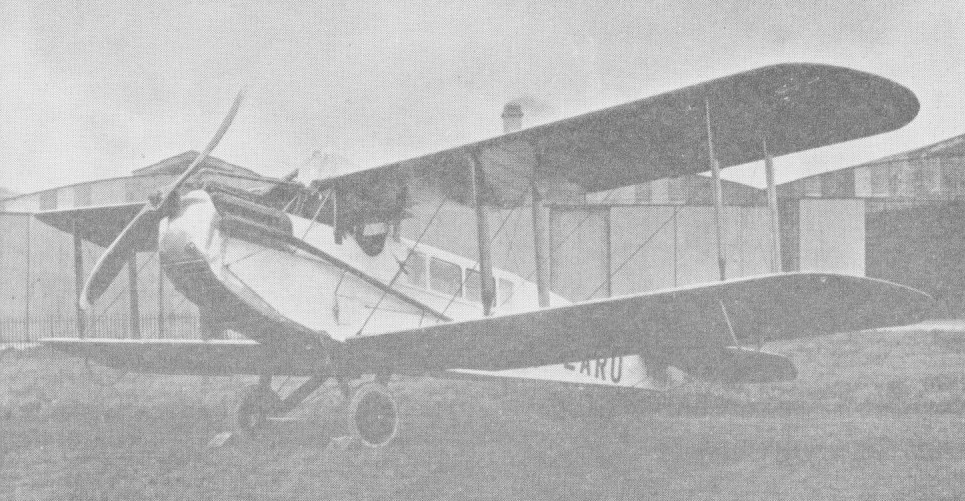
The end of World War I and the subsequent vast surplus of military aircraft was not a time for new civil designs to emerge. Instead, many conversions of military models were attempted, but the de Havilland D.H.16 was a redesign of the D.H.9A with a wider fuselage for four passengers. Following its first flight at Hendon in March 1919, the D.H.16 was sold to Aircraft Transport and Travel Ltd (AT&T), who used it for pleasure flying before it inaugurated a London-Paris service on 25 August 1919.

On September 2, 1919, Handley Page Transport Ltd, operating from Cricklewood, began flights between London and Paris, and to Brussels and Amsterdam.

Handley Page used converted O/400 bombers on the London-Paris, London-Brussels routes, and converted de Havilland 9s on the London-Amsterdam. The converted DH9s were designated DH.16s. The fuselage of the aircraft was rebuilt as a cabin with room for four passengers.

Total D.H.16 production was nine aircraft, all but one being used by AT&T. The sole exception was sold to a customer in Buenos Aires, where it operated a service to Montevideo. The first six D.H.16s were powered by the 239kW Rolls-Royce Eagle engines, the last three having Napier Lions.

AT&T closed in December 1920 and its seven remaining D.H.16s (one had been lost in a crash) were stored. Five were broken up in 1922 and two sold for newspaper delivery flights; one of these was lost in a fatal crash in 1923, and the remaining aircraft was subsequently withdrawn and scrapped.

Engine: Rolls-Royce Eagle, 325 hp.
Speed: 95 mph.
Pax cap: 4.

Engine: 1 x Napier Lion inline piston engine, 336kW
Take-off weight: 2155 kg / 4751 lb
Empty weight: 1431 kg / 3155 lb
Wingspan: 14.17 m / 46 ft 6 in
Length: 9.68 m / 31 ft 9 in
Height: 3.45 m / 11 ft 4 in
Wing area: 45.5 sq.m / 489.76 sq ft
Max. speed: 219 km/h / 136 mph
Cruise speed: 161 km/h / 100 mph
Ceiling: 6400 m / 21000 ft
Range: 684 km / 425 miles

de Havilland DH.15 Gazelle

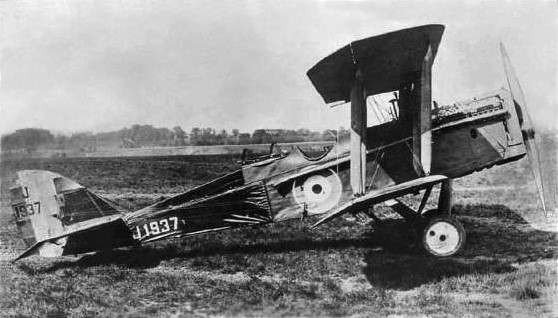
Airco DH.15 J1937

Enquiries were also made of the 500 hp Galloway Atlantic engine that was currently under evaluation. Seventy-two of these engines were ordered in September 1918 with a possible increase to 1000, but only one was ever fitted into a DH.9A, which was re-designatd the DH.15.

The DH.15 Gazelle, more often known just as the DH.15, was a standard DH.9A, complete with original armament, converted for use as an engine testbed. The engine involved was the 500 hp (373 kW) B.H.P. Atlantic, a water-cooled V-12 unit produced by the Galloway Engineering Co., which merged two six-cylinder inline B.H.P. engines onto a common crankcase. This replaced the DH.9A’s standard 400 hp (300 kW) Liberty 12, although without great change in appearance, as the Atlantic was mounted behind a similar large rectangular radiator. Both engines were upright V-12s, both with crankshafts near the base, and in each case the propeller was mounted low on the nose. The exhaust pipes on the DH.15 were longer than the usual DH.9A set, running straight back from the upper sides of the engine, ending at the observer’s cockpit.

Two DH.15s were ordered, but only one was built. It completed many flights with the Atlantic engine, through 1919 to 1920.

Engine: 1 × B.H.P (Galloway Atlantic), 500 hp
Wingspan: 45 ft 11.38 in (14.00 m)
Wing area: 486.75 ft2 (45.13 m2)
Length: 29 ft 11 in (9.12 m)
Empty weight: 2,312 lb (1,049 kg)
Gross weight: 4,773 lb (2,165 kg)
Maximum speed: 139 mph (224 km/h)
Service ceiling: 20,000 ft (6,100 m)
Rate of climb: initial 1,500 ft/min (7.62 m/s)
Crew: two

de Havilland 1910 / FE.1

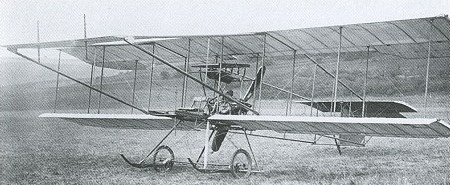
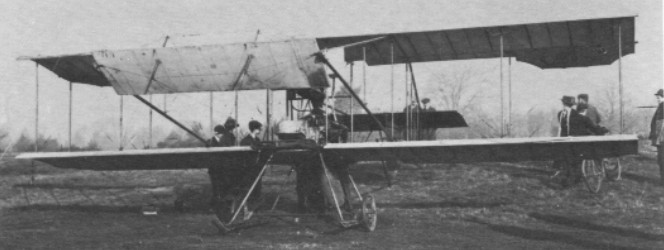
The Balloon Factory at Farnborough decided to buy the de Havilland No. 2 for £400. Being a pusher biplane like the Farman, de Havilland’s aircraft was given the official designation F.E.1 (Farman Experimental No. 1). After quite a lot of flying it was wrecked, rebuilt with a Gnome instead of its original 45 hp de Havilland Iris engine and re-designated F.E.2. A successful fighter of 1916-17.

Engine: 1 x 60-h.p. E.N.V., “F”
Span: 38ft 0in
Length: 40′
Loaded wt: 1,200 lb
Seats: 1

1910 De Havilland biplane No. 2

De Havilland 1

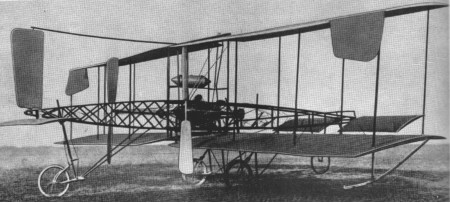
The first Geoffrey de Havilland aeroplane was a biplane built by de Havilland and F.T.Hearle in a shed near Newbury (Berks) in 1908-9. The airframe was American white pine, spruce and ash. The propeller had steel shafts with aluminium blades, and the airframe covered in undoped bleached cotton.

Flown (or hopped) on a racecourse there, it crashed; but he built another.

Engine: 45 hp Iris-built de Havilland 4-cyl horizontally opposed
Span: 36 ft 0 in / 10.97 m’
Length: 29′ 0 in / 8,84 m
Height: approx. 9 ft 10 in / 3.00 m
Wing area: 408 sq.ft / 37.90 sq.m
Weight all up: 850 lb 386 kg

de Havilland

Geoffrey de Havilland built his first (unsuccessful) aircraft in 1909. His second, flown in 1910, was bought by the War Office, and de Havilland was taken on as designer at the Balloon Factory (later Royal Aircraft Factory), where between 1911 and 1914 he designed the F.E.2, S.E.1, S.E.2, B.E.1, and B.E.2. In 1914 he joined the Aircraft Manufacturing Company at Hendon, designing the D.H.2 pusher fighter, D.H.3, and D.H.10 twin-engined bombers, D.H.5 fighter, and D.H.4 day bomber. The latter was extensively built in the USA. The D.H.9 and 9a were variations; the 9a equipped post-war RAF bomber squadrons and it, too, was built in the USA. Nearly 3,000 were constructed in Russia as the R-1.

Geoffrey de Havilland Article

The Aircraft Manufacturing Co. was sold in 1919 to the B.S.A.-Daimler group who, disappointed at the failure of air transport in 1919-20, shut the firm down. Almost immediately de Havilland and C.C.Walker, financed largely by Holt Thomas, out of money which he got by selling B.S.A. shares which he received in payment for the A.M.C. Ltd, started de Havilland Aircraft Co. Ltd. Airco name was temporarily revived January 1958 for production of D.H.121 jet transport.

The first aeroplane built at Stag Lane was the DH.18.
The D.H.53 Humming Bird ultralight was the best entrant in the 1923 Air Ministry Light Aeroplane competition, but de Havilland realised that their passion for lightness was an error, and in 1925 produced the first Moth to more sensible proportions. It was sold all over the world. A number of cabin monoplanes and a military version, the Tiger Moth, followed; over 8,000 Tigers were built for various air forces.
The three-engined D.H.66 Hercules was flown by Imperial Airways from 1926, and in the 1930s many domestic and foreign airlines used the twin-engined D.H.84/89 Dragon/Dragon Rapide and four-engined D.H.86 Express.
In 1934 de Havilland designed the all-wood D.H.88 Comet twin-engined racer for entrants in the “MacRobertson” England-Australia race. At a fixed unit price of GBP5,000 this gamble paid off; three were entered, and one of these won the speed prize. By 1939 the firm was producing the D.H.91 Albatross, a fast airliner with four engines; the twin-engined D.H.95 Flamingo feederliner and the diminutive D.H.94 Moth Minor. All production of these ceased at the outbreak of war, which also cut short a promising bombertrainer, the D.H.93 Don. In 1938 work started on a fast unarmed wooden bomber, the D.H.98 Mosquito. It became one of the most versatile aircraft of its time, and by the end of the war a single-seat fighter version attained a speed of 760km/h. The Vampire, de Havilland’s first turbojet fighter, Venom, Sea Venom and later Sea Vixen, served for a decade after the war.

Geoffery de Havilland in a Vampire cockpit

The other problem arising from the cancelled Don order was the under-utilisation of woodworking skills at the de Havilland factory. To compensate the Company, on 2nd September 1938 the Air Ministry awarded them orders for a large batch of Tiger Moths, some more Queen Bees, plus a contract to build 150 all wooden Airspeed Oxford trainers for the RAF. When Geoffrey de Havilland read the letter, he saw red – de Havilland’s did build somebody else’s aeroplane. de Havilland gave Nixon a simple order – “Buy that company!”

As it transpired, this order took some doing and it would be several years before de Havilland’s owned Airspeed Ltd, of Portsmouth. Airspeed joined de Havilland in 1951.
Back in civil work, the company produced the twin-engined Dove, four-engined Heron and, in 1949, the first jet airliner in the world, the D.H.106 Comet. The Comet 1 ran into constructional problems, but the Mark IV achieved success. The last DH designs were the D.H.121 Trident, a three-engined airliner for BEA, and the D.H.125 executive jet (both first flown 1962). Both were still in production in 1978, long after the company’s absorbtion into the Hawker Siddeley Group in 1960, and the D.H.125’s successors were still in production at the turn of the new century.

de Havilland Sprite DSpr.2 / Super Sprite DSpr.4

The Sprite was a British rocket engine built by de Havilland for use in RATO applications. For RATO use only a short burn time is required, with simplicity and light weight as major virtues. The intended market was for assisting take-off of de Havilland Comet 1 airliners (as hot and high operations in the British Empire were considered important) and also for V bombers carrying heavy nuclear weapons. 30 successful test flights were carried out by Comets, from May 1951, but gas turbine performance improved rapidly, and so RATO was not required in service.

A hydrogen peroxide monopropellant was used, decomposed into oxygen and steam over a metallic calcium catalyst. The maximum thrust was 5,000 lbf (22 kN), varying over the 16 second burn time for a total impulse of 55,000 lbf (240 kN) seconds. Propellant capacity was 39 gallons. The dry weight was 350 lbs.

The DSpr.2 used a silver-plated nickel-gauze catalyst, tested in Comets during April 1952. A technology update then took place with the proving of silver plated nickel gauze packs as catalysts with the establishment of optimum loadings and flows. This practice was replicated in all future applications with the catalyst no longer consumed. In April 1952 the DSpr.2 proved this modification impressively in Comet demonstration with clean exhaust. The next stage was pursued with the Super Sprite (DSpr.4) following the ATO development precedent with ‘hot’ operation but now enhanced in simplicity by ability to inject kerosene fuel once chamber pressure was established by the catalysed peroxide flow. The units, flight approved in August 1953, reverted to the practice of being parachuted after firing for routine re-use in service operations with the Vickers Valiant V bomber.

The Super Sprite DSpr.4 was a re-development of the Sprite application, using a significantly different ‘hot’ propellant technology, that of hydrogen peroxide / kerosene. Although the peak thrust was actually reduced (4,200 lbf / 18.7kN), burn time was 2.5 times longer (40 seconds), with a proportionate increase in total impulse (120,000 lbf seconds). Propellant capacity was 60 gallons (approx.).

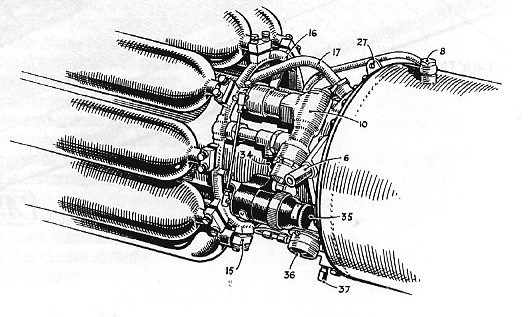
For simplicity, there were no fuel pumps and the tanks were pressurised by nitrogen from nine cylinders wrapped around the combustion chamber.

The Super Sprite was packaged as a self-contained engine in its own nacelle, jettisoned after take-off and retrieved by parachute. Inflatable air bags cushioned its impact with the ground. To obtain a clean separation from the carrier aircraft, the production engines fitted to the Vickers Valiant had a small canard vane at the nose, pitching the nacelle downwards on separation.

De Havilland regarded the 166 units manufactured as a standard production item, supported by their Service Department alongside piston and turbojet engines. It was the first rocket engine to gain formal type approval.

Super Sprite DSpr.4
Super Sprite DSpr.4

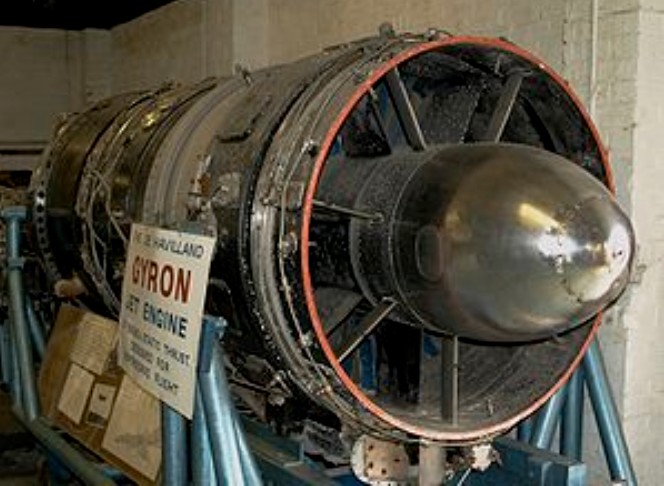
de Havilland PS.23 / PS.52 Gyron / Halford H-4

de Havilland Gyron

The de Havilland PS.23 or PS.52 Gyron, originally the Halford H-4, was Frank Halford’s last turbojet design while working for de Havilland. Intended to outpower any design then under construction, the Gyron was the most powerful engine of its era, producing 20,000 lbf (89 kN) “dry”, and 27,000 lbf (120 kN) with afterburner.

The Gyron was Halford’s first axial-flow design, a complete departure from his earlier centrifugal-flow engines based on Whittle-like designs, the Goblin (H-1) and Ghost (H-2). The Gyron was also one of the first engines designed specifically for supersonic flight.

The Gyron first ran in 1953. Flight testing started in 1955 on a modified Short Sperrin (a bomber design that was instead turned into an experimental aircraft), replacing the lower two Rolls-Royce Avons with the much larger Gyrons. Flight rating was 18,000 lbf (80,000 N). In 1955 the DGy.1 received an official rating of 15,000 lbf (67,000 N). Addition of a reheat section boosted output to 20,000 lbf (89,000 N) and then 25,000 lbf (110,000 N) in the Dgy.2

The Gyron was selected for a number of projects, most notably the Hawker P.1121 (sometimes referred to as the Hurricane) supersonic attack aircraft that was to have been the replacement for the Hawker Hunter. However, this project was eventually cancelled. Another design potentially based on the Gyron was the Operational Requirement F.155 interceptor, which optionally used the Rolls-Royce RB.106. F.155 was also cancelled, part of the 1957 Defence White Paper. Government financial support of the Gyron project itself was cancelled in March 1957, at a reported total cost of £ 3.4 million.

The engine was actually too large for most roles and saw no production use. It was later scaled down to 45% of its original size to produce the de Havilland Gyron Junior, which was somewhat more successful.

Specifications

Gyron D.Gy.1
Type: Turbojet
Length: 155.5 in
Diameter: 55.2 in
Dry weight: 4,270 lb
Compressor: Seven stage axial flow
Turbine: Two-stage
Maximum thrust: 20,000 lb
Overall pressure ratio: 5.6
Specific fuel consumption: 1.04 Ib./hr/lb at maximum thrust

de Havilland Ghost / Halford H-2 / Svenska Flygmotor RM2

Swedish licensed-built de Havilland Ghost – RM 2

The Ghost came about when de Havilland started work on what was to become the Comet in 1943. Frank Halford’s first design, the H-1, was just entering production and he was able to meet the power requirements of the Comet by simply scaling up features of the H-1. The resulting H-2 also used ten larger flame cans in place of the Goblin’s sixteen smaller ones, using “split intakes” to each can to feed in more air, as if there were twenty cans feeding off the compressor. While the prototype was being built, de Havilland bought Halford’s firm and reformed it as the de Havilland Engine Company, renaming the H-1 and H-2 as the Goblin and Ghost respectively.

The Ghost was already being tested in 1944, and flew on 2 September 1945. This was long before the Comet or Venom was ready for flight. By this point the Ghost had been selected for the Swedish “JxR” fighter project, which eventually turned into the Tunnan. During the design of the Tunnan, Sweden received German data on swept wing designs via Switzerland and redesiged the plane to incorporate this planform. The Tunnan first flew in this form in 1948. For production versions of the Tunnan, the Ghost was built under licence by Svenska Flygmotor (later to become Volvo Aero) as the RM2.

The Ghost would next be seen when the Comet finally took to the air on 27 July 1949. This prototype was powered by the 5,000 lbf (22 kN) Ghost 50, although this was an interim measure while more powerful engines could be developed. The “real” version of the aircraft would be the Rolls-Royce Avon-powered Comet 2, but these engines were not yet ready for flight. In order to make up for the low thrust of the Ghost, the Comet was lightened by using thin-gauge skinning. It was this thin skin that was later found to be a contribution to the cause of a number of infamous crashes, due to metal fatigue. Several versions of the Ghost 50 were produced, ending with the Ghost 50-Mk.4 mounted on the Comet 1XB that was built to test new fuselage construction techniques to address the problems in the Comet 1.

During development, the Royal Air Force also asked for an improved version of the de Havilland Vampire with greater load carrying capacity and thus a larger engine. The resulting design was known as the Venom, and shared many features with the earlier Vampire. The Ghost first flew in the Venom on 2 September 1949. By this point the engine had been running for some time and was already at the Mk.103 model of 4,850 lbf (21,600 N). The Venom was used primarily as a fighter bomber, although some were also produced as night fighters. The Venom was later selected by the Fleet Air Arm for their interceptor needs, and was widely used as the Sea Venom.

Variants:
Ghost 45, rated at 4,400 lbf (19.7 kN)
Ghost 48, rated at 4,850 lbf (21.6 kN)
Ghost 50 Mk 1, rated at 5,000 lbf (22.2 kN) at 10,000 rpm with a weight of 2,011 lb (912 kg)
Ghost 50 Mk 2, rated at 5,125 lbf (22.8 kN)
Ghost 103, rated at 4,850 lbf (21.6 kN)
Ghost 104, rated at 4,950 lbf (22.0 kN)
Ghost 105, rated at 5,150 lbf (22.9 kN)

Applications:
de Havilland Comet
de Havilland Venom
de Havilland Sea Venom
“Ghost-Lancastrian”
Saab Tunnan
Crusader (speedboat)

Specifications:

Ghost 50
Type: Turbojet
Length: 121 in
Diameter: 53 in
Dry weight: 2,218 lb
Compressor: Single stage centrifugal flow
Combustors: 10 chambers
Turbine: Single-stage
Fuel type: Kerosene
Maximum thrust: 5,000 lbf at 10,250 rpm
Overall pressure ratio: 4.6
Specific fuel consumption: 1.02 lb/hr/lbf

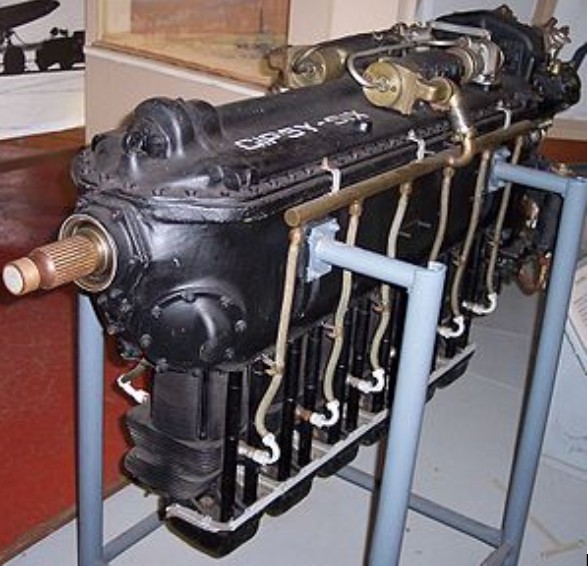
de Havilland Gipsy Six / Industria Aeronautică Română IAR 6G1

The de Havilland Gipsy Six is a British six-cylinder, air-cooled, inverted inline piston engine developed for aircraft use in the 1930s. It was based on the cylinders of the four-cylinder Gipsy Major and featured a low cross-sectional area.

The de Havilland company had hoped to produce a version of the basic engine capable of utilising a hydraulically actuated variable pitch (VP) airscrew based on the American Hamilton “Bracket-Type.” Since there was so little time to perfect this installation, as a compromise, a French “Ratier” VP airscrew was fitted to the Comets’ “R” engines, which utilised a simple air-filled bladder for a once-per-flight automatic pitch change. Later on, Comets were fitted with the Series II engine, which eliminated this crude system. Power for the “R” was increased to a takeoff rating of 223 hp by increasing the compression ratios from 5.25:1 to 6.5:1, while fitting aluminium alloy cylinder heads, domed-pistons and modified valve gear. Production of the basic fixed-pitch Gipsy Six unit began in 1935, with the engines rated at 200 hp (150 kW) at 2,400 rpm for takeoff.

In 1934, the basic bronze-headed Gipsy Six, rated at 185 horsepower (138 kW) at 2,100 rpm was modified for use in the DH.88 Comet air racer as the Gipsy Six “R” which produced 223 horsepower (166 kW) at 2,400 rpm for takeoff.

This was quickly followed by production of the 205 hp Gipsy Six Series II for use with the hydraulically actuated airscrews that de Havilland were by then producing under a licence acquired from Hamilton Standard in 1934. This was effectively the engine that the company did not have time to develop for the 1934 MacRobertson race, but without the significant increase in compression-ratio needed for the Comet. The Series II unit, while superficially similar to its predecessor, utilised a hollow, splined crankshaft to permit the fitting of the VP airscrew utilising boosted pressurised oil from the engine’s dry-sump lubrication system via a pilot-operated control valve. As well as differences to the crankcase and crankshaft, different cylinder barrels, pistons and aluminium cylinder heads were utilised. The “pilot-friendly” constant speed units (CSUs) were not available for these engines until 1939. The Series II was also equipped with AMC (Automatic Mixture Control) a barometric device, without which it was exceedingly difficult to adjust for a correct mixture with a CSU fitted. This feature was also carried over onto the similar Queen II. Pilots were then able to simply select the required RPM and Boost pressure required. This reduction in over-leaning also tended to extend the TBO (time between overhauls). The twin down-draught, Claudel-Hobson A.I.48 carburetters were common to all these engines. In the mid-1930s, the induction system was skilfully designed to automatically obviate the effects of carburetter icing. The series of engines proved to be reliable, and the time between overhaul (TBO) was more than doubled within a few years.

These engines powered many, if not most of the racing and record-setting aircraft of the 1930s. The engines were subsequently developed into the similar de Havilland Gipsy Queen III and Queen II for military applications. Later developments, such as the postwar Queen 30 and Queen 70 series engines took the rated power from 185 hp up to nearly 500 hp, and, while being entirely new designs, still used all of the same basic configuration of the original Gipsy Six of the mid-1930s and were in use by operators such as the Royal Air Force (RAF) and Royal Navy (RN) until the 1980s.

In all, 1139 were built.

Alfa Romeo built two engine types based on the Gipsy Six design, the Alfa Romeo 110 and Alfa Romeo 115.

Variants:

Gipsy Six I
Bronze cylinder heads, 200hp. For fixed-pitch airscrews.

Gipsy Six Series II
Aluminium cylinder heads, designed for leaded fuel. 210 hp. For VP airscrews.

Gipsy Six ‘R’
Racing engine with high lift camshaft. 220 hp. For VP airscrews.

Gipsy Queen
Military version of Gipsy Six. Queen III, 205 hp, for fixed-pitch airscrews. Queen II for VP airscrews, 210hp. Later Queens differed substantially.

IAR 6G1 – licence-built by Industria Aeronautică Română

Applications
ASJA Viking II
Cierva W.9
de Havilland Dragon Six
de Havilland Dragon Rapide
de Havilland Express
de Havilland DH.88
Koolhoven F.K.57
Miles Mentor
Parnall Heck
Percival Mew Gull
Percival Petrel
Percival Vega Gull
Rogožarski SIM-XII-H

Specifications:

Gipsy Six I
Type: 6-cylinder air-cooled inverted inline piston aircraft engine
Bore: 4.646 in (118 mm)
Stroke: 5.512 in (140 mm)
Displacement: 560.6 in3 (9.186 L)
Length: 62.1 in (1,578 mm)
Width: 19 in (485 mm)
Height: 32.4 in (823 mm)
Dry weight: 468 lb (213 kg)
Valvetrain: OHV
Fuel system: Two downdraught Claudel-Hobson A.I.48F carburettors
Oil system: Dry sump, gear-type pump
Cooling system: Air-cooled
Power output: 200 hp (149 kW) at 2,350 rpm (on 70 octane fuel)
Specific power: 0.357 hp/cu in (16.2 kW/L)
Compression ratio: 5.25:1
Fuel consumption: 10 gph (45.4 L/ph) at 2,100 rpm
Oil consumption: Up to 4 pints (2.4 L) per hour.
Power-to-weight ratio: 0.42 hp/lb (0.7 kW/kg)
de Havilland Gipsy Queen

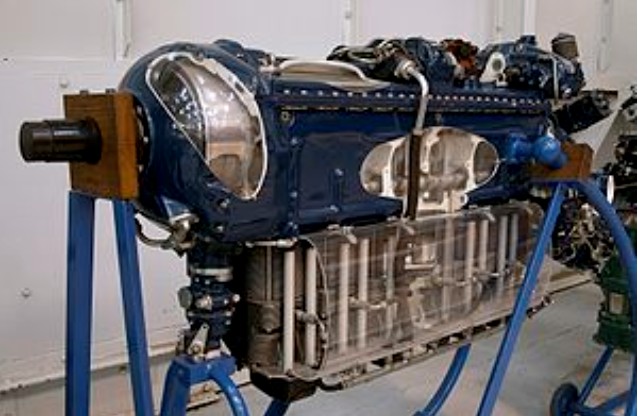
de Havilland Gipsy Queen 70-4

The de Havilland Gipsy Queen is a British six-cylinder aero engine of 9 litres (550 cu in) capacity that was first run in 1936 by the de Havilland Engine Company. It was developed from the de Havilland Gipsy Six for military aircraft use. Produced between 1936 and 1950, around 5000 Gipsy Queen engines were built.
Variants:

Gipsy Queen I
(1936) 205 hp (153 kW), military version of Gipsy Six II. Splined crankshaft.

Gipsy Queen II
(1936) 210 hp (160 kW), military version of the Gipsy Six Series II. Strengthened crankcase. Splined crankshaft for V/P airscrew.

Gipsy Queen III
(1940) 200 hp (150 kW), military version of Gipsy Six, strengthened crankcase, tapered crankshaft for fixed-pitch;-1,358 built.

Gipsy Queen IV
(1941) Supercharged version, originally designated Gipsy Queen IIIS, designated Gipsy Queen 50 in June 1944.

Gipsy Queen 30
All-new engine from this point. (120 mm x 150 mm = 10.18 L)
(1946) 240 hp (180 kW), 1,762 built.

Gipsy Queen 30-2
(1946) 240 hp (180 kW).

Gipsy Queen 30-3
(1946) 240 hp (180 kW).

Gipsy Queen 30-4
(1946) 240 hp (180 kW).

Gipsy Queen 32
(1946) 250 hp (190 kW).

Gipsy Queen 33
As Gipsy Queen 30 for pusher installation.

Gipsy Queen 34
As Gipsy Queen 30.

Gipsy Queen 50
(1944) 295 hp (220 kW), Single-speed, single stage supercharger. 14 built.

Gipsy Queen 51
295 hp (220 kW), as Gipsy Queen 50.

Gipsy Queen 70-1
(1946) Renamed Gipsy Six S.G, 1,889 built. Supercharged with reduction-drive.

Gipsy Queen 70-2
380 hp (280 kW)3. Supercharged with reduction-drive.

Gipsy Queen 70-3
380 hp (280 kW). Supercharged with reduction-drive.

Gipsy Queen 70-4
340 hp (250 kW). Supercharged with reduction-drive.

Gipsy Queen 71
(1950) 330 hp (250 kW). Supercharged with reduction-drive.

Applications:
Airspeed Oxford
Breda Ba.44
Cierva W.9
Fiat G.46 bis and G.46-2
de Havilland Dragon Rapide
de Havilland Dove
de Havilland Heron
Handley Page Marathon
Heston A.2/45
Miles Mentor
Miles Merchantman
Parnall Heck
Percival Merganser
Percival Prentice
Percival Proctor
Planet Satellite
Scottish Aviation Pioneer
Short Sealand
Youngman-Baynes High Lift

Specifications:

Gipsy Queen I
Type: 6-cylinder inverted inline piston engine
Bore: 4.646 in (118 mm)
Stroke: 5.512 in (140 mm)
Displacement: 560.6 cu in (9.186 L)
Length: 63.5 in (1,587 mm)
Width: 20.5 in (513 mm)
Height: 33.5 in (838 mm)
Dry weight: 486 lbs (220 kg)
Valvetrain: Overhead valve
Fuel type: 87 octane petrol
Oil system: Dry sump
Cooling system: Air-cooled
Power output: 208 hp (155 kW) at 2,400 rpm
Compression ratio: 6.5:1
Power-to-weight ratio: 0.43 hp/lb (0.7 kW/kg)