Messerschmitt-Bolkow-Blohm, by 1990, was part of Deutsche Aerospace.
Era
Detroit Aircraft Corp Gull G1
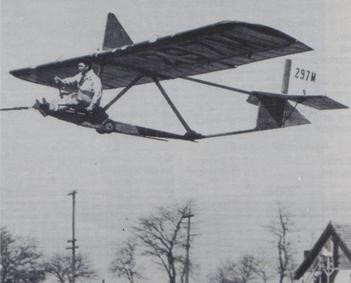
The Gull G1 was developed by Detroit Aircraft as an inexpensive aircraft for the Depression. The Gull is a high wing, cable-braced primary glider.
The Gull is built from wood, with the tail and wing surfaces covered in doped aircraft fabric. The wing is cable braced from a kingpost. The fuselage consists of a simple structure to which the seat is attached. The pilot sits on the completely open seat, with no windshield. Controls are conventional three-axis. The landing gear consists of the bottom of the fuselage shaped into a long wooden skid. Sometimes two small wheels were attached.
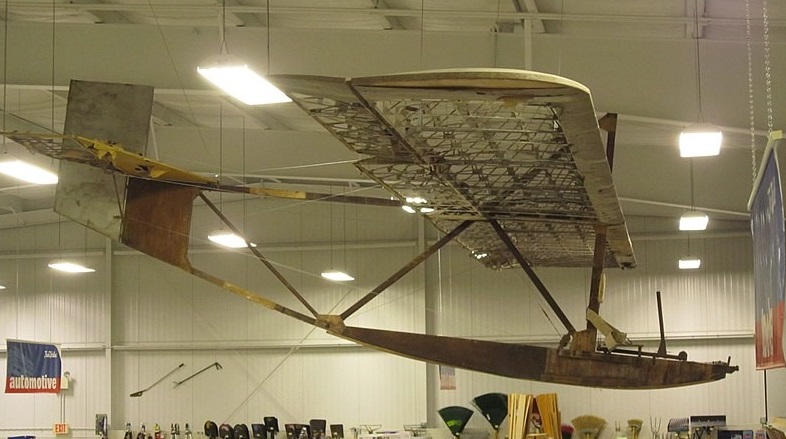
On June 20, 1930, the Aeronautics Branch certificated its first glider, the Detroit Gull, Model G-1. The aircraft’s correct designation is not clear. Soaring Magazine calls it the Detroit Gull G1 Primary, while the two Federal Aviation Administration registered aircraft are simply Detroit Gulls. Henley’s ABC of Gliding and Sailflying also calls it the Detroit Gull.
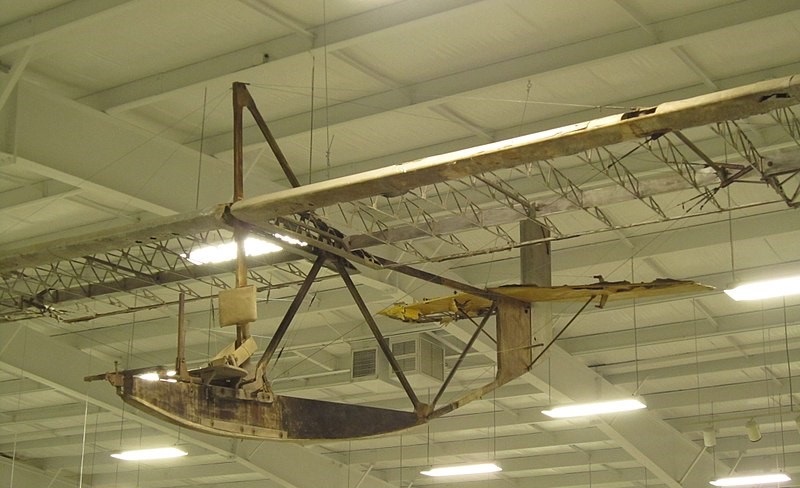
Detroit Aircraft later sold the rights to Stone Aircraft, who sold plans for the aircraft for amateur construction.
One Gull was started before the Second World War by Peter Eyrud of Walla Walla, Washington, but not completed. This aircraft was purchased by Peter M. Bowers who completed and flew it. Bowers documented the aircraft project in an article in the March/April 1957 edition of Soaring Magazine entitled Don’t Build a Primary.
In 1983 two other Gulls were reported to be in storage awaiting restoration.
In May 2011 there were two G1 Gulls registered with the Federal Aviation Administration in the USA. One was in the Kansas Aviation Museum and the other was still registered to Peter M. Bowers, even though he died in April 2003. Soaring Magazine reports that this aircraft too is actually in an unnamed aviation museum.
In August, 2013 one was put on display at the W.L Zimmerman’s Hardware Store, Intercourse, Pennsylvania. This glider has been preserved in original condition from 1931.
G1
Wingspan: 34.5 ft (10.5 m)
Wing area: 170 sq ft (16 sq.m)
Length: 17.5 ft (5.3 m)
Height: 7.0 ft (2.1 m)
Aspect ratio: 7:1
Airfoil: USA 35
Empty weight: 200 lb (91 kg)
Gross weight: 400 lb (181 kg)
Never exceed speed: 103 mph (166 km/h, 90 kn)
Maximum glide ratio: 8:1 at 30 mph (48 km/h)
Wing loading: 2.36 lb/sq ft (11.5 kg/sq.m)
Crew: one
Detroit Aircraft Corp
Formed in 1929 as a parent corporation to take control of several firms hit by the Depression: Lockheed Aircraft Company, Ryan Aircraft Corporation, Eastman Aircraft Corporation, Blackburn Aircraft Corporation, Aircraft Development Corporation, Marine Aircraft Corporation, Parks Airlines Ltd., and the Winton Engine Corporation. The consortium itself failed shortly afterwards.
In 1929 Lockheed merged with the Detroit but After the Great Crash Detroit Aircraft Corporation went bankrupt in 1931 and with it Lockheed.
In 1932, Boston banker Robert Gross led a syndicate that bought and resurrected the company with $50,000. The Electra was a success and the company prospered.
Detroit Aeroplane Co Viking
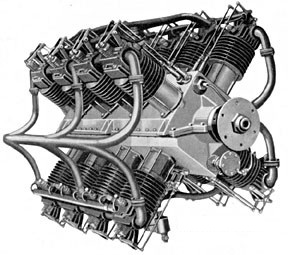
The 1919 Detroit Aeroplane Co Viking was an experimental 16 cylinder air-cooled aero engine producing 140hp.
Capacity: 530.88ci
Cylinders: 16
Power: 140hp@1600rpm
Dry weight: 306 lb
Detroit Aeroplane Co Airmotor
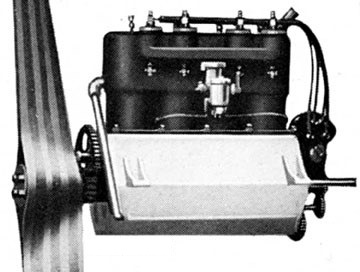
The 1910 Aeromotor aero engine was in two versions. A four-cylinder inline water cooled producing 60-75hp. And a six-cylinder experimental 6-cyliner liquid-cooled.
Detroit Aeroplane Co Aero / O-240
The 1910 Detroit Aeroplane Co Aero / O-240 was a two cylinder, horizontally opposed, air cooled aero engine. Designed by Fred Weinberg, it produced 20-30hp@1500rpm from 237.48ci.
Detroit Aeroplane Co 1910 Monoplane / Miss Detroit
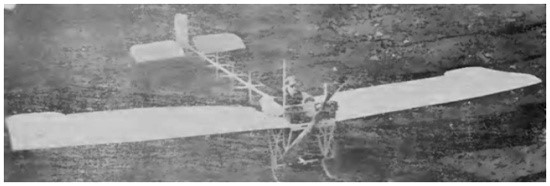
The Detroit Aeroplane Co. displayed a monoplane fitted with the company’s two-cylinder opposed 30 hp engine at the 1910 Philadelphia show, where it was “the hit of the show”. Two of them were sold, one to Atlantic City, where a training school is to be started next summer. It had a main plane with a span of 30 ft and an area 150 sq. ft. Stability was achieved by an arrangement where “the extremities of the wings sections have been cut out and hinged to the rear lateral beam. These float in the air stream in flight, being depressed individually through their attachment to the steering column”, i.e. ailerons… The fuselage was a single seamless steel tube of large diameter, braced with wires over cruciform horizontal and vertical masts.
Detroit Aeroplane Co
74 Crane Ave
Detroit MI
USA
Detroit Mfrs Syndicate.
Detroit Aeronautic Air Cat
The 1925 Detroit Aeronautic Construction Co Air Cat aero engine was a 5-cylinder air-cooled radial of 234ci that produced 60-85hp.
Detroit Aeronautic Construction Co / Detroit Aircraft Engineering Corp
c.1918: Detroit Aeronautic Construction Co,
74 Crane Ave
Detroit MI
USA
c.1920: Detroit Aircraft Engineering Corp (Glenn D Angle & Edward V Rickenbacker).
Circa 1920 the Detroit Aeronautic Construction Co built 4- and 6-cylinder, inline water-cooled aero engines of 30-75hp.
1928: Sold to LeBlond Co, Cincinnati.

