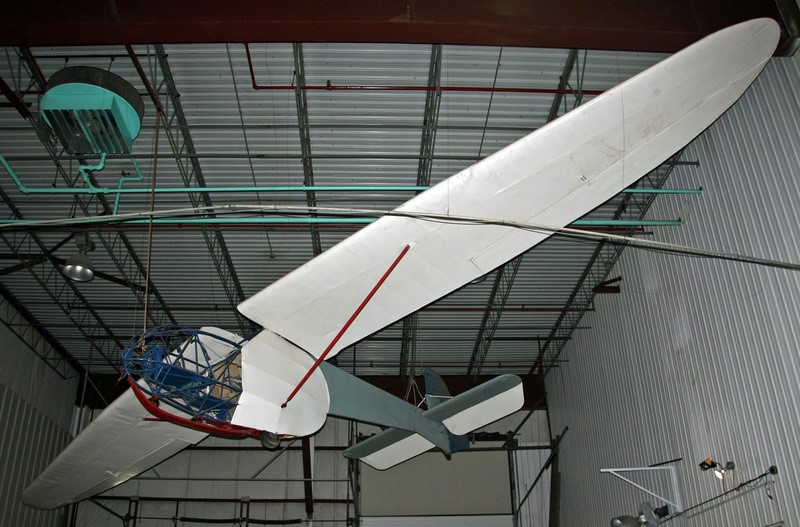
Doppelraab IV

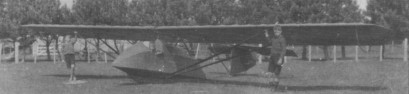
Designed by Fritz Raab. A 1950 glider trainer that was well used after the war because its compactness and low cost. The instructor seat was elevated and had no controls. The instructor having to reach over the students shoulders to take the controls.

Wing span: 12.76m
Wing area: 18sq.m
Length: 29.692 ft / 9.05 m
Empty Weight: 185kg
Gross Weight: 350kg
Wing Load: 19.4kg/sq.m
Aspect ratio: 9.05
Airfoil: Go 550
MinSink: 0.85 m/s 50 kph
L/DMax: 20 @ 55 kph
No. of Seats: 2
No. Built: 220

Donohoe Shuttle

Dave Donohoe, a colleague of Tom Cadet, developed the Boorabee’s airfoil. This wing was mated to a new fuselage mould to use a 4 x 3 inch rectangular boom and Dave called the result the Shuttle. Similar in overall appearance, the Shuttle has a single wing strut and a different tail and undercarriage and control system. After the undercarriage of the Shuttle proved weak, some Shuttles adopted that of the Boorabee.

The Shuttle design was abandoned after Dave’s second aircraft, powered by a 1600cc Jabiru, developed aileron flutter. The wings were damaged extensively, but Dave was able to land the aircraft. Vibration from the Jabiru, coupled with a control system that was too slack, caused the flutter.

Donnet-Lévêque Type A / Type C

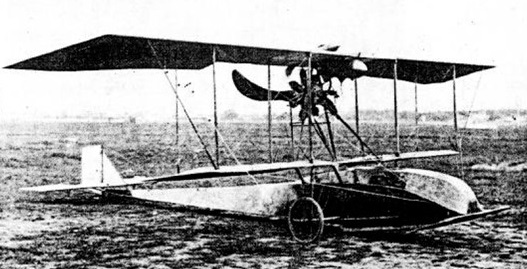
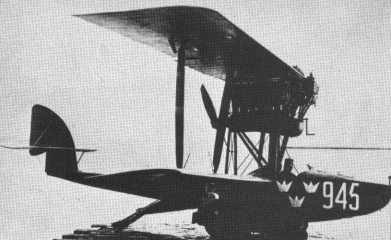
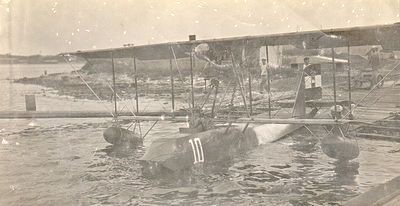
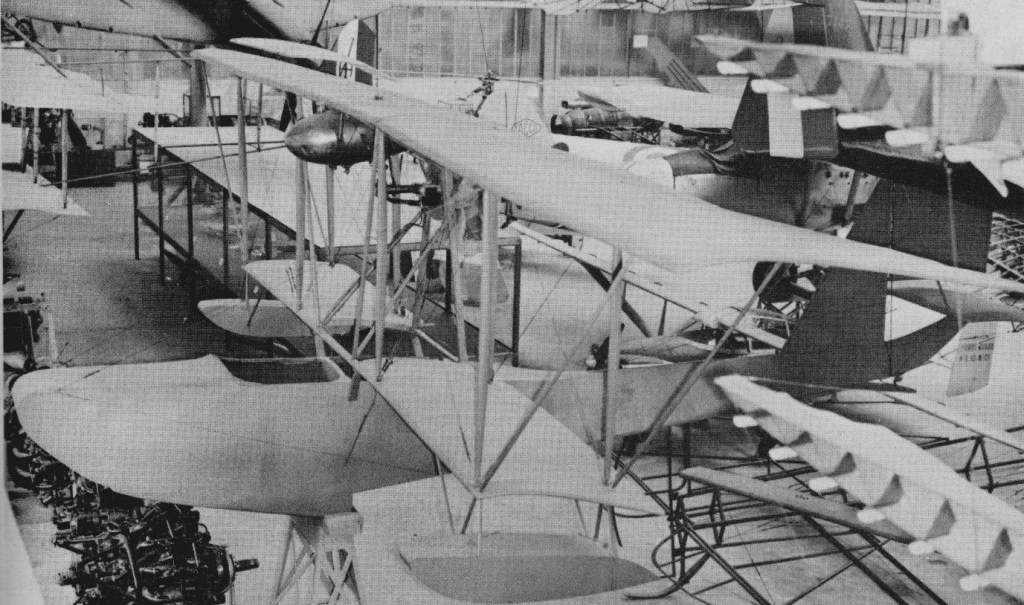
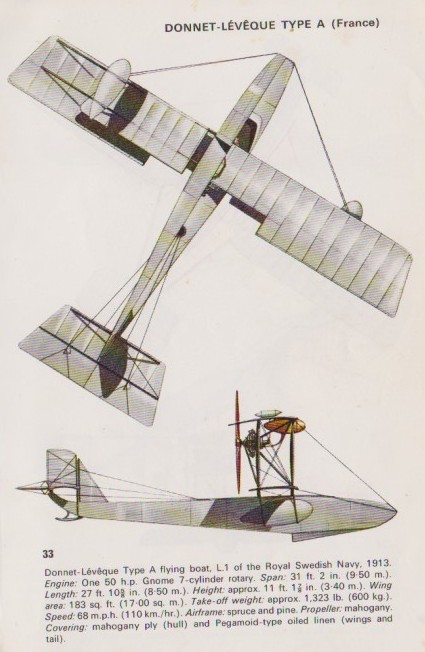
In 1912 four Donnet-Lévêque flying boats type A (no ailerons) and type C (with ailerons) – assigned numbers from 8 to 12 – were obtained by K.u.k. Seeflugwesen. A two-place hulled hydroplane designed by Francois Denhaut, they were powered by a 50 hp Gnome engine.

Aircraft sporting number 10 entered service on January 4, 1913 and was written off in December 1913 due to damage sustained in a crash.

At Argenteuil in 1913, piloted by the marine Konning

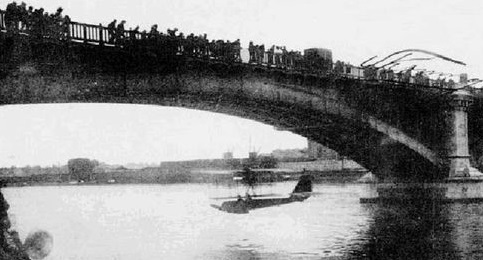
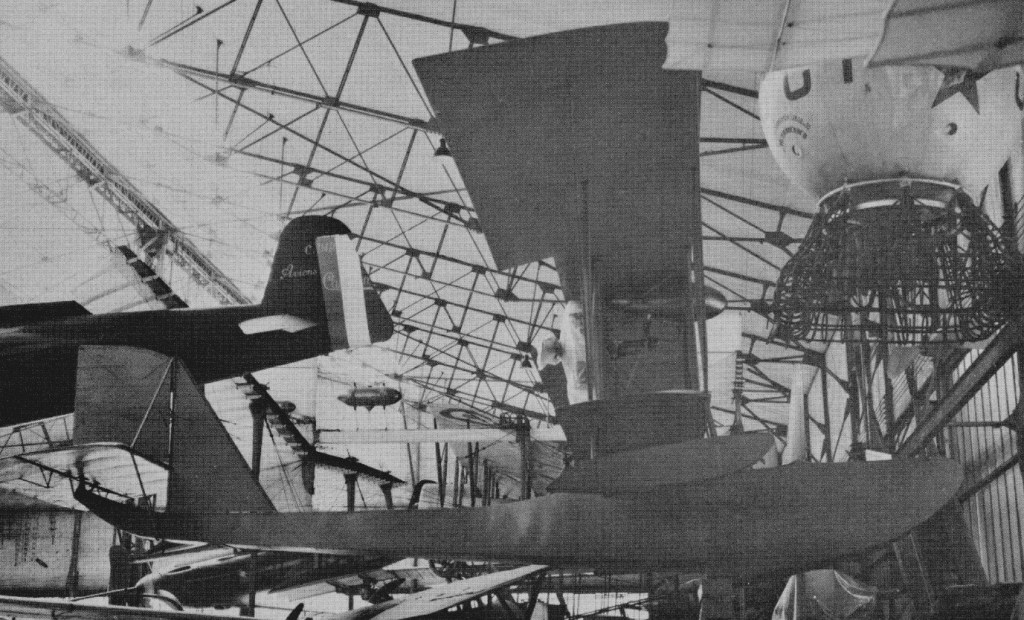
On 9 August 1912, Jean Conneau (also known as Beaumont) attempted a Paris-to-London flight. He took off from the Seine, near Bezons, made stops at Quilleboeuf and Le Havre, and the landed at Boulogne-sur-Mer where an accident cancelled the flight.

Jean Conneau’s aircraft was donated to the Musse de L’Air by the Schreck concern.

Jean Conneau’s aircraft

Engine: Gnome, 50 hp
Wingspan: 31.16 ft
Length: 28.86 ft

Dongan WJ-5 / WZ-5

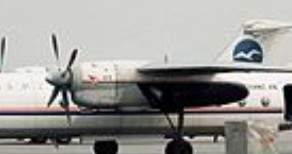
Dongan WJ-5 turboprop powered Xian Y-7-100

The Dongan WJ-5 is a Chinese single-shaft turboprop aero engine built by the Dongan Engine Manufacturing Company for the Xian Y-7 twin-engined transport.

Variants:
WJ-5A
Main production variant of 2162 ekW (2900 ehp)

WJ-5E
Improved variant for the Xian Y-7-200 sometimes referred to as the WJ-5A-1G. Developed with the help of General Electric.

WZ-5
A turboshaft version of the WJ-5, which failed to progress beyond the prototype stage.

Application:
Harbin SH-5
Xian Y-7

Donaldson New Graphic

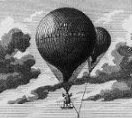
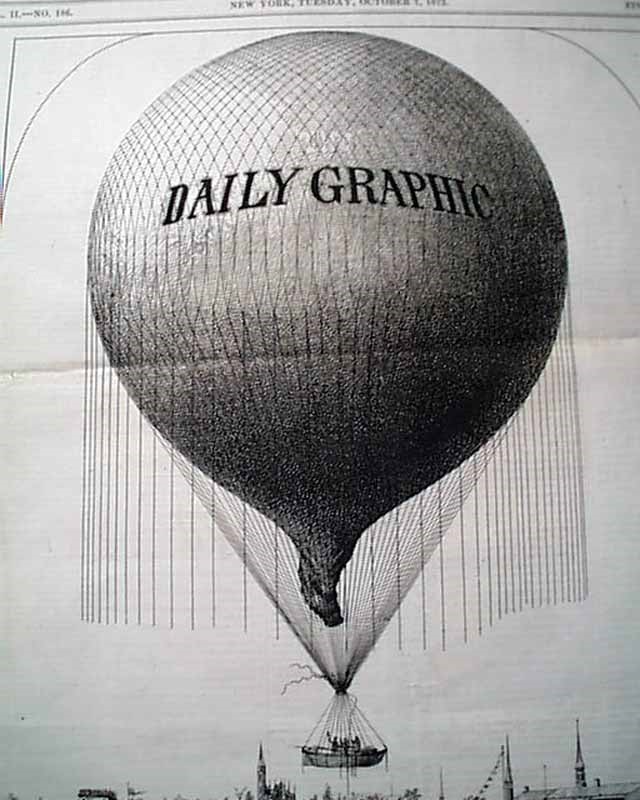
The first attempt at an Atlantic crossing by balloon. Originally intended by John Wise and Washington Donaldson as a 3-envelope aerostat designated the Daily Graphic after the sponsoring newspaper. It was converted to a smaller envelope by Donaldson and renamed New Graphic. Leaving from New York on its trans-Atlantic flight, it reached Connecticut before foundering in 1873.

Domrachiev D-2

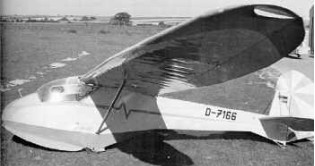
The Domrachiev D-2 (Russian: Домрачев Д-2) was designed as a two-seater aerobatic glider. Its construction was carried out in the LENOAX construction workshops in 1934 with the aim of participating in the X National Sailing Competitions to be held that year in Koktebel.

The D-2 was designed as a high-bridged, two-seater glider with long wings and a high tail bar. The wing was braced by means of steel tapes that started from the wing intrados towards the landing ski and from the extrados towards a raised structure located on the longitudinal axis of the glider. This configuration made it possible to build an extremely light wing without detriment to its structural rigidity.

Another significant detail was the wing attachment to a vertical pile located above the head of the second crew member, which allowed excellent visibility and easy access to the cabins. This vertical pile had as a distinctive feature the possibility of being moved forward or backward in order to modify the aerodynamic centering of the glider.

The landing gear consisted of a fixed ski located in the ventral region of the nacelle, following the line of the glider axis.

The gondola with the tandem cabins also featured an additional luggage area with a capacity of 80 kg. In the rear cabin a shelf was to locate a telephone set that could be used for communication with the tug aircraft.

Built in Leningrad in 1934 and first flying that September, it participated in the X National Sailing Competitions, held in Crimea, where it was aero-towed. The acrobatic two-seater Domrachiev D-2 glider arrived at the competitions in Koktebel by air, towed by a plane.

D-2
Wingspan: 18.10 m
Wing area: 19.80 m²
Length: 8.05 m
Height: 2.68 m
Empty weight: 230 kg
Optimal speed: 61 km / h
Glide ratio: 20
Minimum descent speed: 0.78 m / s
Wing loading: 19.70 kg / m²
Surface of the horizontal plane: 2.82 m²
Vertical plane surface: 1.58 m²
Ailerons area: 2.10 m²
Wing elongation: 16.5
Accommodation: 2
Domrachiev, Yuri Vlarimirovich

Soviet aircraft builder Yuri Vlarimirovich Domrachiev (Russian: Юрий Владимирович Домрачев) designed and built several gliders in Leningrad in the 1930s.

From 1931 Domrachiev began to work in the aeronautical construction section of the NIAI under the direction of IM Zharnilski. By 1934 this section separated from the NIAI, becoming an independent Special Construction Bureau (OKB), initially subordinate to the Institute’s Student Combined and later to the LII GVF.

In the OKB the Lisichkin, Bedunkovich, Krylov, Domrachiev and later Bakshayev brigades were created. Each developed their own aircraft, but in many cases they were combined to achieve the end result.

In 1933 and 1934 Domrachiev created two competition planners that participated in the national competitions at Koktebel.

When the Institute of Engineers of the Leningrad Civil Air Fleet was created, Domrachiev went on to work in the research department. In 1937, together with LS Vildgrube, he designed and built a transport glider with an M-11 engine.