Poland
Founded in Warsaw in 1933 to take over assets and liabilities of RWD, the aeronautical section of Warsaw Technical High School, which had been building to the designs of Rogalski, Wigura and Drzwiecki, initially in the school workshops, later those of the government. Production continued under the RWD name until 1939.
Era
Dorset Gliding Club Dorsling
A modified RG Prufling glider built by the Dorset Gliding Club in 1932. Twin wheels were fitted for auto-tow launching.
BGA.183 was allocated in July 1932.
Dornier-Flugzeug D-3800 / D-3801 / D-3802 / D-3803
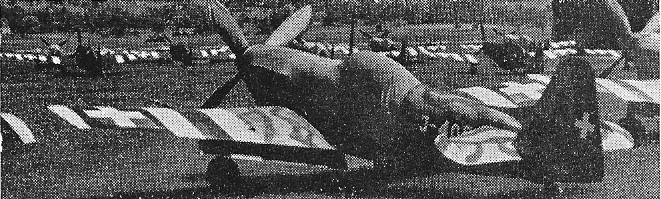
Swiss fighter aircraft. In 1938 the Swiss government purchased two Morane Saulnier M.S.405 fighters from France and, after careful evaluation, purchased a licence for the production version, the M.S.406C. Manufacture of a Swiss version of the 406 was assigned to Dornier Flugzeug at Altenrhein, with the Swiss designation D 3800. This differed from the French aircraft in having a Saurer/SLM licence built Hispano Suiza 12Y 31 of 860 hp, cooled by a fixed ventral radiator.
In 1939 40 Dornier delivered 82, followed in 1940 44 by 207 D 3801 fighters with many refinements and in having the 860 hp Hispano 12Y-31 engine replaced by a 1000 hp Hispano 12Y-51 built by A.G.Adolph Saurer.. Both types had one 20 mm (0.79 in) Hispano cannon and two 7.7 mm (0.303 in) wing guns, with provision for two 50 kg (110 lb) bombs.
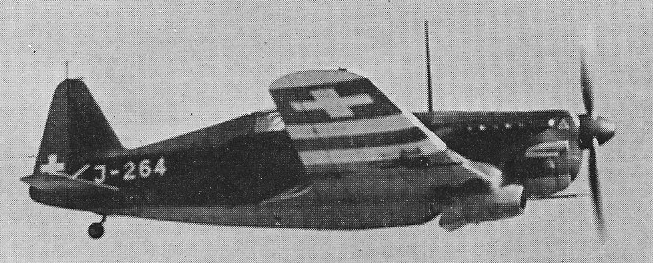
The D 3802 single-seat fighter prototype was built in 1943 by Dornier Werke to designs provided by Morane-Saulnier (designated M.S.450). A second prototype modified up to production standards was produced as the D-3802A, and orders were placed by the Swiss Air Force for 100. With the end of the war in Europe, the order was reduced to ten, built in 1944.
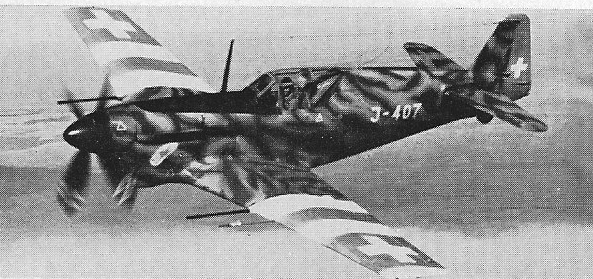
The 1500 hp (12Y 53) D 3803 of 1947 remained a one off, by which time the company had become Flug & Fahrtzeug¬werke (F&FW).
D 3801
Engine: 1000 hp Hispano 12Y-51
Span: 10.61 m (34 ft 9.75 in)
Length: 8.16 m (26 ft 9.25 in)
Empty weight: 4694 lb
Gross weight: 2725 kg (6007 lb).
Maximum speed: 523 km/h (325 mph) at 13,950 ft
Econ cruise: 190 mph
Time to 16,400 ft: 5.4 min
Service ceiling: 35,400 ft
D-3802A
Engine: Hispano-Suiza 1250 hp 12Y-52
Wingspan: 35 ft 2.75 in
Length: 30 ft 7 in
Height: 10 ft 11 in
Empty weight: 6327 lb
Loaded weight: 7716 lb
Max loaded weight: 8014 lb
Max speed: 391 mph at 21,325 ft
Time to 19,865 ft: 7.1 min
Ceiling: 33,500 ft
Armament: three 20mm (0.79 in) cannon
Dornier-Flugzeug
Dornier Flugzeug became Flug & Fahrtzeugwerke (F&FW).
Flug & Fahrtzeugwerke (F&FW)
2008: CH-9422 Staad
Switzerland
Dornier Composite Sea Star
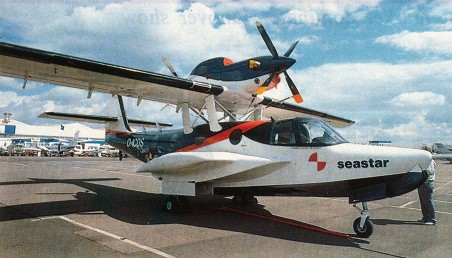
Flying Boat, Germany, 1986.
Dornier Composite Sea Star Article
Dornier succcessfully test flew preproduction Sea Star CD2 with technical modifications in 1988.
Modifications included –
Increase in wing area from 28.5 to 30.5 sq.m.
Replacement of the original P&WC PT6A-112 engines with –13S models of 650 hp at takeoff and 500 hp at cruise. This led to a 400 kg gain in takeoff weight, better climb rate, and up o 11 hrs in single engine (600 hp) mode.
Addition of a small keel on the underside of the hull, resulting in greater stability and reduced takeoff and landing speeds.
Modifications to the upper strut shrouds and air intakes, allowing an increase in empty weight, from 2.6 to 2.8t, and rise in payload capacity, from 1.6 to 1.8 t.
Engine : 2 x PT 6 A 112, 368 shp
Length : 41.011 ft / 12.5 m
Height : 15.092 ft / 4.6 m
Wingspan : 52.165 ft / 15.9 m
Wing area : 306.774 sq.ft / 28.5 sq.m
Max take off weight : 9261.0 lb / 4200.0 kg
Weight empty : 5292.0 lb / 2400.0 kg
Max. weight carried : 3969.0 lb / 1800.0 kg
Max. speed : 184 kt / 341 km/h
Landing speed : 62 kt / 115 km/h
Cruising speed : 167 kt / 310 km/h
Initial climb rate : 1574.8 ft/min / 8.0 m/s
Service ceiling : 28002 ft / 8535 m
Wing load : 30.14 lb/sq.ft / 147.0 kg/sq.m
Range : 300 nm / 555 km
Crew : 2
Payload : 12pax
Claudius Dornier Seastar Gmbh & Co Kg / Dornier Composite
Founded 1982 to develop the Seastar twin-turboprop STOL amphibian (first flown 1984), but became insolvent 1989. Re-formed 1990 as Dornier Composite.
Dorner 1911 Eindecker / T.II / T.III
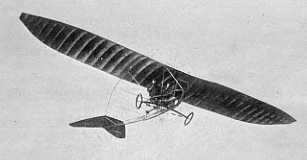
The Dorner monoplane was a well-known sight around Johannistahl. Georg Schendel set a German record for altitude of 2010 meters on 6 June, 1911, and a World Altitude record with passenger, of 1690 meters on 9 June, 1911, in his Dorner.
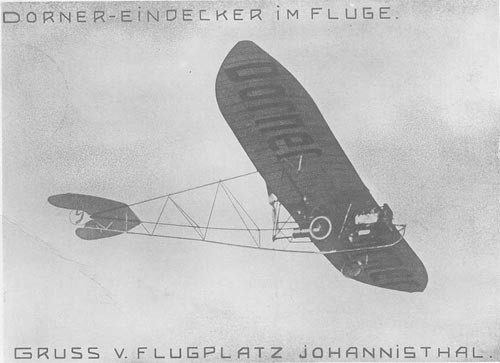
Type II had a 20 hp Dorner-Motor and cost 13,500 Marks.
Type III came with a 40 hp Dorner-Motor at 15,500 Marks, or 50 hp at 16,500 Marks.
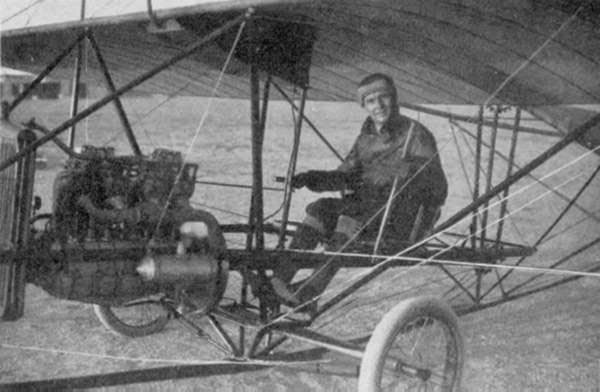
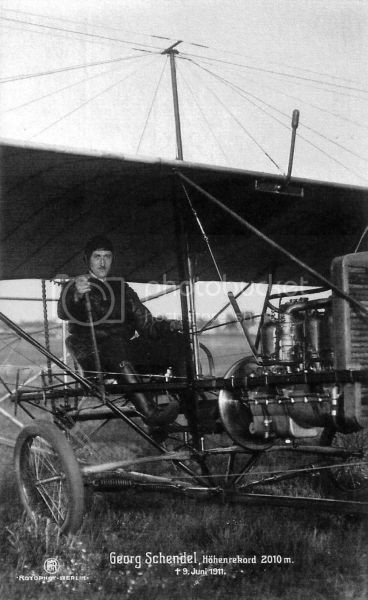
Dorner had entered the T III with 40 hp Körting at the “Zuverlässigkeitsflug am Oberrhein” in April/May 1911, where his light monoplane still was underpowered and could not complete a single stage.
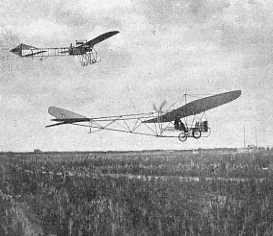
The T. III version had a fatal accident for both passenger and pilot on 9 June, 1911 at Johannistahl.
Variation:
Werntgen Wassereindecker
Dornier Do-728JET
A twin jet regional transport aircraft. In 1999, Fairchild Aerospace announced that it had taken an order from Lufthansa for 60 of its all new 70 passenger 728 jets the carrier also reserved 60 options for the jet.
728JET
Engines: two 12,500 lb. General Electric CF343-3D1 turbofans.
Gross weight: 83,754 lbs.
Max cruise: 460 kts
Range: 1,400–4,000 nm
Service ceiling: 41,000 ft.
Takeoff distance: 4,800 ft.
Landing distance: 4,659 ft.
Seats: 70
Dornier Do-328 / Do.328Jet
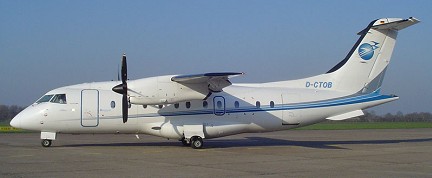
The Fairchild-Dornier 328 is 30-34 seat turboprop powered commuter airliner designed and engineered by Dornier in Oberpfaffenhofen, Germany. Development of the 328 started in 1985, after Dornier decided to redesign the fuselage of the Dornier 228. After Dornier’s market research had indicated a substantial market for regional airliners in the 30-seat class it was decided to develop the Dornier 328. Work began in December 1988, culminating in the first development aircraft’s rollout on 13 October 1991 and the first flight on 6 December 1991. The 328 was awarded EJAA certification on 15 October 1993.
Dornier Do-328 / Do.328Jet Article
First customer deliveries occurred on 21 October 1993, when the Dornier 328-110 s/n 3005 HB-AEE was handed over to the Swiss scheduled carrier Air Engiadina. The initial 328-100 was followed by the production standard 328-110 with redesigned aerodynamics and increased performance. Other models are the 328-120 with improved short field performance and the 328-130 with progressive rudder authority reduction with increasing airspeed.
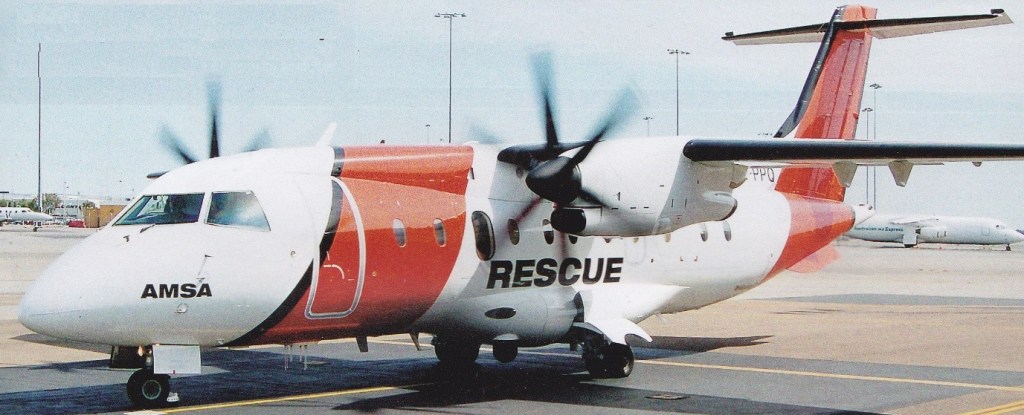
Mid 1996 Fairchild Aerospace acquired 80% of Dornier to form Fairchild-Dornier. In 2002 Fairchild Dornier filed bankruptcy and the court appointed administrator determined that the company had to be sold in pieces. The US company AvCraft Aviation acquired the Fairchild-Dornier’s 328 program, including the 328 production line at Oberpfaffenhofen, Germany. Early 2005 AvCraft Aerospace GmbH, the German subsidiary of AvCraft Aviation was declared insolvent at a German court at Weilsheim. In December 2005, UK’s Corporate Jet Services Ltd purchased the former AvCraft Aerospace GmbH. On 2 January 2006, Corporate Jet Services Ltd created the German subsidiary ‘328 Support Services GmbH’, headquartered at Oberpfaffenhofen near Munich. It holds the type certificate of the Dornier 328 Jet and Turboprop aircraft plus the Dornier 428, and is carrying on the worldwide support of the aircraft. Part of the company’s strategy is to work towards returning to service the Dornier 328 aircraft which are currently parked in Europa and US.
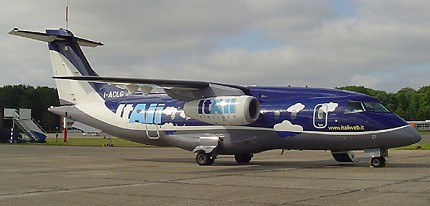
The Fairchild-Dornier 328JET is 32 seat commuter jet airliner. After Fairchild Aerospace had acquired the majority of Dornier in 1996, the new formed company Fairchild-Dornier started in 1997 with the development of the 328JET. The Fairchild-Dornier 328Jet was derived from the Dornier 328 turboprop featuring two Pratt & Whitney Canada PW306B turbofans instead of the turboprops. Next to the engines, only slight modifications to the landing gear and wings were required to convert the Dornier 328 into the 328JET model. FADEC Pratt & Whitneys were hung under the wings, the landing gear was strengthened and new Honeywell Primus 2000 EFIS panels were installed in the cockpit.
The 328JET prototype D-BJET was converted from the second 328 turboprop airframe and was flown first on 20 January 1998. Deliveries of the 328JET started in 1999. The combined USA and German engineering team developed the new 428 model based on the 328JET, but the project was turned down in 2001 when Fairchild-Dornier ran into financial problems. In 2002 Fairchild Dornier filed bankruptcy and the court appointed administrator determined that the company had to be sold in pieces. The US company AvCraft Aviation acquired the Fairchild-Dornier’s 328 program, including the 328JET production line at Oberpfaffenhofen, Germany. Next to 18 ready-to-deliver aircraft, and five in the final assembly stage, the purchase included also the 428 intellectual properties. AvCraft/Fairchild-Dornier restarted in 2004 the production of the Fairchild Dornier 328JET. Early 2005 AvCraft Aerospace GmbH, the German subsidiary of AvCraft Aviation responsible for the 328JET program was declared insolvent at a German court at Weilsheim. In December 2005, UK’s Corporate Jet Services Ltd purchased the former AvCraft Aerospace GmbH. On 2 January 2006, Corporate Jet Services Ltd created the German subsidiary 328 Support Services GmbH, headquartered at Oberpfaffenhofen. It holds the type certificate of the Dornier 328 Jet and Turboprop aircraft plus the Dornier 428, and is carrying on the worldwide support of the aircraft. Part of the company’s strategy is to work towards returning to service the Dornier 328 aircraft which are currently parked in Europa and US.

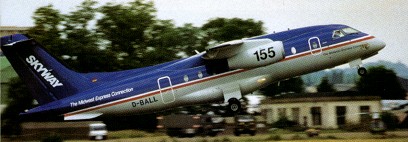
Two 328Jets were handed over to Skyways Airlines ofMilwaukee at San Antonio, Texas, on 9 August 1999. The first customer for the type. By then, orders and options had reached 162.
Fairchild was developing the Envoy, a private jet variant of the 328JET, and the 528JET, a 55- to 63-seat stretch. A larger 728Jet was planned until the company declared bankruptcy in 2002.
328JET
Engines: 2 x PW306B turbofan.
Max cruise: 335 kts.
Capacity: 30-33 pax.
Range: 1000nm.
Dornier Do-228
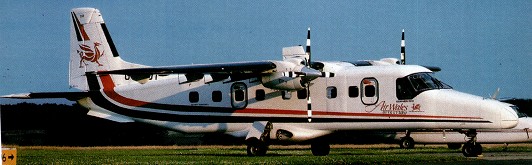
In June 1979 Dornier flight tested a new high-technology wing intended for the proposed Do 228 series of commuter airliners. Using a modified Skyservant fuselage fitted with the so-called TNT wing and powered by 533kW Garrett turboprop engines, the aircraft completed a 2 1/2-year test programme during which seven different types of propeller were evaluated. The first definitive Do 228-100, fitted with a new fuselage and tail plus the TNT wing, flew for the first time on 28 March 1981. German certification followed on 18 December the same year and the first production aircraft was delivered to the Norwegian commuter airline Norving early in 1982. The Do 228-100 prototype was lost in a fatal accident near Augsburg while undergoing tests for British certification in March 1982. About 35 Series 100s were built and customers included the German Alfred Wegener Institute which used three ‘Polar’ aircraft on research duties in Antarctica.
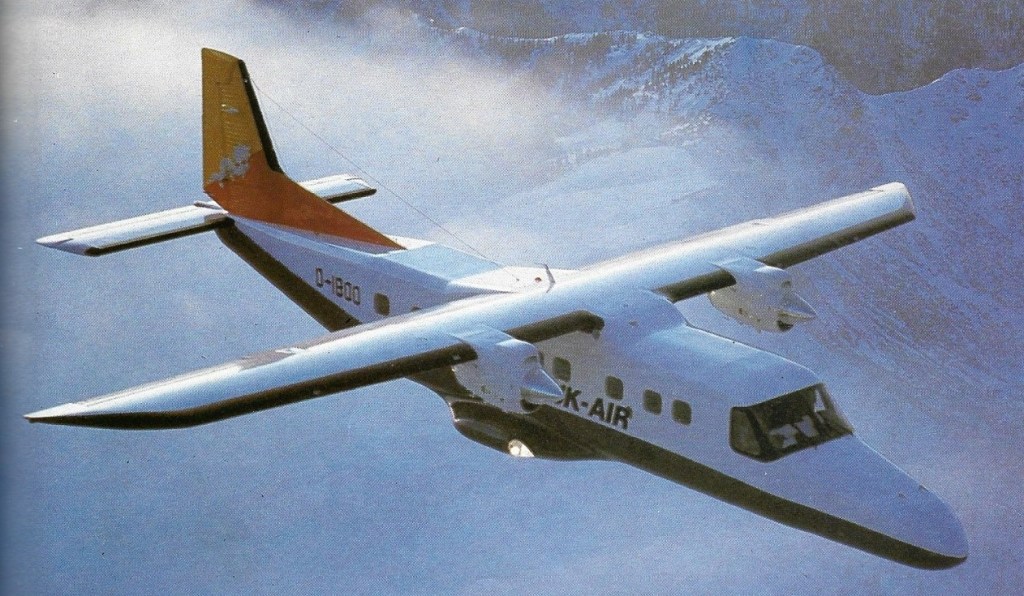
Development of a ‘stretched’ version followed, designated the Do 228-200. The Dornier 228-200 seats 19 passengers in single seats on either side of a central aisle in a rectangular fuselage of interior dimensions 1.35m x 1.55m and is intended for the wide range of capabilities but its forte is commuter operations into smaller and often semi-prepared airfields.
The aerofoil, of Do A-5 supercritical section with maximum thickness at 50 per cent of chord, is tapered on the outer panels, with the triangular wingtips acting as winglets, but straight out to reduce drag. The glassfibre/Kevlar leading and trailing edges being attached to the primary structure by myriad screws.
The smooth-surfaced wing structure is a box made up of four panels, with integral internal bracing for strength. Each is made from a 70mm thick block of aluminium, of which 95 per cent is milled away to a tolerance of 0.01mm, giving rise to a basic structure which is guaranteed for 50,000 flight hours and 62,500 landings. The two Garrett/ AiResearch TPE 331-5 engines, flat rated to 715 shp, will give full performance for take-off at either sea level at 33’C, or 8,000 feet field elevation at ISA.
The Dornier 228-200 (the -100 model is 1.5m shorter and carries 15 passengers but is otherwise identical) has small single mainwheels with negative camber retracting into the underside of a sponson below the fuselage which, combined with the wing’s position right on top of the fuselage and the straight bottom surface of the long nose, gives it a hunch-back, droop-snooted look. Able to carry 19 passengers, the prototype made its first flight on 9 May 1981.

Two versions of the Dornier 228 twin-turboprop regional transport have been developed to serve in the maritime surveillance role, with differing equipment fits. The Version A has a MEL Marec 2 radar as primary surveillance sensor, and wing hardpoints for supply or sensor packs. For inshore patrol and fishery protection, Version B has Ericsson/SSC side-looking airborne radar as main sensor and an optional forward-looking Bendix radar and other aids.
Hindustan Aeronautics’ Kanpur Division was manufacturing some 150 twin-turboprop Dornier 228s, of which a substantial number are for the Indian armed forces. The first Indian-built aircraft flew in January 1986, and was delivered to the internal airline Vayadoot the following March. The Coast Guard service received its first aircraft in 1986 for maritime surveillance duties. These are fitted with an MEL Marec 2 search radar and other maritime equipment. Deliveries to the Air Force and Navy were suspended in May 1987, following a series of engine difficulties experienced by Indian civil operators.
The Dornier 228 was in commercial service in both 15-seat -100 and 19-seat -200 form with more than 183 ordered by customers in some 27 countries by 1990. More than 50 airlines ordered the Series 200, including Air Caledonie, Air Moorea, Air Tahiti, Air Guadeloupe, Air Maldives and Aerotuy of Venezuela. Other customers include the governments of Germany, Nigeria, Saudi Arabia, India, Niger, Malawi, Bolivia and Japan.
Do228-100
Engine: 2 x Garrett TPE331-5-252D turbo-props.
Installed pwr: 1060 kW.
Span: 17 m.
Length: 15 m.
Wing area: 32 sq.m.
Empty wt: 2980 kg.
MTOW: 5700 kg.
Payload: 2130 kg.
Cruise speed: 430 kph.
Initial ROC: 618 m / min.
Ceiling: 9020 m.
T/O run (to 15m): 565 m.
Ldg run (from 15m): 600 m.
Fuel internal: 2390 lt.
Range/payload: 1343 km with max pax.
Capacity: 15 pax.
Do228-200
Engine: 2 x Garrett TPE331-5-252D turbo-props, 715 shp / 578kW
Wingspan: 16.97 m / 55 ft 8 in
Length: 16.56 m / 54 ft 4 in
Height: 4.86 m / 15 ft 11 in
Wing area: 32 sq.m / 344.44 sq ft
Max take-off weight: 5700 kg / 12566 lb
Empty weight: 3086 kg / 6804 lb
Max. speed: 428 km/h / 266 mph
Cruise speed: 205 kts/365km/h true airspeed @65% / 10000ft
Ceiling: 9020 m / 29600 ft
Range w/max.payload: 1130 km / 702 miles
Crew: 2
Pax cap: 19


