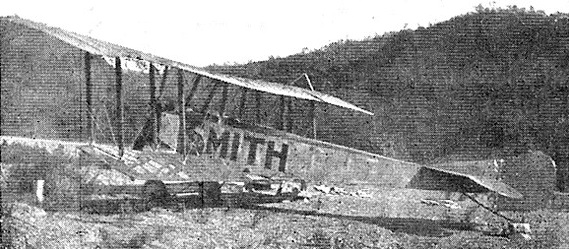
A two-place, open cockpit biplane built in 1917.
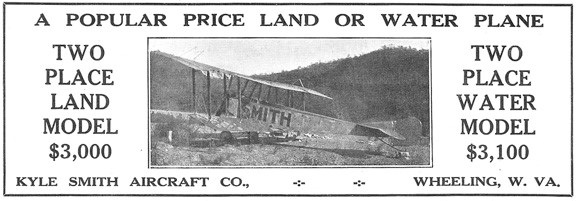
A two-place, open cockpit biplane built in 1917.
Kyle Smith Aircraft Co,
Kyle Smith Aircraft Co,
Wheeling WV.
USA
1919: West Virginia Aircraft Co.
This company was established at Wheeling, West Virginia, and produced a three-seat triplane during 1919-1920.
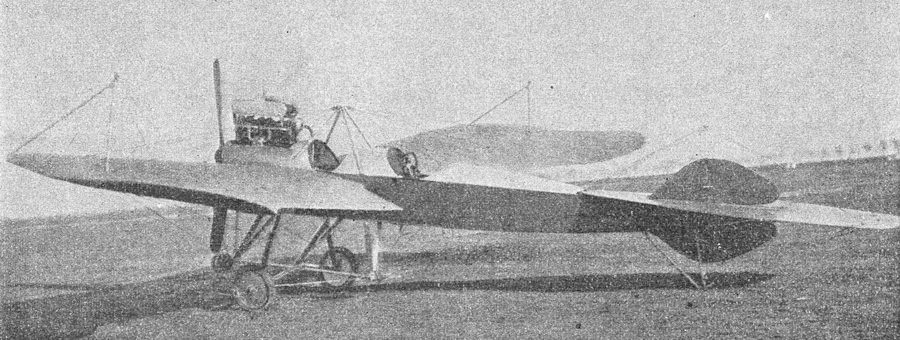
Paul Westphal built his second design “Taube” after the guidelines of the army. It passed the tests easily, but was not bought. He then gave up his own attempts.
Paul Westphal was one of the constructors at the “Alte Startplatz” of the Berlin-Johannisthal airfield.
He was a co-designer of the early Geest planes and set up his own “business” when he rented shed #8 at Johannisthal in 1911. In 1912 he completed his first monoplane.
His “Taube” second design was not bought so he gave up his own attempts and went to the Kondor Flugzeugwerke GmbH at Essen, Rhineland before summer 1914 where he became chief engineer then.
Built by Gordon W. Westphal, the Rose Parakeet replica N16N sn GW-100 was first registered on 23 February 1976. Classified as an amateur built experimental, it was powered by a Lycoming O-290 engine.
2337 12th Ave NW
Rochester, MN
USA
Built a replica Rose Parakeet in 1976.
The Westmacott Skylark was a single-seat biplane glider built by R.J. & K. Westmacott at Minety. UK, in 1959.
Eventually it was stored at Minety.
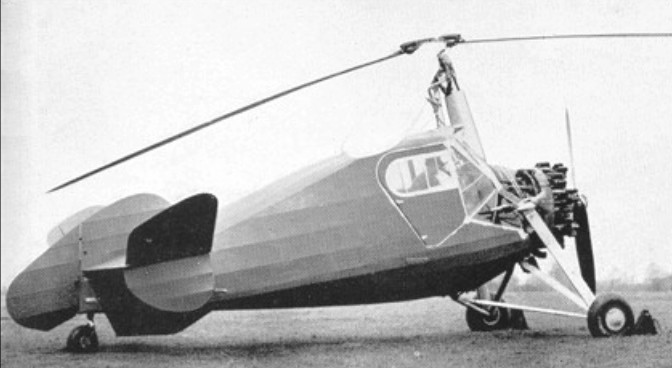
In 1934 the Westland design staff, in co-operation with the Cierva Autogiro Company, produced a large five-seat cabin autogiro in Duralumin tubing, powered with a 600hp Armstrong Siddeley Panther engine.
The fuselage was of square-section steel and duralumin tubing, arranged in the characteristic Westland style, with composite stringers and formers to give a deep oval section. The fabric-covered tailplane and vertical and oblique fins were built up of duralumin tubing and pressings, the aerofoil section of the port half of the tailplane being inverted, to offset airscrew torque effect. The seating in the cabin was arranged in the 2-3 plan.
It was much larger and heavier than anything of its kind previously attempted. The Cierva Company was responsible for the rotors and rotor mechanism, the direct control system being employed, while the airframe was designed and built by Westland.
Test of this machine, which was known as the C.29 Autogiro, disclosed vibration problems with the rotor system, which could not be immediately solved. In the circumstances it was decided to shelve this particular design, until further experience had been gained with other experimental autogiros, but the untimely death of Senor Cierva ultimately prevented development of this work. This aircraft never flew.
Westland-Cierva C.29
Engine: Armstrong Siddeley Panther, 600hp
Rotor diameter: 15.23m
Length: 11.58m
Height: 3.88m
Loaded weight: 2268kg
Empty weight: 1461kg

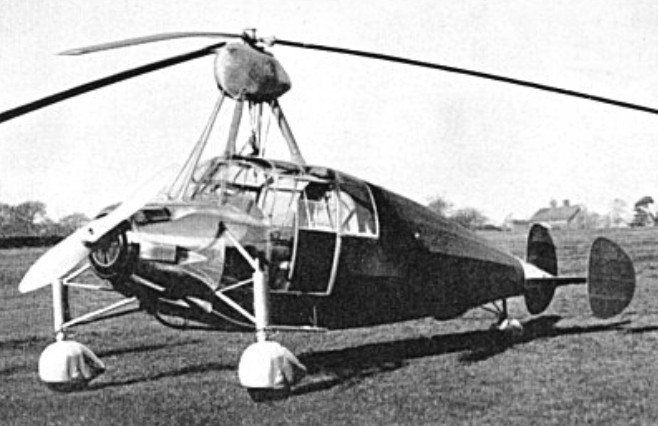
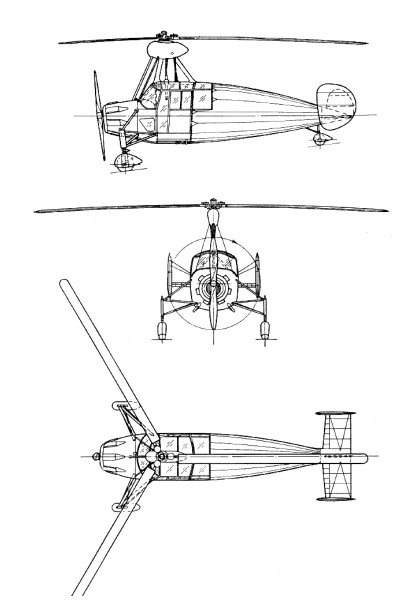
Westland, in conjunction with the Cierva Company and M. Lepere, produced the C.L.20 Autogiro, a two-seat side-by-side cabin machine. Lepere was at that time working with Liore and Olivier, holders of the Cierva licences for France. The fuselage was of welded seamless steel tubing, triangulated and faired to a streamline form by the use of stringers and fabric covering. A large door was fitted on either side of the cockpit and transparent panels, running right down to the bottom longeron, gave a forward and downward range of vision. The three-blade direct control rotor was arranged to fold, to facilitate parking and storage. It had a rotor with a direct-control head consisted of three untapered blades on flapping and drag hinges. Three vertical fins gave directional stability, while the tailplane was designed so that the aerofoil section of one half was inverted, and set at a negative angle of incidence, to counteract airscrew torque.
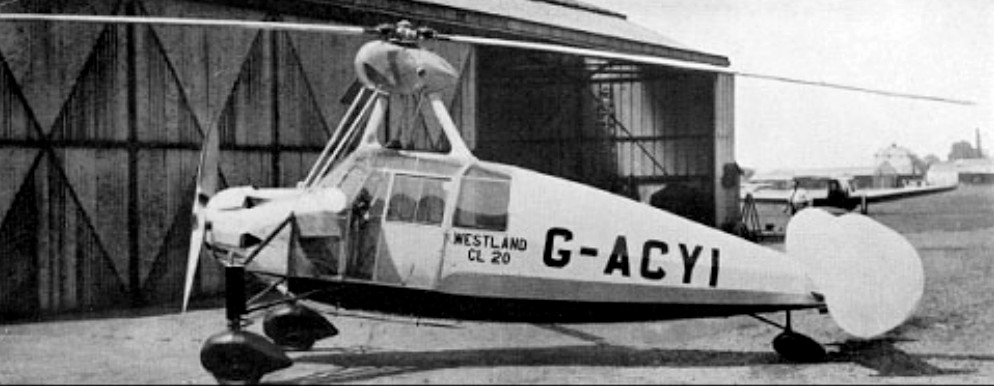
The earliest flights were in 1935.This experimental aircraft was successfully flight-tested by the Cierva Company’s pilot, R. A. C. Brie, but the shadow of impending hostilities prevented its production in quantity and closed Westland interest and activity in autogiros.
Westland CL.20
Engine: One 90hp Pobjoy Niagara S
Rotor diameter: 9.75m
Length: 6.17m
Height: 3.12m
Loaded weight: 635kg
Empty weight: 381kg
Speed: 170km/h
Landing speed: 40km/h
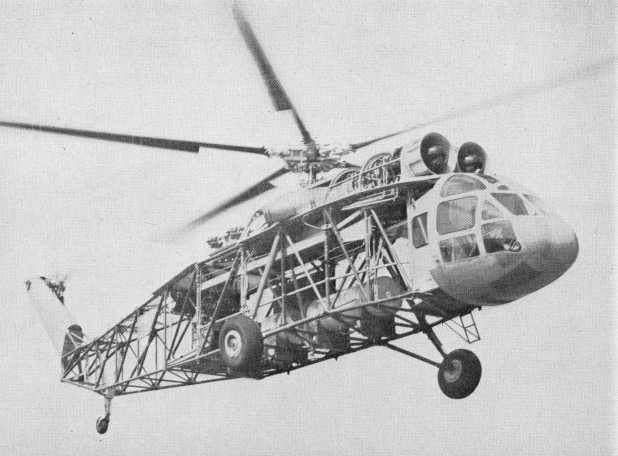
A private venture by Westland, based on the single main 5-blade rotor, gearbox, and hydraulic controls from the Sikorsky S-56 Mojave, Westland redesigned the fuselage using steel tube construction to create a medium sized troop and passenger carrying helicopter, witth tailwheel u/c. Up to 40 passengers were to be carried, with metal cladding for passenger role or open frame for utility/crane role.

First flown at Yeovil on 15 June 1958 (G-APLE), the prototype Westland Westminster was powered by two 2920shp Napier Eland E220 turboshafts. Two prototyprs were built.
After the type’s appearance at the 1960 Farnborough Air show, it was cancelled in September of that year.

The Westminster appeared in June 1960 with its fuselage framework faired in. Late a six-blade rotor was fitted.
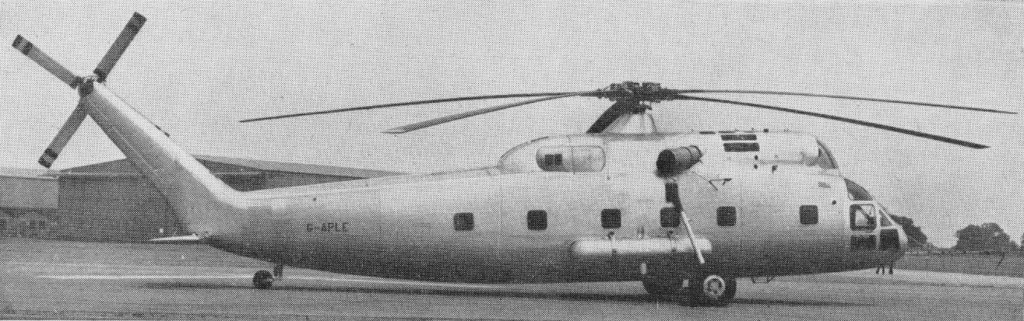
Westminster
Engines: 2 x Napier Eland E.229A turboshaft, 2090kW
Rotor diameter: 21.95m
Length: 27.4m
Max take-off weight: 14965kg
Empty weight: 10125kg
Max speed: 241km/h
Cruising speed: 184km/h
Hovering ceiling, IGE: 2750m
Range: 330km
Crew: 2
Passengers: 40

