Explorer PG-1 Aqua Glider

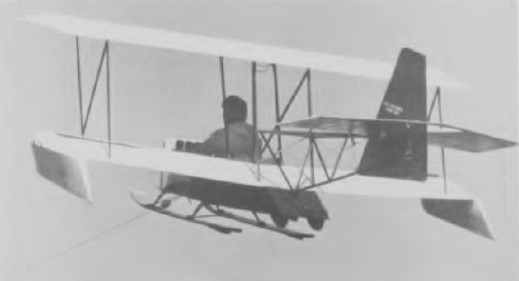
One of the very few waterborne gliders, the Aqua Glider single-seater is also unusual in being a biplane; it is intended for tethered gliding by unlicensed pilots, and is towed behind any speedboat that can attain a speed of 30kt (35mph). The pilot can also cast off from the speedboat when airborne and make a free flight before landing back on the water, but to do this he must have a licence. The Aqua Glider was designed by Col William L. Skliar, USAF (Ret’d), who began design work on it in September 1958, the prototype making its first flight in July 1959. After making about 1,000 flights and being flown by about 60 pilots, the prototype was donated to the Experimental Aircraft Association Museum in Milwaukee.
Approximately 1,000 sets of plans have now been sold to amateur constructors in more than 20 countries all over the world, and about 200 Aqua Gliders were under construction; about 12 are known to have flown, in the Bahamas, Brazil and Japan as well as in the USA. The forward staggered single bay biplane wings are conventional single-spar wooden structures with fabric covering, and there are spoiler-type light alloy ailerons on the lower wing only, immediately behind the main spar.
Balance floats – basically just plate-type fairings – are carried at the extremities of the lower wing tips. The pilot sits in an open cockpit in the unstopped watertight wooden hull and, instead of a conventional planing bottom, take-offs are made on a pair of standard jumper skis, 6 ft in length, attached to small wire-braced struts below the hull. The latter is of spruce with a mahogany plywood bow, bottom skins and sides, the plywood being glass fibre covered below the waterline. There is a towing hook on the nose. The wire-braced tail unit is of spruce with plywood and fabric covering, and is carried on a boom of welded steel tube or wire-braced wooden construction. The rudder is conventional and the tailplane an all-moving one-piece surface.

Span: 4.87m / 16 ft
Wing Area: 14.28 sq.m / 95 sq.ft
Aspect ratio: 5.0
Airfoil: NACA 4412
Length: 13 ft 8 in
Height: 5 ft 0 in
Empty Weight: 83 kg / 180 lb
Payload: 100 kg / 220 lb
Gross Weight: 182 kg / 400 lb
Wing Load: 20.61 kg/sq.m / 4.5 lb/sq.ft
Max speed: 65 mph (in smooth air)
Stalling speed: 35mph
L/DMax: 6.5 at 72 kph / 39 kt / 45 mph
Seats: 1

Explorair Ranger

Explorair’s designs have composite engine cowlings which incorporates a large capacity fuel tank. The prop is carbonfibre.

Ranger 2H 110
Empty weight: 20.2 kg
Engine: Lark, 16.2 hp
Reduction: 2.68-1
Prop diameter: 110 cm
Fuel capacity: 12 lt
Price (1998): DM6350

Ranger 2K 95
Empty weight: 18.8 kg
Engine: Lark, 16.2 hp
Reduction: 1.175-1
Prop diameter: 95 cm
Fuel capacity: 12 lt
Price (1998): DM6350

Ranger 2K 115
Empty weight: 19.4 kg
Engine: Lark, 16.2 hp
Reduction: 1.75-1
Prop diameter: 115 cm
Fuel capacity: 12 lt
Price (1998): DM6350

Ranger Kit 095
Empty weight: 20 kg
Engine: Lark, 16.2 hp
Reduction: 2.68-1
Prop diameter: 95 cm
Fuel capacity: 12 lt
Price (1998): DM5990

Ranger Kit 110
Empty weight: 20 kg
Engine: Lark, 16.2 hp
Reduction: 2.68-1
Prop diameter: 110 cm
Fuel capacity: 12 lt
Price (1998): DM5990

Ranger Kit 115
Empty weight: 20 kg
Engine: Lark, 16.2 hp
Reduction: 1.75-1
Prop diameter: 119 cm
Fuel capacity: 12 lt
Price (1998): DM5990

Experimentalnii Zavod Sportivnoi Aviatsii Oshkinis BRO-11 Zile / BRO-16 / BRO-17U Utochka

The BRO-11 Zile (or Acorn) single-seat basic training glider is a rather smaller Russian version of the EoN Primary/Dagling/SG 38 formula, and first flew in 1954; it has since been built in large numbers for use by the DOSAAF as an elementary training glider. It was designed by B. Oshkinis and among the factories building it was the Experimentalnii Zavod Sportivnoi Aviatsii (or Experimental Sports Aviation Factory) where B. Oshkinis was one of the designers and which started production of the type in 1969; this later became the LAK organisation, which created the LAK-9 Lietuva and continues to produce the BRO-11. A modified version known as the BRO-
11-M was later produced, and a biplane seaplane version, the BRO-16, made its first flight in August 1973. Another, shorter-span version, which may be experimental, is the BRO-17U Utochka. The BRO-11 is a strut-braced high wing monoplane of fabric and ply-covered wooden construction, with the pilot sitting on an elongated beam which forms the fuselage and which has a semi-recessed monowheel for landing; there is a towing hook under the nose and a bumper at the end of the boom to act as a tailskid. The tail unit is carried on a framework of metal tubing and wire bracing, and the flaps are similar in appearance to the Miles high-lift auxiliary flaps fitted to the Aerovan and Gemini.

BRO-11
Span: 23 ft 10.5 in
Length: 16 ft 11.5 in
Wing area: 113.0 sqft
Aspect ratio: 5.05
Empty weight: 128 lb
Max weight : 260 lb
Stalling speed: 19 mph
Min sinking speed: 3.28 ft/sec

Experimental Aviation Berkut / Renaissance Composites Berkut

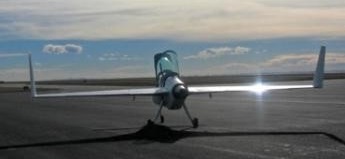
Outwardly reminiscent of the Long EZ, the new composite canard used the Burt Rutan design as a starting point. Added to the aerodynamic appeal is fully retractable landing gear, split canopies, a 205 hp engine and a longer, wider pre moulded fuselage.
Named after the Berkut (Berkoot), a Russian Golden Eagle, by designer Dave Ronnenberg, the new craft uses a Lycoming 0 360 to provide a cruise of 208 knots indicated at 8000 feet on 2840rpm.
Constructed of carbon fibre and fibreglass a balsa core sandwich with a safety epoxy matrix the canard pusher has an overall length of some 18 foot 6in. The cockpit features a sidearm controller/stick with HOTAS (Hands On Throttle and Stick Controls). Going through its test programme in 1991 with manufacturing company Experimental Aviation, the aircraft has a claimed range of 1,400 nm at 65 percent power. Other preliminary specifications include a 2000 fpm ROC, 54 knots minimum controllable airspeed gear down, an endur¬ance of 5.5 hours at 65 percent power, a ceiling of 35,000 feet, maximum useful load of 965 lbs and an empty weight of 1,035 lbs.

The prototype Berkut was designed and built by Dave H. Ronneberg and Kerry Beresford.

Like the Long EZ, the Berkut carries 2 people in tandem seats. The front seat occupant has access to all instrumentation and controls. The rear seat, normally holding the passenger, is equipped with a side stick and throttle, but no rudder pedals, brakes, or instruments.

Out of 57 kits sold by 1998, 7 were finished.

Builder Jerrold Jorritsma installed a General Electric T-58 jet engine in his Berkut.

It was destroyed following an engine failure in Loveland, CO, May 9, 2010.

Engine: Lycoming IO-360-B1A, 205 hp.
HP range: 180-205.
Height: 7.5 ft.
Length: 18.5 ft.
Wing span: 26.67 ft.
Wing area: 110 sq.ft.
Weight empty: 1035 lbs.
Gross: 2000 lbs.
Fuel cap: 58 USG.
Speed max: 250 mph.
Cruise: 209 mph.
Range: 1228 sm.
Stall: 62 mph.
ROC: 2000 fpm.
Take-off dist: 1000 ft.
Landing dist: 1000 ft.
Service ceiling: 29,500 ft.
Seats: 2.
Landing gear: retractable nose wheel.

Renaissance Composites Berkut
Engine: Lycoming IO
Wing span: 8.12 m
Wing area: 10.12 sq.m
MAUW: 907 kg
Empty weight: 469 kg
Fuel capacity: 219 lt
Max speed: 398 kph
Cruise speed: 385 kph
Minimum speed: 107 kph
Climb rate: 10 m/s
Fuel consumption: 38 lt/hr
Seats: 2
Kit price (1998): $34,480

Experimental Aviation / Renaissance Composite

1991: Experimental Aviation, 3021 Airport Avenue, Hangar 109, Santa Monica CA90405, USA.
1995-6: 3025 Airport Ave, Santa Monica, CA 90405, USA.
A Chapter 11 reorganisation attempt followed the loss in 1995 of the company’s demo pilot and demonstrator in an accident at Santa Paula, California, and a lawwsuit from a former partner.
In 1996 Experimental Aviation filed Chapter 11 bankruptcy.
1997-8: 3025 Airport Ave, Santa Monica, CA 90405, USA.
Experimental Aviation was reconstituted as Renaissance Composite, operating from the same address (1998).
Developed the Berkut as tandem two-seat compositesbuilt canard monoplane with pusher engine, first flown 1991 and made available in kit form.

Excalibur Aviation Co.

Ed Swearingen returned to airplanes in 1959 by forming his own company, Excalibur Aviation, to produce the Swearingen Excalibur. This was a cleaned up, re engined modification of the Beech Twin Bonanza, and it was followed by Queen Air conversions and then the popular turboprop Merlin series.

In October 1960 Excalibur Aviation acquired all rights for conversion program (for which it already had responsibility) of Beechcraft Queen Air and Twin-Bonanza marketed by Swearingen Aircraft. Continues production at San Antonio, Texas. New company has adopted the name Queenaire 800 for former Swearingen 800.

Excalibur Aircraft Excalibur

Excalibur Four stroke

Four versions of this aircraft (LSA) were produced: the standard series and the wide body model, the stretch model and four stroke model.
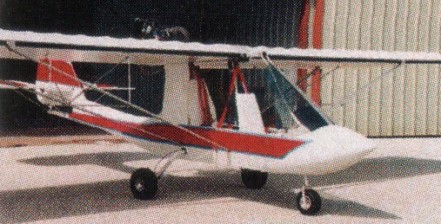
The kit for the Excalibur II features prebuilt tail surfaces, wings, ailerons end fuselage, and all the controls are already installed. Build time for the kit is estimated at 100 to 200 hours.
Options include: 60-hp HKS 700E air-cooled 4-stroke or 4O-hp Rotax 447 air- cooled 2-stroke engine, instruments (ASI, altimeter, tach, dual CHT dual EGT, panel-mounted compass, ignition switch), standard or amphibious floats, fiberglass wheel pants, BRS ballstic emergency parachute, doors, strobe lights and paint materials.
Construction is 6061-T6 and 2024-T3 aluminum tube airframe with chromoly steel weldments where needed, stainless steel pop rivets and AN or military spec hardware. Wings and surfaces are covered with Superflite fabric. No welding or machining is necessary and all the critical work is completed at the factory.

Standard Engine; Rotax 503 (52HP)
Wingspan; 31 ft. 6 in.
Chord; 60 in
Length; 20 ft. 0 in.
Height; 6 ft. 0 in.
Wing area; 185 sq.ft.
Empty weight; 450 lbs.
Useful load; 500 lbs.
MTOW; 900 lb
Ultimate load factor; +6 -4
Build time; 100-200 hours
Field assembly time; 20 min.
VNE; 100 mph
Top level speed; 90mph
Cruise speed; 50-90 mph
Stall speed; 30-35 mph
Climb rate; 1200 fpm solo, 700 ft. dual
Take off roll; 96 ft.solo, 196 ft. dual
Glide ratio; 11:1 solo, 9:1 dual
Service ceiling; 14,000 solo, 12,500 dual
Range; 290 sm
Fuel used at cruise; 2.3 gph to 4 gph
Fuel capacity; 10 gal. (U.S.)
Cockpit width Standard Body; 26 inches
Seats: 2 Tandem
Undercarriage; nose wheel
LSA

Excalibur Wide Body
Engine: Rotax 503, 52 hp
HP range: 52-65
Cruise: 80 mph
Stall: 33 mph
Range: 290 sm
Rate of climb: 1200 fpm
Takeoff dist: 100 ft
Landing dist: 300 ft
Fuel capacity: 20 USG
Empty weight: 450 lb
Gross weight: 950 lb
Length: 20 ft
Wing span: 32 ft
Wing area: 183 sq.ft
Cockpit width: 31 in
Seats: 2
Landing gear: nose wheel
LSA

Excalibur Four Stroke
Engine: Rotax 582, 65 hp
Cruise: 80 mph
Stall: 33 mph
Range: 290 sm
Rate of climb: 1200 fpm
Takeoff dist: 96 ft
Landing dist: 300 ft
Fuel capacity: 20 USG
Empty weight: 470 lb
Gross weight: 950 lb
Length: 20 ft
Wing span: 31.5 ft
Wing area: 183 sq.ft
Cockpit width: 26 in
Seats: 2
Landing gear: nose wheel
LSA

Excalibur Stretch
Stall: 26 kt / 30 mph / 48 kmh
Cruise: 70 kt / 80 mph / 129 kmh
VNE: 87 kt / 100 mph / 161 kmh
Empty Weight: 204 kg / 450 lbs
MTOW Weight: 454 kg / 1000 lbs
Climb Ratio: 1200 ft/min / 6 m/s
Glide Ratio: 11:1
Take-off distance (50ft obstacle): 200 ft / 61 m
Landing distance (50ft obstacle): 300 ft / 91 m

E-Volo Volocopter VC200

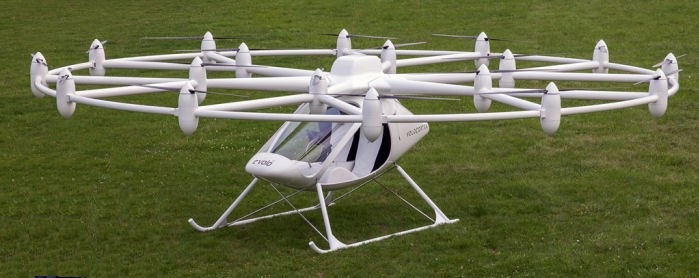
Premiere in April 2017, E-Volo celebrated the first series model of a passenger multicopter. Also known as MultiCopter, the Volocopter is a personal aerial vehicle made of fiber composite material in light-weight design. It runs on an all-electric propulsion system for its 18 rotors powered by 9 independent batteries.

The 2X is the consequent evolution of the VC200 prototype towards everyday use. Its battery replacement system makes it ready for operation again in only a few minutes. The sporty design includes a cockpit that comfortably seats 2 adults. Developed from the VC1, a radio controlled VC200 performed a first flight on November 17, 2013 in the dm-arena in Karlsruhe. The flight with the VC1 in October 2011 lasted precisely 90 seconds. Following several indoor-flights of several minutes’ duration with a number of gentle starts and landings, all the expectations upon the Volocopter are exceeded.

The innovative concept of the electric VTOL aircraft was able to so convince the German Federal Ministry of Transport that it resolves upon a trialing scheme spanning a period of several years for the creation of a new aviation category for the Volocopter. The DULV (The German Ultralight Association) is commissioned with drafting a manufacturing specification, operating regulations and the training scheme for the future pilots in cooperation with e-volo in January 2013.

The Volocopter VC200 received the permit-to-fly as an ultralight aircraft from German aviation authorities in February 2016. The first manned flight took place on March 30, 2016.