March 1917 – the Fairey N9 designed to meet an Admiralty specification had what was called a camber changing gear wing feature.
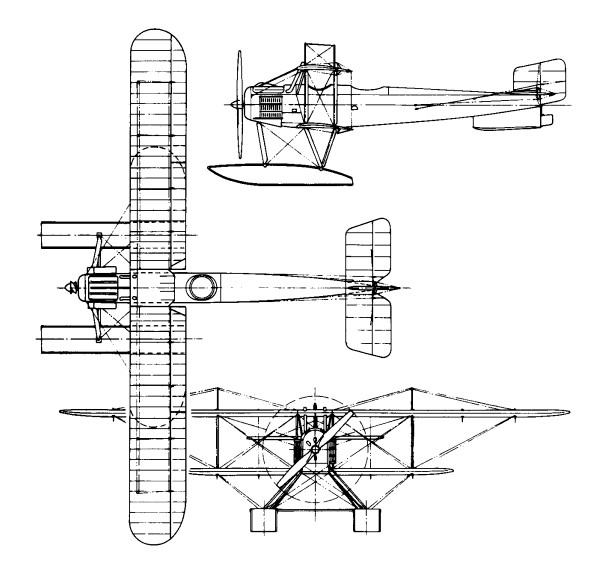
March 1917 – the Fairey N9 designed to meet an Admiralty specification had what was called a camber changing gear wing feature.
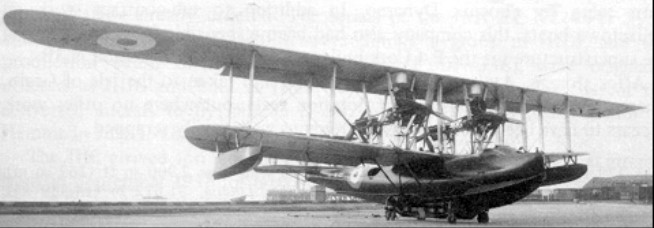
The Fairey N.4 was a 1920s British five-seat long range reconnaissance flying boat. Designed and built by the Fairey Aviation Company to meet an Admiralty requirement for a very large four-engined reconnaissance aircraft, it was the world’s biggest flying boat when it first flew in 1923.
The first N.4 (named Atalanta) first flew in 1923 powered by four 650 hp (485 kW) Rolls-Royce Condor IA piston engines. The hull had been built in Southampton (by boat builders) and delivered to Lytham St. Annes for assembly and the complete aircraft was then dismantled and taken by road to the Isle of Grain for its first flight.
The second N.4 Mk II (named Titania) included improvements and later variant Condor III engines. Titania was not flown straight away and was stored, not flying until 1925.
Engines: 4 × Rolls-Royce Condor III, 650 hp (485 kW) each
Length: 60 ft 0 in (20.12 m)
Wingspan: 139 ft 0 in (42.37 m)
Wing area: 2900 ft2 (269.41 m2)
Gross weight: 31612 lb (14339 kg)
Maximum speed: 115 mph (185 km/h)
Endurance: 9 hours 0 min
Service ceiling: 14,100 ft (4300 m)
Crew: 5
Armament
0.303in (7.7mm) Lewis machine-gun (in nose and beam positions)
1000lb (454kg) of bombs
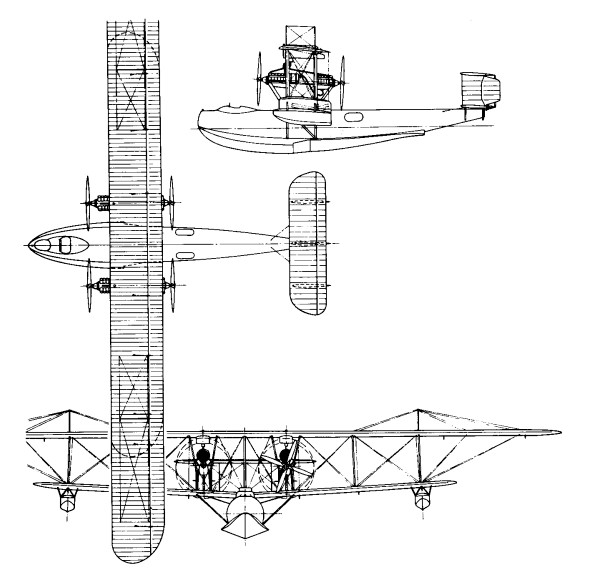
Founded by C R. (later Sir Richard) Fairey, initially to build 12 Short 827 seaplanes. Leased premises at Hayes, Middlesex, replaced by new factory 1917-1918. Became a public company March 5,1929 and the following year opened new airfield at Harmondsworth, later requisitioned and incorporated in site for London’s Heathrow Airport. Reorganized as holding company The Fairey Company Ltd. March 31,1959, aircraft manufacturing subsidiary becoming Fairey Aviation Ltd. and the Stockport plant Fairey Engineering Ltd. Fairey Aviation Ltd. merged with Westland Aircraft Ltd. in 1960. Britten-Norman (Bembridge) Ltd. acquired 1972. Fairey group into liquidation 1977; engineering activities acquired by National Enterprise Board; Britten-Norman operated by liquidator pending sale.
Company designs included F.2 twin-engined biplane fighter; camber-changing trailing-edge flaps introduced on Hamble Baby. Fairey III series introduced 1917; final model IIIF entered production 1926 and declared obsolete 1940. Fairey Hendon (1930) was the first British cantilever monoplane heavy bomber; Long-range Monoplane captured absolute distance record for Britain 1933. The famous Fairey Swordfish (“Stringbag”) torpedo bomber entered production in 1936; 2,392 were built by Fairey and Blackburn; it was the only biplane to remain in service throughout Second World War. Other famous aircraft included Battle light bomber, Fulmar fleet fighter, and Barracuda dive-bomber. Firefly name revived for Rolls-Royce Griffon-powered monoplane which entered FAA service in 1943, serving in Korea in 1950. First FAA aircraft to combine search and strike roles was the Gannet with Double Mamba coupled turbines; developed Gyrodyne convertible helicopter 1946; Jet Gyrodyne 1953; Rotodyne compound helicopter airliner 1957. Fairey Delta 2 research aircraft set world air speed record of 1,822km/h on March 10, 1956.
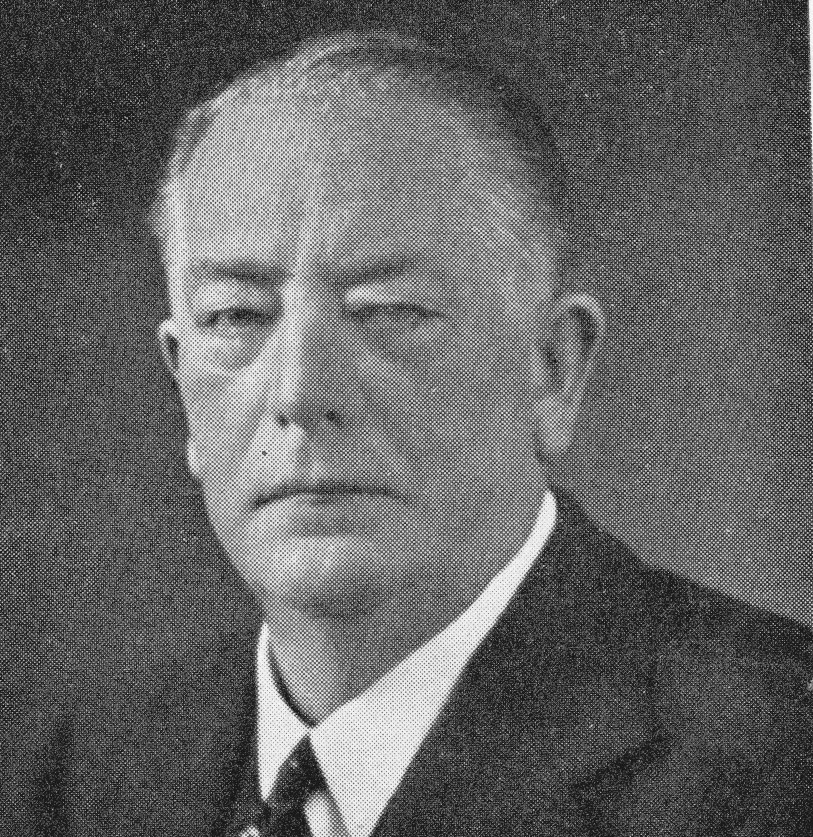
Britten-Norman became Fairey Britten-Norman in 1974.
Faiery Aviation joined Westland in 1961.

Produced in reply to a specification of 1967, which called for a hard-hitting close-support aircraft, the Fairchild A-10A Thunderbolt II (YA-10A) first flew on 10 May 1972 and was selected by the USAF in preference to the Northrop A-9 on 18 January 1973 after a competitive flyoff, and received a contract for six A-10A aircraft, the first of which flew 15 February 1975. The Thunderbolt’s appearance derives from the care taken to enhance its survival prospects over the battlefield and incorporate maximum fire-power. Absorbing much of the centre fuselage is a GAU-8/A Avenger seven-barrel 30-mm cannon, the muzzle protruding slightly beneath the nose, which can be fired at the rates of 2,100 or 4,200 rounds per minute. The engine location is considered optimum for minimizing hits by ground-fire, and has the additional advantage that the wing and tail mask the infra-red emissions of exhaust gases and therefore affords some protection against heat-seeking SAMs. All of the A-10’s glass is bulletproof and the cockpit itself is surrounded by a heavy tub of titanium. Titanium armor protects both the pilot and critical areas of the flight control system. This titanium “bathtub” can survive direct hits from armor-piercing and high explosive projectiles up to 37 mm in size. The front windscreen can withstand up to a 23 mm projectile. Fire retardant foam protects the fuel cells which are also self sealing in the event of puncture.
The airframe has numerous constructional features resistant to battle-damage or conducive to swift repair, such as interchangeable (left or right) flaps, fuselage components, rudders, elevators and main landing gear legs. There are two primary hydraulic systems, each with manual back-up, and the landing gear can be extended under gravity if necessary. Well protected electronically by AN/ALQ-119 jamming pods, plus an AN/ALE-40 chaff and flare dispenser, the Thunderbolt carries a Pave Penny laser designation pod on a pylon to the right of the forward fuselage for accurate marking.
Fairchild Republic A-10 Thunderbolt Article
The first production A 10A Thunderbolt II flying on 21 October 1975. Entering service in early 1977, these single seat aircraft are powered by two 9,065 lb thrust General Electric TF34 GE 100 turbofan engines.
General Electric TF34 / Fairchild A-10 Thunderbolt Article
Armament comprises a seven barrel, 30 mm gun mounted in the nose, plus a maximum external load of 16,000 lb (7,257 kg) of weapons including air to surface missiles. The General Electric Aircraft Armament Subsystem (30 millimeter Gun System) is located in the forward nose section of the fuselage. The gun system consists of the 30 mm Gatling gun mechanism, double-ended link-less ammunition feed, storage assembly and hydraulic drive system. The General Electric GAU-8/A 30 mm seven barrel cannon, specifically designed for the A-10, provides unmatched tank killing capability. The gun fires armor-piercing projectiles capable of penetrating heavy armor. It also fires a high explosive incendiary round, which is extremely effective against soft skinned targets like trucks. The cannon fires at a rate of 4,200 rounds per minute.

Features of the design are very advanced avionics to enhance operational capability and provision of titanium 737 mph armour for the entire cockpit area.
Avionics equipment includes communications, inertial navigation systems, computer-aided fire control and weapons delivery systems, electronic countermeasures, target penetration aids and self-protection systems. The A-10 employs both electronic and infrared countermeasures against enemy weapons systems. The weapons delivery system incorporates a heads-up display that provides the pilot with references for flight control and weapons employment. The weapons delivery systems include head-up displays that indicate airspeed, altitude and dive angle on the windscreen, a low altitude safety and targeting enhancement system (LASTE) which provides constantly computing impact point freefall ordnance delivery; and Pave Penny laser-tracking pods under the fuselage.
Development of a night/adverse weather (N/AW) two seat version has been initiated, the prototype first flying in 1979. This is intended to allow the pilot to concentrate on control of the aircraft under night or adverse weather conditions, the second seat occupied by a weapons system officer to handle the electronics. The private-venture Thunderbolt N/AW (Night/Adverse Weather) was offered without success.
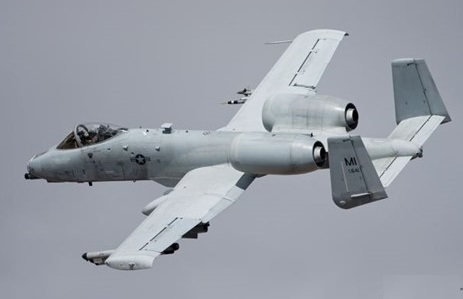
The A-10/OA-10 have excellent maneuverability at low air speeds and altitude, and are highly accurate weapons-delivery platforms. The A-10 has half the turning radius of the US Air Force’s other primary CAS aircraft, the F-16. After initially leaving a target, the A-10 can turn around and hit the same target again, all in around 7 seconds. Due to its large combat radius, the Thunderbolt II can loiter for extended periods of time, allowing for the coordination required to employ within yards of friendly forces. They can operate under 1,000-foot ceilings (300 meters) with 1.5-mile (2.4 kilometers) visibility. Using night vision goggles, A-10/ OA-10 pilots can conduct their missions during darkness.
The A-10 is capable of sustaining operations on unimproved airfields and the A-10’s rapid re-fueling and re-arming capability allows it to operate from forward bases close to the front lines. It is also capable of refueling in the air.
Altogether the USAF has received 713 aircraft, including A-10B dual control-trainers. Modelled on the A-10N/AW evaluator, the A-10B was in production featuring a second cockpit and taller fins.
The USAFs 33rd Tactical Fighter Training Squadron at Davis-Monthan AFB, Arizona, received its first Fairchild A 10A Thunderbolt IIs in February 1976.
The first combat-ready A-10A wing was the 345th Tactical Fighter Wing, based at Myrtle Beach, South Carolina, to which deliveries began on 20 March 1977. The last of 713 A-10s was handed over to the USAF on 20 March 1984. This was the end of aircraft manufacturing in Hagerstown and Washington County. A-10s were fitted with AIM-9L Sidewinder AAM dual rail adaptors, to allow four missiles to be carried in pairs.
The primary mission of the OA-10 is to act as forward air controller to coordinate and direct friendly air forces in support of land forces.
Northrop Grumman acquired the A-10 programme from Fairchild in 1987.
In 2000 preparations for the Precision Engagement Program (PEP) upgrade program began. PEP gives the A-10 the capability of deploying precision-guided weapons. The upgrade is carried out in two phases, called Spiral One and Spiral Two. The aircraft is designated A-10C. Between July and October 2004 the first A-10C underwent ground and instrumentation tests prior to the first flight in November 2004. In total 13 A-10C aircraft were for flight testing. The entire A-10A fleet is expected to receive the PEP upgrade. The last aircraft due to be modified before the summer of 2009.

Fairchild A-10A Thunderbolt II
Engine: 2 x General Electric TF34-GE 100 turbofan, 9065 lb / 4112-kg
Wingspan: 57 ft 6 in / 17.53 m
Length: 53 ft 4 in / 16.25 m
Height: 4.47m / 14 ft 8 in
Wing area: 47 sq.m / 506.0 sq ft
Empty equipped weight: 11,321 kg / 24,959 lb
MTOW: 50,000 lb / 22,680 kg
Wing load : 96.97 lb/sq.ft / 473.0 kg/sq.m
Max speed: 439 mph / 706 kph
Combat limit: 704 km/h (438 mph) at 1525 m (5,000 ft)
Service ceiling 13,636m / 45,000 ft
Initial ROC: 1830 m / min / 6,000 fpm
Ferry range: 2454 sm / 3949 km
Combat radius: 930+ km
T/O run (to 15m): 780 m
Ldg run (from 15m): 715 m
Armament: 1 x 30 mm GAU-8/A Avenger seven-barrel cannon (1174 rds)
Pylons: 11 up to 7,258 kg / 16,000 lb
Fuel internal: 6225 lt.
Air refuel: Yes.
Seats: 1
OA-10A
The original Fokker F-27 Friendship was built in Holland. Fairchild has built the F-27 under license from Fokker since 1958. The first F-27 models had a maximum gross weight of 40,500 pounds and seated 44 passengers. Power was supplied by twin 1,720 shp Dart turboprops. When Fairchild merged with Hiller Aircraft, the designation of the airplane was changed to FH-227 and the fuselage was stretched by six feet, giving increased cabin space for passengers and freight.
The stretched airliner will accommodate up to 52 passengers. In 1960, power was increased to 2,105 shp. The stretched version was fitted with 2,250 shp engines, and ultimately the FH-227 received a redesigned windshield, stronger landing gear, strengthened rear fuselage, heavier wing skin, propellers of increased diameter and a more powerful 2,300 shp Dart turboprop. Fairchild discontinued building the FH-227 under license from Fokker in 1975.
Engines; 2 x Rolls-Royce RDa-7 Dart Mk.532, 1655kW / 2,300 shp
Wingspan; 29.0 m / 95 ft 2 in
Length; 25.5 m / 83 ft 8 in
Height; 8.4 m / 27 ft 7 in
Wing area; 70.0 sq.m / 753.47 sq ft
Take-off weight; 20640 kg / 45504 lb
Empty weight; 12478 kg / 27509 lb
Fuel capacity: 1,364 lb
Max. Speed; 483 km/h / 300 mph
Top cruise: 270 mph
Stall speed: 87 mph
Initial climb rate: 1,560 fpm
Service ceiling: 28,000 ft
Takeoff run: 3,950 ft
Landing roll: 4,100 ft
Range w/max.fuel; 2500 km / 1553 miles
Range w/max.payload; 800 km / 497 miles
Seats: 44-52
Crew; 2-3

Fairchild Engine Division started studies for a small, inexpensive turbojet in 1946, for a guided missile the company was developing. In June 1947 the US Navy awarded a contract to develop such an engine to power an air-to-undewater torpedo-carrying missile. The engine, designated the J44, was America’s first expendable turbojet and was required to have a life of only 10 hours.
The Compressor was a mixed-flow, axial and centrifugal type with curved inducer vanes, and it was made of one piece of magnesium alloy casting that required no machining of the blades. Similary to the compressor, the diffuser section, with 3 rows of guide vanes, following the compressor was a single casting requiring no machining.
An annular combustion chamber was made from sheet metal and used in commercialy available oil burners. The single stage turbine had its blades welded on to a forged steel disc. A simple, stock stainless steel tube, with a welded flange at each end, formed the rotor connecting the turbine to the compressor.
There was a bearing before the compressor and aft of the turbine, and a fixed-area exhaust nozzle was used.
In August 1948 the XJ44 made its first run. The first flight was made in mid 1950 when it powered Fairchild’s Petrel Missile. As service trial proceeded, so problems with J44 where thrown up, most of them attribuable to over-simplified production. A lot of changes were required, and development of J44 was completed by October 1954 under designation J44-R-3.
The Improved engine was mounted on a Fairchild C-82 cargo aircraft, then later to each wingtips of the Fairchild C-123B cargo aircraft. Another use of the J44 was one the experimental Bell model 65 VTOL Aircraft.
The main usage of the J44 was to power the Firebee drone, although, with a specific fuel consumption of 1,55 it could not compete with Continental’s J-69 (Licence version of Turbomeca’s Marbore) and it was taken out of production by 1959.
Applications:
AQM-34B/C Firebee
AQM-41 Petrel
Bell Model 65
C-123 Provider
Specifications
Type: turbojet
Diameter: 0,56 m
Length: 2,24 m
Frontal area: 0,25 m²
Dry Weight, without accessories: 127 kg
Dry weight: 363 lb. (165 kg.)
Compressor: single stage centrifugal flow compressor
Combustors: annular combuster
Turbine: two-stage turbine
Fuel type: JP-4
Static thrust: 454 kg
Maximum thrust: 2450 lb. (10.9 kN)
Specific fuel consumption: 0.94 SFC
Thrust-to-weight ratio: 6.5:1
In June 1996 Fairchild Aerospace of U.S.A. bought 80% of the German manufacturer Dornier Luftfahrt from Daimler-Benz Aerospace, resulting in creation of Fairchiid Dornier Germany Dornier Luftfahrt GmbH. Current product range comprises Fairchiid Dornier 228 twin-turboprop 19-passenger commuter transport (first flown March 1981) plus special missions variant for many roles including border patrol, maritime patrol, pollution surveillance, antiship warfare, long-range observation, etc.; Dornier 328 twin-turboprop 30-39 passenger regional transport (first flown December 1991); 328JET twin-turbofan development of 328 (first flown January 1998; 40-passenger version launched as 428JET, and low-wing developments are 55-passenger 528JET, 70-passenger 728JET and 90-passenger 928JET). Company also carries out subcontract work for Airbus Industrie.
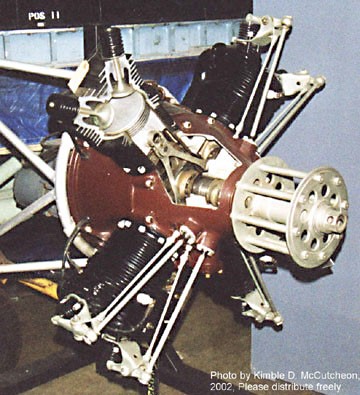
The Fairchild Caminez 477-B of 1927 four-cylinder air-cooled radial aero engine was designed by David Caminez and produced 150hp from 447ci.
The Fairchild Caminez 477-C of 1928 produced 120hp from 447ci and received ATC 1.

The Kreider-Reisner XC-31 or Fairchild XC-31 was an American single-engined monoplane transport aircraft of the 1930s designed and built by Kreider-Reisner. It was one of the last fabric-covered aircraft tested by the U.S. Army Air Corps.
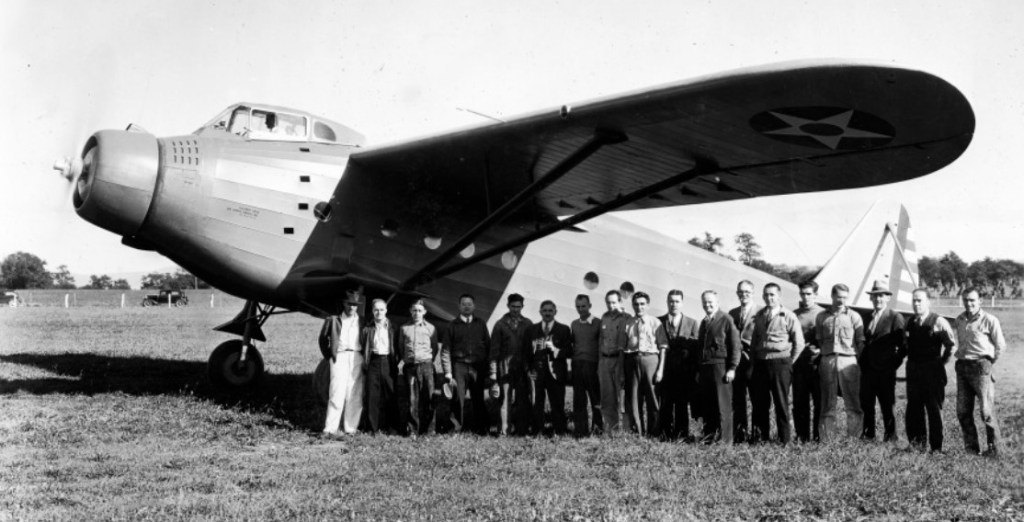
The XC-31 was built with an aluminum alloy framework covered by fabric, and featured strut-braced wing and fully retractable landing gear, with the main gear units mounted on small wing-like stubs and retracting inwards. An additional novel feature was the provision of main cargo doors that were parallel with the ground to facilitate loading.
Designed as an alternative to the emerging twin-engined transports of the time such as the Douglas DC-2, it was evaluated by the Air Corps at Wright Field, Ohio, under the test designation XC-941, but rejected in favor of all-metal twin-engined designs.
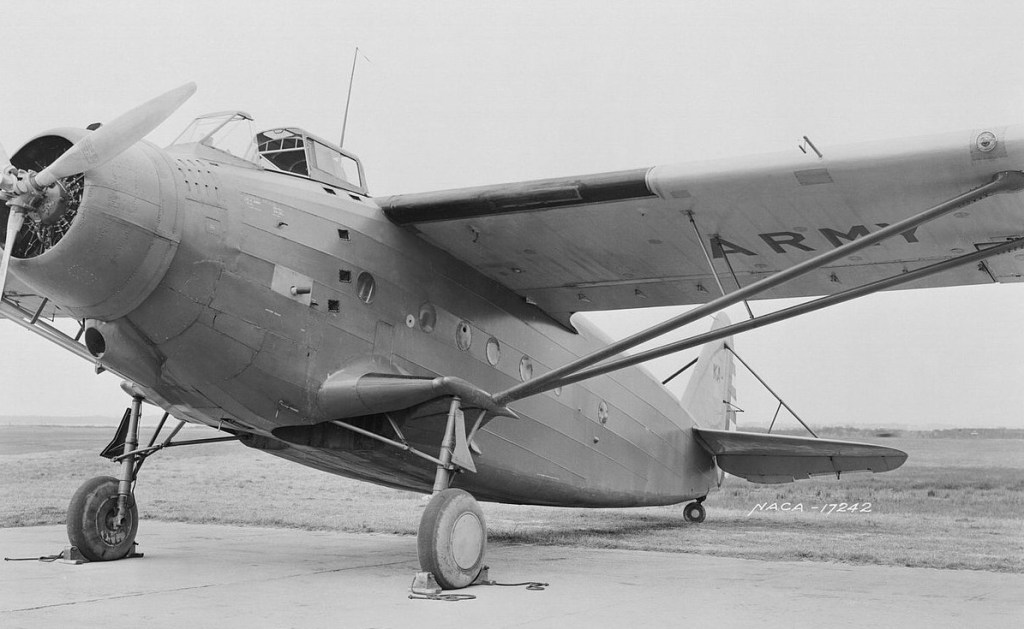
Following evaluation by the USAAC, the XC-31 was transferred to NACA, which used it for icing studies at its Langley Research Center.
Powerplant: 1 × Wright R-1820-25, 750 hp (559 kW)
Wingspan: 75 ft 0 in (22.86 m)
Wing area: 802 sq ft (74.5 m2)
Length: 55 ft 5 in (16.89 m)
Height: 15 ft 10 in (4.83 m)
Empty weight: 7,322 lb (3,321 kg)
Gross weight: 12,750 lb (5,783 kg)
Maximum speed: 154 mph (248 km/h, 134 kn)
Cruise speed: 143 mph (230 km/h, 124 kn)
Range: 775 mi (1,247 km, 673 nmi)
Service ceiling: 15,000 ft (4,570 m)
Crew: 1 (Pilot)
Capacity: 15 passengers or 3,500 pounds (1,600 kg) of cargo

During 1934 the Fairchild company designed a business or executive aircraft with five seats, designated the Model 45. It first flew on 31 May 1935. The Model 45 was a low-wing cantilever monoplane with a conventional cantilever tail unit and a retractable tailwheel landing gear. The aircraft was powered by a 225 hp (168 kW) Jacobs L-4 radial engine and had a luxury five-seat interior as standard. Flight testing showed that the aircraft performed well, although it was described as sedate.
The company predicted that the Model 45 would have only limited market appeal in that form, therefore only the prototype was built.
Fairchild then upgraded the prototype with a larger engine, the Wright R-760 radial, for evaluation. In this configuration it was designated the Model 45-A. This configuration was placed in production, with about 16 units being completed.
One aircraft was bought as an executive transport by the United States Navy as the JK-1. After the United States entered the Second World War, two aircraft were impressed into service with the United States Army Air Forces as the UC-88.
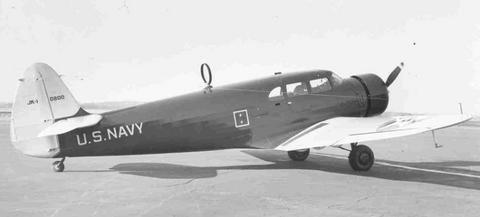
In 1997, Greg Herrick requested drawings of a Fairchild 45 tail section for an ongoing restoration project. The request was refused, citing the design was a trade secret. This led to a FOIA request, and lawsuit that was debated in the United States Supreme Court. The effort led to the “Herrick amendment” added to the FAA Air Transportation Modernization and Safety Improvement Act of 2012. The amendment released the ATC type certificate information for 1,257 aircraft first certified in 1927 through the beginning of World War II in 1939.
Variants:
45
One prototype
Engine: 225 hp (168 kW) Jacobs L-4
45-A
Production aircraft 16 built
Engine: 320 hp (239 kW) Wright R-760
Wingspan: 39 ft 6 in (12.04 m)
Wing area: 248 sq ft (23.04 m2)
Length: 30 ft 1 in (9.17 m)
Height: 8 ft 2 in (2.49 m)
Empty weight: 2,512 lb (1,139 kg)
Gross weight: 4,000 lb (1,814 kg)
Maximum speed: 170 mph (274 km/h, 150 kn)
Range: 650 mi (1,046 km, 560 nmi)
Service ceiling: 18,700 ft (5,700 m)
Crew: one
Capacity: four passengers
JK-1
One 45-A for the United States Navy
UC-88
Two 45-As impressed into service with the United States Army Air Forces

