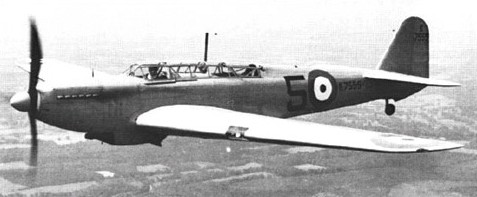
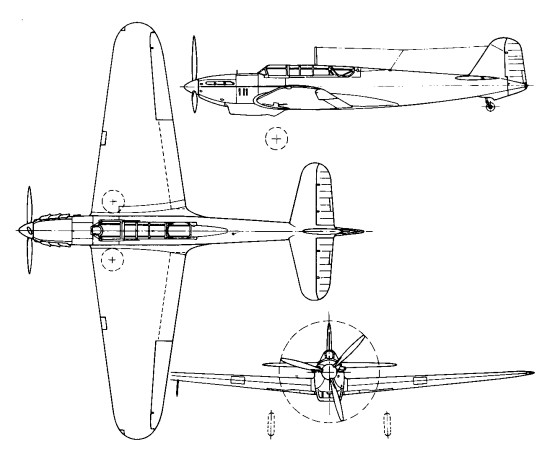
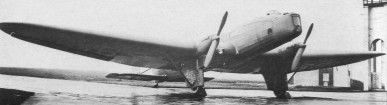
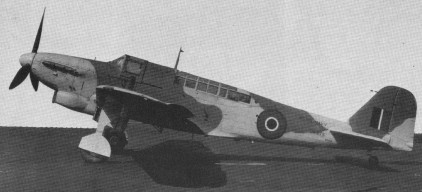
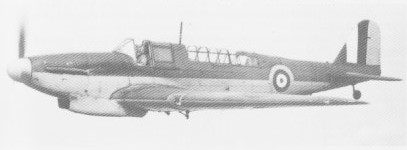
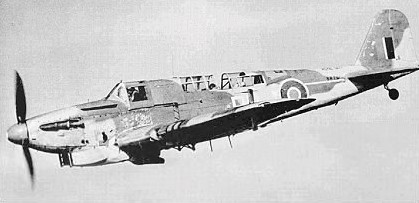
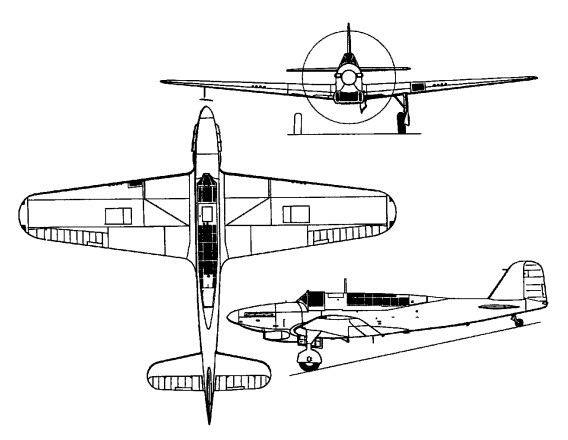
Two prototypes, first flown on 13 June 1937. No production.
Engine; 1 x 1030hp Rolls-Royce Merlin I (later II) Take-off weight; 3989 kg / 8794 lb Empty weight; 2908 kg / 6411 lb Wingspan; 14.43 m / 47 ft 4 in Length; 12.19 m / 39 ft 12 in Height; 4.29 m / 14 ft 1 in Max. Speed; 456 km/h / 283 mph Ceiling; 8108 m / 26600 ft Range; 1481 km / 920 miles Crew; 2
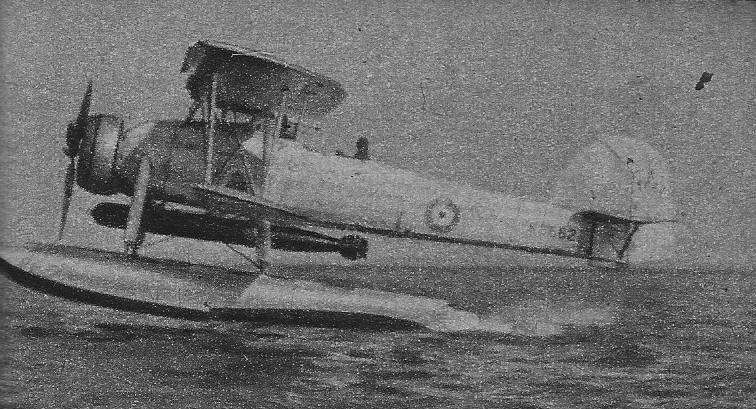
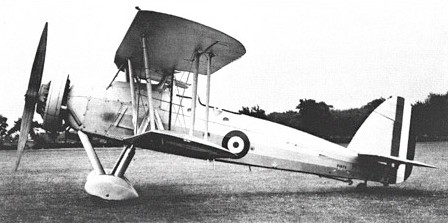
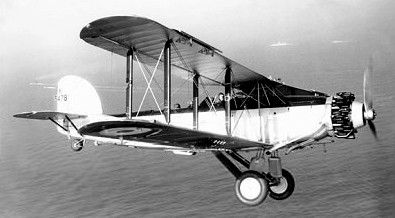
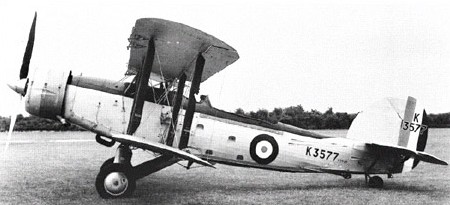
In 1933 the Fairey Aviation Company privately financed and built the TSR.1, a biplane torpedo spotter reconnaissance aircraft, from which the Swordfish evolved. Although the first TSR.I crashed, it had undergone sufficient tests to prove the feasibility of the design, and Fairey built the TSR.II, a slightly larger aircraft. It was designed by Marcelle Lobelle to meet the Naval Spec S.15/33.
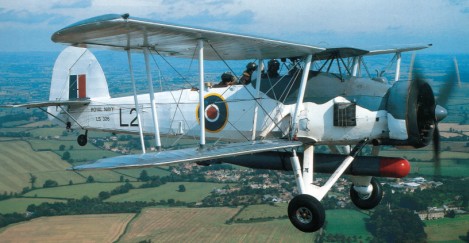
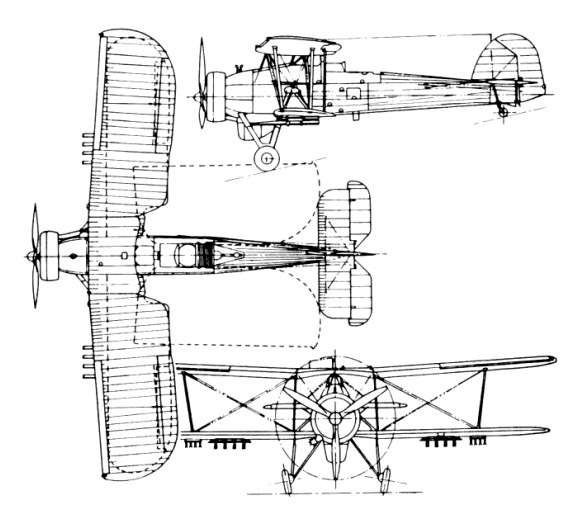
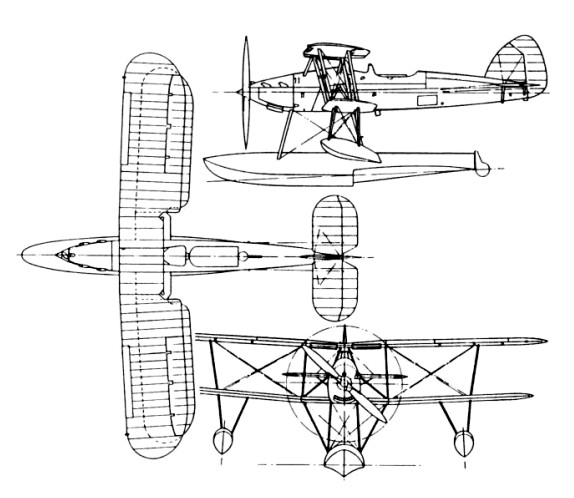
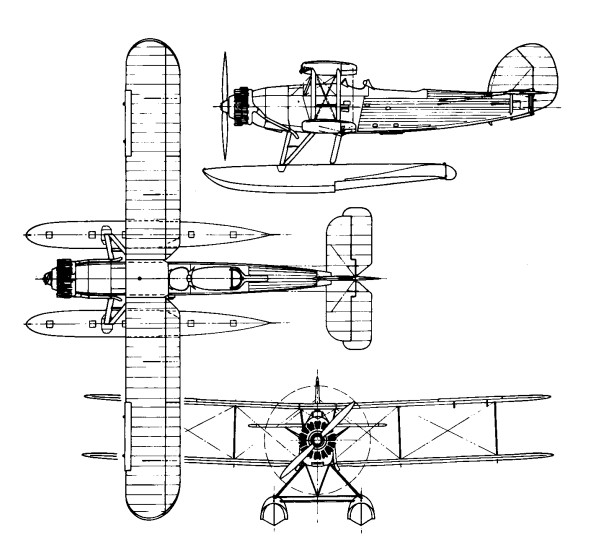
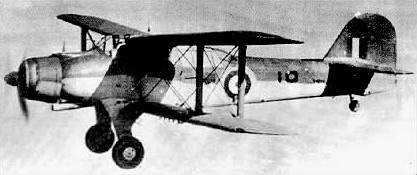
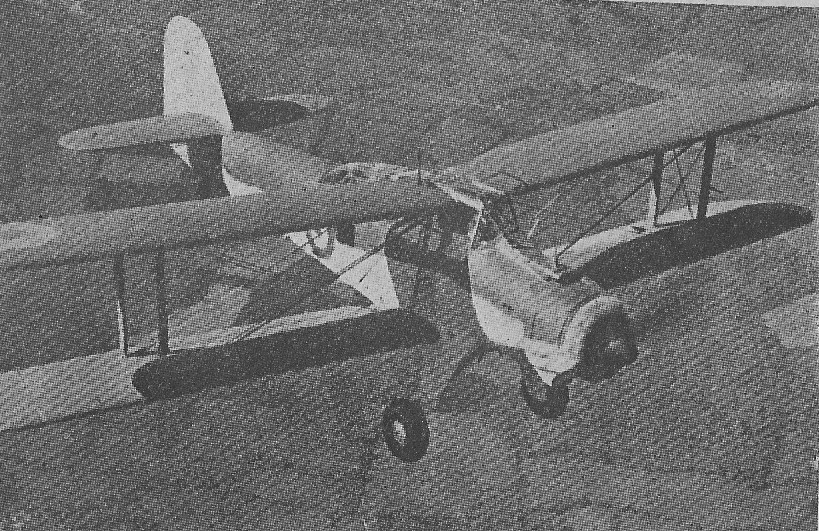
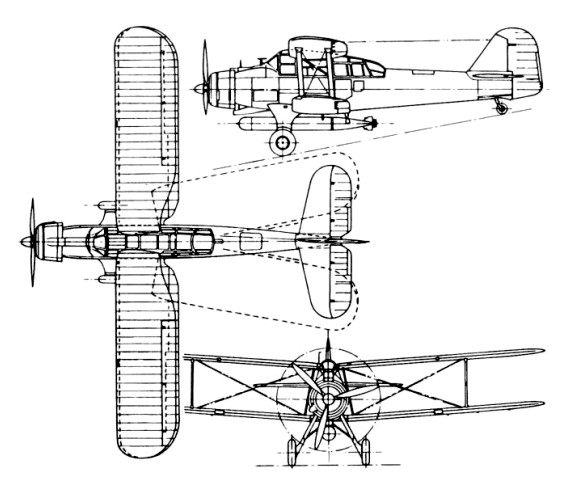
First flying from Harmondsworth on 17 April 1934, and after numerous modifications a specification (S.38/34) was written around the aircraft. Official testing proved it to be a stable and reliable aircraft. The fuselage, 36ft 4in long, was rectangular in section and featured a bolted steel tube frame. The aft portion was fabric covered, but detachable metal panels, for easy access, were fitted from the cockpit forward. The crew consisted of a pilot, navigator and bomb-aimer. The equal span biplane wings were of fabric covered metal construction, and the upper wing centre section was attached to the fuselage by a pyramid structure and carried the hoisting sling. The lower wings were braced to the fuselage by an inverted V strut. The wing cellules could be manually folded for compact storage. The leading edge of the upper wing was fitted with Handley Page slots, and ailerons were fitted to both upper and lower wings. The undercarriage used medium pressure tyres and pneumatic brakes. Each of the main units consisted of an oleo shock absorber leg connected to the lower centre section front spar, and two inner struts hinged to the fuselage. The design was strengthened to withstand catapult launches and arrester hook landings. Early production Swordfish, built to Air Ministry Specification S.33/34, were powered by an air cooled 690 hp Bristol Pegasus IIIM3 radial engine. Blessed with superb handling characteristics, the Swordfish performed extremely well on carrier borne operations, being able to operate from pitching decks in stormy conditions. It had a range of 546 miles and a maximum speed of 138 mph at 5,000ft.
The propeller was a three-blade Fairey-Reed metal.
The Swordfish carried 155 Imp.Gal / 705 lt of fuel in its min tank and 12.5 Imp.Gal / 57 lt in a gravity tank, both behind the Pegasus IIIM3 or Mk.30 engine.
The first batch of production Fairey Swordfish rolled off the assembly line during December 1935, and were operating with the Royal Navy’s Fleet Air Arm (FAA) within two months. By 1939, on the eve of the Second World War, there were 13 operational squadrons of the type. A total of 689 aircraft had been delivered or were on order. The Swordfish Mk I’s defensive armament comprised a fixed forward firing synchronised Vickers machine gun and a movable Vickers K gun on a Fairey high speed mounting in the rear cockpit. The offensive load could be a single 18in 1,610 lb torpedo, or one 1,500 lb mine, or 1,500 lb of bombs. The Mk II, which appeared in 1943, had a strengthened lower wing capable of carrying eight 601b rocket projectiles. The final production version, the Mk III, had an ASV Mk X radar scanner in a radome under the fuselage. In Canada, canopy equipped Mk.IIs and IIIs were designated Mk IVs. The No 1 Naval Air Gunners School at Yarmouth, Nova Scotia, operated 105 Swordfish. Considered obsolete at the beginning of the war, the Swordfish outlived its successors and survived the war with an impressive battle record; the type is credited with sinking a greater tonnage of Axis shipping than any other torpedo bomber.
The Swordfish first made big news in the seaplane form, when a Swordfish catapulted from HMS Warspite not only spotted for the British naval force during the battle in Ofot Fiord, Norway, on April 13, 1940, but itself bombed and sank a submarine and fin¬ished off an enemy destroyer that had been dam¬aged by the ships. Seven months later, Swordfish from the carrier Illustrious achieved one of the most spectacular successes in naval air warfare. In two waves or twelve and nine aircraft, they dived into Taranto Harbour under cover of darkness and launched their bombs and torpedoes to such effect that three Italian battleships, a cruiser and two destroyers were seriously damaged, two naval auxiliaries sunk and shore installations heavily damaged all for a loss of two Swordfish. Another major success was achieved on May 26, 1941, when Swordfish of 818 Squadron so crippled the battleship Bismarck that the Navy was able to intercept and sink it. The well remembered attack on the Scharnhorst and Gneisenau in the Channel cost the lives of 13 of the 18 men who took part. Outliving its intended replacements, the Fairey Albacore and Barracuda, the Swordfish served until the war’s end. Production ended on 18 August 1944, by which time a total of 2,396 Swordfish were built.
Engine: Bristol Pegasus, 690 hp Wingspan: 45 ft 6 in Length: 36 ft 4 in Takeoff weight: 9250 lb Max speed: 139 mph Seats: 2-3
Swordfish Mk II Engine: 1 x Bristol Pegasus XXX, 559kW / 740 hp Max take-off weight: 3406 kg / 7509 lb Empty weight: 2132 kg / 4700 lb Wing loading: 12.3 lb/sq.ft / 60.0 kg/sq.m Wingspan: 13.87 m / 45 ft 6 in Length: 10.87 m / 35 ft 8 in Height: 3.76 m / 12 ft 4 in Wing area: 56.39 sq.m / 606.98 sq ft Max. speed: 120 kt / 222 km/h / 138 mph Cruise speed: 104 kt / 193 km/h / 120 mph Service ceiling: 3260 m / 10700 ft Range: 1658 km / 1030 miles Armament: 2 x 7.7mm machine-guns, 1 x 730kg torpedo or 680kg of bombs Crew: 2-3
In 1933 the Fairey Aviation Company privately financed and built the TSR.1, a biplane torpedo spotter reconnaissance aircraft, from which the Swordfish evolved. Although the first TSR.I crashed, it had undergone sufficient tests to prove the feasibility of the design, and Fairey built the TSR.II, a slightly larger aircraft.
One S.9/30 prototype, first flown on 22 February 1934. One TSR.1 prototype, first flown on 21 March 1933. No production.
S.9/30 (landplane) Engine; 1 x 525hp Rolls-Royce Kestrel IIMS Max take-off weight; 2606 kg / 5745 lb Wingspan; 14.02 m / 45 ft 12 in Length: 10.39 m / 34 ft 1 in Height: 4.27 m / 14 ft 0 in Wing area: 41.06 sq.m / 441.97 sq ft Max. speed: 237 km/h / 147 mph Armament; 1 x 7.7mm machine-gun, 540kg of bombs Crew; 3
A twin 447kW Rolls-Royce Kestrel Vl-engined cantilever low-wing monoplane heavy night bomber, 14 of which were operated by the RAF from 1937 until just before the outbreak of World War II.
Engines: 2 x Rolls-Royce Kestrel IV, 440kW Max take-off weight; 9072 kg / 20000 lb Empty weight; 5774 kg/ 12730 lb Wingspan; 31.0 m / 101 ft 8 in Length; 18.5 m / 60 ft 8 in Height; 5.6 m / 18 ft 4 in Wing area; 110.0 sq.m / 1184.03 sq ft Max. speed; 249 km/h / 155 mph Cruise speed; 215 km/h / 134 mph Ceiling; 6500 m / 21350 ft Range w/max.fuel; 2200 km / 1367 miles Range w/max.payload; 1900 km / 1181 miles Armament; 3 machine-guns, 1100kg of bombs Crew; 5
Fairey Hendon Mk. II Engines: 2 x Rolls Royce Kestrel VI, 600 hp Length: 60.761 ft / 18.52 m Wing span: 101.739 ft / 31.01 m Max take off weight: 20003.8 lb / 9072.0 kg Max. speed: 135 kts / 250 kph Range: 1180 nm / 2185 km Armament: 3x 7,7mm MG, 753kg Bomb. int.
In 1926 a proposal was made that the RAF should attempt a non-stop flight to India. The chosen vehicle for this attempt was the Hawker Horsley, then entering RAF service as a day and torpedo-bomber. Three unsuccessful attempts were made with the Horsley and the Air Ministry decided to obtain a purpose-built long-range aircraft to make a new attempt. The Fairey Long-Range Monoplane was the result. A clean, high-wing cantilever monoplane of low wing loading, it was of composite construction and fabric-covered. The high-efficiency wing, incorporating a triangulated-tube internal bracing system devised by Hollis Williams, also contained tanks for more than 4,546 litres of fuel. In this aircraft (J9479) Sqd Ldr A. G.Jones-Williams and Flt Lieut N. H. Jenkins flew from Cranwell, Lincolnshire to Karachi, recording the first non-stop flight between Britain and India, but failing to beat the world long-distance record. This aircraft was lost in a second long-range attempt, resulting in the construction of a new aircraft which differed only in detail and by the addition of an autopilot.
In this, during the period 6-8 February 1933, Sqd Ldr Gayford (with Flt Lieut G. E. Nicholetts as navigator) flew non-stop from Cranwell to Walvis Bay, South West Africa, creating a world long-distance record of 8,544km. Only six months later this record was captured by France.
A further development of the IIIF Mk VI went under the designation Seal. The Seal was the Fleet Air Arm version of the Gordon and was operated as a three-seat spotter-reconnaissance biplane. Equipment unique to the Seal were a tailwheel, wheel brakes, catapult points, flotation gear, slinging gear and an arrester hook, enabling it to be used from aircraft carriers and as a seaplane from warships. 90 were delivered to the FAA between 1933 and 1935 (the 91st Seal ordered but thought not to have been delivered.
Seals were also sold to Peru, Latvia, Argentina and Chile. Late in their career a number of Seals passed into RAF service, remaining operational in Ceylon during the early years of World War II.
Engine; 1 x 525hp Armstrong Siddeley Panther IIA Max take-off weight; 2724 kg / 6005 lb Wingspan; 13.94 m / 45 ft 9 in Length; 10.26 m / 33 ft 8 in Height; 3.89 m / 12 ft 9 in Wing area; 41.20 sq.m / 443.47 sq ft Max. speed; 222 km/h / 138 mph Ceiling; 5182 m / 17000 ft Range; 773 km / 480 miles Armament; 2 x 7.7mm machine-guns, 2 x 110kg bombs Crew; 3
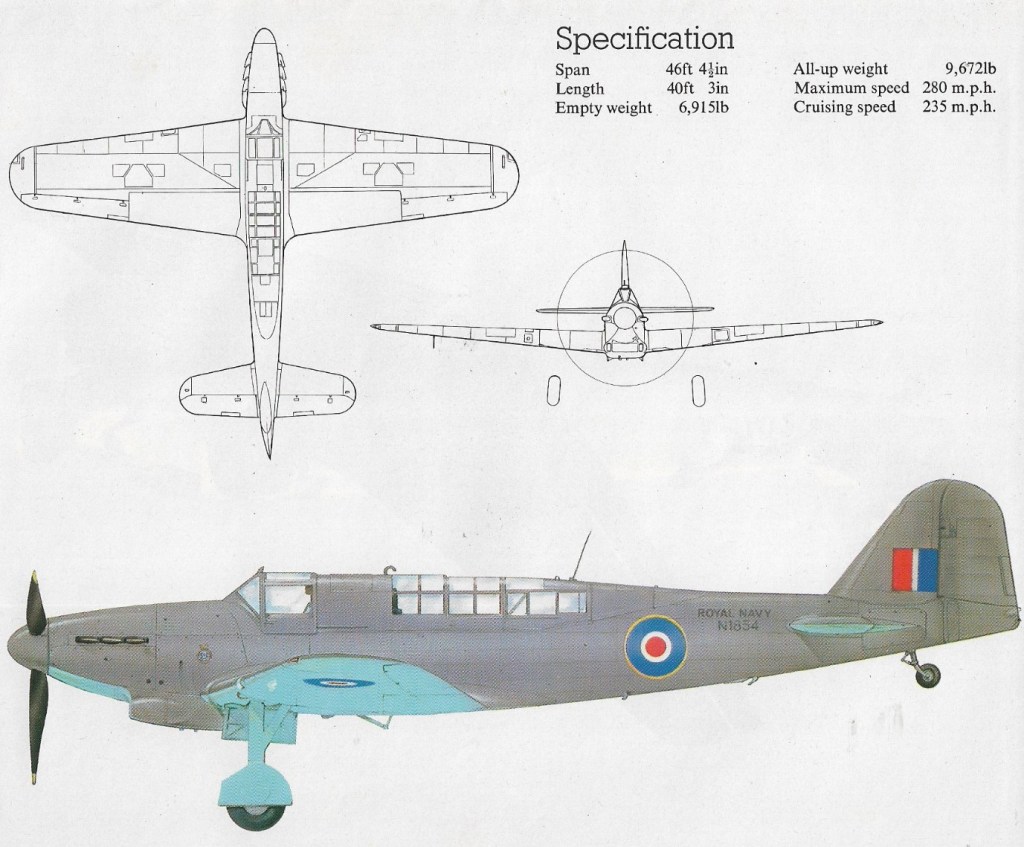
First flown on 4 January 1940, there was no prototype as such for the Fulmar, which was evolved in 1939 from the P.4/34 lightweight development of the Fairey Battle day bomber. The urgent need by the Fleet Air Arm (FAA) for a new fighter led to a rapid trials programme, beginning on January 4, 1940, with the maiden flight of N1854, the first production Fulmar, of which 250 were ordered. The Fulmar I was an all metal cantilever monoplane, with folding wings for carrier stowage; the semimonocoque fuselage housed the deck arrester gear and catapult points, and space was provided for an inflatable dinghy.
The pilot’s cockpit was separated from that of the observer/navigator, and both were enclosed by perspex canopies following the contours of the fuselage. The wide track undercarriage retracted inwards towards the wing roots. The powerplant for all except two early Fulmar 1 aircraft was the 1080 hp Rolls¬Royce Merlin VIII engine. Due to the additional weight of a second crew member, and the special equipment required for carrier operation, the Fulmar did not achieve the same rate of climb or airspeed as its land-based counterparts although this was not necessarily required by the Royal Navy. Armament was very similar to the best in the RAF, consisting of eight 0.303 in (7.7 mm) Browning machine guns four in each wing with twice the ammunition capacity of the Spitfire and Hurricane. The lack of a rear defensive gun was one of the Fulmar’s principal deficiencies, and some crews unofficially fitted an additional gun of their own choice in the rear cockpit.
N1858 – the 5th Fulmar I
Deliveries of the Fulmar I began in June 1940, to 806 Squadron, and it became operational aboard the aircraft carrier Illustrious about two months later. A total of 250 853kW Rolls-Royce Merlin VIII-powered Mk Is were built. At this time, Fairey had plans for the development of the Fulmar II, to be powered by the 1300 hp / 969kW Merlin 30, and with weight reductions brought about by the use of lighter constructional materials. This enabled the Fulmar II to carry the originally intended bombload in the form of a single 113.4 kg (250 1b) or 227 kg (500 1b) bomb beneath the fuselage (the Mk I being limited to eight 9 kg [20 1b] or 11.3 kg [25 1b] bombs under the wings). The Fulmar Mk II with nearly 300 more horsepower, was only 16km/h faster than the Mk I.
Orders for 350 Fulmar IIs were placed during the autumn of 1940, bringing the total number on order to 600. With conversions to Fulmar II beginning on the Mk I production line, the eventual result was that well over 400 were completed as Mk IIs. Ammunition capacity of the Fulmar II was eventually increased from 750 to 1000 rounds per gun but, despite this, the aircraft’s fighting ability was still disappointing. Although short on speed and manoeuvrabil¬ity, it served with 14 FAA squadrons, accounting for more than 100 enemy aircraft until the appearance of more advanced types such as the Seafire and Firefly. During the summer of 1941, four 0.3 in (12.7 mm) machine guns were fitted to one Fulmar. Firing trials proved satisfactory, and the last 100 aircraft were adapted for such an armament, but not all were equipped due to an insufficient supply of the heavier guns. Fulmars were used quite successfully as convoy escorts during the mid war years, and about 100 were converted into makeshift night fighters. In 1943 they were gradually withdrawn from front line service and reassigned to training duties.
Fairey Fulmar Mk.I Engine: 1 x Rolls-Royce Merlin VIII, 805kW / 1065 hp Max take-off weight: 4853 kg / 10699 lb Empty weight: 3955 kg / 8719 lb Wing loading: 31.37 lb/sq.ft / 153.0 kg/sq.m Wingspan: 14.14 m / 46 ft 5 in Length: 12.24 m / 40 ft 2 in Height: 4.27 m / 14 ft 0 in Wing area: 31.77 sq.m / 341.97 sq ft Max. speed: 215 kts / 398 km/h / 247 mph Service ceiling: 6555 m / 21500 ft Endurance: 4 h Armament: 8 x .303in / 7.7mm machine-guns Bombload: eight 9 kg [20 1b] or 11.3 kg [25 1b] bombs Crew: 2
Fairey Fulmar Mk.II Engine: 1 x Rolls-Royce Merlin 30, 1300 hp / 969kW Span: 14.13 m (46 ft 4.5 in) Length: 12.24 m (40ft 2 in) Gross weight: 4695 kg (10350 lb) Maximum speed: 417 km/h (259 mph) Bombload: 113.4 kg (250 1b) or 227 kg (500 1b) bomb
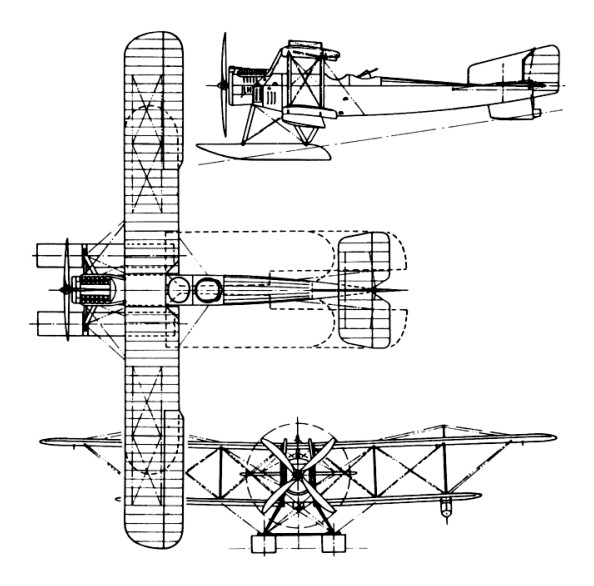
The Fairey Campania two-seat seaplane got its name from the ex-Cunard ocean liner Campania which the Admiralty had converted into a seaplane carrier during the winter of 1914-15. Production aircraft, powered by a 186.3kW Sunbeam Maori II or 186.3-257kW Rolls-Royce Eagle engine, entered service in 1917 and eventually operated as armed-reconnaissance aircraft from the carriers Campania, Nairana and Pegasus and from coastal bases until the Armistice, thereafter also seeing action in Russia. A total of about 60 Campanias were built from the contracts placed with Fairey (for 50 aircraft in two batches), Barclay Curie and Company (for 50) and Frederick Sage and Company/Sunbeam Motor Car Company (for 70).
Engine; 1 x Sunbeam “Maori II”, 190kW Max take-off weight; 2420 kg / 5335 lb Empty weight; 1660 kg / 3660 lb Wingspan; 18.8 m / 61 ft 8 in Length; 13.1 m / 42 ft 12 in Height; 4.6 m / 15 ft 1 in Wing area; 58.3 sq.m / 627.54 sq ft Max. speed; 137 km/h / 85 mph Ceiling; 1520 m / 5000 ft Range w/max.fuel; 450 km / 280 miles Armament; 1 machine-guns, 2 x 30kg bombs Crew; 2
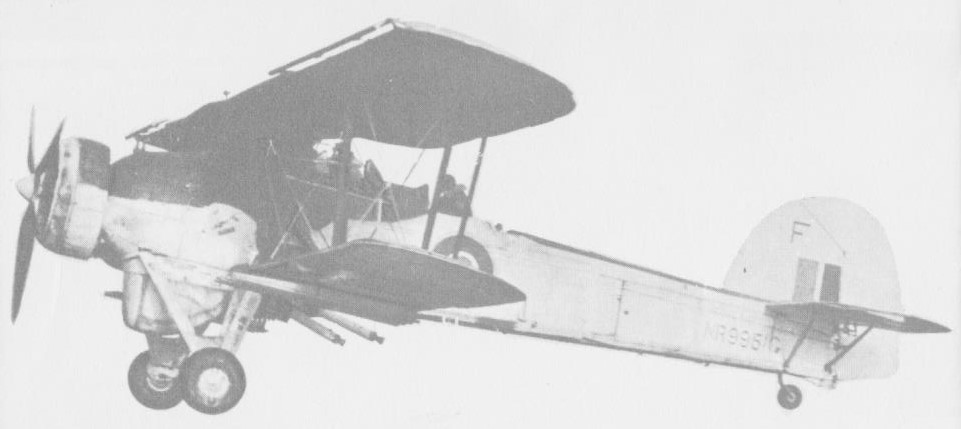
The Albacore torpedo-bombing biplane was first flown in prototype form on 12 December 1938. During the spring of 1940 the first production aircraft entered FAA service and for the remainder of that year were flown mainly on coastal patrol, spotter-reconnaissance, minelaying and night-bombing duties. In 1941 the Albacores went to sea in HMS Formidable and other carriers and from then were active on convoy protection duties in the Baltic and in anti-submarine and other roles in the Mediterranean and elsewhere. The Albacore was removed from FAA service in late 1943, having never performed its intended role as a Swordfish replacement. It had a more powerful 794kW Bristol Taurus or 842kW Taurus XII 14-cylinder sleeve-valve air-cooled radial engine in the NACA cowling with leading-edge exhaust collector and trailing-edge controllable gills, enclosed cockpits for the crew of two or three, one forward-firing 7.7mm Browning and two rear-mounted 7.7mm Vickers guns on a Fairey high-speed mounting, and hydraulically operated flaps. The last Albacores in operational service were those ex-FAA aircraft taken over by the RCAF and used during the Allied advance into Europe from mid-1944. Production totalled 803 aircraft.
Engine; 1 x Bristol Taurus XII, 843kW / 1115 hp Max take-off weight; 4745 kg / 10461 lb Empty weight; 3289 kg / 7251 lb Wingspan; 15.24 m / 50 ft 0 in Length; 12.14 m / 39 ft 10 in Height; 4.32 m / 14 ft 2 in Wing area; 57.88 sq.m / 623.01 sq ft Wing loading: 16.81 lb/sq.ft / 82.00 kg/sq.m Max. speed; 259 km/h / 161 mph Cruise speed; 101 kts / 187 km/h / 116 mph Ceiling; 6310 m / 20700 ft Range; 808 nm / 1497 km / 930 miles Armament; 3 x 7.7mm machine-guns, 1 x 730kg torpedo, 6 x 113kg or 4 x 227kg bombs Crew; 3