UK
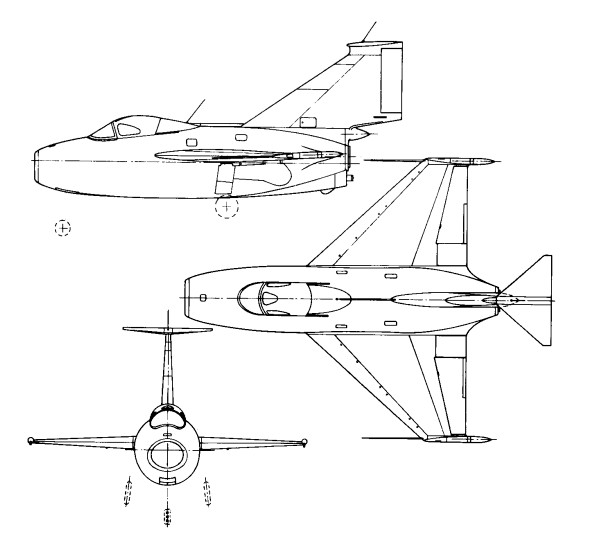
Formed in 1962 to build Piel CP.301 Emeraude, modified to comply with British certification requirements and known originally as the Garland-Bianchi Linnet.
Era
Fairhall Special
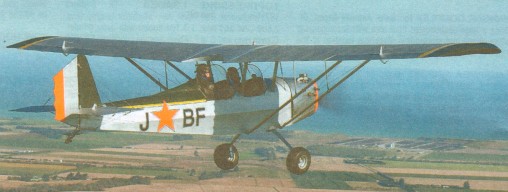
Based on the Pietenpol Aircamper, Andy Fairhall built all the woodword, metal fittings, and deigned and carved the propeller.
The Fairhall Special features a lengthened wingspan and the cabane struts were moved slightly outward and angled. Andy added a spring steel undercarriage and steerable tailwheel.
First flown in 1997, the Special is a Class 2 microlight with a MTOW of 453 kg.
The Special is powered by a Toyota 4Y Hilux engine of 80 hp and runs mainly on Avgas, giving a three hour endurance. The water cooling allows a ducted hot air system from the radiator to heat the cockpit.
Fair Fax Dr Hazard
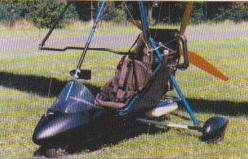
The Dr is a two-seater with a faired in cockpit. There was also a single seat version.
Empty weight: 150 kg
Wing span: 10.38 m
Wing area: 15.2 sq.m
Fuel capacity: 48 lt
Certification: Vz
Engine: Rotax 462, 52 hp
MAUW: 400 kg
Seats: 2
Max speed: 115 kph
Cruise speed: 90 kph
Minimum speed: 45 kph
Climb rate: 3.5 m/s
Fuel consumption: 9 lt/hr
Price (1998): 27 600 DM
Fair Fax UL-Bau GmbH
1998:
Wicheler Kreuz 1
D-49393 Lohne
Germany
Trike builder
Fairey P.24 Monarch / Prince 4
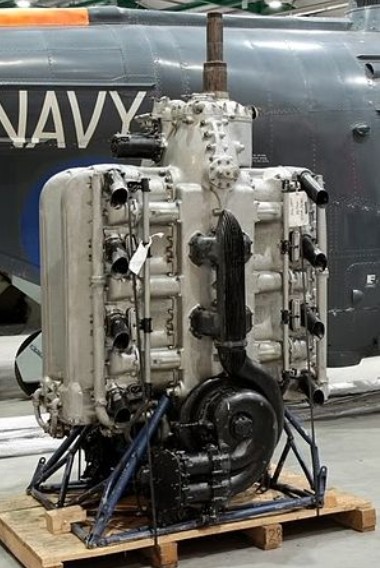
The Fairey P.24 Monarch or Prince 4 was a British experimental 2,000 hp (1,490 kW) class H-24 aircraft engine designed and built by Fairey in the late 1930s.
The P.24 Monarch was an enlarged development of the Prince, designed by chief engine designer Captain A.G. Forsyth. Similar in layout to the Napier Dagger the cylinders were arranged vertically in two separate blocks, driving contra-rotating propellers via separate shafts and gears. Like the smaller Prince engine each bank of cylinders could be shut down in flight to drive only one propeller, an idea that was reused much later in the Armstrong Siddeley Double Mamba turboprop. The engine was test flown in a Fairey Battle, serial K9370, with its first flight taking place on 30 June 1939.
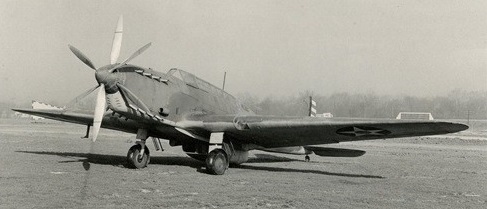
The engine was considered for use in the Hawker Tornado and K9370 was later shipped to Wright Field in the US, where testing (Project MX-229) was carried out in 1942 with a view to using the potentially 3,000 hp of the P .24 in the Republic P-47 Thunderbolt, a total of around 250 hours of test flying in the Battle being completed at Wright Field before the idea was abandoned. Following cancellation, the engine provided three trouble-free years of service in K9370.
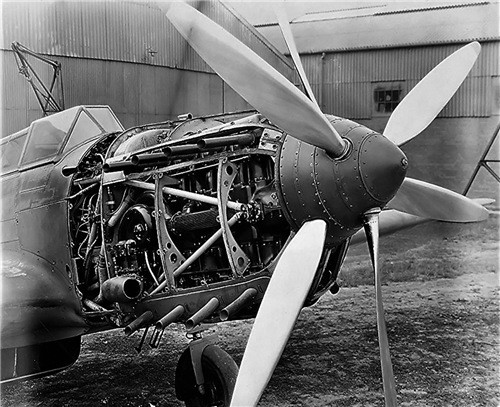
P.24 Monarch
Type: Liquid-cooled H24 engine
Bore: 5.25 in (133.35 mm)
Stroke: 6.0 in (152.4 mm)
Displacement: 3,117 in³ (51.08 L)
Length: 86.25 in (2191 mm)
Width: 43 in (1092 mm)
Height: 52.5 in (1333.5 mm)
Dry weight: 2,180 lb
Valvetrain: 2 intake, 1 exhaust valve per cylinder
Supercharger: Four-speed, two stage
Cooling system: Liquid-cooled
Reduction gear: Spur gear, 0.543:1
Power output: 2,240 hp (1,670 kW) at 3,000 rpm at 9,000 ft
Fairey P.16 Prince (H-16)
The Fairey P.16 Prince was a British experimental 1,500 hp (1,118 kW) class H-16 aircraft engine designed and built by Fairey in the late 1930s.
The Prince P.16 was a radical design by Captain A.G. Forsyth who was the Fairey company’s chief engine designer. Similar in layout to the Napier Rapier, the cylinders were arranged vertically in two separate blocks, driving contra-rotating propellers via separate shafts and gears. Each bank of cylinders could be shut down in flight to drive only one propeller, an idea that was reused much later in the Armstrong Siddeley Double Mamba turboprop. First run in 1939, the engine was test flown in a Fairey Battle.
The idea came from the desire to deliver high power in a reliable form for naval use. A twin engined aircraft could not be designed such that even when “folded” it came within the limits for aircraft carrier use; with two power blocks the failure of an accessory would not lead to failure of the engine as a whole. The engine did not go into production.
Specifications
P.16 Prince 3 / Prince H-16S
Type: Liquid-cooled H16 engine
Bore: 5.25 in (133.35 mm)
Stroke: 6.0 in (152.4 mm)
Displacement: 2,078 in³ (34.05 L)
Dry weight: 2,180 lb (989 kg)
Supercharger: Two-speed, single stage
Cooling system: Liquid-cooled
Power output: 1,540 hp (1,148 kW) at 3,000 rpm at 9,500 ft, +2 lb/sq/in boost
Power-to-weight ratio: 0.7 hp/lb (0.86 kW/kg)
Fairey P.12 Prince / V-12
The Fairey P.12 Prince was a British experimental 700 hp (520 kW) class V-12 aircraft engine designed and built by Fairey in the early 1930s. The engine did not go into production.
The Prince was a privately funded project designed by Captain A.G. Forsyth who had joined the Fairey company in 1931 as their chief engine designer. The company had hoped to obtain Air Ministry orders for the engine but faced opposition with the ministry favouring Bristol and Rolls-Royce engines instead.
Three prototypes were built in secrecy with the engines running by 1933, a single Prince was installed and test flown in a Fairey Fox II biplane in 1934 but no orders materialised.
Variants
P.12 Prince I or Prince V-12
650 hp (485 kW) – Unsupercharged
P.12 Prince II or Super Prince V-12S
720 hp (537 kW) projected – Fully supercharged
Specifications:
Prince I
Type: Liquid-cooled 60-degree V12 engine
Bore: 5.25 in (133 mm)
Stroke: 6.0 in (152 mm)
Displacement: 1,558.62 in³ (25.54 L)
Cooling system: Liquid-cooled
Power output: 670 hp (500 kW) at 2,500 rpm at 2,000 ft
Fairey Biplane Firefly
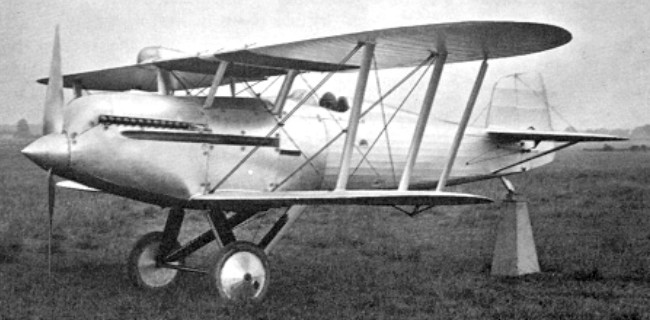
1925
Fairey Biplane Firefly Article
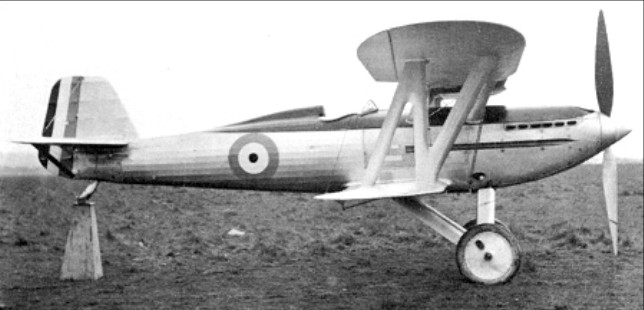
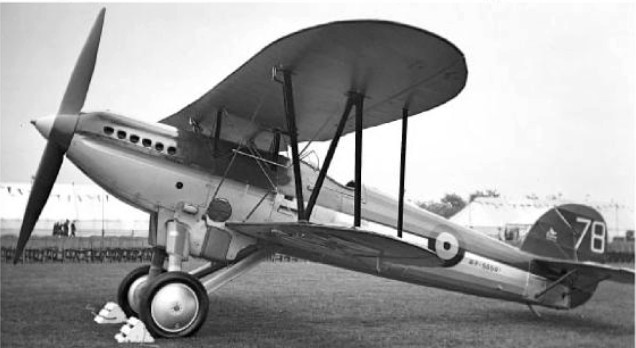
Specifications:
Fairey IV
Engine: Hispano-Suiza 12Xbrs, 785 hp
Top speed: 220 mph at 20,000 ft
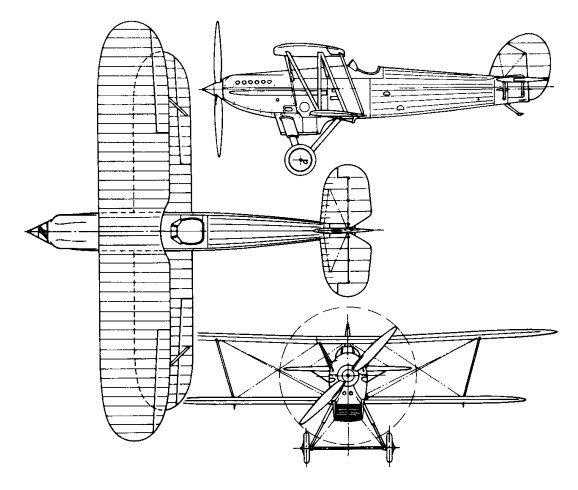
Fairey FD.2 Delta
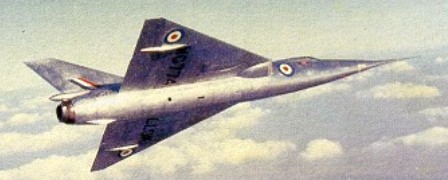
The Delta 2 was built to investigate the characteristics of flight and control at transonic and supersonic speeds. A 60 degree delta, one feature was a nose that drooped 10 degrees for landing for visibility.
The first made its maiden flight on 6 October 1954. Powered by a 12,000-lb (5443-kg) afterburning thrust Rolls-Royce Avon RA.5, the initial F.D.2 secured the first world air speed record at more than 1000 mph (1609 km/h) in March 1956, when an average of 1132 mph (1821 km/h) was recorded in two flights, piloted by Peter Twiss.The second aircraft had the 13,000-1b (5896-kg) afterburing thrust Avon RA.28 and helped to expand the F.D.2’s flight envelope in an important research programme.
On 10 March 1956 the RA.5-powered aircraft (flown by Peter Twiss) became the first aircraft to set an over-1,000mph world speed record, with an average of two flights of 1,821km/h.
The first machine was later revised as the British Aircraft Corporation 221 to evaluate the ogival wing proposed for the Anglo-French supersonic airliner that finally appeared as the BAC/Aerospatiale Concorde. The Concorde also adopted another F.D.2 feature, the drooping nose that gave the pilot an adequate field of vision for takeoff and landing.
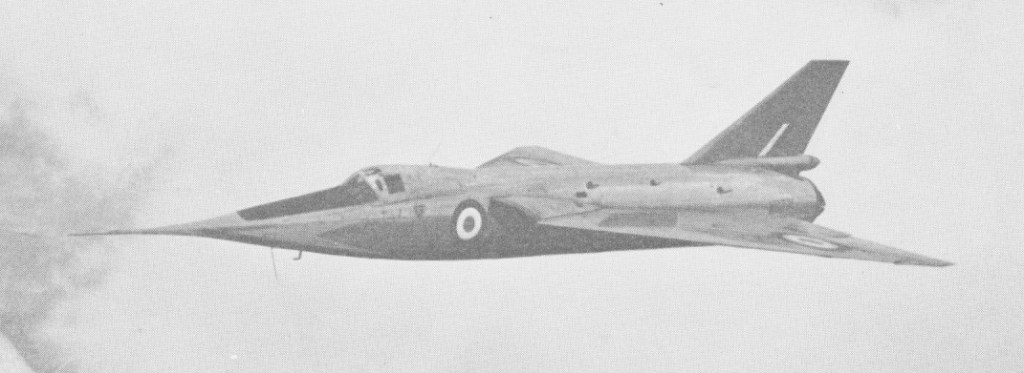
Fairey F.D.2
Engine: 1 x Rolls-Royce “Avon” 200 turbo-jet, 44.5kN
Max take-off weight: 6298 kg / 13885 lb
Empty weight: 4990 kg / 11001 lb
Wingspan: 8.18 m / 26 ft 10 in
Length: 15.74 m / 51 ft 8 in
Height: 3.35 m / 10 ft 12 in
Wing area: 33.44 sq.m / 359.94 sq ft
Max. speed: 2092 km/h / 1300 mph
Range: 1336 km / 830 miles
Crew: 1
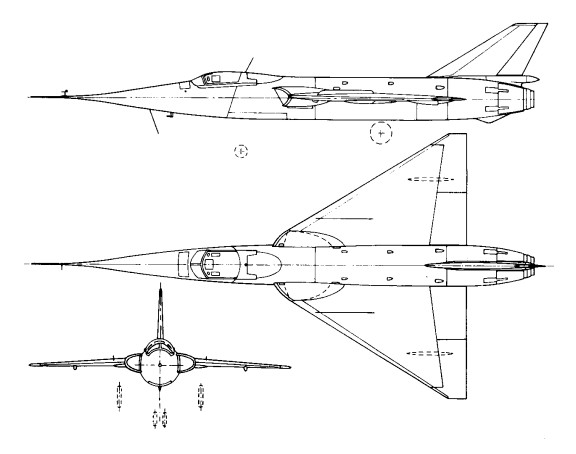
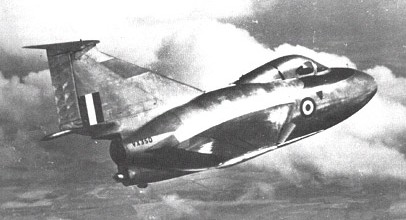
Fairey FD.1
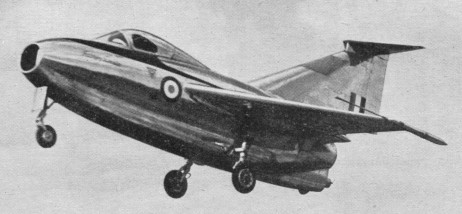
The Fairey FD.1 was produced as a prototype for the investigation of the handling characteristics of a planned vertical take-off fighter (using an inclined ramp). For that reason had provision for four small rocket engines mounted round the efflux of the Derwent engine. These rocket engines were never fitted, and with its very small wing and high wing loading, the F.D.1 required a very long run to take off.and first flew on 12 March 1951, but then adapted for research into the flying qualities of delta-winged aircraft. Powered with a 3600lb (1633-kg) thrust Derwent 8 turbojet. The type had poor handling qualities and was soon abandoned.
Engine: 3600lb (1633-kg) thrust Derwent 8 turbojet
Empty weight: 3084 kg / 6799 lb
Wingspan: 5.95 m / 19 ft 6 in
Length: 7.99 m / 26 ft 3 in
Max. speed: 1011 km/h / 628 mph