The 1910 Farman HF 2/2 Parasol tractor monoplane was designed and built by Henri Farman.
Span: 25’3″
Length: 23’4″
Weight: 660 lb gross
Speed: 65 mph
The 1910 Farman HF 2/2 Parasol tractor monoplane was designed and built by Henri Farman.
Span: 25’3″
Length: 23’4″
Weight: 660 lb gross
Speed: 65 mph
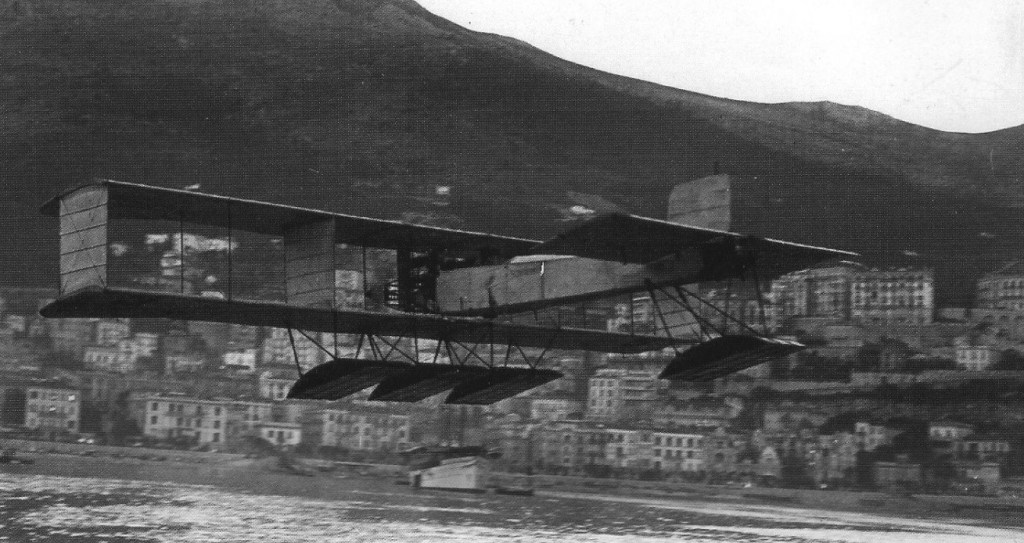
A Farman seaplane fitted with a 70 hp Gnome engine flies low over the port at the very first Monaco meeting in 1912.
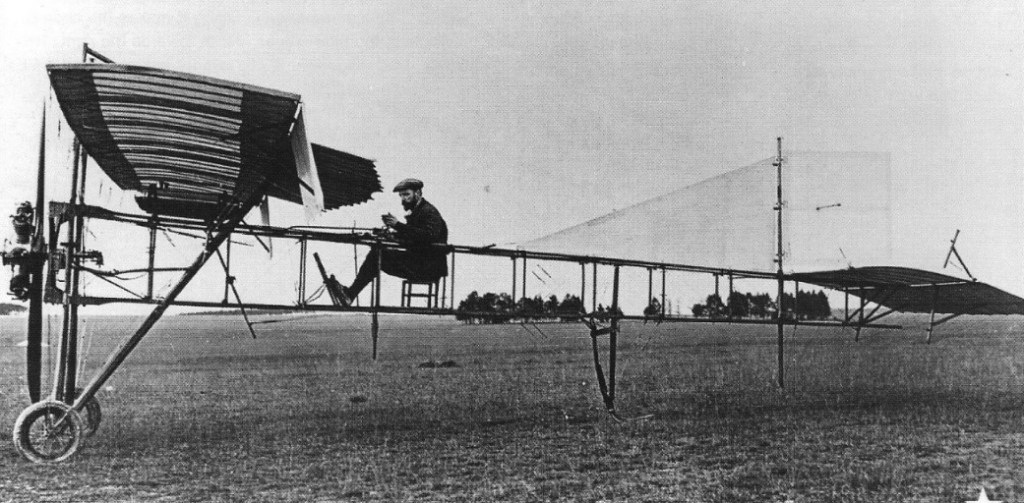
Henry Farman was a supporter of pusher biplanes, but he realized that his business needed to gain expertise in the field of tractor monoplanes.
His first tractor monoplane was produced in the beginning of 1911. It was an ultra light high wing monopplane where the pilot sat in a fully open fuselage on a very basre chair. In the end this paid back in a monoplane with a total weight of 300 kg. The 50 hp developed Gnôme rotary engine gave this monoplane a top speed pf 115 km/hr,
The monoplane was tested at Bouy (Camp du Chalons)
It consisted of a rectangular wing of 23 ft span with a chord, including ailerons, of 6 ft 6 in. about 13 ft behind is a tail, composed of a small horizontal surface, and vertical and horizontal rudders. The Gnome motor, with propeller, is in front, while to pilot’s seat is located on a level with the main plane and just behind it.
It is mounted on a steel chassis with two wheels.
The monoplane carries 48.5 lb/sq.m at more than 25 mph.
This design got the factory identification HF.2/2. This development monoplane model was followed in due course by at least two other tractor monoplanes.
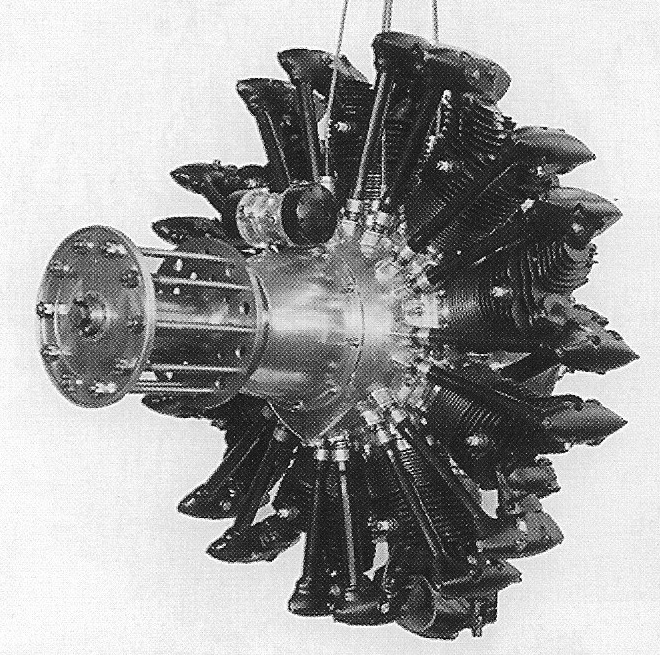
The 9Ea was an air-cooled nine-cylinder radial with a 2:1 Farman reduction gear, 115 mm (4.528″) bore, 120 mm (4.724″) stroke, 11.218 l (684.6 in³) displacement and 5.75:1 compression ratio that was rated 250 hp at 2,600 rpm and capable of 280 hp at 2,700 rpm. Dry weight was 583 lb, or 2.33 lb/hp. Fuel consumption was 0.5 lb/hp/hr and oil consumption was 0.033 lb/hp/hr. Outside diameter was 42″ and length was 46″.
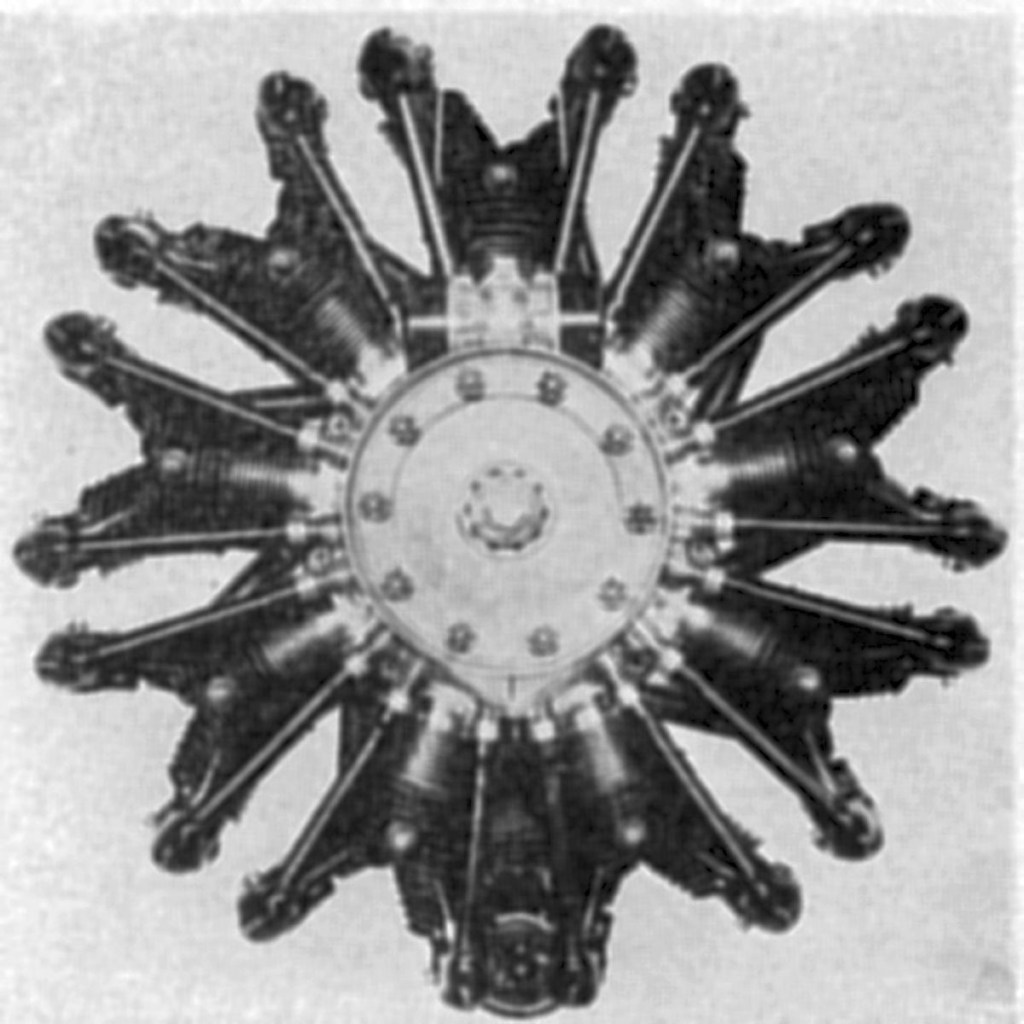
The 9Ea cylinders used steel barrels with integrally turned cooling fins that were screwed into cast aluminum alloy heads. Two inclined valves were operated by fully enclosed push rods and rocker arms driven by a cam ring at the engine front. A full-floating piston pin, two compression rings and two scraper rings were fitted to each aluminum piston. The two-piece forged steel crankshaft included a crankpin integral with the front section. The master connecting rod big end was fitted a floating bushing. The four-section crankcase inner sections were joined in the cylinder plane. The forward inner section housed the timing gears and distributors, and the rear section contained a mixture distribution fan driven at four times crankshaft speed. The nose section enclosed the propeller reduction gears, and the rear cover supported the oil pumps, generator and starter. The mixture was supplied by a Claudel carburetor, and the ignition by battery and coil. Lubrication was a force-fed dry-sump type using gear pumps; oil was scavenged from both crankcase ends.

The 9Eb, introduced in 1929, had a 115 mm (4.528″) bore, 135 mm (5.315″) stroke, 12.62 l (770.1 in³) displacement and 5.4:1 compression ratio. It was rated 250 hp at 2,150 rpm and 270 hp at 2,200 rpm. Dry weight was 550 lb. The mixture was furnished by a Stromberg carburetor, and dual ignition by Ducellier magnetos. Fuel consumption was 0.53 lb/hp/hr and oil consumption 0.0265 lb/hp/hr. The 9Eb diameter was 41.76″ and its length was 47.28″. Farman continued to improve the 9Eb and produced other 9E models through the 1930s.
The 8VI, a water-cooled 90° V-8 and companion of the 12WI displacing 16.032 l (978.3 in³), was rated 350 hp at 2,500 rpm and delivered 418 hp at 2,700 rpm. It weighed 704 lb, was 57.13″ long, 37.43″ wide and 32.5″ high.
The 12WI was a water-cooled 60° V-12 with a 2:1 reduction gear ratio. With a 135 mm (5.315″) bore, 140 mm (5.512″) stroke, 24.047 l (1,467.4 in³) displacement and 5.5:1 (later 5.9:1) compression ratio, it was rated 540 hp at 2,260 rpm and could produce 603 hp at 2,700 rpm. It was 59.1″ long, 43.34″ wide and 35.46″ high. Cylinder construction was similar to the 18WI. A Zenith carburetor supplied the mixture, and Ducellier magnetos the ignition. Bare dry weight was 902 lb, and complete weight was 1010 lb. Fuel consumption was 0.539 lb/hp/hr and oil consumption was 0.026 lb/hp/hr. A Farman two-stage supercharger maintained rated output up to 2,000 m (6,562 ft) with the first stage, and up to 5,100 m (16,732 ft) with the second stage.
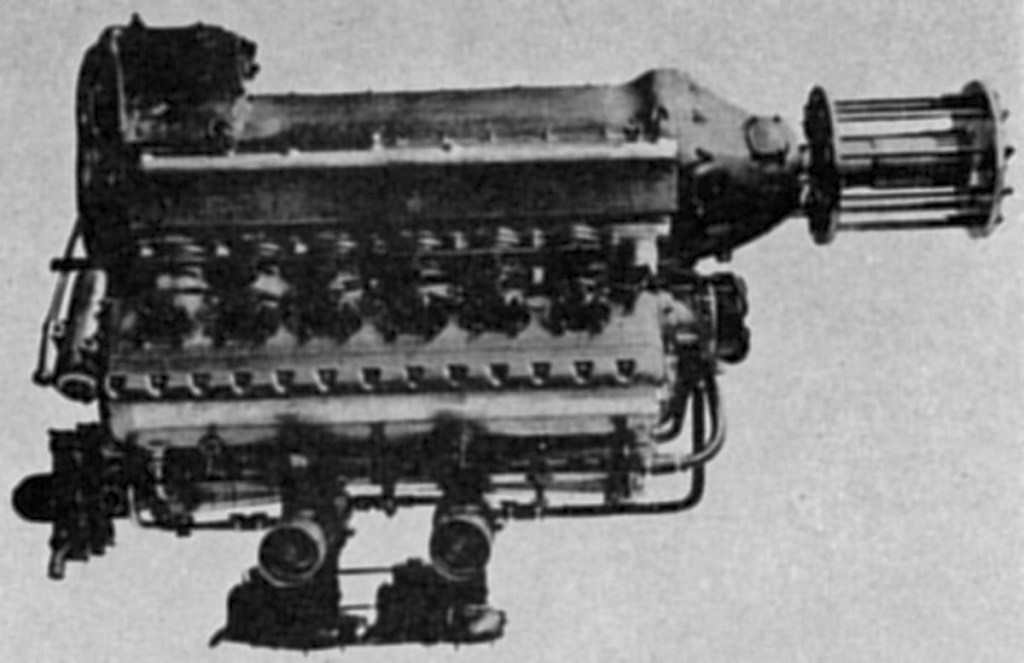
The 18WI, introduced in 1926, had a different construction than former Framan water-cooled W-18s. It was also adaptable to inverted installation. Its bore was 110 mm (4.331″), its stroke 125 mm (4.921″), its displacement 21.382 l (1,304.8 in³) and its compression 5.7:1. It was rated 550 hp at 2,600 rpm but could produce 730 hp at 3,400 rpm.
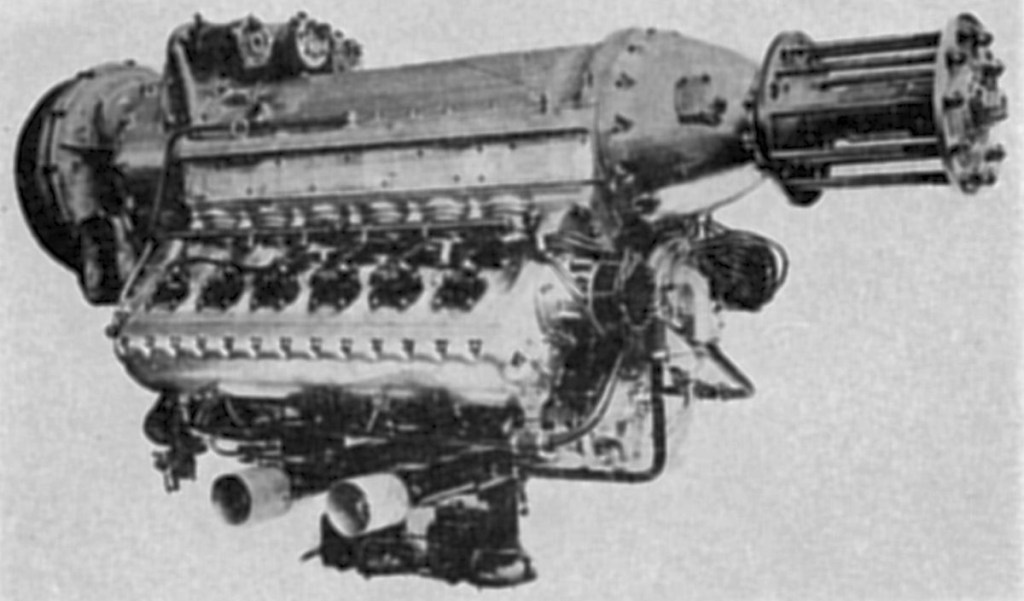
Its bare weight was 701 lb, but with a 2.46:1 propeller reduction gear, starter and propeller hub it weighed 930 lb. It was 67.69″ long without supercharger, 80.29″ long with supercharger, 30.7″ wide and 42.67″ high. Each six-cylinder row, including cylinder heads and valve ports, was cast en-bloc of Alpax, a ductile silicon-aluminum alloy. Steel liners were pressed into these castings from inside. The three blocks were mounted on an aluminum crankcase at a 40° included angle. The valves seated upon inserts and were operated via rocker arms and overhead camshafts enclosed in aluminum housings that were bolted to the cylinder blocks. The crankcase was divided horizontally along the crankshaft centerline and was closed at the front by the reduction gear casing. The six-throw, seven-main-bearing crankshaft used articulated rods with H-section link rod shanks. Light alloy cast aluminum pistons were fitted with full-floating pins. Spur gear trains at the engine front drove the camshafts. Intermediate gears in the outer block camshaft gear trains drove two 18-cylinder ignition distributors and a water pump on the center block. The dry-sump lubrication system furnished pressurized oil to all bearings. Two Zenith carburetors were suspended below the cylinders; one fed the aft nine cylinders and the other the nine forward cylinders. When fitted with a Rateau supercharger, the engine could maintain 600 hp up to 5,684 m (18,000 ft).
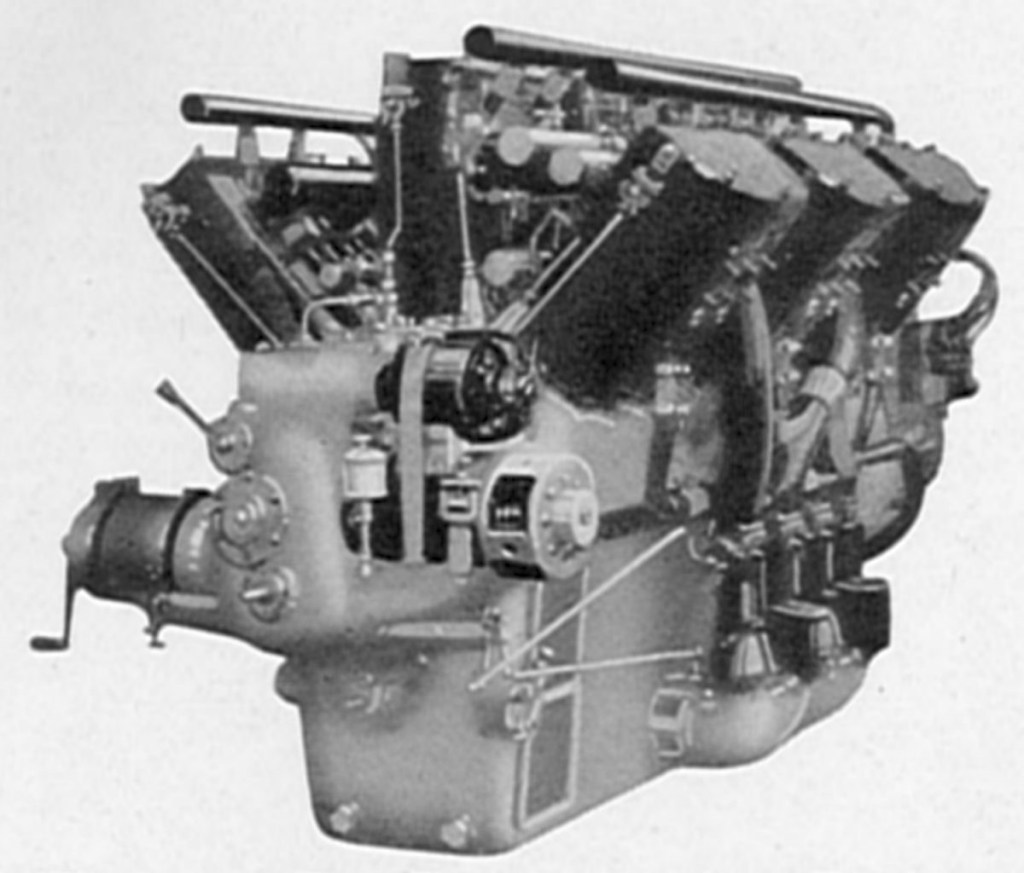
A W-18 engine using similar construction to the 12WE was next introduced. With a 130 mm (5.118″) bore, 180 mm (7.087″) stroke, 43.005 l (2,624.3 in³) displacement it was rated 600 hp at 1,860 rpm and weighed 1,848 lb. As with the 12WE the cylinders, built up in pairs, each had four interchangeable overhead valves operated by rocker arms and push rods from camshafts in the Vees. Articulated connecting rods were used and the link rods had tubular shanks. These engines were either direct-drive or used Farman bevel-planetary reduction gears with standard 2:1, 1.83:1, 1.67:1 and 1.5:1 ratios. Six carburetors, three on each side, fed three cylinders each.
The 18WD, a more refined version of the earlier W-18, was rated 700 hp at 1,850 rpm and produced 820 hp at 2,100 rpm. It weighed 1,716 lb and consumed 0.495 lb/hp/hr. It was equipped with magneto and battery ignition.
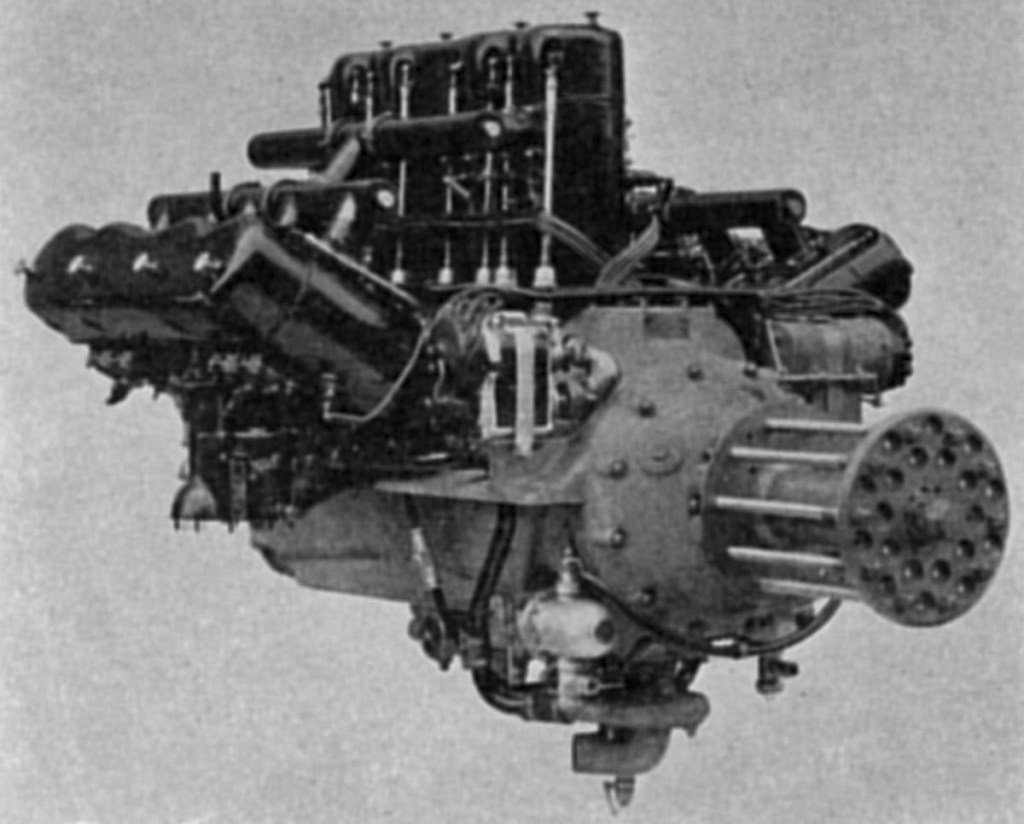
The 12WE, a more refined water-cooled W-12 with the same bore, stroke and displacement was introduced in 1924. With a 5.3:1 compression ratio, it was rated 500 hp at 2,150 rpm and could produce 550 hp at 2,200 rpm.
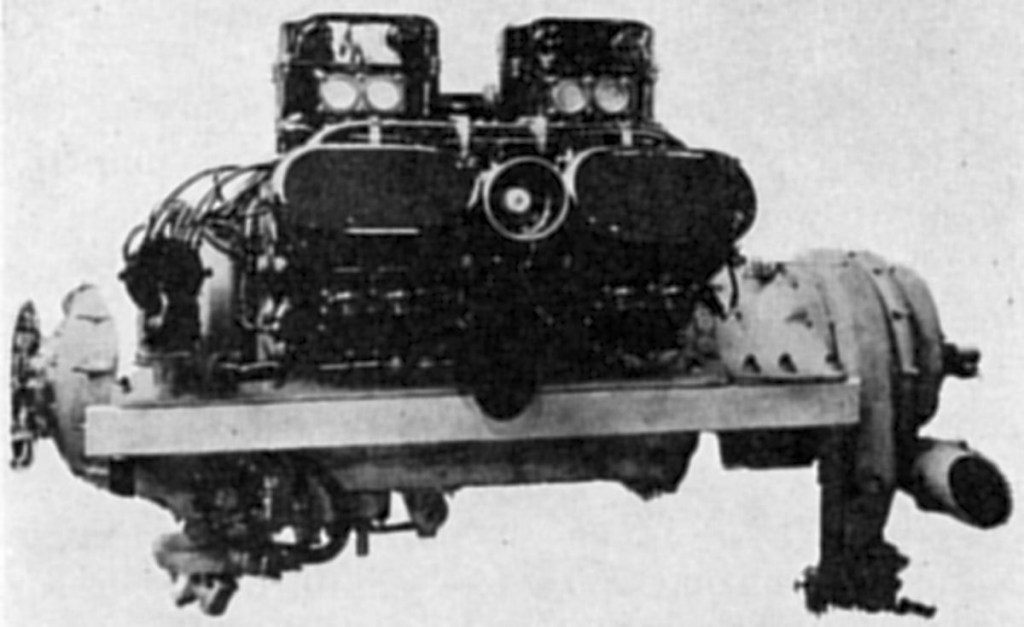
The direct-drive engine weighed 1,034 lb; with Farman propeller reduction gears, the engine weighed 1,122 lb. Steel cylinders with a common welded-on sheet-metal water jacket were arranged in pairs. The overhead valves were operated by push rods from camshafts located at each Vee’s center and driven through a gear train from the crankshaft propeller end. Pistons and crankcase were aluminum-alloy castings. The crankshaft was supported on white-metal-lined plain bearings. A disc with driving dogs at the crankshaft front accommodated either a bolted-on propeller shaft or reduction gear drive. The crankshaft gear driving the cam gear train also meshed with a pinion at the crankcase bottom that drove oil, water, and fuel pumps. A front-mounted cross shaft driven from a camshaft drove two magnetos or two distributors. The dry-sump lubrication system used gear-type pumps to draw oil from both crankcase ends and force it through cooler, from which it was flowed to all bearings through a filter that could be bypassed and withdrawn for cleaning while the engine was running. Cooling water was circulated by a centrifugal pump fitted with a throttling device to regulate the water flow rate and thereby maintain correct water temperature. The carburetors were situated outside the outer cylinder rows and the induction pipes had water jackets. Some 12WE engines were fitted with centrifugal superchargers. Propeller reduction gears were available with 2:1 and 1.35:1 ratios.

The first Farman engine was a water-cooled V-8 rated at 200 hp. It weighed 700 lb, or 3.5 lb/hp. The built-up, welded-steel cylinders were made in pairs. Push rods and rockers operated the valves, were enclosed by aluminum covers and fed directly with oil. The oil supply was carried in the crankcase base chamber.
Magnetos provided dual ignition and a Ragonet electric starter and an impulse magneto were fitted. The propeller was driven through bevel planetary gears of the well-known Farman design, which included one fixed crown bevel, a differential spider with four satellites, and a crown bevel wheel. A water-cooled V-12 of similar design was rated at 400 hp.
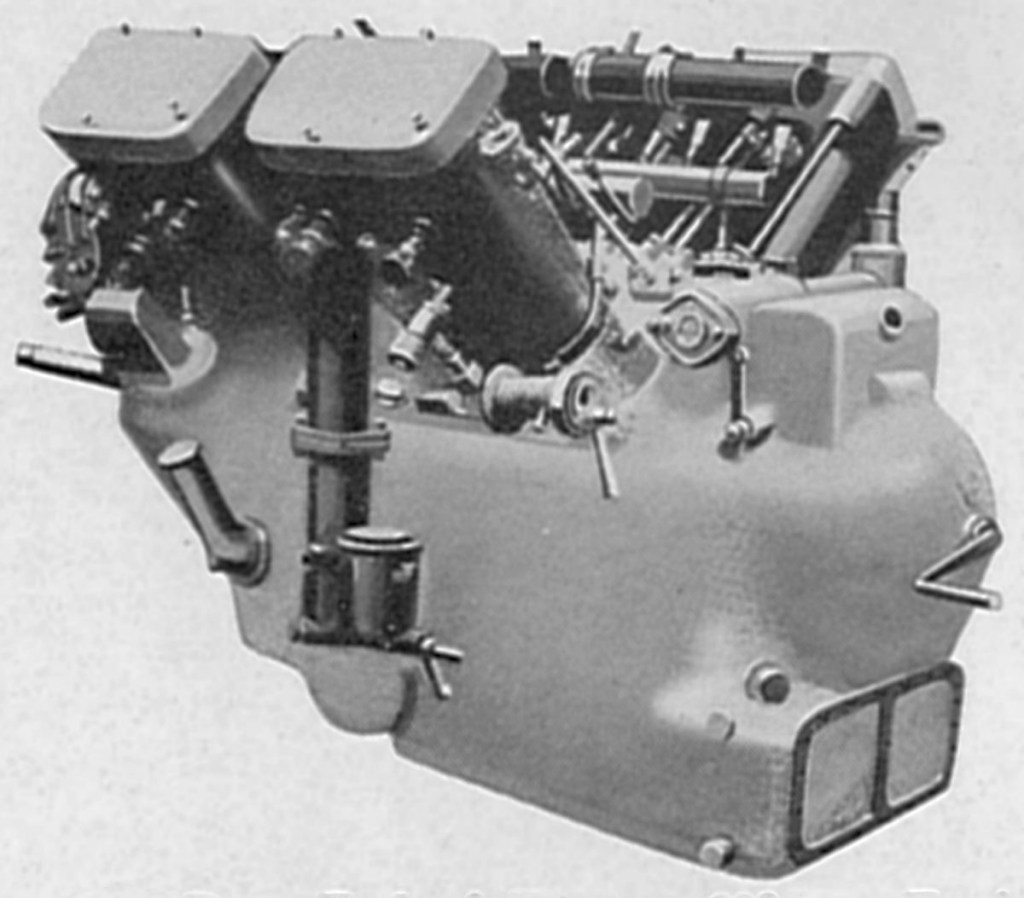
This engine soon was supplanted by a water-cooled W-12 with a 130 mm (5.118″) bore, 160 mm (6.299″) stroke, 28.485 l (1,555.2 in³) displacement and 5.5:1 compression ratio was rated 400 hp at 1,880 rpm and weighed 1,100 lb. Fuel consumption was 0.484 lb/hp/hr and oil consumption was 0.022 lb/hp/hr.

