Fibrera KK-1 Utu

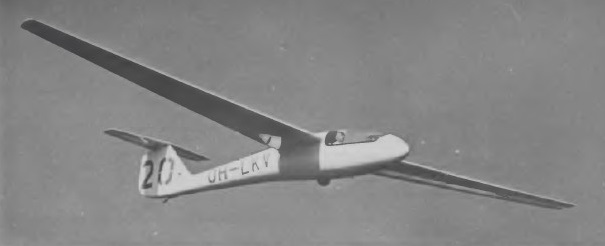
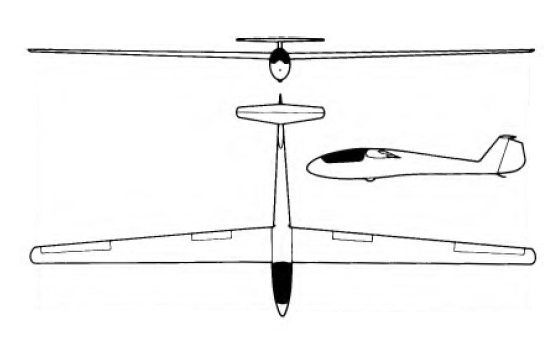
The Finnish Utu is a Standard Class single-seater that was designed and built over a three year period by a team of engineers of OY Fibera AB, a company specialising in glassfibre manufacture.
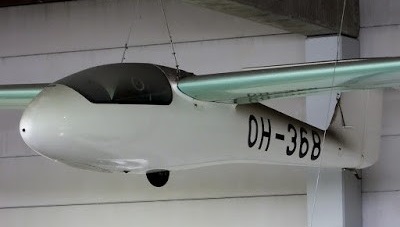
Fibera KK-1e UTU OH-368

The design team was headed by Dipl-lng Ahto Anttila, and the Utu was intended to investigate the structural applications to sailplanes of plastic laminates stabilised with polyurethane foam. The prototype, designated KK-1a, first flew on 14 August 1964, and was followed by four more prototypes, designated KK-1b, c,d and e, each with structural modifications resulting from variations in the constructional techniques used. Tests with these proved the superiority of plastics over conventional wooden construction, and the Utu in due course went into small-scale production, a total of 22 having been built when production ended early in 1970.
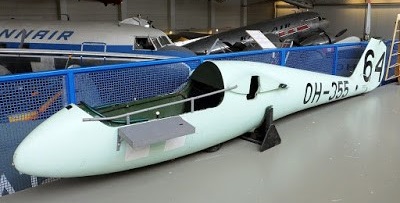
Fibera KK-1e Utu OH-355 / 64

The high cantilever wings have single I-spars and no ribs, each wing consisting of a polyester/glassfibre laminate sandwich shell with foam plastic core. The upper-surface hinged ailerons are of glassfibre reinforced plastic shell construction with foam plastic stiffening; there are no spoilers but flaps are fitted. The Utu has a trailing-edge split spoiler/terminal-velocity brake. One surface rotates up like a spoiler and the other splits down like a flap and the resultant air deflection from the upper spoiler drives the wing down in a strong negative lift configuration.
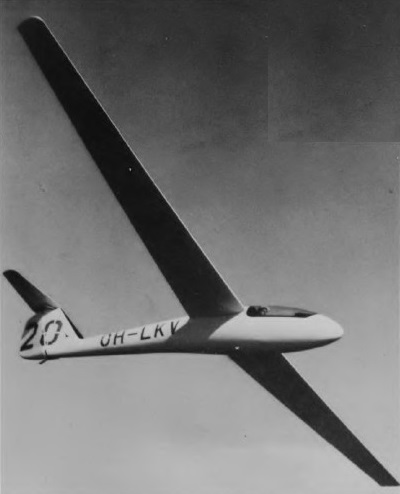
The fuselage is a double shell monocoque with a polyester/glassfibre laminate outer shell and a sandwich-type inner shell of similar construction to the wing. The fin is moulded integrally with the fuselage and has the tailplane mounted on top of it; the tail surfaces are glassfibre-reinforced plastic shells stiffened with foam plastic. There is a nonretractable monowheel with a drum brake, and a tail skid. The one-piece canopy is blended into the forward fuselage shape, and oxygen and radio is installed aft of the pilot’s seat.
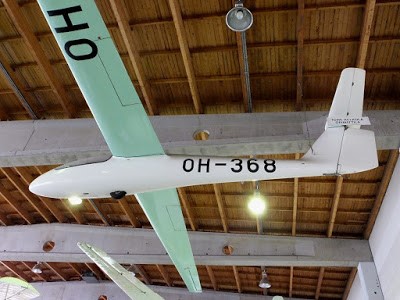
Fibera KK-1e Utu

Fibera KK-1 Utu
Wing span: 15m / 49.2ft
Wing area: 11.24sq.m / 121sq.ft
Length: 6.5 m / 21 ft 4 in
Height: 1.22 m / 4ft 0 in
Empty Weight: 200kg / 441lb
Payload: 110kg / 242lb
Gross Weight: 310kg / 683lb
Wing Load: 27.58kg/sq.m / 5.65lb/sq.ft
Water Ballast: 0kg / 0lb
Aspect ratio: 20
Airfoil: NACA 63 (3)-618 root. 63(1)-612 tip
Max speed (smooth air): 135 kt / 250 km/h
Stalling speed: 34 kt / 63 km/h
Max rough air speed: 113 kt / 210 km/h
L/DMax: 35 @80 kph / 43kt / 50 mph
MinSink: 0.61 m/s / 2.0 fps / 1.18 kt at 40 kt / 74 km/h
No. of Seats: 1
No. Built: 22

KK-1e
Span:49 ft 2.5 in
Length: 21 ft 4 in
Height: 4 ft 0 in
Wing area: 121.6 sqft
Aspect ratio: 20.0
Empty weight: 441 lb
Max weight: 684 lb
Max speed: 155 mph (in smooth air)
Max aero-tow speed: 124 mph
Min sinking speed: 2 ft/sec at 46 mph
Best glide ratio: 35:1 at 50 mph
Fiat SA 8/75

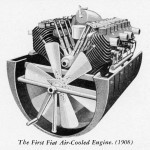
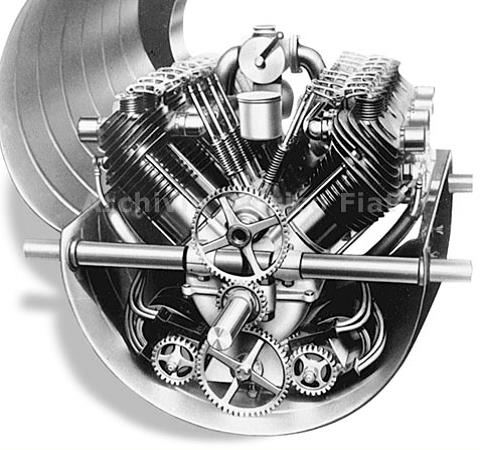
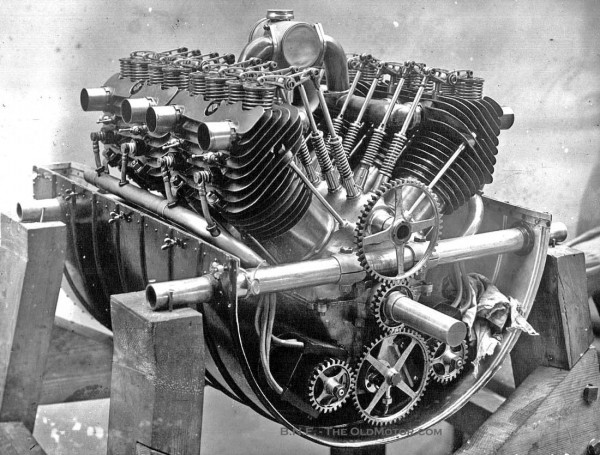
The 1908 V8 3.2 liter Fiat SA 8/75 was the first aero engine produced by Fiat Avio. The 50 hp OHV V-8 air-cooled aircraft engine was based on a race car engine, and first built in 1908; it was used experimentally, and noted for its excellent power to weight ratio. This engine was built for aircraft use only.

One carburettor feeds all eight cylinders. The ignition for each row of four cylinders is provided by a separate magneto.

The engine was soon followed by the widely used Fiat A.10.

An air-cooled 90 degree V
Power: 50 hp at 2000 rpm.
Bore: 2.95 in
Stroke: 3.5 in / 90 mm

Fiat 7002

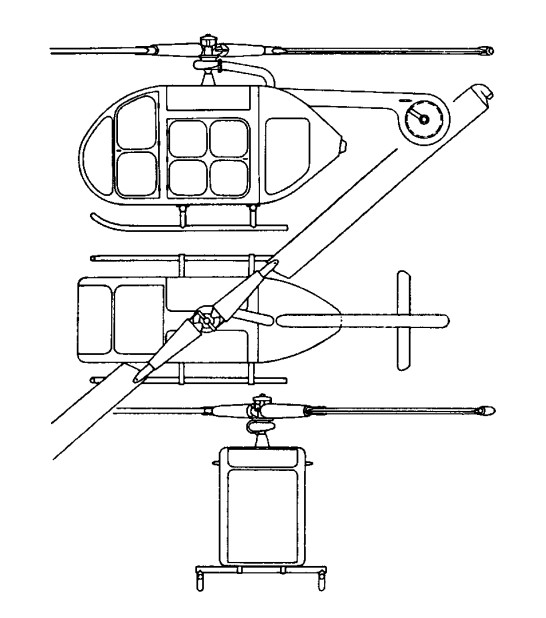
In 1959, the Societa per Azioni Fiat was awarded an Italian Defence Ministry contract to design and build a medium capacity helicopter for use by the Italian Air Force.

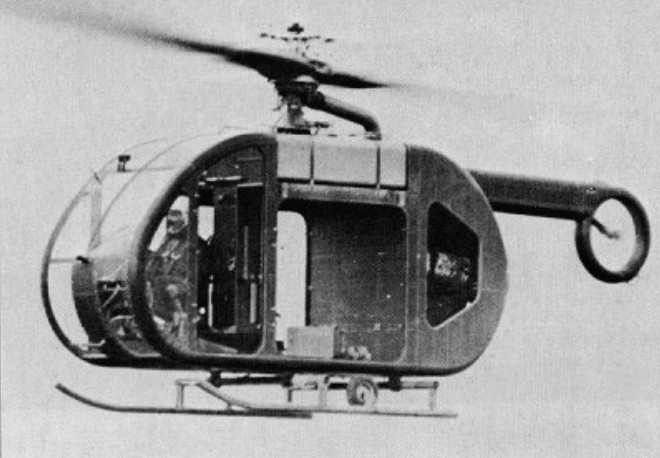
The Fiat 7002 is a medium-capacity dual-control helicopter for passenger transport and general-purpose duties. The main rotor is of the “cold jet” type, and is turned by ejecting compressed air, without any form of combustion, from nozzles at the blade-tips. Compressed air is provided by a Fiat 4700 turbogenerator. A small ducted tail rotor, mechanically-driven by the main rotor, ensures good manoeuvrability at low forward speeds and in autorotation.

The rotor system has a two-blade main rotor on tilting hub. Blades have leading-edge and spar of welded stainless steel sheet. Ducts in leading-edge and spar carry compressed air to propulsion nozzles at blade-tips. Blades linked together by steel strips which bear centrifugal loads and permit pitch variation. Blade chord 0.43m. Small ducted two-blade tail rotor.

The fuselage is light alloy sheet structure in three portions. Front portion accommodates side-by-side pilot’s seats; centre portion accommodates passengers or payload; rear portion carries power plant. Short semi-monocoque tail-boom carries ducted tail rotor and small horizontal stabiliser. Twin tubular-skid type.

Power is from one Fiat 4700 turbogenerator with equivalent power of 530hp housed vertically in rear of fuselage. Fuel in tanks above cabin, with total capacity of 525 litres.

Two pilots, or pilot and passenger, sit side-by-side in front portion of fuselage, with dual controls. Large sideways-opening door on each side. Centre cabin for five passengers or 2.5cu.m of freight, etc. In casualty evacuation role can carry pilot, attendant, two litters internally and two externally. Very large door on each side of main cabin.

The sole prototype flew on 26 January 1961, but development was discontinued in 1963. Fiat then designed a new high-speed three-seat helicopter, designated Fiat 7005, which had a pusher propeller mounted immediately behind the rotor pylon. This was not built and Fiat discontinued helicopter development in 1967.

Fiat 7002
Engine: Fiat 4700 turbo-compressor, 405kW
Main rotor diameter: 12.0m
Fuselage length: 6.12m
Height: 2.88m
Max take-off weight: 1400kg
Empty weight: 650kg
Max speed: 170km/h
Cruising speed: 140km/h
Ceiling: 3400m
Range: 300km
Crew: 2

Fiat A.80

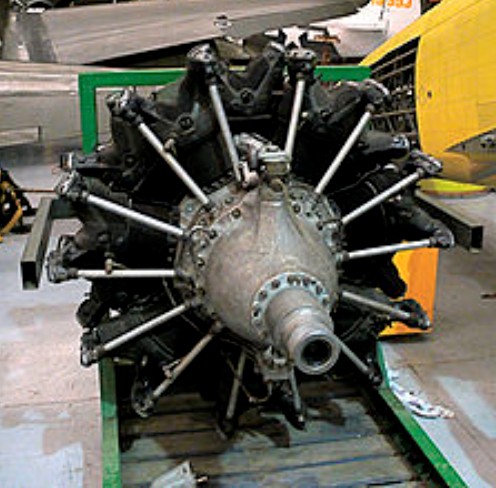
The Fiat A.80 was an 18-cylinder, twin-row, air-cooled, radial aircraft engine produced during World War II. Rated at 1,000 hp (745 kW), it was a more powerful development of the Fiat A.74.

Applications:
Aeronautica Umbra Trojani AUT.18
Breda Ba.65
CANSA FC.20
Fiat BR.20
Savoia-Marchetti SM.79

Variants:
R.C.41

Specifications:

A.80
Type: 18-cylinder air-cooled radial
Bore: 140 mm (5.51 in)
Stroke: 165 mm (6.50 in)
Displacement: 45.72 L (2789.9 cu in)
Length: 1,155 mm (45.47 in)
Width: 653 mm (25.71 in)
Height: 1,335 mm (52.56 in)
Dry weight: 725 kg (1598.4 lb)
Valvetrain: One intake and one sodium-cooled exhaust valve per cylinder
Supercharger: Single Speed, Single Stage. 4,100 m rated altitude
Fuel system: 1 Fiat carburettor
Fuel type: 87 octane
Cooling system: air-cooled
Power output: 1,000 hp at 2,100 rpm at 4,100 m, 1,100 hp at 2,100rpm at Sea Level
Compression ratio: 6.7:1
Power-to-weight ratio: 0.6 hp/lb at cruise speed

Fiat A.74

Fiat A.74 RIC38

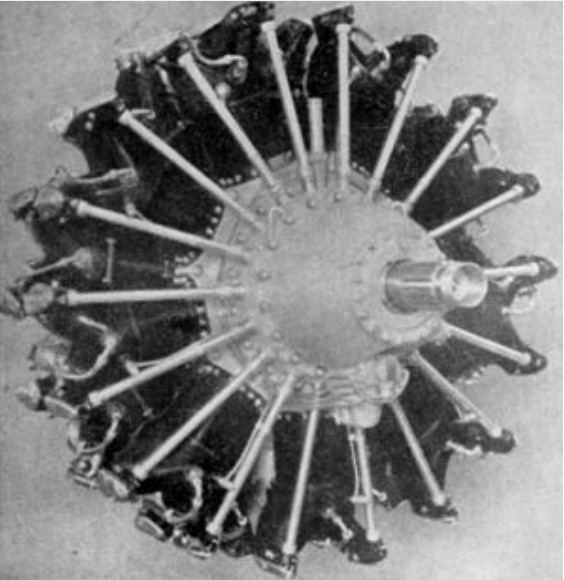
The Fiat A.74 was a two-row, fourteen-cylinder, air-cooled radial engine produced in Italy in the 1930s as a powerplant for aircraft. It marked a transition for Fiat from liquid-cooled inline engines, to large air-cooled radial engines. Fiat had made a number of smaller radial air engines over the years but the A.74 marked a major increase in power and size. The A.74 family was widely produced and spawned a number of related engines such as the A.76, A.80 and A.82. Each successive generation being larger and more powerful than the previous. The entire series grew from 14 cylinders to 18 cylinders with a power output of 870 hp to 1,400 hp.

Applications:
CANSA FC.20
Fiat CR.42
Fiat G.50
Fiat RS.14
Macchi C.200

Variants:
R.C.38
R.C.42

Specifications:
A.74
Type: 14-cylinder air-cooled radial
Bore: 140 mm (5.512 in)
Stroke: 145 mm (5.709 in)
Displacement: 31.25 L (1,906.9 cu in)
Length: 1,044mm (41.13 in)
Width: 653mm (25.71 in)
Height: 1,195 mm (47.05 in)
Dry weight: 565 kg (1,246 lb)
Valvetrain: One intake and one sodium-cooled exhaust valve per cylinder
Fuel system: 1 Stromberg carburettor
Fuel type: 87 octane
Cooling system: air-cooled
Power output: 870 cv (858 hp, 640 kW) at 2,520 rpm at sea level (take-off power); 960 cv (947 hp, 706 kW) at 2520 rpm at 3,000 m (Emergency power)
Compression ratio: 6.7:1
Power-to-weight ratio: 0.67 hp/lb

Fiat A.54

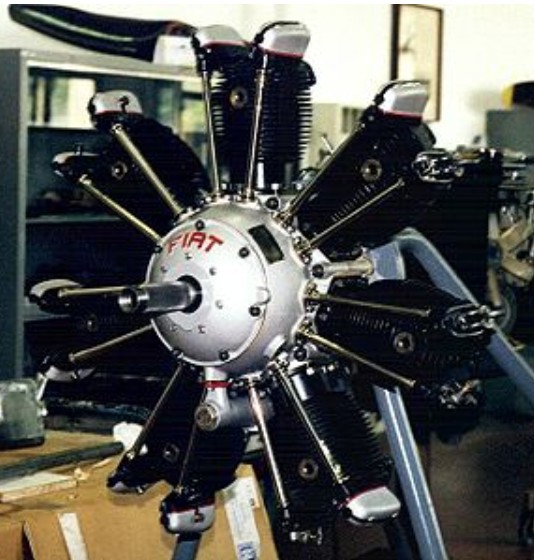
The Fiat A.54 was a seven-cylinder, air-cooled radial engine developed in Italy in the 1930s as a powerplant for aircraft. Amongst others, it powered the Ambrosini SAI.1 and SAI.2 racing aircraft.

Applications:
Ambrosini SAI.1
Ambrosini SAI.2
Caproni Ca.100
Fiat G2.4
Jona J-6

Specifications:
Type: 7-cylinder air-cooled radial
Bore: 105 mm (4.13 in)
Stroke: 120 mm (4.72 in)
Displacement: 7.27 L (443.9 cu in)
Length: 1,770 mm (69.69 in)
Width: 734 mm (28.93 in)
Height: 1,065 mm (41.93 in)
Dry weight: 150 kg (330.7 lb)
Valvetrain: One intake and one sodium-cooled exhaust valve per cylinder
Fuel system: 1 Stromberg carburettor
Fuel type: 74 octane
Cooling system: Air-cooled
Power output: 140 hp (104 kW) at 2,100 rpm
Compression ratio: 5.5:1
Power-to-weight ratio: 0.42 hp/lb (0.7 kW/kg)

Fiat A.50

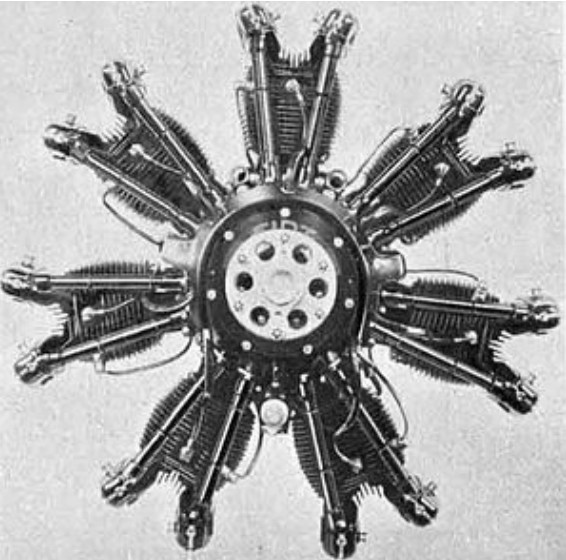
The Fiat A.50 was a seven-cylinder, air-cooled radial engine for aircraft use built in Italy in the 1930s. It was first run in 1928, it had a bore and stoke of 100 mm × 120 mm (3.94 in × 4.72 in)(6.6 L / 402.6 cuin) and was rated at 78 kW (105 hp) at 1,800 rpm.

Applications:
Ambrosini SAI.3
Ambrosini SAI.10
CANSA C.5
CANT 26
Caproni Ca.100
Fiat AS.1
IMAM Ro.5

Specifications:
Type: Seven-cylinder radial engine
Bore: 100 mm (3.94 in)
Stroke: 120 mm (4.72 in)
Displacement: 6.6 L (402.6 cu in)
Fuel system: Carburettor
Cooling system: Air-cooled
Power output: 78 kW (105 hp)

Fiat A.30

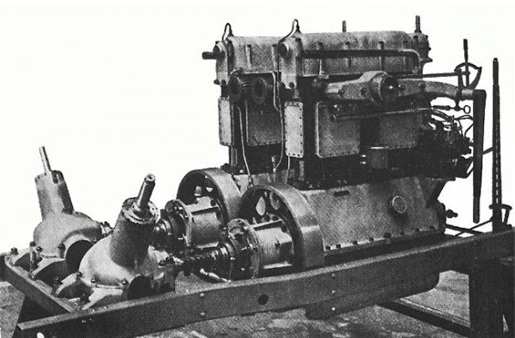
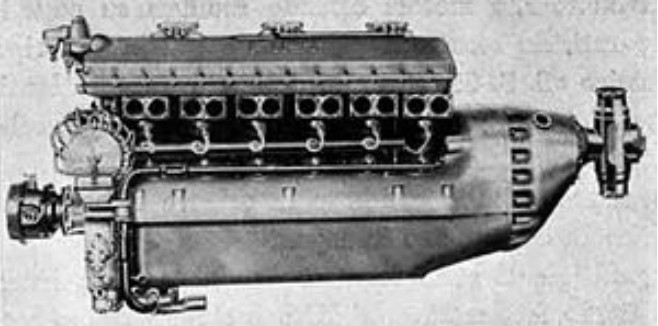
The Fiat A.30 R.A. was an Italian water-cooled V-12 aircraft engine from the 1920s, built in large numbers and serving with several air forces up to the beginning of World War II. It produced 447 kW (600 hp).

During the second half of the 1920s Fiat introduced several water-cooled aircraft engines, including the A.20, A.22, A24, A.25 and A.30. They were all upright V-12s with 60 degrees between the cylinder banks; capacities ranged between 18.7 L and 54.5 L (1,141-3,326 cu in) and power outputs between 320 kW and 745 kW (430-1,000 hp). Producing 447 kW (600 hp) from 24.0 L (1,464 cu in), the A.30RA was towards the low power end of these ranges. The R, (Riduttori – reduced), indicated that the output was geared down.

Many of the production A.30 R.A.s were fitted in Fiat’s own fighters and fighter trainers, particularly in the Fiat C.R.32. Both this aircraft type and the Meridionali Ro.37 remained in service with the Regia Aeronautica when Italy joined in World War II in 1940; by then the engine was seriously dated. Before the war similarly powered CR.30s had been sold to the air forces of Austria, China and Paraguay, the Austrian aircraft ending their service with the Luftwaffe after the Anschluss. Ultimately 2,679 A.30 R.A. and A.30 R.A.bis engines were built.

Variants:
A.30 R.A.
A.30 R.A.bis

Applications:
CMASA MF.10
Fiat CR.30
Fiat CR.32
Fiat CANSA FC.12
IMAM Ro.37

Specifications:

A.30RA
Type: water cooled 60 degree upright V-12
Bore: 135 mm (5.31 in)
Stroke: 140 mm 5.51 in)
Displacement: 24.0 L ( 1,464 cu in)
Length: 1.751 m (68.94 in)
Width: 653 mm (25.71 in)
Height: 935 mm (36.82 in)
Dry weight: Dry 480 kg (1,060 lb)
Valvetrain: Two overhead camshafts, geared together, driving two inlet and two exhaust valves per cylinder. Housed under aluminium casings.
Fuel system: Twin water heated Fiat carburetters mounted between cylinder banks, one serving each bank. Two spark plugs per cylinder, placed horizontally and opposite each other, supplied by two Marelli MF.12 magnetos.
Oil system: One delivery pump and two scavenge pumps, in a single unit.
Cooling system: water, with centrifugal pump.
Reduction gear: 1.611:1 spur gear, lubricated via oil spout.
Cylinders: Forged steel barrels, with closed, flat ends.
Pistons: Aluminium alloy, two compression rings and one scraper ring above a fully floating gudgeon pin, with a second scraper ring below it.
Crankshaft: Each six throw, seven bearings.
Crankcase: Each an aluminium casting, split on crankshaft centre line. Bolted-on duralumin end caps.
Power output: Normal, 447 kW (600 hp) at 2,000 rpm at sea level. Take-off, 596 kW (800 hp) at 2,900 rpm.
Compression ratio: 8:1
Fuel consumption: 0.322 kg/kW/h (0.529 lb/hp/h)

Fiat A.25

During the 1920s Fiat introduced several water-cooled aircraft engines, including the A.20, A.22, A24, A.25 and A.30. They were all upright V-12s with 60 degrees between the cylinder banks; capacities ranged between 18.7 L and 54.5 L (1,141-3,324 cu in) and power outputs between 320 kW and 745 kW (430-1,000 hp).

The Fiat A.22 produced 708 kW (950 hp) and was used by the Regia Aeronautica for fifteen years to power their Fiat BR.2 and BR.3 bombers.

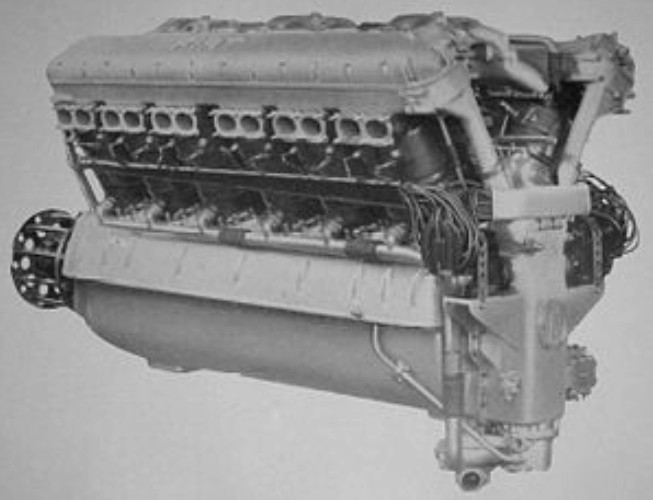
Producing 710 kW (950 hp) from 54.5 L (3,324 cu in), the A.25 was the largest and most powerful in the range. When Fiat were advised by the government to simplify their water-cooled product line, they focussed on the A.20, A.22 and A.30 models, so the A.25 was not further developed. They concentrated their higher power development effort on radial engines instead.

The only series produced types powered by the A.25 were the Fiat BR.2 and BR.3 single engine bombers. These began operating with the Regia Aeronautica in 1925. Some, used as trainers, were still in service in 1939.

Applications:
Fiat BR.2
Fiat BR.3
Fiat BR.4

Specifications:
Type: water cooled 60° upright V-12
Bore: 170 mm (5.31 in)
Stroke: 200 mm (6.29 in)
Displacement: 54.48 L (3,324 cu in)
Dry weight: 841 kg (1,854 lb)
Valvetrain: Two overhead camshafts, driven via enclosed, inclined shafts. The cams operate two inlet and two exhaust valves per cylinder. Housed under aluminium casings.
Fuel system: Three water heated Fiat carburettors mounted between cylinder banks, one serving each bank. Four spark plugs per cylinder, supplied by two Marelli MF.12 magnetos.
Oil system: One delivery pump and two scavenge pumps, in a single unit.
Cooling system: water, with centrifugal pump.
Cylinders: Forged steel barrels, with closed, flat ends.
Pistons: Aluminium alloy, two compression rings and one scraper ring above a fully floating gudgeon pin, with a second scraper ring below it.
Crankshaft: Each six throw, seven bearings.
Crankcase: Each an aluminium casting, split on crankshaft centre line. Bolted-on duralumin end caps.
Power output: normal, 708 kW (950 hp) at 1,700 rpm at sea level. Maximum, 745 kW (1,000 hp) at 1,900 rpm.
Compression ratio: 5.25:1