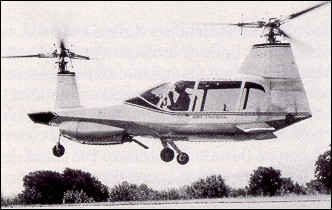
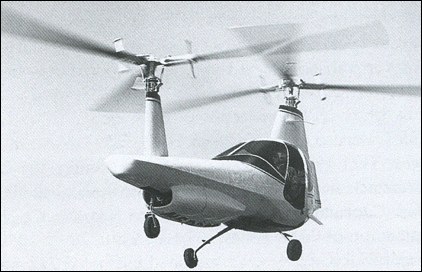
The Beta 200 prototype (N5000F) was first flown on 26 May 1966. Filper planned several versions of the Beta with either two seats (Model 200A and 300) or four seats (Model 400A and 600A). The four-seat models had a fuselage which was stretched by 36-inches and the first Beta 400A (N5003F) was flown on 13 July 1967. The Beta 400A had a 250hp Continental IO-520. Details of the Model 600A are unknown. A former N.A. test pilot and a flight test engineer were killed in the stretched version. Registration records show that 32 Betas were completed, comprising two Model 100As, 29 Model 400As and one Model 600A, but there is some doubt as to whether all of these were completed. It is believed the company ceased operations in 1969.
Under the direction of William Orr, Filper Research designed a novel helicopter using the ‘Gyroflex Rotor’, which employed special balance weights fitted to the roots of the rotor blades instead of conventional flapping or lead-lag hinges, or other hub stability devices. Filper was in the peach-pitting machinery business. This concept was tested on the Filper Helicopter (N9712C) which had fore and aft rotor pylons and the pilot sitting astride a central beam which also carried the engine. A commercial development was the Filper Beta 100A. This was a tandem rotor machine with a two-seat cabin and pylon at the rear, and the engine with the forward pylon in front. This arrangement resulted in the pilot being unusually far from the front of the helicopter. The Beta 200 prototype (N5000F) was first flown on 26 May 1966. Filper planned several versions of the Beta with either two seats (Model 200A and 300) or four seats (Model 400A and 600A). The Beta models had various powerplants – namely the 210hp Continental IO-360-E (Model 200A), Allison 250-C18 turbine (Model 300) and 250hp Continental IO-520 (400A). Details of the Model 600A are unknown. Registration records show that 32 Betas were completed, comprising two Model 100As, 29 Model 400As and one Model 600A, but there is some doubt as to whether all of these were completed. No Filpers were ever sold to the public and never received FAA certification. It is believed the company ceased operations in 1969.
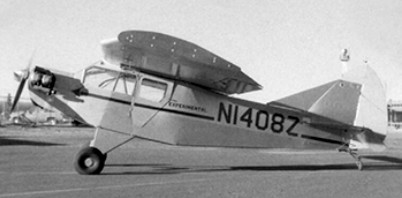
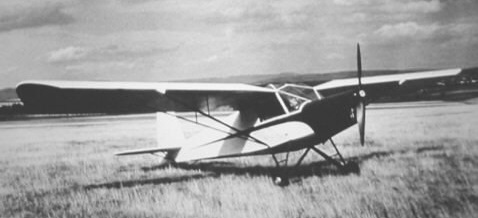
William Fike, designer and Alaska airline pilot, created this two-place cabin monoplane. The Model Es airframe structure includes a Piper J-3 tail assembly, a welded steel-tube fuselage and an all-wood, fabric-covered wing. Power is supplied by an 85-hp Continental engine. The wing can be removed within 10 minutes to enable the plane to be towed.
Gross Weight: 1150 lb Empty Weight: 690 lb Fuel capacity 15 USG Wingspan 22 ft 4.5 in Length: 19 ft 2 in Engine: 85-hp Continental Top speed: 110 mph Cruise speed: 100 mph Stall: 37 mph Climb rate: 800 fpm Ceiling: 10,000+ ft Takeoff run: 400 ft Landing roll: 600 ft Range: 280 miles
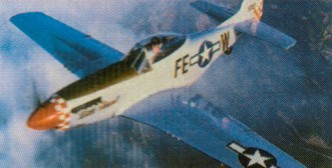
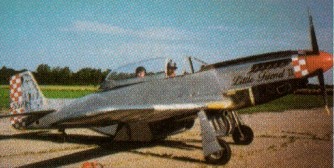
For years, many experimental aircraft builders have strived to re-create their favorite World War II fighters in miniature. For most, many hurdles had to be negotiated to get the right look, feel, sound and, of course, performance—all at the right cost of ownership. Until the advent of composite building techniques, forming all those compound curves of a fighter in metal just wasn’t within the means of your average builder. Then, getting the proper powerplant to look and sound like “the real thing” was next to impossible with the technology and funds at hand. Now with automotive/aviation V-8 conversions attaining a respectable degree of reliability, cost, and power coupled with these modern prepreg, composite techniques, the right combination has been reached. F.E.W.’s P-51D is a 67% scale version of the famous fighter of World War II first flew in 1992, and it looks the part, sounds the part and flies the part. The P-51D is stressed to ±6 G’s for aerobatics and is available in a dual-control version, the P-51TF, which first flew in 1997.
TF-51
P-51 Speed max: 340 mph. Cruise: 210 mph. Range: 750 sm. Stall: 57 mph. ROC: 2000 fpm. Take-off dist: 900 ft. Landing dist: 1000 ft. Service ceiling: 18,000 ft. Engine: V-8, 300 hp. HP range: 250-350 Fuel cap: 58 USG. Weight empty: 1300 lbs. Gross: 2200 lbs. Height: 8.1 ft. Length: 20.5 ft. Wing span: 25.6 ft. Wing area: 111 sq.ft. Seats: 1-2. Landing gear: retractable tail wheel.
P-51TF Speed max: 340 mph. Cruise: 210 mph. Range: 750 sm. Stall: 57 mph. ROC: 2000 fpm. Take-off dist: 900 ft. Landing dist: 1000 ft. Service ceiling: 18,000 ft. Engine: V-8, 300 hp. HP range: 250-350 Fuel cap: 58 USG. Weight empty: 1300 lbs. Gross: 2200 lbs. Height: 8.1 ft. Length: 20.5 ft. Wing span: 25.6 ft. Wing area: 111 sq.ft. Seats: 1-2. Landing gear: retractable tail wheel.
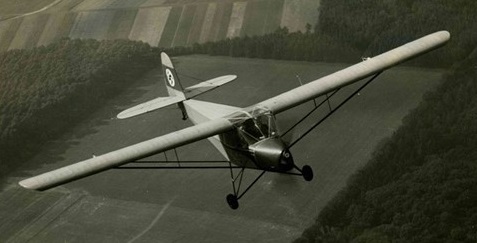
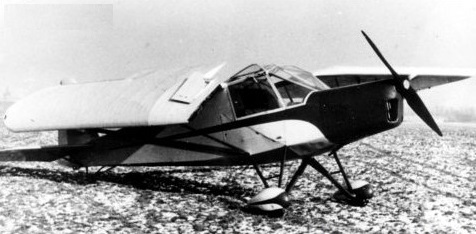
In January 1937 Major Werner Junck, chief of the LC II, the technical wing of the Reichsluftfahrtministerium responsible for the development of new aircraft, informed various minor aircraft manufacturers such as Bücker, Fieseler, Gothaer Waggonfabrik, Flugzeugwerke Halle and Klemm that they would not get any contracts for the development of military aircraft. He therefore advised them to concentrate in the development of a Volksflugzeug or a small twin-engined plane.
As a result, Fieseler developed the Fi 253, while the other companies produced the Kl 105, the Si 202, the Bü 180 and the Go 150. First flow on November 4, 1937, only six Fieseler Fi 253 Spatz, (English: Sparrow) were produced, however, due to the Second World War.
Engine: 1 × Zündapp Z 9-092, 37 kW (50 hp) Length: 7.25 m (23 ft 9 in) Wingspan: 11 m (36 ft 1 in) Height: 2.3 m (7 ft 7 in) Wing area: 16 m2 (170 sq ft) Empty weight: 295 kg (650 lb) Max takeoff weight: 500 kg (1,102 lb) Maximum speed: 140 km/h (87 mph; 76 kn) Cruising speed: 125 km/h (78 mph; 67 kn) Range: 450 km (280 mi; 243 nmi) Crew: 1 Capacity: 1 pilot, 1 passenger, 205kg
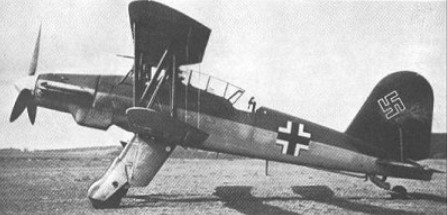
Two-seat torpedo-bombing and reconnaissance biplane of 1938 developed to serve on the German aircraft carrier Graf Zeppelin.
Fieseler Fi.167A-0 Engine: 1 x Daimler-Benz 601B, 820kW Max take-off weight: 4850 kg / 10692 lb Empty weight: 2800 kg / 6173 lb Wingspan: 13.5 m / 44 ft 3 in Length: 11.4 m / 37 ft 5 in Height: 4.8 m / 15 ft 9 in Wing area: 45.5 sq.m / 489.76 sq ft Max. Speed: 325 km/h / 202 mph Cruise speed: 270 km/h / 168 mph Ceiling: 8200 m / 26900 ft Range: 1500 km / 932 miles