Frontline Helicopter was acquired by Glenview Metal Products circa 1950.
Era
Frontier Iron Works A-2
The 1912 Frontier Iron Works A-2 was a V-8 water cooled aero engine. It produced 55hp from 507.84ci with a dry weight of (cast iron cyl jackets) 315lb, or (copper cyl jackets) 292lb.
Frontier Iron Works A-1
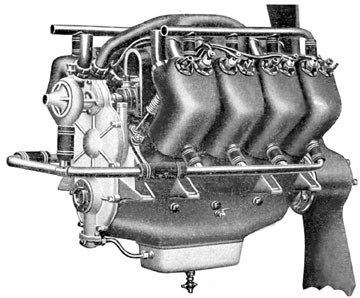
Built 1911-12, the Frontier Iron Works A-1 was an 8-cylinder, inline water-cooled aero engine. With a dry weight of 175lb, it produced 60 to 70hp from 253.92ci.
Frontier Iron Works
Buffalo NY.
USA
Built the Frontier A-1 and A-2 aero engines in 1912.
Frontier MD-11
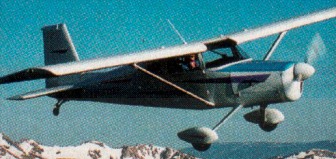
A metal monocoque aircraft kit with 2 seats side by side. The MD-11 can accommodate engines up to 200hp. Built with 2024 T-3 aluminium. First flown in 1993.
The standard kit price in 1996 was US$19,500.
Engine: Franklin, 120 hp.
HP range: 100-180.
Height: 6 ft.
Length: 24.5 ft.
Wing span: 29.5 ft.
Wing area: 155.9 sq.ft.
Weight empty: 925 lbs.
Gross: 1800 lbs.
Speed max: 180 mph.
Cruise: 125 mph.
Range: 875 sm.
Stall: 40 mph.
ROC: 1000 fpm.
Take-off dist: 500 ft.
Landing dist: 400 ft.
Service ceiling: 16,000 ft.
Seats: 2.
Landing gear: tail wheel.
Cabin width: 43 in
Engine: Walter Lom, 140 hp
HP range: 100-200
Fuel capacity: 43 USG
Height: 6.5 ft
Length: 27.5 ft
Wing span: 29.5 ft
Wing area: 177 sq.ft
Empty weight: 1150 lb
Gross weight: 2000 lb
Top speed: 200 mph
Cruise: 150 mph
Stall: 35 mph
Range: 700 sm
Rate of climb: 1000 fpm
Takeoff dist: 500 ft
Landing dist: 400 ft
Service ceiling: 16,000 ft
Seats: 2
Landing gear: tail
Cabin width: 43 in
Engine: Lycoming
HP range: 150-180
Height: 6.5 ft
Length: 27.5 ft
Wing span: 29.5 ft
Wing area: 177 sq.ft
Fuel capacity: 43 USG
Empty weight: 1150 lb
Gross weight: 2000 lb
Top speed: 200 mph
Cruise: 150 mph
Stall: 35 mph
Range: 700 sm
Rate of climb: 1000 fpm
Takeoff dist: 500 ft
Landing dist: 400 ft
Service ceiling: 16,000 ft
Seats: 2
Landing gear: tail
Cabin width: 43 in
Frontier Aircraft
1995-7: 225 Wall St, Vail, CO 81657, USA.
LSA builder
Fronius Pacific I / Quickarus
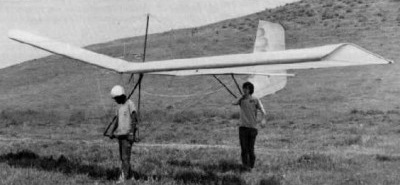
The Pacific I is a high performance glider designed by Doug Fronius and built by John Lasko. The basic goals were that is should offer competitive performance at the Icarus V level while being much simpler and less expensive to buid.
The glider was first conceived in late summer/early fall of 1974. An important design goal was that a Quicksilver’s basic structure (everything but the sail and wing ribs) could be converted into a Pacific I with very few modifications. A Quicksilver would need a better airfoil for more lift and better streamlining. More lift was provided by a modified Liebck section from the Icarus V. A rear spar was put at the trailing edge and eliminate the use of any secondary structures. The 1in trailing edge could be put in latter with foam, paper, or whatever.
To reduce the drag, all surfaces were covered on both sides with 1.8oz dacron glued and shrunk in place. Gussets and pop rivets relace bolts and machined fittings. The only machied parts ae standard bar corner fittings. The calculated desin weight was 48 lb however some larger tubin increased the weight by about 4 lb. The completed machine came in at 53 lb.
It has no turnbuckles, as it has a homemade threaded expandable kingpost to take up the rigging slack after assembly. It can be assembled by one person in under 5 minutes.
The wing ribs are made out of 1.2lb foam with spruce capstrips and weigh 3 oz each. Foam blocks are glued between the ribs to the high point of the airfoil, covered by a thin layer of cardboard under the dacron.
The rigging uses double leading and trailing edge wires top and bottom, and a set of extra tail brace wires running from the stabiliser leading edge bolt to the first compression member on the wing.
The prototype Pacific I cost about $225 to build.
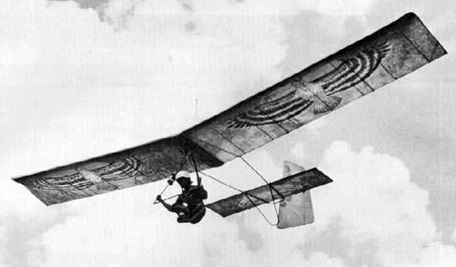
The only major changes to the prototype was the pilots suspension system to allow supine flying. It was flown to 3rd place in the rigid wing class at the 1975 Tellurise Championships.
There was a need for better roll control and/or glide path control.
Fronius, Doug
100 Stoney Knoll Rd
El Cajon
CA 92021
USA
Circa 1974 hang glider builder
Froebe Helicopter
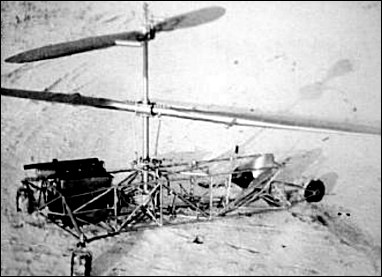
Canada’s first helicopter was built by the Froebe brothers of Manitoba in the early 1930s. It is preserved in Western Canada Aviation Museum in Winnipeg.
Friesley Falcon
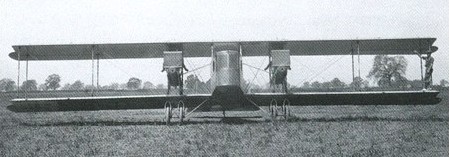
A single Falcon, large transport biplane, 12 passengers, 2 x 400hp Liberty, was finished mid-1920, but not flown until 1921.

