The Williams F121 (company designation WR36-1) is a small turbofan engine designed for use in the AGM-136 Tacit Rainbow anti-radiation cruise missile.
The F121 engine had a rare set of design parameters as it is designed to be used only once. As a cruise missile engine, it was designed to have a long shelf life (be able to sit around unused for long periods of time) and then operate when needed for several hours. It was designed to power the AGM-136 Tacit Rainbow, which was to be a stand-off anti radiation missile. Its first flight was on July 30, 1984. The AGM-136 program was canceled several years later.
Another unique feature of the engine is that it was started with an explosive cartridge because it couldn’t start while still mated to its aircraft.
In the late 2000s, the engine was being used by the Naval Air Warfare Center at Naval Air Weapons Station China Lake to test fuel performance and additives.
Specifications: Type: Single Spool Turbofan Length: 40 in (1.01 m) Diameter: 8.5 in (0.22 m) Dry weight: 49 lb (22.22 kg) Compressor: 1 stage axial fan, 6-stage axial compressor Combustors: Turboméca Piméné-type Turbine: 2-stage axial Maximum thrust: 70 lbf (0.31 kN) Bypass ratio: 1.7:1 Thrust-to-weight ratio: 1.43:1
Williams International had been building small turbofan engines for cruise missile applications since the 1960s, and had successfully entered the general aviation market in 1992 with the FJ44 engine. That same year, NASA initiated a program, Advanced General Aviation Transport Experiments (AGATE), to partner with manufacturers and help develop technologies that would revitalize the sagging general aviation industry. In 1996, Williams joined AGATE’s General Aviation Propulsion (GAP) program to develop a fuel-efficient turbofan engine that would be even smaller than the FJ44 and designated the FJX-2 engine.
Initially, Williams contracted with Burt Rutan’s Scaled Composites to design and build the Williams V-Jet II, a Very Light Jet (VLJ) to use as a testbed and technology demonstrator to showcase the new engine. The aircraft, powered by two interim FJX-1 man-rated version of Williams’ cruise-missile engine, debuted at the 1997 Oshkosh Airshow. Development of the FJX-2 engine progressed, most of the design work was completed during 1998 with initial prototype parts being delivered in the second quarter of that year. The FJX-2 engine was designed with many experimental systems and manufacturing processes to minimize parts count and lower production costs and having a bypass ratio of 4:1. As a result, result there were many technical difficulties and failures of the initial prototype hardware. However, subsequent re-designs and the incorporation of more conventional systems resulted in the engine eventually meeting the NASA requirement of 700 lbf (3,100 N) thrust. The program ultimately culminated with altitude testing at the NASA Glenn Research Propulsion Systems Laboratory from March – April 2000.
In 2000, Williams joined with Eclipse Aviation to develop an FAA-certified version of the FJX-2, designated the EJ22, to be used on the Eclipse 500 VLJ due for first flight in June 2002. This would be an unprecedentedly short period of time to develop a new man-rated turbofan engine. The new EJ22 powered the Eclipse 500 prototype on its first flight in the Summer of 2002.
Eclipse initially required the engine to produce 770 lbf (3,400 N) thrust, exceeding the 700 lbf (3,100 N) rating of the FJX-2 by 10%. This was only the first of a large number of continuously changing requirements Eclipse would demand. Ultimately, numerous technical problems with the EJ22, significantly compounded by the frequently changing requirements of Eclipse Aviation, grounded the plane and prompted Eclipse Aviation to terminate its relationship with Williams International in late 2002. Following termination of the contract, development work and FAA certification was halted shortly thereafter.
To achieve the required TSFC, the EJ22 turbofan was designed as a three spool engine having a fan, two axial compressors and three expansion turbines. As a result, the engine was significantly more complicated than any prior Williams International engine. While very impressive on the test stand, the EJ22 proved quite temperamental during the two years of its development process and it was frequently subject to problems starting, overheating, part failures and various subsystem issues. While most of problems may have eventually been resolved during a normal development program, the shortened development period, and the frequent changes by Eclipse, proved to be unsurmountable obstacles.
The engine is a 700 lbf (3,100 N) thrust class medium-bypass ratio (4:1 bypass ratio) turbofan with a fan diameter of about 15 inches. Length is 41 inches (1,000 mm), and basic engine weight was 85 pounds. At the time of testing in March 2001 of an early EJ22 prototype the engine weighed 96 lb (44 kg) and demonstrated a thrust-to-weight ratio of 7.52. The main compressor has 6 stages, and weighs only 1.22 lb (0.55 kg). Engine layout was a three-spool arrangement, with all three compressors and turbines being axial. This was a departure from previous Williams engines, which had all used centrifugal high-pressure compressors followed by axial turbines. A reverse flow combustor and a mixed exhaust were other features.
The Williams FJ44 is a family of small, two-spool, turbofan engines produced by Williams International/Rolls-Royce for the light business jet market. Although basically a Williams design, Rolls-Royce was brought into the project, at an early stage, to design, develop and manufacture an air-cooled high-pressure (HP) turbine for the engine. The FJ44 first flew on July 12, 1988 on the Scaled Composites/Beechcraft Triumph aircraft.
Production started in 1992 with the 1900 lbf (8.45 kN) thrust FJ44-1A, which comprises a 20.9 in (531 mm) diameter single stage blisk fan plus a single intermediate pressure (IP) booster stage, driven by a 2 stage low pressure (LP) turbine, supercharging a single stage centrifugal high pressure (HP) compressor, driven by a single stage uncooled high pressure (HP) turbine. The combustor is an impingement cooled annular design. Fuel is delivered to the combustor through an unusual rotating fuel nozzle system, rather than the standard fuel-air mixers or vapourisers. The bypass duct runs the full length the engine. Specific fuel consumption at 1900 lbf (8.45 kN) thrust at SLS, ISA is understood to be 0.456 lb/hr/lbf. A derated version, the 1500 lbf (6.67 kN) thrust FJ44-1C has an SFC of 0.460 lb/hr/lbf.
An uprated version, the 2300 lbf (10.23 kN) thrust FJ44-2A, was introduced in 1997. It has a larger 21.7 in (551 mm) diameter fan, with two additional booster stages to increase core flow. Owing to stressing considerations, the centrifugal compressor is throttled-back aerodynamically to a lower HPC pressure ratio than the -1. Other features include an exhaust mixer and an electronic fuel control unit. The 2400 lbf (10.68 kN) thrust FJ44-2C is similar to the -2A, but incorporates an integrated hydromechanical fuel control unit.
Further updates include the 2004 introduction of the 2820 lbf (12.54 kN) thrust FJ44-3A, which is similar to the -2A, but features an increased diameter fan and dual channel FADEC (Full Authority Digital Engine Control) unit. The 2490 lbf (11.08 kN) thrust FJ44-3A-24 is a derated version of the -3A.
In 2005, a new low end version, the FJ44-1AP, was introduced, with a 1965 lbf (8.74 kN) takeoff thrust, 5% better specific fuel consumption, and lower internal temperatures. The -1AP is similar to the -1A, except for a higher pressure ratio fan, a new combustor and LP turbine, a new full length bypass duct/exhaust mixer and a dual channel FADEC.
Released in 2007 was the new 3600 lbf (16.01 kN) thrust FJ44-4, which has a hi-tech fan of larger diameter than the -3 unit. As of March 2010, this engine was only in use on the Cessna CJ4.
The F129 is the military designation for a derated FJ44 with 1500lbf (6.672kN) power output.
The Williams FJ33 is a smaller engine based on the basic FJ44 design.
WR44
In February 1978 Foxjet International signed an agreement with WRC for exclusive supply over three years of the 8001b WR44-800 to power the new Foxjet light executive jet. Under the agreement Foxjet would pay for certification and other costs of the engine programme.
The new turbofan replaced the original WR19-3-1, giving WRC its first entry into the general-aviation market. A derivative of the WR19, the WR44 has had its bypass ratio reduced from 5:1 to 3:1, and its pressure ratio increased.
Applications: FJ44 Beechcraft Premier I Eviation Jets EV-20 Vantage Jet Cessna CitationJet Emivest SJ30 Grob G180 SPn Hawker 200 Lockheed Martin RQ-3 DarkStar Lockheed Martin Polecat Pilatus PC-24 Piper PA-47 PiperJet Piper PiperJet Altaire Saab 105 Scaled Composites Proteus Scaled Composites Triumph Virgin Atlantic GlobalFlyer
F129 Cessna 526 CitationJet
Specifications:
FJ44-1A Thrust: 1,900 lbf / 8,452 N Specific Fuel Consumption: 0.456 lb/hr/lbf Dry Weight: 460 lb / 209 kg Overall Length: 53.3 in / 1,354 mm Approximate Fan Diameter: 20.9 in / 531 mm Bypass ratio: 3.28
FJ44-1C Thrust: 1,500 lbf / 6,672 N Specific Fuel Consumption: 0.460 lb/hr/lbf Dry Weight: 460 lb / 209 kg Overall Length: 53.3 in / 1,354 mm Approximate Fan Diameter: 20.9 in / 531 mm Bypass ratio: 3.28
FJ44-1AP Thrust: 1,965 lbf / 8,741 N Dry Weight: 468 lb / 212 kg Overall Length: 57.9 in / 1,471 mm Approximate Fan Diameter: 20.7 in / 526 mm
FJ44-2A Thrust: 2,300 lbf / 10,231 N Dry Weight: 530 lb / 240 kg Overall Length: 59.8 in / 1,519 mm Approximate Fan Diameter: 21.7 in / 551 mm Bypass ratio: 4.1
FJ44-2C Thrust: 2,400 lbf / 10,676 N Dry Weight: 520 lb / 236 kg Overall Length: 59.8 in / 1,519 mm Approximate Fan Diameter: 21.7 in / 551 mm
FJ44-3A Thrust: 2,820 lbf / 12,544 N Dry Weight: 535 lb / 243 kg Overall Length: 62.4 in / 1,585 mm Approximate Fan Diameter: 22.9 in / 582 mm
FJ44-3A-24 Thrust: 2,490 lbf / 11,076 N Dry Weight: 535 lb / 243 kg Overall Length: 62.4 in / 1,585 mm Approximate Fan Diameter: 22.9 in / 582 mm
FJ44-4 Thrust: 3,600 lbf / 16,014 N Dry Weight: 650 lb / 295 kg Overall Length: 68.6 in / 1,742 mm Approximate Fan Diameter: 25.2 in / 640 mm
Walled Lake, Michigan USA In addition to engine manufacture, has developed the V-Jet II as an engine demonstration aircraft as part of a joint NASA/industry General Aviation Propulsion Program, intended to assist the U.S. light aircraft industry through turbofan technology. V-Jet II first flew April 1997 as a fiveseat jet of composites construction. In 2010, Williams was in the component design phase of the engine technology program, is emphasizing low cost manufacturing processes suitable for high quantity production, and is active with key suppliers to minimize material and purchase parts costs. The new Williams engine has been named the “FJX-2.” Dr. Sam Williams, Chairman of Williams International, said, “Our objective is to replace aging, piston-powered light aircraft with all new, four-place single and six-place twin, turbofan-powered modern aircraft. This means we must develop a turbofan in the 700 lb thrust category that is very low in cost at a high production rate, is extremely quiet, is light in weight, and is very reliable.”
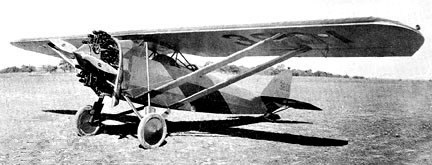
In 1928 Geo. Williams Airplane & Manufacturing Co built the C-4, featuring four passengers in an enclosed cabin, and pilot in an open cockpit behind the wing.
A high wing monoplane, the first flight was in October 1928.
In 1926 a prototype of the Commercial-Wing was designed by George Carroll and George Williams and built. A single place, open cockpit, high wing monoplane, it was powered by an 80hp (later 120hp) LeRhône rotary engine.
Designed by George Carroll and George Williams, four planes were made with the Wright engine (c/n 101 registration NC173, c/n 102 registration NC2506, c/n 104 registration NC5185, c/n 105 registration NC138N), one with a Hisso (c/n 103 – registration NC3801), and one with a 100 hp Curtis OXX-6. This later one could be a Sportsman or the NC6525 registration aircraft.
The 1927 Texas-Temple Commercial-Wing cost $10,500 with an inertia starter, brakes and metal prop.
The 1928 Speed-Wing carried 1 passenger and was a Commercial-Wing for carrying mail. It took a 500 lb payload over a 500-mile range. The plane cost $9,500. It was advertised as a 1 or 2 person sportplane. The first plane was powered by a 150 hp Hisso A engine and had a 39’4″ wingspan. No registration found, but it could be the Commercial-Wing registration NC3801.
Continental Airways of Cincinnati used the Temple Company’s Commercial-wing model almost exclusively. Other models followed, including the much-ballyhooed Sportsman. The Sportsman was touted by British aviation enthusiast Lady Mary Heath as “the best performing airplane its class today.” Her endorsement might mean more to history if Lady Heath had ever met an airplane she didn’t like. During her stay in America, she declared every plane she flew to be a marvel of aviation engineering.
A contract that might have saved the company – delivering air mail between Dallas and Fort Worth and San Antonio and Houston — was awarded instead to Bowen Air Transport. Bowen then took over a hangar at Meacham Field in Fort Worth, a hangar Temple Aero had bought.
The Depression hit the aviation industry early and hard. Companies that had signed contracts with Texas Aero were hard-pressed to honour those contracts.
Operating exclusively out of Temple, Aero scaled back its operation to concentrate exclusively on production of the Sportsman model and the training of student pilots. Three 1929 Sport / Sportsman were built: prototype N480 c/n 1, N852H, and N987N c/n 107.
Commercial-Wing Engine: 220 hp Wright J-5 Wing span: 39’4″ Length: 25’10” Useful load: 950 lb Max speed: 130 mph Cruise speed: 112 mph Stall: 35 mph Range: 550 mi Ceiling: 18,500 ft Seats: 2-3
Sport / Sportsman Engine: Cirrus Mk III, 100hp Seats: 2
Speed-Wing Engine: Hisso A, 150hp Wingspan: 39’4″ Useful load: 1055 lb Payload: 500 lb Max speed: 135 mph Cruise speed: 120 mph Stall: 42 mph Range: 500 mi Seats: 1-2
Texas Aero Manufacturing Co Temple Aero Club Texas Aero Corp Texas-Temple
USA George W. Williams designed and built his first aircraft, a light monoplane, about 1908 and started operations at Temple, Texas, as the Texas Aero Manufacturing Company. With George Carroll was credited with development of first full monocoque cantilever wing (not flown). Only production aircraft Texas-Temple of 1928-1929. On Williams’s death in 1929 company reorganized as the Texas Aero Corporation.
George Williams was a pioneer aviator who lived in Temple. He had built and flow his own monoplane called the Prairie Queen in 1910. Williams had been experimenting with aircraft design from at least 1908. Williams first aviation company was the Texas Aero Manufacturing Company, formed in 1911, which became in turn George Williams Airplane and Manufacturing Company in 1920. The Texas Aero Corporation of Temple became in 1928 the first Texas business licensed by the government to sell new aircraft. Begun with a $150,000 stake.
In 1911 Williams and others formed the Temple Aero Club. The club was based at Woodlawn Field, Temple, Texas. Its officers in 1920 were President, Eldon Kent Williams (Williams’ newspaperman brother); Secretary-Treasurer, George W Williams; and Field Manager, Lieutenant Eric A Locking, ex RAF.
James Albert Jackson Carroll (aka George A Carroll), was born on April 4, 1902 in Belton, Texas and died on July 17, 1987 in Tujunga, California. Carroll had joined with the Williams’ to found the Texas Aero Corporation; the first commercial aircraft fabricating facility in Texas.
George Williams, learned to fly but never took a pilot’s license. His brother, E.K. Williams, publisher of the Temple Telegram, promoted the venture with a plane that delivered the newspaper by plane.
In October 1927 the Aero Club changed its charter to form the Texas Aero Corporation. Its purpose was to manufacture aircraft in Temple. At the time the Corporation commenced it had orders for six aircraft. To increase the Corporation’s capital in June 1929 it offered 100,000 shares at $10 per share in 1929. A 4-acre site was acquired at Love Field, Dallas for a new factory to replace its Temple facility.
Williams, aged 45, died in an air crash in August 1930, while training Clyde Moore, a student pilot. The plane had stalled at low altitude and crashed 3 miles (4.8 km) west of Temple near the hospital dairy farm. The Corporation folded as a result.
George Williams and Carroll designed and built the Texas Monoplane. In total 12 aircraft were constructed between 1928 and 1930 when the Corporation ended.
Texas Aero Corporation planes were registered as Texas-Temple and Temple.
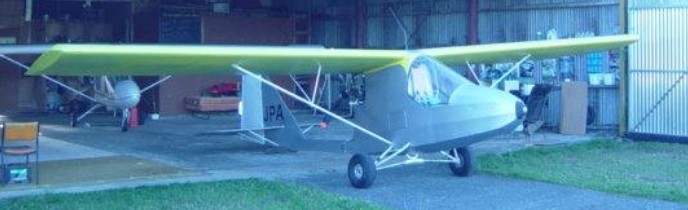
As the designation infers, the Williams Mk.4 is the fourth aircraft from the hands of the late Geoff Williams, a well-known Otago identity who did not like to conform to the rules. It was finished about 1990, first flew in 1991 and had logged over 160 illegally flown hours prior to its sale to Bob Gibson in June 2002. This aircraft was legally registered as ZK-JPA on 25 February 2003. Geoff Williams never flew again after the third aeroplane, but resolved to build a fourth aircraft. This is the aircraft Bob Gibson bought. This plane was not difficult to fly he did have a few minor landing faults. Geoff’s ambition was to fly his aeroplane around Fiordland coastline, landing at somewhere like Jackson’s Bay for refuelling and to this end he built a heated cabin and fuel capacity of over 100 litres and a locker where he could hold an additional 10- or 15-litre can. Sadly this was never to be realised as Geoff became ill March 2002 and died on 10 May 2002. It was Geoff’s wish that his plane be kept flying, and Bob seemed to be the person most interested.


 All Aero