Gloster III

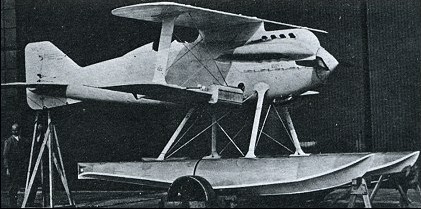
Built for 1925 Schneider Trophy races. The Gloster IIIA (High Speed Flight N-195) was the most successful of all the Gloster Schneider entries. It came 2nd in the 1925 race held in Baltimore, USA. The winner was Doolittle in the renowned Curtiss R3C-2. A second IIIA (N-194) was held in reserve for this race.

Engine: 1 x Napier Lion VII, 522kW
Max take-off weight: 1343 kg / 2961 lb
Empty weight: 1033 kg / 2277 lb
Wingspan: 6.10 m / 20 ft 0 in
Length: 8.18 m / 26 ft 10 in
Height: 2.95 m / 9 ft 8 in
Wing area: 14.12 sq.m / 151.99 sq ft
Max. speed: 405 km/h / 252 mph

Gloster I

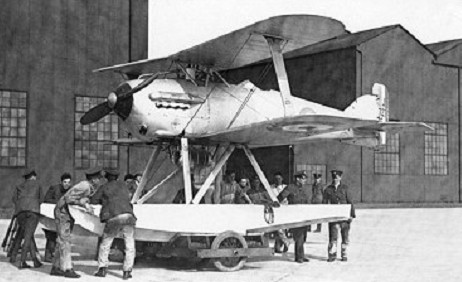
During early 1923 the Mars I was given extensively modified wings, had the fuel and water header tanks transferred within the fuselage to lose the view-limiting cabane structure, and had a more powerful Lion engine installed, being re-designated Gloster I. After winning the Aerial Derby of 1923, it was acquired by the RAF and with float landing gear, was used by the RAF’s High Speed Flight at Felixstowe for training purposes.

Engine: 1 x Napier Lion, 395kW
Max take-off weight: 1202 kg / 2650 lb
Empty weight: 894 kg / 1971 lb
Wingspan: 6.10 m / 20 ft 0 in
Length: 7.01 m / 22 ft 12 in
Height: 2.84 m / 9 ft 4 in
Wing area: 15.33 sq.m / 165.01 sq ft
Max. speed: 354 km/h / 220 mph

Gloster G.14 Gannet

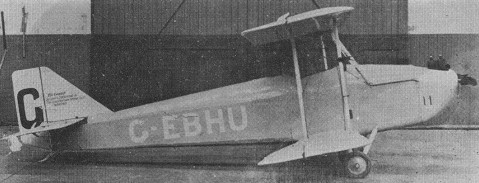
The Gloster G.14 Gannet, G EBHU, was registered on August 15, 1923 to the Gloucestershire Aircraft Co. Ltd. it was designed by H. P. Folland and built for the 1923 Lympne Trials, from which it retired when its 750cc Carden two stroke engine had cooling troubles.
In 1924 it was re engined with a 698cc Blackburne Tomtit, with which it had a top speed of 72 m.p.h. Although its registration was cancelled on January 25, 1928, the Gannet was exhibited at the 1929 Aero Show at Olympia.

Gloster Mars 1 / Bamel

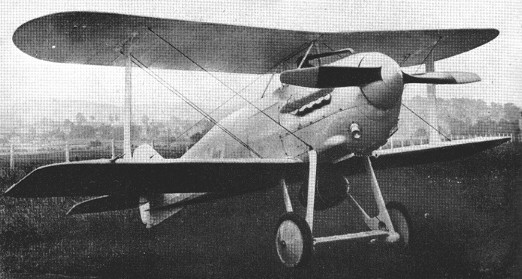
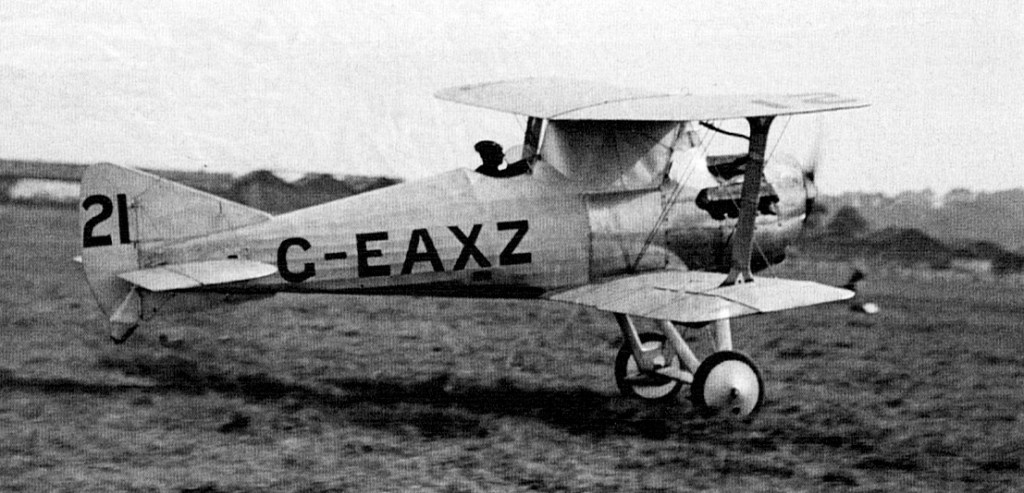
Britain’s Gloucestershire (Gloster) Company designed, built and flew the Mars 1 single seat racer in three weeks, as the prototype for a new fighter. It won the Aerial Derby in 1921, 1922 and 1923, and set up a British speed record of 196.6 mph.

Jimmy James, Gloster test pilot, taking off from Hendon at the start of the Aerial Derby on 16 July 1921. James won the Hendon-West Thurrock-Epping-Essex-Hertford-Hendon at 163 mph winning trophy and £600.

Designed by H. P. Folland, the Mars I or ‘Bamel’ was a single-seat racing biplane: the greater part of the fuselage, landing gear and tail unit being constructed from components similar to those used in the well-known Nieuport Nighthawk, which the company took over in 1920.

Engine: 1 x Napier Lion, 336kW
Max. speed: 316 km/h / 196 mph

Gloster Aircraft Co Ltd / Gloucestershire Aircraft Company Ltd

Formed in 1917 as the Gloucestershire Aircraft Company Ltd. to take over subcontract work from the Aircraft Manufacturing Company and H. H. Martyn & Co Ltd. of Cheltenham. D.H.4 and D.H.6 fuselages had been built by Martyn, and by the end of the war the company had supplied 461 Bristol Fighters and 165 RAF F.E.2bs, as well as Nieuport Nighthawks and other fuselages.
Fifty Nighthawks, renamed Sparrowhawks, were built for Japan to a 1920 order, and were shortly followed by the first true Gloucester aircraft, the Bamel single-seat racing biplane, designed and built in less than four weeks. H. P. Folland, joined the company soon after the Bamel’s completion. A line of biplane fighters followed, the Grebe and Gamecock being notable successes, and in 1926 the company was renamed Gloster Aircraft Company Ltd. moving its main factory to Hucclecote, Gloucester.
Up to 1930, all but one of their machines had been single-engined, the exception being the A.S.31, which was not originally a Gloster design but based on the de Havilland DH.67B.

Joining the Hawker Siddeley Group in 1934, Gloster continued fighter production with the Gauntlet and Gladiator, the latter being the RAF’s last biplane fighter. Henry Folland, Gloster’s chief designer, would leave Gloster when it was taken over by Hawker in 1937.

During the Second World War Gloster built 2,750 Hurricanes and 3,330 Typhoons, and produced Britain’s first jet aircraft to specification E.28/39, the first of two single-jet prototypes flying in 1941 and leading to the twin-jet Meteor of 1944. A total of 3,545 Meteors was produced by Gloster and Armstrong Whitworth. Gloster’s final production aircraft was the twin-jet delta-wing Javelin all-weather interceptor, flown in 1951, of which 435 were produced for the RAF. Gloster ceased aircraft production in 1956.
Gloster, Armstrong Whitworth and Avro joined Hawker Siddeley Aviation in 1965.

Globe GC-1 Swift

GC-1B

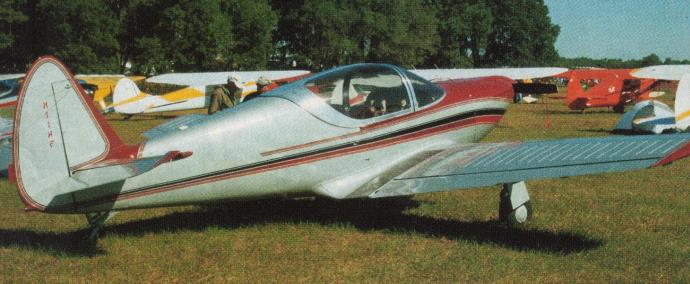
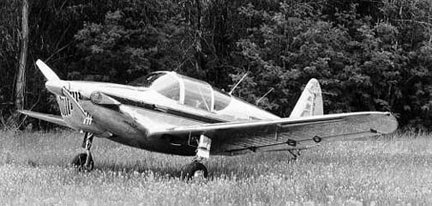
These all-metal side-by-side two seaters had retractable undercarriage and offered a ‘fighter-like” aircraft yet was powered by a small engine. Globe Swifts were priced at $2,995.

Texas Engineering & Manufacturing Co built 329 Globe Swifts under licence before Globe went bankrupt in August 1947, when it acquired rights in this aircraft. Temco priced the Swift at $3,250-3,750.

Temco GC-1B Swift

Including Globe production 1,093 were built from 1946 to 1951.

In 1989 Piper planned to produce the “sexy, spirited” SwiftFury, a 200 hp Lycoming powered 200 mph plus cruise update of the two seat Globe Swift designed in the late 1940s. Piper advised that some 350 SwiftFury orders have been placed with the 1989 price being US$118,900.00.

Gallery

Globe Swift GC-1B
Engine: Continental IO-360-D (modified), 210 hp
TBO hr: 1800
Fuel type: 100LL
Propeller: McCauley two-bladed
Landing gear type: Conv./Ret.
Max ramp weight: 1975 lb
Gross weight: 1975 lb
Landing weight: 1975 lb
Empty weight, std: 1370 lb
Usable fuel: 49 USgal.
Oil capacity: 10 qts
Wingspan: 29 ft. 4 in.
Overall length: 20 ft. 10 in.
Height: 6 ft. 2 in.
Wing loading: 15 lbs./sq. ft
Power loading: 9.4 lbs./hp
Wheel track: 10 ft. 6 in.
Seating capacity: 2
Cabin width: 3 ft. 4 in.
Cabin height: 3 ft. 10 in.
Baggage capacity:100lb
Cruise speed 75% power @ 24,000 ft.: 173 to 180kt
Cruise speed 65% power @ 6,500 ft.: 160 kt
Cruise speed 55% power @ 16,000 ft.: 150 kt
Max range (w/ reserve) 75% power: 1000 nm
Stall speed (flaps up): 63 kt
Best rate of climb (SL): 1500 fpm
Service ceiling: 18,000+ ft
Takeoff ground roll: 400 ft
Landing ground roll: 800 ft
Original base price: $3,750 to $4,000

GC-1B Swift
1947 (ATC 766)
Engine: Continental C-125, 125hp
Wingspan: 29’4″
Length: 20’11”
Useful load: 560 lb
Max speed: 145 mph
Cruise speed: 132 mph
Stall: 48 mph
Range: 420 mi
Seats: 2
Undercarriage: retractable

Globe Aircraft Corp / Bennett Aircraft Corp

Formed originally as the Bennett Aircraft Corporation to manufacture aircraft from Duraloid, a new type of bonded plywood. Produced twin-engine eight-seat monoplane, the BTC-1, about 1940. Company reorganized and renamed Globe Aircraft Corporation in 1941. First design under new name was the GC-1 Swift, a two-seat light monoplane with retractable landing gear and Continental engine. Development stopped by war, but produced postwar from 1945. Company built also Beech 18s for U.S. Government during Second World War.

Glidden and Stevens Boston

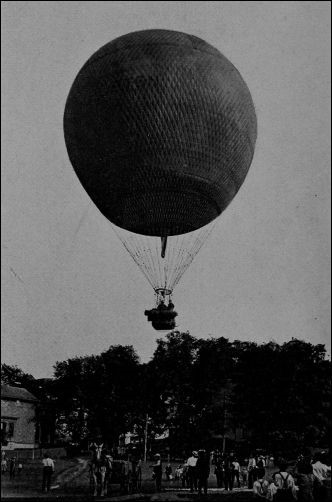
On 19 June 1908 the balloon Boston made its initial flight, landing shortly after 7pm on a mountain between Putney, VT., and Dammerston, VT., near the Vermont-New Hampshire boundary line.

The start of the trip was made a little after 4pm. In order to avoid electric light wires, it was necessary to unload about 60 lb of ballast just after starting.

The thermometer registered 103 degrees in the sun, and the wind blew in puffs, at a varying rate of from 25 to 40 mph. The puffs of wind and changing directions of the various air currents encountered frequently caused the balloon to revolve. The highest elevation reached was 6100 ft.

While passing over the northeast Brattleboro, VT., the gas bag was struck by two rifle bullets. The bullets glanced off without penetrating the silk covering but the course of the bullets was indicated plainly by two dark coloured streaks across the silken covering.

The landing was made in a pasture on top of a mountain 2000 ft high, and the descent was from an elevation of more than 2000 ft.

Charles J. Glidden of Boston, owner of the balloon, and Leo Stevens had an exciting trip. In addition to being the target for rifle bullets during the flight, Glidden and Stevens landed in a pasture where a young bull was confined. The animal charged the aeronauts after they had stepped from the basket and they were forced to run and scramble over a barbed wire fence. Both aeronauts stated that all things considered, it was the most thrilling balloon trip either of them had undertaken.

The pair made the farmhouse of W.W.Burnett just before midnight. The next day preparing to ship the balloon to Steven’s factory for repairs.