Yuneec International, created GreenWing International and in June 2013 it was announced that their GW280 (eSypder) and GW430 (e430) airplanes will be produced, marketed and supported by GreenWing International, however that company went out of business in about 2014.
Era
Green Sky Adventures
1995: 2377 Cream Ridge Rd, Orwell, OH 44076, USA.
UL builder
Greenleaf CT-6A / Plxweve CT-6A / Player CT-6A
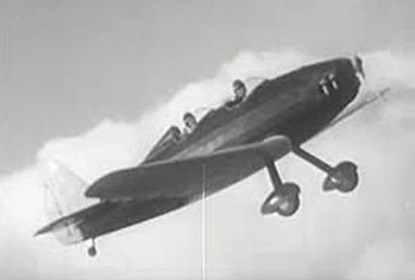
The Greenleaf CT-6A NX19994 was thought of during a meeting at the airport’s restaurant. Designed in 1940 by W E Player.
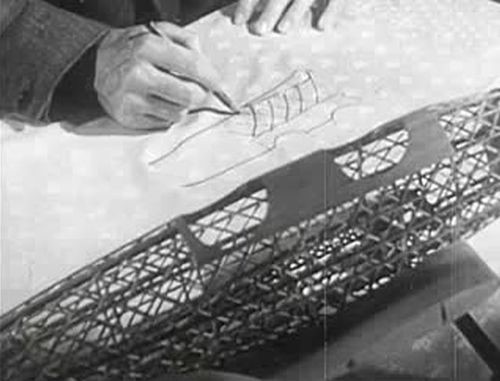
A wooden study.
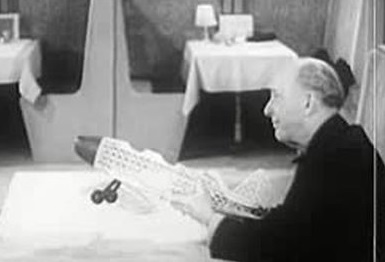
Then the aircraft was built. An all-wood, geodetic construction. All of the wood to make one plane cost $23.00 (in 1940 dollars), the jigs and forms added another $10.20.
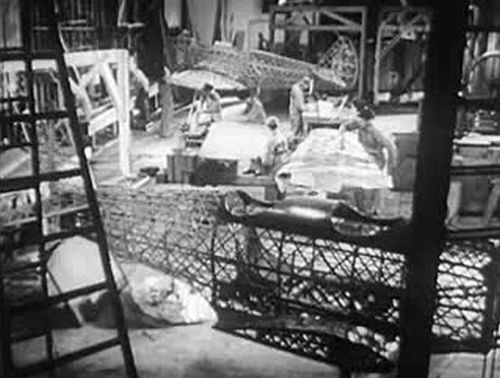
The original motor was a Dayton (Ford Model A), powering NX19994 c/n 1.
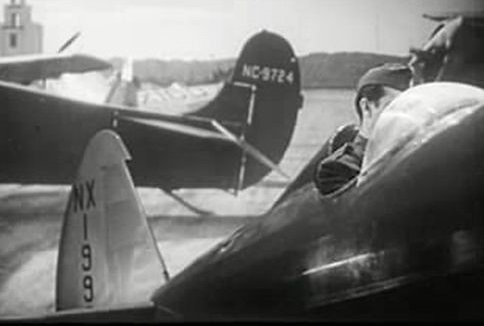
It appeared in several motion pictures.
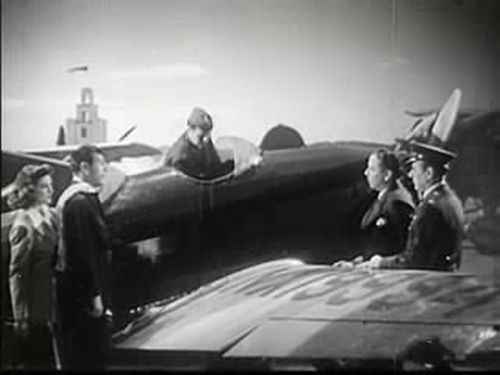
It was rebuilt in 1960.
CT-6A Plxweve
Engine: 75hp Continental A-75
Wingspan: 29’0″
Length: 20’6″
Useful load: 528 lb
Max speed: 130 mph
Cruise: 120 mph
Stall: 47 mph
Range: 350 mi
Ceiling: 17,500′
Seats:2
Greene 1910 biplane
The 1910 Greene biplane was designed and built by Dr. W. Greene in the USA.
Green E.6
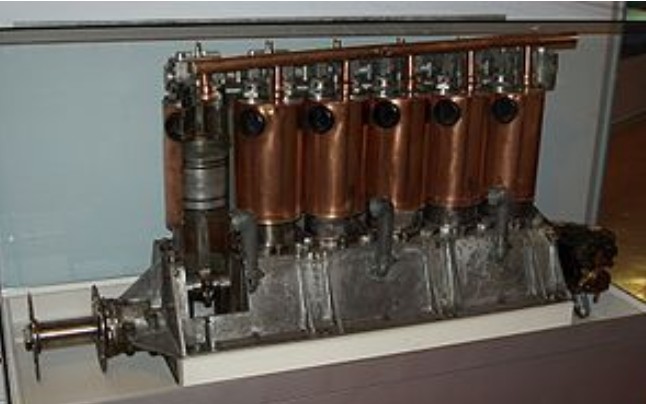
The Green E.6 was a British six-cylinder, water-cooled aero engine that first ran in December 1911, it was designed by Gustavus Green and built by the Green Engine Co and Mirlees, Bickerton & Day of Stockport between August 1914 and December 1918. A total of 42 were built.
Applications:
Avro 504K
Avro 523A
Bass-Paterson flying boat
Cody Type V
Eastbourne Aviation Circuit biplane
Gnosspelius Hydro Tractor Biplane
Graham-White Charabancs Type 10
Royal Aircraft Factory F.E.2a
Short S.68 Seaplane
Sopwith Bat Boat
Sopwith Three-seater
Sopwith 1913 Circuit of Britain floatplane
Sopwith Type TT
E.6
Type: 6-cylinder, inline, upright piston engine
Bore: 5.51 in (140 mm)
Stroke: 5.98 in (152 mm)
Displacement: 855.54 cu in (14.03 L)
Dry weight: 440 lb (200 kg)
Valvetrain: Gear driven overhead camshaft, two valves per cylinder
Fuel type: 40-50 octane petrol
Cooling system: Water-cooled
Reduction gear: Direct drive, right-hand tractor
Power output: 120 hp (89.5 kW) at 1,300 rpm (maximum power)
Specific power: 0.14 hp/cu in (6.4 kW/L)
Power-to-weight ratio: 0.27 hp/lb (0.45 kW/kg)
Green D.4
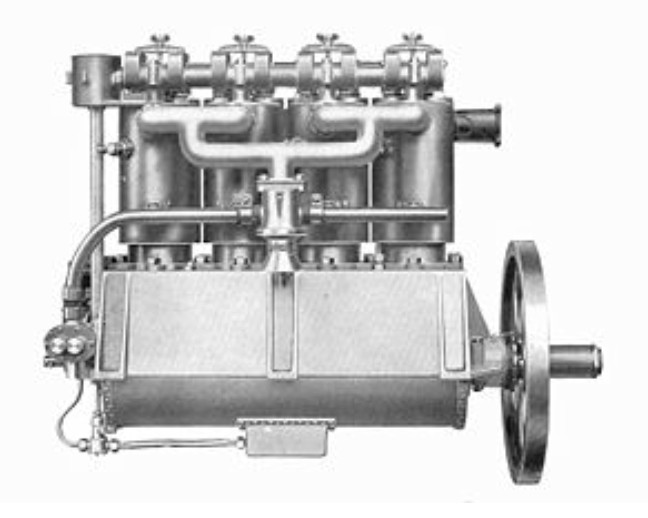
The Green D.4 was a four-cylinder watercooled inline piston engine produced by the Green Engine Co in the UK in 1909. It produced about 60 hp (45 kW) and played a role in the development of British aviation before World War I.
The Green D.4 was a natural development of the Green C.4. It was an inline, watercooled 4-cylinder piston engine with characteristic Green features: cast steel single piece cylinders and cylinder heads, two valves per cylinder driven by an overhead camshaft, white metal crankshaft bearings and copper water jackets, rubber sealed to allow for differential expansion.
Increases in bore and stroke more gave the D.4 more than twice the swept volume of the C.4, and roughly doubled its power. The cast steel cylinders, individually machined inside and out, were mounted separately onto a flat sided aluminium crankcase. They were fastened down by long bolts between them, which reached into the crankcase to support the four inner crankshaft bearings. The main bearings were in the crankcase ends, and the ball race was designed to allow either pusher or tractor operation. A flywheel was fitted to the output shaft. Thin cylindrical copper water jackets surrounded the cylinders almost to their base, where a rubber ring, located by a circumferential groove in the cylinder, provided a sliding water seal that allowed for the differential thermal contraction of copper and steel. Cooling water was fed to these jackets by an engine driven pump via a horizontal tube on the low right side of the engine, assuming a tractor orientation, and fed to the radiator by another tube on the top left.
A single jet Zenith carburettor with a remote float chamber fed a double branched inlet manifold on the right; the plugs, also set in the cylinder walls, were on the same side, below and angled to the inlets. The exhaust ports were on the left side, angled forwards. A crankshaft driven Bosch magneto at the rear provided the plugs’ high voltage supply. The overhead camshaft was also driven from the crankshaft, via worm gears and a vertical shaft at the rear of the engine. The camshaft operated the valves by rockers with rollers on their camshaft ends and adjusting screws at the other.
Lubricating oil was mechanically pumped through cast-in channels in the crankcase to all the crankshaft bearings. The camshaft was contained in an oil tight sleeve.
The D.4 was usually described as a 50-60 hp engine, sometimes as 60 hp, 65 hp or 60-70 hp. The type designation D.4 was rarely used at the time.
Green’s engines were noted for their reliability and he reinforced that reputation with entries into Government competitions; in 1910 the D.4 won the £1.000 prize donated to the winner by Patrick Alexander. There was a maximum power test, the D.4 achieving 67.8 hp at 1,210 rpm, but the emphasis was on endurance: the engine had to produce two non-stop 12 hr runs and average more than 58.5 hp. In the event, the D.4 averaged 61.6 hp with few signs of wear on inspection afterwards.
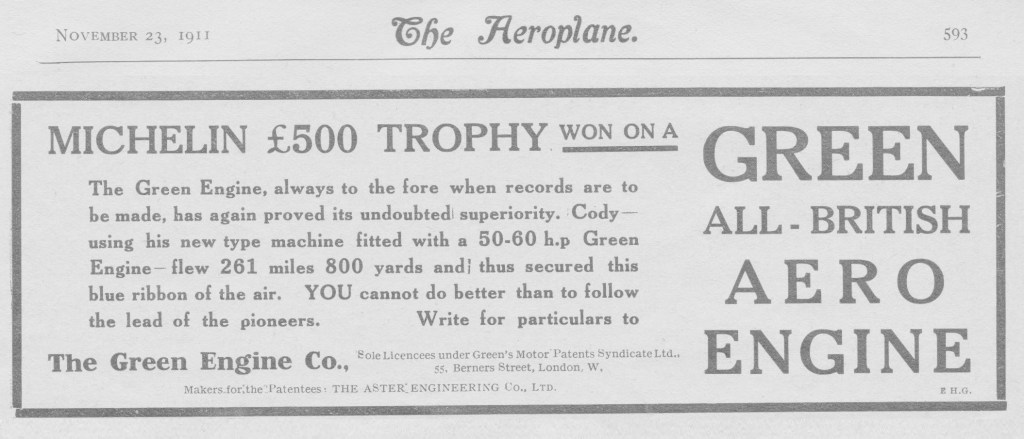
Up to 1912 the Green D.4 was the only all-British aircraft engine capable of producing 60 hp, so when prizes were offered for flights or races for all-British aircraft, the Green was the only choice. The best known example is that of Moore-Brabazon in his Short Biplane No. 2, winning the £1,000 Daily Mail prize in 1910 for a circular 1 mile flight by a British pilot in an all-British aeroplane.
The British Empire Michelin Trophies (no.1 for speed and no.2 for distance) between 1910 and 1913 were also all-British aircraft competitions. Six of the seven winners were powered by Green engines, showing their dominance and reliability. The winners of all four of the 1910-11 contests, three of Cody’s aircraft plus Moore Brabazon’s Short S.2, were D.4 powered.
Cody’s D.4 also powered his entry to fourth place in the 1911 Daily Mail Circuit of Britain competition, a distance of 1,010 miles. That engine, flown over 7,000 miles, was exhibited at the 1913 Olympia Aero Show. Despite its pre-war success, neither the Green D.4 nor other Green models played a part in the war, in which the lighter, air-cooled French engines of Le Rhône, Clerget and Gnome were extensively used.
Variants:
A long stroke (152 mm) development gave 65 hp (48 kW) at 1250 rpm, but seems not to have flown.
Applications:
ASL monoplane no.2
ASL Valkerie C
Avro Type G
Blackburn Type E
Cody No.IIA
Cody No.IIB
Cody No.IIC
Cody No.III
Dunne D.5
Dunne D.6
Dunne D.8
Edwards Rhomboidal biplane (damaged in taxi trials, not flown)
Flanders F.2
Flanders F.3
George & Jobling biplane
Grahame-White XV
Handley Page Type B
Harper monoplane (possibly not completed)
Howard Wright biplane
Humphreys monoplane No.1
Humphreys monoplane No.2
Humphreys monoplane No.3
Megone biplane
Northern Aircraft PB.1
Poynter monoplane (probably not flown)
Short Biplane No.2
Sonoda Tractor Biplane
Specifications:
Type: 4-cylinder water-cooled inline upright poppet valve piston engine
Bore: 5.51 in (140 mm)
Stroke: 5.75 in (146 mm)
Displacement: 549 cu in (9.0 litres)
Dry weight: 259 lb (117 kg) bare; 302 lb (137 kg) with accessories
Valvetrain: two poppet valves per cylinder driven by overhead camshaft via rockers
Fuel system: 1× single jet Zenith carburettor with separate float chamber
Fuel type: petrol, 40-50 octane
Oil system: fully forced, with cast-in channels to bearings and via hollow crankshaft to end bearings
Cooling system: water, with rubber sealed spun copper jackets around each cylinder, engine pumped
Reduction gear: none; direct right hand tractor drive
Ignition: single Bosch magneto
Power output: 50 hp (37 kW) at 1,050 rpm, 70 hp (52 kW) at 1,200 rpm for short periods
Fuel consumption: 0.590 lb/hp/hr (0.359 kg/kW/hr) at 62 hp
Oil consumption: 0.175 lb/hp/hr (0.107 kg/kW/hr) at 62 hp
Green C.4
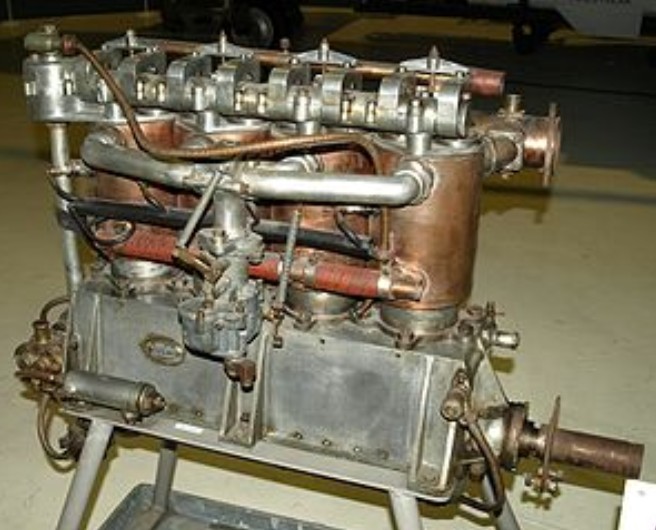
The Green C.4 was a British four-cylinder, water-cooled aero engine that first ran in 1908, it was designed by Gustavus Green and built by the Green Engine Co and Aster Engineering. The engine was one of two Green designs to win a government prize.
Applications:
Aeronautical Syndicate Valkyrie Type A
Avro Type II
Avro Type III
Avro Type IV
Avro Type D
Avro Baby
Blackburn Monoplane 1
Handley Page Type B
Handley Page Type D
Hornstein biplane
Macfie Empress
Martin-Handasyde No.3
Neale VII biplane
Short S.27 (Manufacturer No.s S.26 and S.28)
Sopwith Burgess-Wright
Wells Reo
C.4
Type: 4-cylinder, inline, upright piston engine
Bore: 4.13 in (105 mm)
Stroke: 4.73 in (120 mm)
Displacement: 253.44 cu in (4.158 L)
Length: 39 in (991 mm)
Width: 16 in (406 mm)
Height: 28 in (711 mm)
Dry weight: 184 lb (83 kg)
Valvetrain: Gear driven overhead camshaft, two valves per cylinder
Fuel type: Petrol
Cooling system: Water-cooled
Reduction gear: Direct drive, right-hand tractor
Power output: 52.5 hp (39 kW) at 1,460 rpm (maximum power)
Specific power: 0.2 hp/cu in (9.37 kw/L)
Power-to-weight ratio: 0.28 hp/lb (0.46 kW/kg)
Green S-25

Green S 25 G-BSON first registered to J.J. Green, UK, in 1990.
Green Royal Vauxhall / Nassau
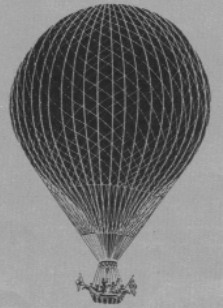
The envelope of the Royal Vauxhall balloon was formed of 2,000 yards of crimson and white silk, imported in the raw state from Italy expressly for this purpose.
First flight: August 1836
Best journey: London Weilburg (Germany) on 7 8 November 1836, approx 600 miles (966 km), with six passengers in 17 hours.
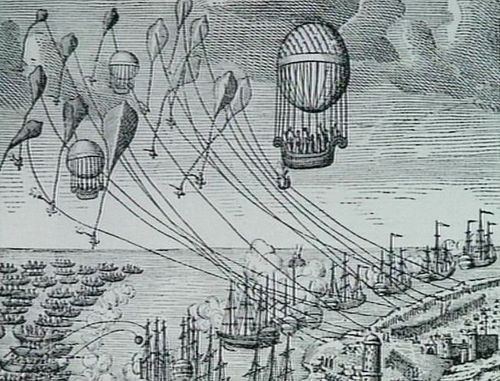
Lifting agent: 70,000 cu.ft (1,982.2 cu.m) of coal gas.
Circumference: 157 ft (47.85 m).
Overall height (incl car): 80 ft (24.38 m).
Accommodation / Payload: 2 persons (28 if filled with pure hydrogen).
Green George IV Royal Coronation Balloon
The George IV Royal Coronation Balloon rose from Green Park, London, on 19 July 1821; in this and subsequent balloons which Green designed between 1821 and 1854, he made altogether 524 ascents.

