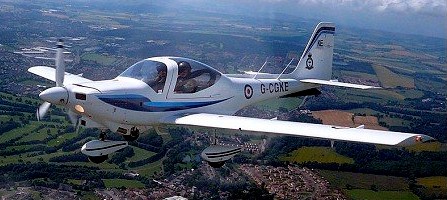
By 1990 the G 115 had orders totalling more than 100 since production began in 1987. The two-seat, side-by-side light aircraft makes extensive use of composite materials in its construction and the resulting smooth finish gives low drag and high efficiency. The production G 115-C is powered by a single 150 hp (112 kW) Lycoming O-320-E2A piston engine driving a constant speed propeller. The Royal Navy Flying Grading Flight operate the G.115D as the Heron. Ninety-nine G.115E (at Tutors) were purchased for Air Cadets and University Air Squadrons in the UK. The E variant with a 3-blade variable pitch propeller is in Royal Air Force service as an elementary flying trainer.
G 115C Engine: 150 hp (112 kW) Lycoming O-320-E2A Propeller: constant speed
G.115D / Heron
G.115E Engine: 1 x 134kW / 180 hp Textron Lycoming AEIO-360-B1F Prop: Hoffman 3 blde CSU Max take-off weight: 990 kg / 2183 lb Empty weight: 690 kg / 1521 lb Wingspan: 10,00 m / 33 ft 10 in Length: 7,79 m / 23 ft 12 in Height: 2,82 m / 7 ft 7 in Wing area: 12,21 sq.m / 129.17 sq ft Max. speed: 270 km/h / 168 mph Cruise speed: 230 km/h / 143 mph Initial climb rate : 1399.61 ft/min / 7.11 m/s Service Ceiling: 4875 m / 16000 ft Range: 1250 km / 777 miles Crew: 2
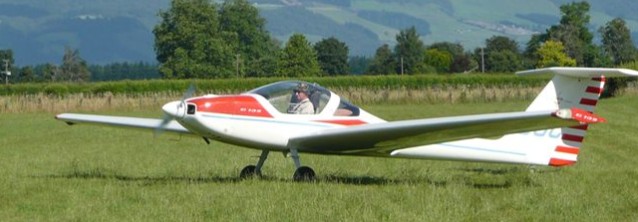
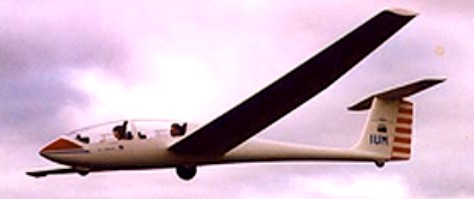
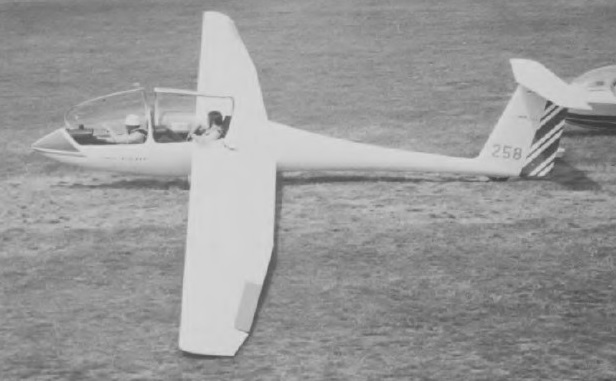
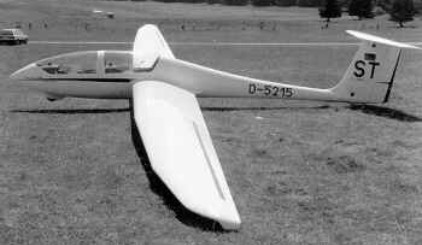
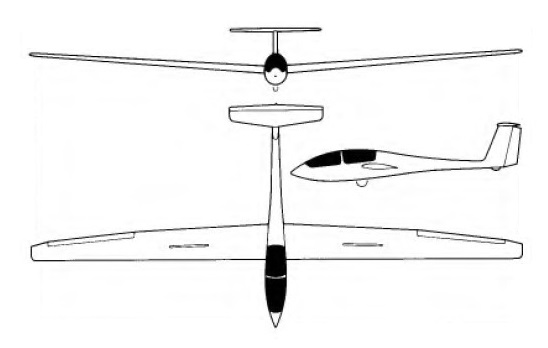
Designed by Burkhart Grob GmbH, the two seat Grob 109 motor glider features side by side seating and fixed tail dragger undercarriage with a steerable tail wheel. The fuselage and wings are made of industrial carbon fibre and glass fibre composites with air brakes. Glass Reinforced Plastic (GRP) is the main structural material with Carbon Fibre for the T-tailplane and rudder. Hard foam sandwiched between fibreglass cloth is used for stringers and formers in the fuselage as well as many other applications.
Grob’s G 109 has the ability to shed its wings, tailplane and elevators to enable it to be neatly packaged for transportation in a suitable road-borne trailer. Each wing has a tapered tongue that extends through the centre section to lock into the opposite wing root rib. The ailerons and air brakes are operated through push-pull control rods. The horizontal tailplane is fitted atop the fin and the quick connect fittings for the elevator and trim tab are fitted. The Limbach L 2000 EB lA engine is rated at 59kw/80hp at 3,400 rpm. The engine has a single Slick magneto, twin Stromberg carbs with “pancake” sport air filters, Motorola alternator and a Hoffman feathering propeller with START (take-off and climb) and CRUISE pitch settings.
The 17.5 Imp gallon fuel tank is behind the cockpit and filled from above the left wing trailing edge. There are GRP skids/tie down points under each wing tip and the engine cooling air exits from fixed louvers in the bottom cowl.
The glassfibre monocoque fuselage has frames and longerons, while the low wing has a glassfibre roving main spar and a glassfibre/epoxy resin sandwich skin; there are aluminium air brakes in the upper wing surfaces. The fixed undercarriage has Scheibe hydraulic brakes on the spatted main wheels, and the tailwheel is steerable. The pilots sit under a one-piece forward-opening canopy and, after some flight testing, this was fitted with a central frame, while changes made to the undercarriage included moving the main wheels further back so as to unload the tailwheel, the main wheel struts being of steel. Wing span was increased from the original 15m (49ft 2.5in) to 54ft, the empty weight was increased and the motor cowling and wing roots were aerodynamically refined.
The prototype, D-KBGF, made its first flight on 14 March 1980, and the Grob G 109 was certified to JAR 22 in March 1980.
The prototype of the G.109B two-seat, side-by-side motorglider first flew in March 1983 as a version of the original G. 109, with increased span. The GROB G109B is a two-seat motor glider with T-type stabilizer, fixed landing gear and airbrakes. It is classified as a TMG (Touring Motor Glider). It was designed by Burkhart Grob GmbH and features side by side seating as well as a classical tail-dragger undercarriage with a steerable tail wheel. The fuselage and wings are made of industrial carbon-fibre and glass-fibre composites. The G109B’s engine was made by Grob (GR 2500) and is an aircooled 4-stroke flat engine. In 1983 a Grob G109B motorglider extended the gliding world altitude record to 6,406m (21,018ft) and the gliding world altitude gain record to 5,042m (16,544ft). Powered by a 75 hp (56 kW) Limbach engine, the G 109B in RAF service is known as the Vigilant T Mk 1 with the self-launching Volunteer Gliding Schools of the ATC and CCF. The Royal Air Force ordered the last 54. Although production of this motorglider ceased in 1986, during 1990, Burkhart Grob Luft-und Raumfahrt was building between 70 and 100 more G.109Bs to meet a number of orders – including from the RAF. A total of 322 of the G109 and 322 of the G109B aircraft were built from 1983 through to 1990.
In 1983 a Grob 109B extended the gliding world altitude record to 6406m / 21,018 ft and the gliding world altitude gain record to 5042 m / 16,544 ft.
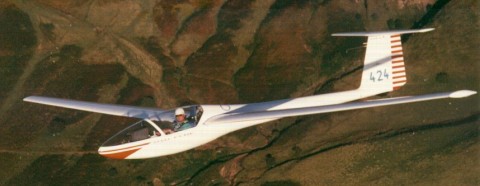
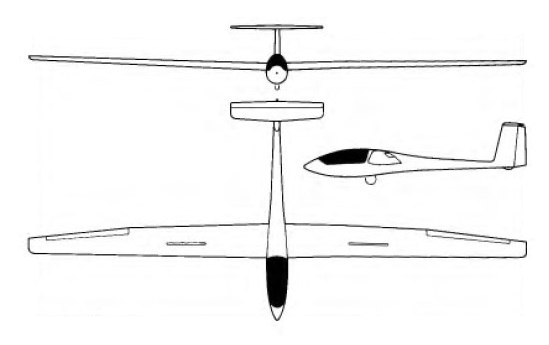
This single-seater Unrestricted 15m Class version of the Astir is generally similar to the Astir CS 77 except for wings of reduced area and different section, which have carbon-fibre spars and are fitted with so called ‘elastic flaps’ in which the gaps between the flap and the wing trailing edge are elastically sealed; these flaps can be deflected upwards to act as air brakes as well as downwards, and the ailerons can be drooped with the flaps.
The Speed Astir has the same cantilever mid-wing and T-tail as the Astir, but with a shorter fin and rudder and constructionally it is the same as its predecessor. The water ballast capacity has been increased to 330 lb.
After 25 of the original Speed Astirs had been built, production switched to the Speed Astir II which first flew on 11 November 1978.
This had a new and slimmer laminar flow fuselage, with carbon-fibre reinforcements in high stress areas, and a two-piece canopy, the rear section of which hinges to open aft. The tail unit is similar to that of the Astir CS but with shorter fin and rudder, and the new tailplane has a sealed elevator hinge line.
The slotless flaps extend half-way along the trailing edges, and the ailerons, which can be deflected in the same way, continue to the wingtips. Mounted on tracks and rollers, the ailerons and flaps articulate with the lower wing surface and can slightly increase the wing area. The wing upper surface features ‘elastic’ strips which form a permanent seal between flap and wing.
Grob G-104 Speed Astir II
In October 1979 the cockpit was lengthened by nearly 8in to accommodate taller pilots, and the Speed Astir IIB has carbon-fibre spars. From the same date the Speed Astir II 17.5, a version with a longer span of 17.5m, was due to become available. Altogether 98 Speed Astir IIs had been built by December 1979 and the type is out of production.
Speed Astir II
G 104 Speed Astir II & IIb Wing span: 15m / 49 ft 2.5 in Wing area: 11.46 sq.m / 123.4 sq.ft Length: 21 ft 11.25 in Height: 4 ft 2 in Empty Weight: 265 kg / 584 lb Payload: 250 kg / 551 lb Gross Weight: 515 kg / 1135 lb Wing Load: 44.94 kg/sq.m / 9.19 lb/sq.ft Water Ballast: 140 kg / 308 lb Max speed:168 mph (smooth air) MinSink: 0.70 m/s / 2.3 fps / 1.36 kt at 47mph L/DMax: 40 95 kph / 52 kt / 60 mph Best glide ratio: 41.5:1 at 74.5 mph Aspect ratio: 19.6 Airfoil: Eppler E 662 Seats: 1 No. Built: 107
Speed Astir II Wing span: 15.0 m / 49 ft 2.5 in Length: 6.60 m / 21 ft 8 in Height: 1.27 m / 4 ft 2 in Wing area: 11.5 sq.m / 124.8 sq ft Wing section: Eppler E660 Aspect ratio: 19.6 Empty weight: 250 kg / 551 lb Max weight: 515 kg / 1,134 lb Water ballast: 180 kg / 397 lb Max wing loading: 45 kg/sq.m / 9.2 lb/sq ft Max speed: 146 kt / 270 km/h Stalling speed: 35 kt / 64 km/h Min sinking speed: 0.57m/sec / 1.87 ft/sec at 40 kt / 75 km/h Best glide ratio: 41.5 at 65 kt / 120 km/h
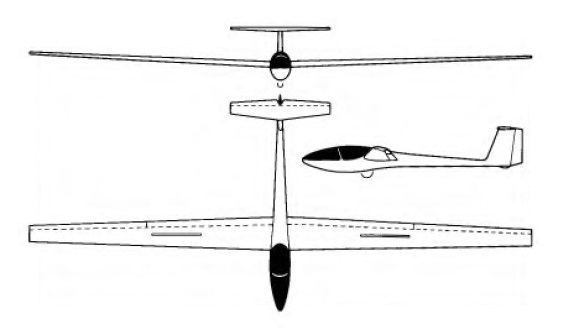
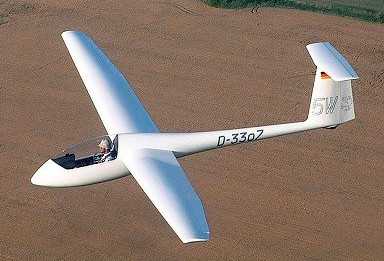
The Twin Astir was a two-seat 1970s development of the Standard Class Astir CS, differing from it principally in having a fuselage lengthened by 9.75 in to accommodate the second seat, and also reduced in depth by 1.5 in; wing span has been increased to 17.5m (57 ft 5 in) and the wings are now swept forward 3° 18′. The gear retracts by folding up to the left and lying horizontally under the rear seat. The 3.3 degree forward wing sweep was replaced by a straight wing with leading edges at right angles to the fuselage centerline early in the production run. Dual controls are provided under the two individual canopies, and the Twin Astir is offered to customers both with and without the basic instruments in the front cockpit and with or without water ballast, of which up to 198 lb can be carried.
The Twin Astir has the same mid wing position and T-tail as its single-seat counterpart, and is of the same glassfibre construction. In contrast to later G 103 models, the Twin Astir has the main wheel ahead of the center of gravity, and does not have a nose wheel. It was offered with a tailskid or an optional tail wheel. The G 103T Twin Astir had a fixed main wheel.
Design of the Twin Astir began in September 1974 and construction of the prototype was commenced in March 1976; this made its first flight on 31 December 1976. By the end of 1978 over 225 Twin Astirs had been delivered; production has now ended. The type is also known as the Twin Astir Trainer when used for this task.
Twin Astir G 103
Formerly the G118, the Twin II is a new tandem two-seater for training and club use to succeed the Twin Astir, from which it differs in having a narrower and more streamlined fuselage, improved cockpit layout and larger canopies, lower-set wings, a fixed monowheel plus a small wheel (likewise semirecessed) under the forward cockpit and a tailwheel, downturned wing tips and reduced empty weight. The same type of elasticated flaps as featured on the Speed Astir are fitted, and the T-tail is similar to the Twin Astir’s. Unlike the latter, no water ballast is carried. The Twin II first flew late in 1979.
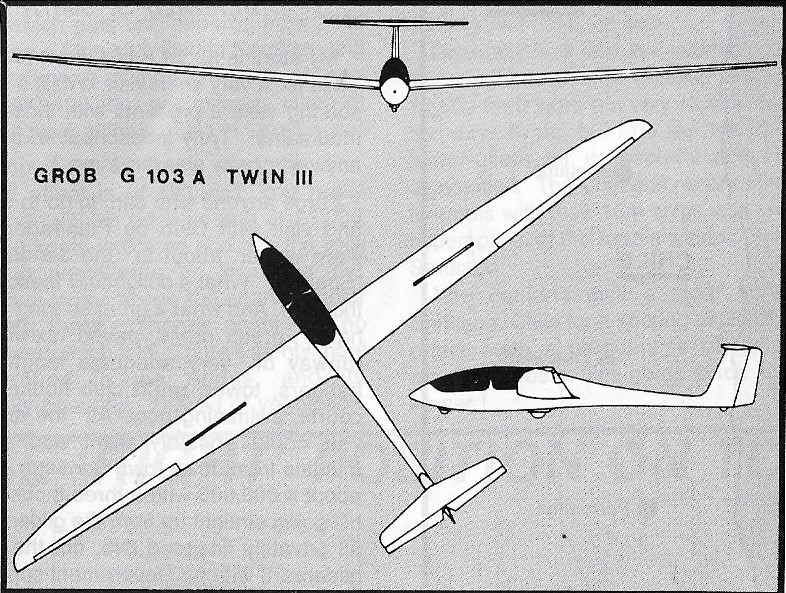
The G-103 A Twin II was the successor of the Twin Astir with a nose wheel and a fixed six-inch main gear fitted behind the center of gravity in a fairing. The main wheel is equipped with a hydraulic brake. Modified ailerons produce a substantially improved roll response. Approach control is by top surface Schemmpp-Hith type airbrakes.
The Twin II won the world Out & Return record for two-seat sailplanes (1000.88 km/ 621.92 miles) flown by Tom Knauff of the U.S. The Twin II Acro is similar to the earlier model, but with strengthened mainspar caps and steel control pushrods which permit greater aerobatic performance. The Royal Air Force acquired 100 Acros (known as the Viking T. MK.1) for its air cadet training program. The G 103 has a FAA approved modification kit for all-hand control for handicapped operation. Air Transport Certified.
G 103 C Twin III
The G 103 C Twin III is a development of the Twin II with a new Discus plan wing of slightly increased span and modified airfoil section. The cockpit has detailed improvements including better ventilation, relocated airbrake levers to give better purchase, and canopies restrained by gas-filled struts. The unpowered sailplane is cleared for aerobatics similar to the Twin II Acro. The self-launching version (Twin III SL), which is non-aerobatic, has an electrically actuated mast-mounted retracting engine and steerable nose wheel. Fuel is stored in a main tank in the fuselage close to the engine, and in an auxiliary tank in the left wing root from which fuel is moved by a transfer pump. The variable pitch propeller has climb and cruise setting.
Twin Astir G 103 Wing span: 17.5 m / 57 ft 3 in Wing area: 17.89 sq.m / 192.6 sq.ft Length: 8.1 m / 26 ft 8.75 in Height: 1.6 m / 5 ft 3 in Empty Weight: 390 kg / 859 lb Payload: 286 kg / 631 lb Gross Weight: 676 kg / 1490 lb Wing Load: 37.79 kg/sq.m / 7.73 lb/sq.ft Water Ballast: 90 kg / 198 lb Aspect ratio: 17.1 Airfoil: Eppler E 603 Max speed: 155 mph / 135 kt / 250 km/h (smooth air) Max aero-tow speed: 105 mph Stalling speed: 40 kt / 74 km/h MinSink: 0.68 m/s / 2.23 fps / 1.32 kt at 56 mph / 40 kt / 75 km/h L/DMax: 38 at 109 kph / 59 kt / 68 mph Seats: 2
Grob G-103 Twin II Span: 57 ft 5 in Length; 26 ft 10 in Height: 8 ft 1 in Wing area: 191.6 sqft Aspect ratio: 17.2 Empty weight: 794 lb Max take-off weight: 1,278 lb Max speed: 155 mph (smooth air) Max aero-tow speed: 105 mph Min sinking speed: 2.1 0 ft/sec at 50 mph Best glide ratio: 37:1 at 65 mph
Twin II and Twin II Acro G 103A Wing span: 17.5m / 57.4ft Wing area: 17.8sq.m / 191.6sq.ft Empty Weight: 368kg / 811lb Payload: 212kg / 468lb Gross Weight: 580kg / 1279lb Wing Load: 32.58kg/sq.m / 6.67lb/sq.ft Water Ballast: 0 L/DMax: 35 105 kph /56 kt / 65 mph MinSink: 0.75 m/s / 2.45 fps / 1.45 kt Aspect ratio: 17.2 Airfoil: Eppler E 603 Seats: 2 No. Built: 549
Twin III Acro and III SL G 103 C Wing span: 18m / 59ft Wing area: 17.5sq.m / 188.4sq.ft Empty Weight: 390kg / 860lb Payload: 210kg / 463lb Gross Weight: 600kg / 1323lb Wing Load: 34.29kg/sq.m / 7.03lb/sq.ft Water Ballast: 0 Aspect ratio: 18.5 Airfoil: Eppler E583 L/DMax: 36 107 kph / 58 kt / 67 mph MinSink: 0.70 m/s / 2.3 fps / 1.36 kt Engine: SL model only Seats: 2 No. Built: 167
The G-102 Astir is a single seat glassfibre Standard Class sailplane, designed by Burkhart Grob. It was the first Grob-designed sailplane.
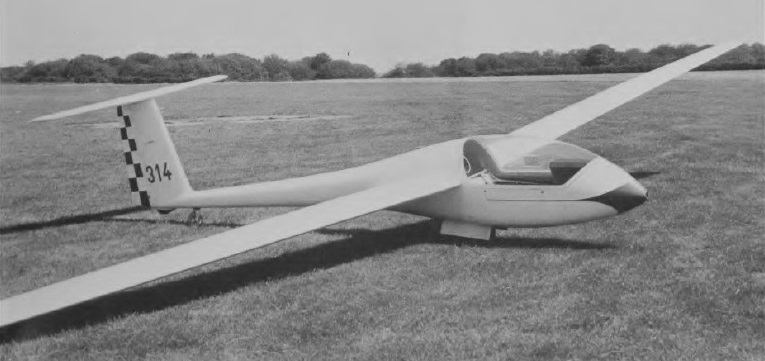
Construction of the prototype Astir CS began in March 1974. It features composite (fiberglass/resin) construction, a large wing area, a T-tail and water ballast. A Standard Class Sailplane, the large wing area gives good low speed handling characteristics. The main gear retracts. It first flew on 19 December 1974 and it went into production in July 1975 and soon proved to be popular, a total of 534 being delivered.
The cantilever mid wings have glassfibre roving main spars and a glassfibre/epoxy resin sandwich skin except for the ailerons, which are of glassfibre sandwich. There are Schempp-Hirth aluminium air brakes in the wing upper surfaces, but no flaps, and up to 220lb of water ballast can be carried in tanks in the wings, being jettisoned via a dump valve in the fuselage. Rigging is carried out without any separate removable parts as the wings and the tailplane are attached by a system of ‘snaplock’ connectors. The glassfibre semi-monocoque fuselage has a towing/launching hook, and the large one-piece cockpit canopy opens sideways to starboard. Construction of the T-tail unit is the same as that of the wings.
This was followed by the Club II with similar fixed gear. A slightly improved version, the CS-77, was introduced in 1977. The CS-77 has a different rudder profile fuselage similar to that of the Speed Astir. The Astir CS 77 made its first flight on 26 March 1977; nearly 400 of the CS 77 and Club Astir had been built by the end of 1978.
The Club Astir II and the Standard Astir II featured the new fuselage of the Speed Astir II. with a one piece canopy, as well as the elasticated flaps of the Speed version and a new wing tip profile.
The Astir CS 77 has a retractable monowheel with an internally-expanding drum brake located ahead of the center of gravity, which folds up behind closed doors, and there is also a rubber-sprung tail wheel. The Astir CSM was a powered version under development in mid-1976 with a 25hp Fichtel & Sachs Wankel KM24 rotating piston engine on a retractable pylon aft of the pilot, driving a two-blade Hoffman tractor propeller. A 6.6 gal fuel tank is fitted.
G-102 Astir
The Astir CS Jeans was of similar configuration to the CS 77, but with fixed wheel, and a tailskid.
The Standard III followed in the early 1980’s reverting to the higher profile fuselage and with reduced empty weight and increased payload. The Club III has a fixed main gear ahead of the center of gravity, and a tailwheel. The Club IIIB has a cockpit almost identical to the front seat of the two-place G 103 Twin II with a fixed main gear aft of the center of gravity and a nosewheel. Air Transport Certified (except Club II which is EXP). One, flown by R.R. Harris of the U.S., won the world absolute altitude record at 14.938 m/ 49.009 ft in 1986.
Production variants were the Club Astir III, IIIB and Standard Astir III, which have a roomier cockpit and reduced empty weight.
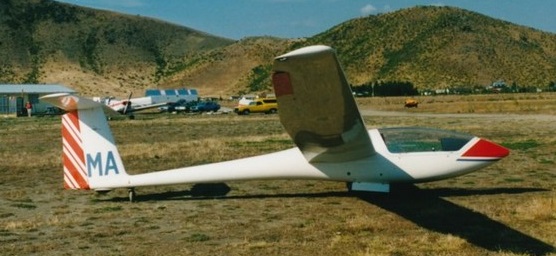
Grob G-102 Astir CS77 ZK-GMA
Grob 102 Wingspan: 15.00 m (49 ft 3 in) Wing area: 12.4 sq.m (133 sq.ft) Water ballast: 50 kg (110 lb) Aspect ratio: 18.2 Empty weight: 255 kg (561 lb) Gross weight: 450 kg (990 lb) Maximum glide ratio: 38 Glide Ratio: 36 at 50 kt (92 km/h) / 5.9 nm (10.97 km) per 1000 ft Sink rate: 141 ft/min (0.71 m/s) at 50 kt Glide Ratio: 34 at 41 kt (76 km/h) / 5.6 nm (10.36 km) per 1000 ft Sink rate: 122 ft/min (0.62 m/s) at 41 kt At 90 knots (166 km/h) Glide Ratio: 23 at 90 kt (166 km/h) / 3.8 nm (7.01 km) per 1000 ft Sink rate: 393 ft/min (2.00 m/s) at 90 kt Stall: (without airbrakes) 32 knots (60 km/h) Stall: (with airbrakes) 35 knots (65 km/h) Never Exceed: 135 knots (250 km/h) In Rough Air: 135 knots (250 km/h) Manoeuvering: 92 knots (170 km/h) On Aerotow: 92 knots (170 km/h) On Winch: 64 knots (120 km/h) Airbrakes: 135 knots (250 km/h) Gear Down: 135 knots (250 km/h) Minimum Payload: 70 kg Maximum Payload: 110 kg Crew: One pilot
Grob G-102 Astir CS77 Span: 49 ft 2.5 in / 15.0 m Length: 21 ft 11.25 in / 6.69 m Height: 4 ft 7 in / 1.4 m Wing area: 133.5 sq.ft / 12.4 sq.m Aspect ratio: 18.2 Wing section: Eppler E603 Empty weight: 595 lb / 270 kg Max weight: 992 lb / 450 kg Water ballast: (220 lb / 100 kg Max wing loading: 7.43 lb/sq ft /36.3 kg/sq.m Max speed: 155 mph / 135 kt / 250 km/h Stalling speed: 32.5 kt / 60 km/h Max aero-tow speed: 105 mph Max rough air speed: 135 kt / 250 km/h Min sinking speed: 0.6 m/sec / 1.97 ft/sec at 47 mph / 40.5 kt / 75 km/h Best glide ratio: 38:1 at 65 mph / 56.5 kt / 105 km/h
1926: Company foundation in Munich Aviation work began in 1971 and has since built many thousands of motorgliders, lightplanes and other aircraft. 1974: Foundation of aircraft plant in Mattsies Burkhart Grob Flugzeugbau GmbH built the Schempp-Hirth Standard Cirrus under licence during 1972-75. Recent aircraft include the G 103 Twin III and G 109 series of gliders/motorgliders, piston-engined G 115 two-seat lightplane (some versions suited to training and aerobatics; first flown November 1985), GF 200 pusher piston-engined and pressurised 4/5-seat lightplane (first flown November 1991, turboprop-powered G-520 Egrett and Strato 1 high-altitude and long-duration research platforms capable of carrying different electronic payloads in 12 separate compartments (first flown June 1987 in G-500 Egrett form), and the most recent G-850 Strato 2C high-altitude and long-duration atmospheric/ stratospheric/ climatic research aircraft with a unique compound propulsion system using two turbocharged piston engines and two gas generators (first flown March 1995).
France Orion four-seat composites monoplane, with pusher propeller aft of tail, produced by Jean Grinvalds 1982. Plans and access to moulds later made available from Club Orion.
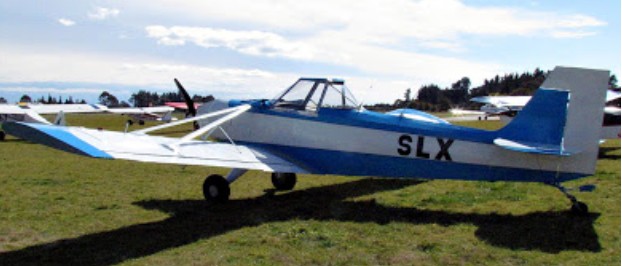
In New Zealand, Gavin Grimmer’s own design, the Grimmer Skylux (c/n 1005-2) is a single seat glider towplane powered by a converted Lexus V 8 engine. It was registered on 10/12/12, at Hastings, New Zealand, as an Amateur Built Aircraft. Gavin has had a lot of experience with automotive engine conversions in homebuilt aircraft with his Maranda ZK-JGR (which has the c/n 1005-1).
The bases of this project go back to an idea presented by Fleet Senior Lieutenant II Golenischev-Kutuzov, who proposed to build a special hovercraft capable of carrying out torpedo attacks on enemy ships. Little by little the idea of the hovercraft was derived from a specialized seaplane. This idea of Golenischev-Kutuzov was presented to PRTV for its implementation.
The plane began to be designed and built in 1916 at the Shchetinin Society. Co – engineered by Mikhail Mikhailovich Shishmariov, who headed the construction department at the Shchetinin factory. Shishmariov developed the entire technical project for the new aircraft, while Grigorovich was in charge only of the general conception of the model and the general direction during the preparation of the plans and technical documentation.
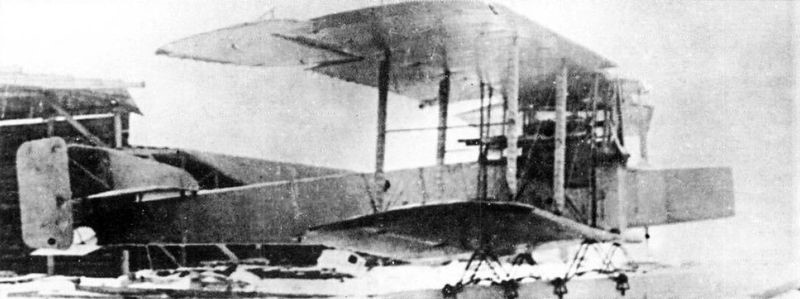
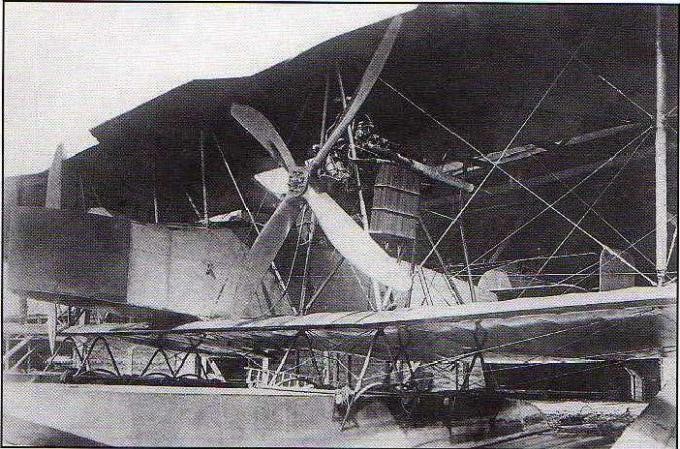
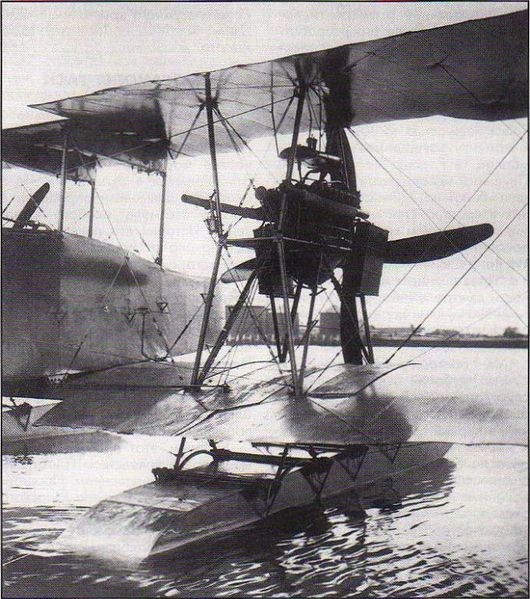
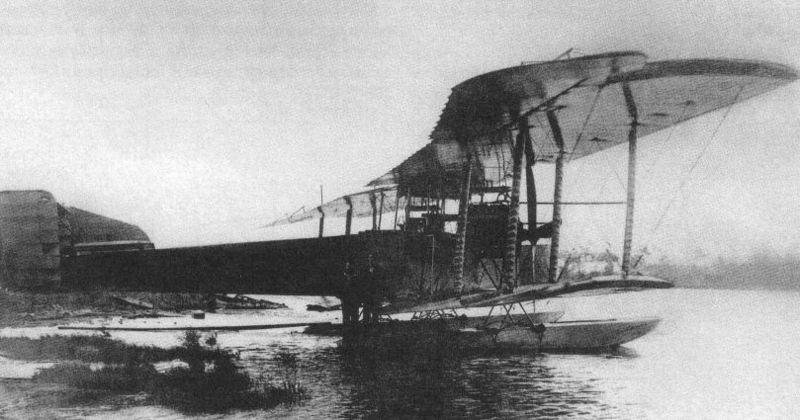
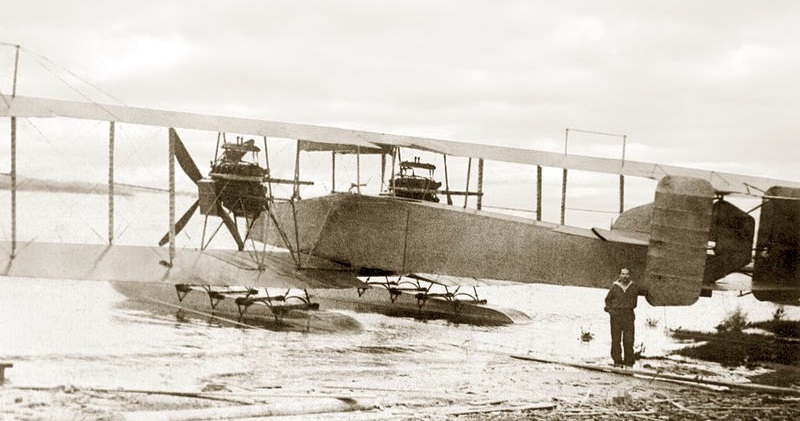
The GASN was designed as a huge twin-engine sesquiplane with a pair of floats and capable of carrying a 450-hp torpedo designed at the “Novi Lessner” factory in Petrograd. The power plant consisted of two 220 hp Renault engines located between both planes on steel tube supports and moving large four-blade propellers.
The initials GASN (Григорович/Шишмарев ГАСН) correspond to G idro Aeroplan S petsialnovo N aznachenia (Special Missions Hydroplane), although the model was also known as SON ( Samoliot O sobovo N aznachenia ) and in either of the two names it was considered to create an aircraft capable of carry and launch a naval torpedo, making this model the world’s first naval torpedo boat. We must add that this subject was considered highly secret, so in fleet documents references to the project are made as Type K.
The floats had a traditional construction similar to that used for the hull of submarines at the time and were fixed to the lower wing by means of uprights in an inverted V made of steel tubes with rubber attachment points.
The fuselage had a rectangular cross section secured by cables and covered with fabric.
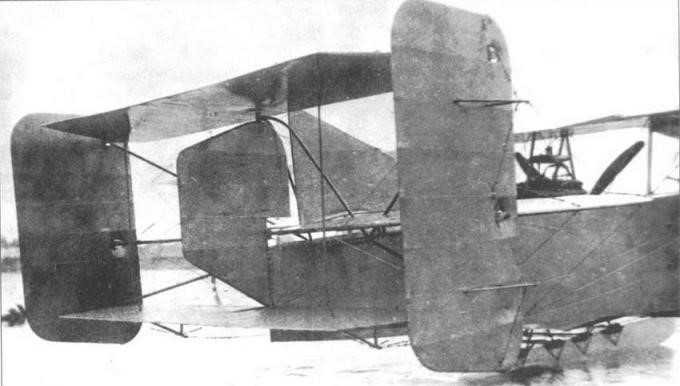
The tail was of the biplane type with three rudders and a small keel on the central empennage.
The large-span wing featured traditional wood-frame construction with fabric covering. The structure had three auxiliary spars to be able to fix the large ailerons. The shape in the plane of the wing was rectangular with a constant chord, but instead of being straight it presented a slight sagging.
The leading edge of the upper wing had indentations in the area of the propellers. The interplane supports were built with steel tubes on which they installed fabric-covered aerodynamic fairings and cable tensioners.
The GASN crew consisted of 3-4 people. In the bow area there was a position reinforced with sheets of plywood for an observer-gunner in charge of defending the forward hemisphere. Behind this position was the cockpit for two pilots and behind the wing box a third position for a gunner.
Even without completing the assembly of the first example, a request for the construction of 10 examples had been sent to Shchetinin.
The first flight of the prototype took place on August 24, 1917 in Petrograd under the leadership of Senior Lieutenant A. Ye. Gruzinov. The first tests showed that the GASN had good behaviour in the water and was easily controllable, but it was necessary to modify the trim and improve the response of the rudders. It was proposed to advance the engines, locate certain weights and increase the wing’s rake angle to advance the center of gravity of the airplane. It was also proposed to increase the surface of the rudders.
The GASN on Krestovsky Island in Saint Petersburg in 1920.
On September 24, during one of the flights, one of the floats was damaged, showing the need to reinforce its structure. After the repairs the plane began to fly again. These flights produced another series of problems, which is why the possibility of the Navy not continuing development and adapting the “Ilya Muromets” bomber or the Jioni twin-tailed plane for this role was considered.
The events of the revolution in Petrograd and the chaotic situation of the first years of the revolution prevented further development. Despite these factors, the GASN and an important set of construction elements of the started series of 10 copies were preserved intact, initially at the Shchetinin factory, which had changed its name to “Gamayún” and later at the “Krasni Liotchik” Factory.
The intention to continue the works would arrive in 1920. In that year Grigorovich traveled to Moscow and received an engineering post in Glavnoavia. His first task consisted of trying to continue the development of the projects stopped in the period 1917-1918. Grigorovich proposed to restore the work on the GASN torpedo bomber, knowing the state of conservation of the prototype and a good number of parts and components to assemble various aircraft of this type.
In November 1920 the GASN was made airworthy and the pilot LI Giks began carrying out the tests. Dmitri Pavolvich was on the shore supervising the process. On the 4th of that month, after long checks on the state of the engines, the mechanic Ozolin told Giks that the plane was ready for flight. The pilot stood in the cockpit and gave instructions to release the seaplane into the water.
During takeoff runs, tabs of fire began to come out of the exhaust pipes of one of the engines. Fearing a fire Giks decided to interrupt the test.
The engines were once more overhauled and the plane was finally cleared to take off, despite the fact that the weather conditions had deteriorated with a southerly wind that made take off difficult and the appearance of floating ice in the bay.
Steering the plane in the direction of Volni Island, Giks turned the plane upwind and took off. The plane was beginning to climb without difficulty when suddenly the engine on the right stopped working. The pilot turned for a landing near Krestovski Island. After gliding, the pilot managed to land and tried to steer the seaplane with a single engine. It was found that the seaplane’s rudder was ineffective and the aircraft only rotated around one axis. Giks directed the mechanic to go to the wing to try to compensate by sinking the float, but that didn’t help either. Waiting for help Giks switched off the engines. The plane began to drift freely.
The crew members removed the cushions from the seats, sprayed them with gasoline and lit them, throwing them near the plane as a signal for help, but help did not appear anyway.
For a whole day the plane drifted. At dawn the crew confirmed that they were about three kilometers from the shore and that the entire plane was surrounded by sheets of ice that made rescue difficult. Finally it was possible to bring the plane to the shore. The analysis of the accident showed that during the preparation of the flight, instead of oil, it was poured into the diluent tank.
With this the development came to an end.
GASN Power plant: 2 x Renault, 220 hp Upper plane wingspan: 28.0 m Wing area: 150.0 m² Length: 14.50m Payload: 1450kg Speed at sea level: 110-120 km/h Accommodation: 3 – 4 Armament: two machine guns Bombload: 450 kg torpedo or 480 kg of bombs
Between 1915 and 1916 at the Shchetinin Factory and based on a Grigorovich project, two “land” models were designed (in Russian Sujoputnie and hence the S in the name as opposed to the M for Morskoi or naval). The objetive of these models was to increase the performance of the Farman biplanes that the factory built under license.
The first of these projects, known as S-1 (Григоровича С-1), was designed as a conventional biplane heavily influenced by Farman’s designs and equipped with a rotary engine. Construction was abandoned before the prototype was finished.
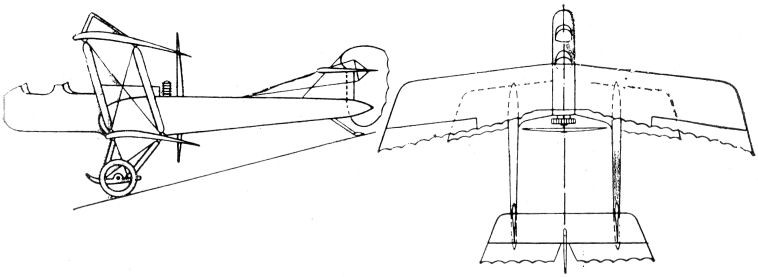
A second model, called S-2, was designed as a two-seater aerial observation and reconnaissance aircraft and generally repeated the successful scheme of the Farman biplanes with a central nacelle and a rotary engine. As a “novelty” it is worth noting the use of double tail cones that ended in individual empennages joined by the stabilizer with the elevators.
The selected powerplant was the 100 hp French Gnôme Monosoupape.
The entire construction was made of wood, covered with fabric. The wings had an Eifel-36 profile and were characterized by a large difference in span between both planes and the use of parallel uprights with cable tensioners.
The S-2 was built and its assembly was completed in January 1916. During flight tests, conducted by pilot Ya. I. Siedov, an accident occurred and the plane was not restored as it was considered that there was no point in trying to improve the outdated Farman designs