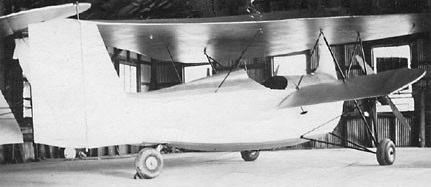
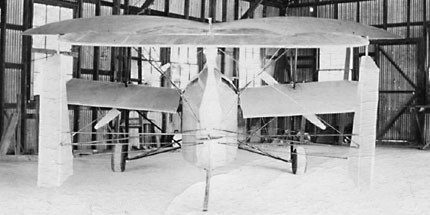
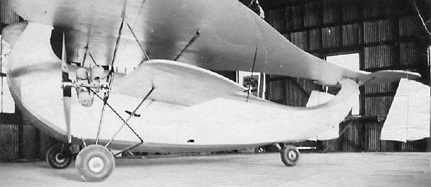
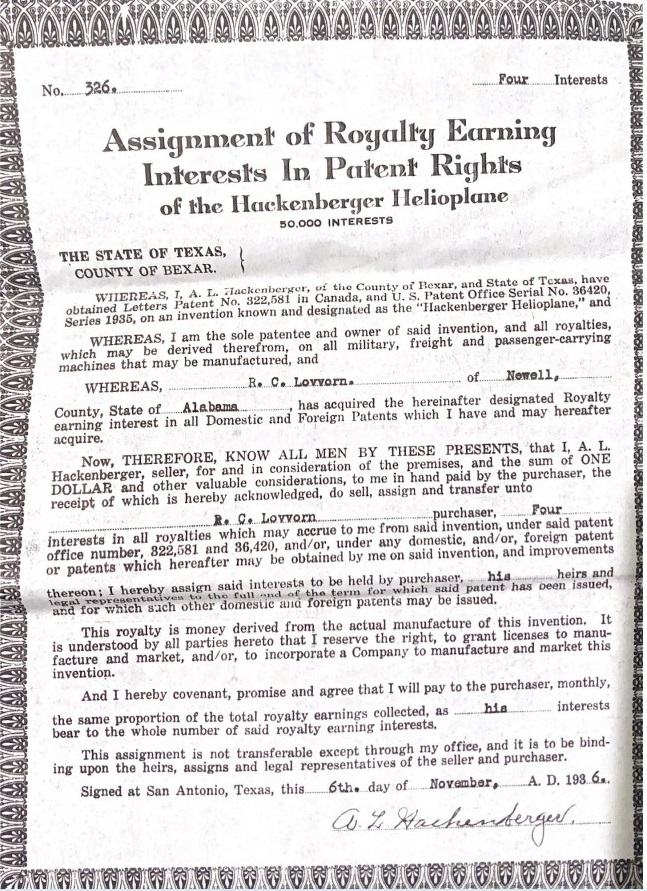
The Hackenberger 1A is an evolution of the model H. Similar in its design, but larger and more streamlined.
Built in 1935, the single place 1A extremites of the elevator had twin stabilizer/rudders.
Those rudders were actually braced onto the rear of the fuselage and only a single strut balanced the elevator above the stabilizers. The fuselage curved upwards at both ends, connecting to the leading and trailing edges of the parasol. Somehow the angle of the elevator was varied at its joining with the parasol/fuselage.
Registered N13974 c/n 2, power was two 20hp Irwin Meteormotors, changed to 40hp Continentals in 1938.
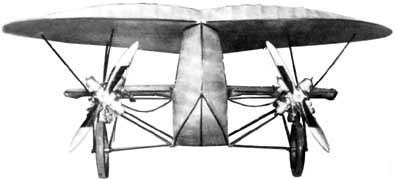
A 1930 twin-engine flying pancake-type with heart-shaped parasol wing built by A L. Hackenberger. The Hackenberger H, or Helioplane, was powered by two 4-cyl “Scroggies”.
The aircraft was registered NX18966 c/n 5H-1 (as H) as a single seater.
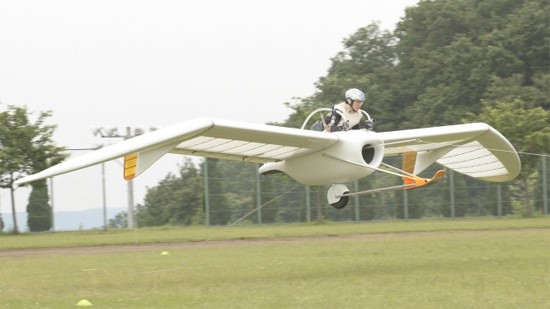
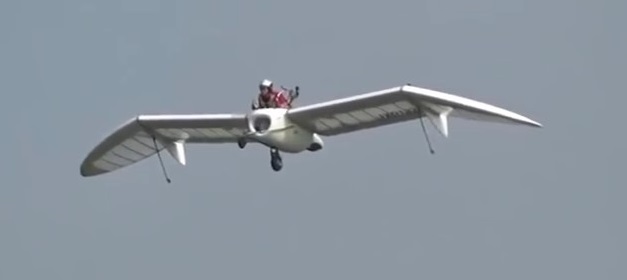
Designed by Satoru Shinohe, the OpenSky M-02 glider/jet-powered motor glider is based on the ‘Mehve’ glider seen in the 1984 anime film, directed by Hayao Miyazaki, Nausicaä of the Valley of the Wind. In the film, Nausicaa takes flight uses the Mehve – the name taken from the German “Möwe”, meaning ‘gull’ – to survey a toxic wasteland.
The M-02J is the work of Kazuhiko Hachiya, who has been working to produce a pilotable version of the aircraft since 2014. Like the animated version, Hachiya’s craft is built around a small jet engine, which is used to achieve take off, climb for a duration of 10 minutes, and attain gliding altitude.
Hachiya’s Mehve, called the OpenSky, has been through several versions since 2003. The original version was radio-controlled, but Hachiya himself took to the sky on OpenSky 3.0. It was this model he planned to show to the public.
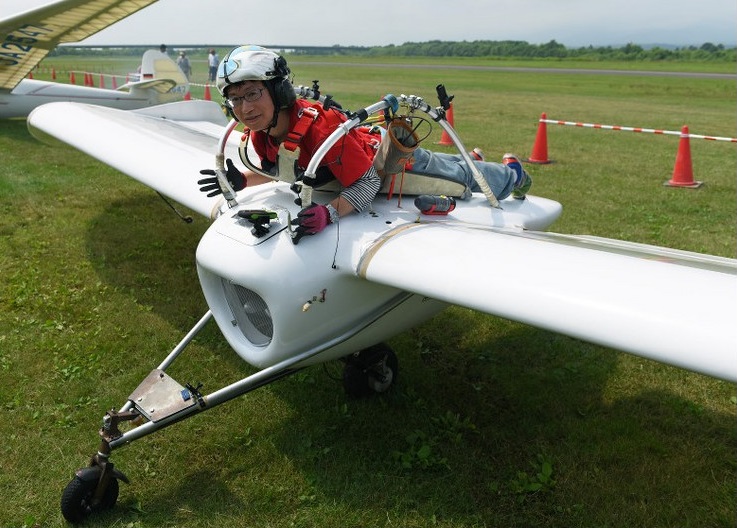
The craft boasts a 963cm wingspan and a 267cm fuselage. Like in the film, the pilot lies flat against the top pf the vehicle, and steers by shifting their weight around.
As of June 2006, two aircraft prototypes had been constructed, and one has successfully completed a series of 10 unpowered test flights where it flew 98 meters and achieved an altitude of 4 meters after being tow-launched by a tensed elastic cable. The project is led by artist Kazuhiko Hachiya and design by Satoru Shinohe and manufactured by Aircraft Olympos.
The Jet engine installed version, M-02J, had public demonstration flight in June 2016 at Takikawa, Hokkaido. Hachiya – a pilot and artist, who conducted the flight in a helmet decorated with wings – hoped to improve stabilisation for future efforts.
Variants:
Möwe 1/2 (メーヴェ1/2) — sub-scale, radio-controlled development aircraft
M-01 — unpowered development aircraft
M-02 a total of 2 airframes of M-02 were built, 1 for preliminary gliding practice and 1 for installing Jet engine with no intention to mass-production.
M-02J (14 June 2007) Modified M-02 airframe has had a Jet engine installed. (14 April 2010) Vehicle M-02 has undergone high speed taxi tests at Fukusima Sky Park runway, in order to evaluate stability and acceleration. More details of the jet engine assembly are available, and the engine has a considerable separation from the walls of the engine pod, in order to permit better cooling and prevent the wood and composite airframe from encountering an excessive fire risk.
M-02 Engine: 1 × (undisclosed engine), 40 kg (88 lbf) Wingspan: 9.636 m (31.61 ft) Wing area: 12.2 m² (131.3 sq ft) Aspect ratio: 3.74 Airfoil: high forward camber, reflexed Mean aerodynamic chord: 1.287 m (4.22 ft) Length: 2.083 m (6.83 ft) Height: 1.057 m (3.47 ft) Empty weight: 50 kg (110 lb) Useful load: 50 kg (110 lb) Loaded weight: 105 kg (231 lb) Max. takeoff weight: 115 kg (253 lb) Fuel capacity: 10 L (planned) Never exceed speed: 200 km/h (124 mph) Maximum speed: 120 km/h (75 mph) Cruise speed: (projected) 50–90 km/h (31–56 mph) Stall speed: 36 km/h (23 mph) Wing loading: 8.6 kg/sq.m (0.0122 lb/sq.in) Thrust/weight: 0.36 Seats: 1
Front Control Stick, Activated Electric Hydraulic Pump for the Pre-rotator & Electric Pitch Trim, Electric Rotor Brake, Dual Contols, Adjustable Front Seat, and a Rear Control Stick. Aluminum Seat Tank Standard Equipment – Altimeter, Air Speed, Compass, Engine Tachometer, Oil Pressure, Water Temperature, Voltmeter, Hour Meter, Main Wheel Brakes, Tall Tail, & Seat Belts. The complete kit unassembled cost in 2010 US$16,500. Assembled and tested, 2010 US$18,000.
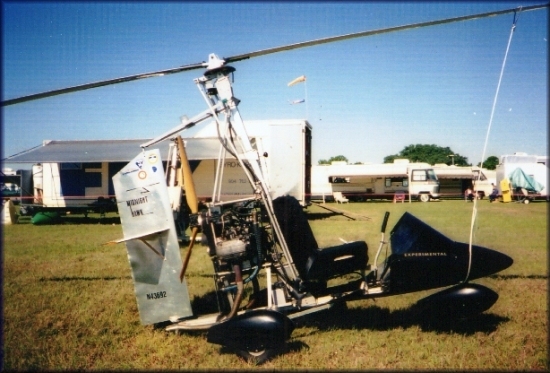
Mosquito Hawk And Midnight Hawk Gyro-Kopp-Ters can be purchased by kit or assembled and tested. Kit Mosquito Hawk 2001: $6500 Complete kit price: $7,500 in 2009.
Assembled Mosquito Hawk 2001: $7500
Single-seat open-frame autogyro Engines: EA-81 or EA-82 Propeller: 52″ X 26″ Fixed Pitch Rotor Blades: 25′ X 7″ Dragon Wings Specifications: Min Speed 25 mph Cruise 50 mph Top Speed 80 mph Empty Weight 410 lbs Useful Load 275 lbs Width 4’11” Height 7’11” Length 10’2″ Frame of bolted 2X2 aluminum and angle, tall tail. Complete kit available, also engines, gauges, reduction drive, t-shirt.
Gyro-Kopp-Ters can be purchased by kit or assembled and tested. Midnight Hawk has front fairing and wheel pants. Frame of bolted 2X2 aluminum and angle, tall tail. Complete kit available, also engines, gauges, reduction drive, t-shirt. Free info package.
Kit Midnight Hawk 2001: $8500 Kit: $9,500 in 2009. Kit: $18,500 in Augusr 2020
Assembled Midnight Hawk 2001: $9500
Single-seat partially-enclosed autogyro Engine: EA-82, 90 hp @ 4800 RPM, Single Point fuel injected with 1.75:1 reduction, Gates Polychain Propeller: Precision 60″, 3-blade, ground adjustable, Rotax bolt pattern Rotor Blades: 26′ X 7″ Dragon Wings Specifications: Min Speed 25 mph Cruise 50+ mph Top Speed 80+ mph Empty Weight 510 lbs Useful Load 300 lbs Width 4’11” Height 7’11” Length 10’2′
Engine: Subaru EA-82, 90HP @ 5200 RPM, Single Point Fuel Injected, Electric Start. Reduction Drive: 1.67:1, Gates Polychain Belt Rotor Blades: Dragon Wings, 25′ x 7″ (Rotor blade length may vary based on pilot weight) Prop: Powerfin 60″, 3-Blade Composite, Ground Adjustable, Rotax Bolt Pattern. Static Thrust: 450 LBS @ 4800 RPM, Prop Adjusted for Engine Peak Performance Length: 12′ 4″ Width: 5′ 5″ Height: 8′ 2″ Empty Weight: 510 lb Useful Load 300 lb Climb: 600 FPM Minimum Speed: 25 MPH Cruise Speed: 50+ MPH Top Speed: 85+ MPH Never Exceed Speed: 120 MPH Fuel Capacity: Max 16 Gallons; Burns: 4.0 GPH (Aluminum Seat Tank) Standard Equipment: Hydraulic Pre-Rotator, Altimeter, Air Speed, Compass, Oil Pressure, WaterTemperature, Voltmeter, Hour Meter, Tachometer, Main Wheel Brakes, Trim Tab, & Tall Tail