Helve Classic

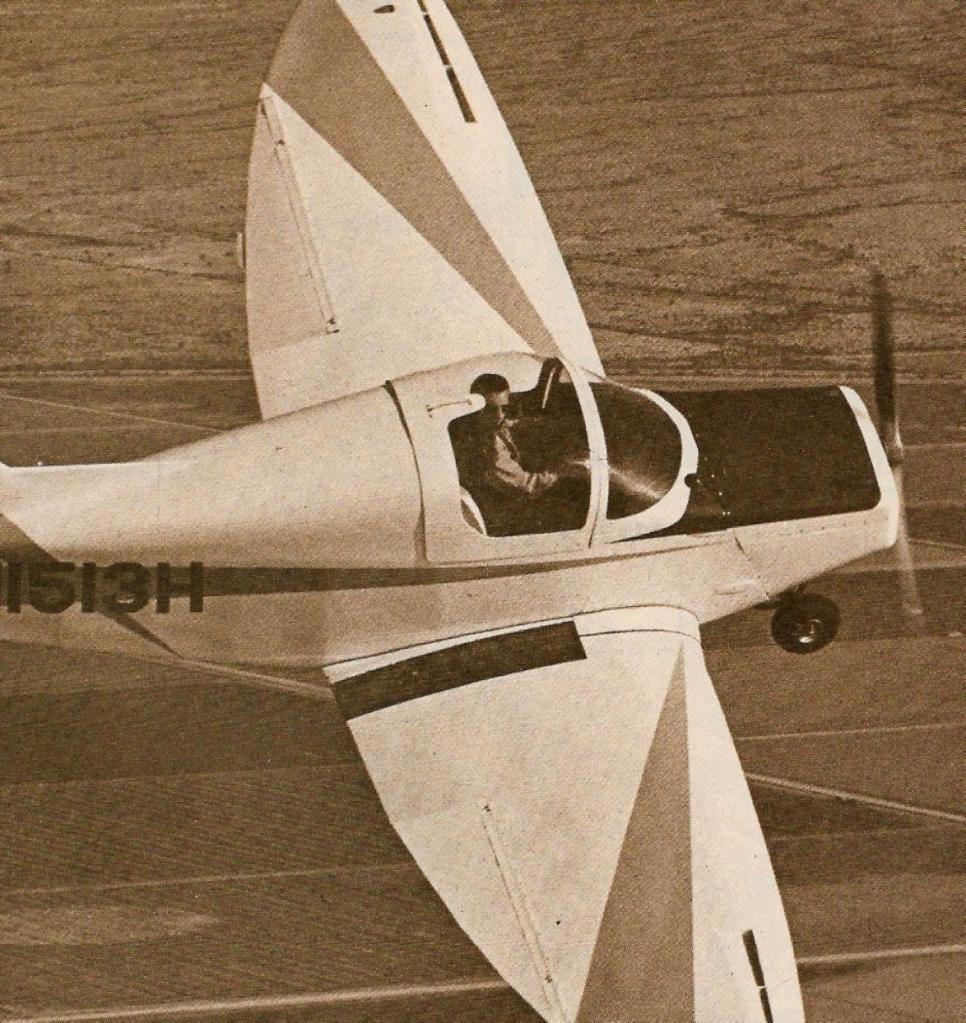
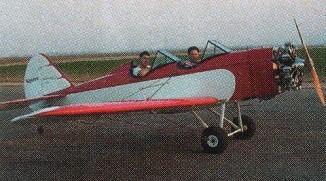
An LSA kit or plans built plane circa 2010. The kit, including engine, cost US$15,995.

Cruise: 105 mph
Stall: 45 mph
Range: 290 sm
Rate of climb: 1000 fpm
Takeoff dist: 400 ft
Landing dist: 500 ft
Engine: Rotec R2800, 110 hp
HP range: 85-150
Fuel capacity: 16 USG
Empty weight: 800 lb
Gross weight: 1320 lb
Length: 22 ft
Wing span: 28 ft
Wing area: 120 sq.ft
Cockpit width: 27 in
Landing gear: tailwheel

Helton Lark 95

When Culver went out of business in 1946 the rights were bought by Superior Aircraft Co and then sold to California Aero Co of Tracy. They revived the model in 1966 as the Helton Lark 95 with a 90hp Continental C 90 16. Dimensions were similar to the Cadet, though the overall height was 6ft 10in due to the tricycle gear.

There is some doubt as to how many Larks were built, but seventeen constructor’s numbers were allotted and not all may have been completed. The last to be built, c/n 9517, was N5017J.

Further developments on the drone theme followed the PQ 8 and the NR D was built as the PQ 14A and PQ 14B for USAAF use and as the TD2CA for the Navy (which used a few TDCs from PQ 8 contracts). About 2,570 were built for use by the two services. Basic power was the 150hp Franklin O 300 11.

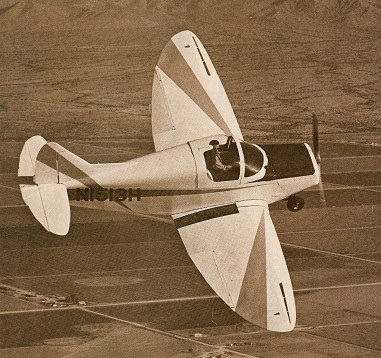
Post war limited type certificate LTC 28 was granted in December 1947 and a few were registered, there being eleven listed in the 1959 statistical survey, and one, N4744N was still in existence fairly recently There was a strong similarity with the Cadet, but the fuselage was lengthened and a larger fin and rudder fitted to counter increased power, plus tricycle undercarriage.

Helsinki University of Technology PIK-19 Muhinu / PIK Pik-19

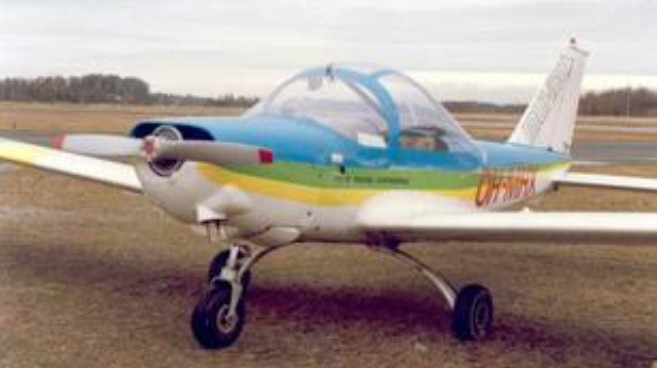
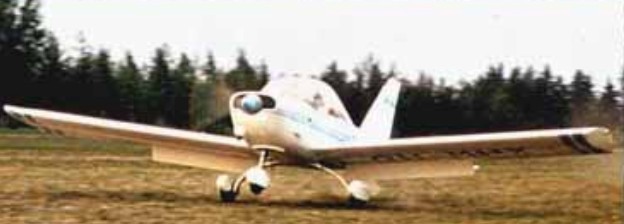
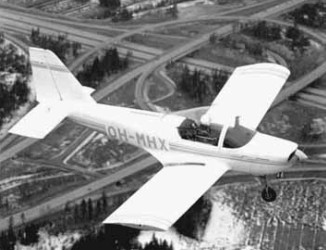
The PIK-19 Muhinu was a light aircraft developed in Finland in the early 1970s for use as a glider tug and flight trainer. It was a low-wing cantilever monoplane of conventional configuration, with an enclosed cockpit and fixed, tricycle undercarriage. Its construction was of composite materials throughout, a novel approach at the time. Some unique design details were used in the construction of the Muhinu -e.g., the wing was made of one-meter (3 ft) panels, thus avoiding big female molds for the wing. Both the fuselage and wing were made of glass-epoxy- honeycomb sandwich. The main landing gear was also made of fiberglass-epoxy by the filament winding process.

When the PIK-19 flew for the first time in 1972, it was only the fourth aircraft in the world made of these materials.

The project was undertaken as a joint venture by the Finnish government and the Helsinki University of Technology. Its “PIK” designation belongs to a sequence of designations applied to the aircraft designed and built by the university’s gliding club, Polyteknikkojen Ilmailukerho, although this was not a project by the club. Design work commenced in 1969 under the leadership of Jukka Tervamäki, Ilkka Rantasalo and Pekka Tammi and the prototype flew on 26 March 1972. This project involved many skilled young engineers and graduates from the University: Ilkka Rantasalo, Pekka Tammi, Hannu Korhonen, Markku Hiedanpää, Erkki Haapanen, Olof Lagerkrantz, etc.

In 1978 the Pik-19 was re-powered with a 180 hp Lycoming 0-360 engine.

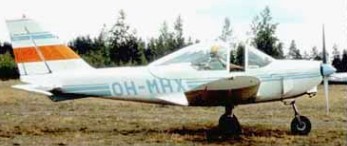
Plans for production in series were never realised, and the single prototype (OH-MHX) was the only example ever built. Over the next 21 years, it accumulated 5217 hours of flying time and some 40,000 glider tows. It was destroyed in a crash in June 1994 when the engine failed at low altitude.

Gallery

Engine: 1 × Lycoming O-320-B2BC, 120 kW (160 hp)
Propellers: 2-bladed McCauley1A-175/GM-8241 for towing and 1C-172/MGM-7657 for other tasks, Both fixed pitch, metal blades.
Length: 6.90 m (22 ft 8 in)
Wingspan: 10.00 m (32 ft 10 in)
Height: 2.60 m (8 ft 6 in)
Wing area: 14.00 sq.m (150.7 sq ft)
Aspect ratio: 7.14
Airfoil: NACA 632415
Empty weight: 560 kg (1,235 lb) equipped
Max takeoff weight: 840 kg (1,852 lb)
Fuel capacity: 150 L (33 Imp gal; 40 US gal)
Maximum speed: 240 km/h (149 mph; 130 kn)
Cruising speed: 220 km/h (137 mph; 119 kn) maximum, 75% power
Stall speed: 83 km/h (52 mph; 45 kn) flaps down
Never exceed speed: 310 km/h (193 mph; 167 kn)
Range: 950 km (590 mi; 513 nmi) maximum fuel, no reserves, 65% power
Rate of climb: 7.00 m/s (1,378 ft/min)
Wing loading: 60.0 kg/sq.m (12.3 lb/sq ft)
Take-off to 15 m (50 ft): 240 m (787 ft)
Landing from 15 m (50 ft): 220 m (722 ft
Crew: Two
Helmy MT-7 / VPM S-2

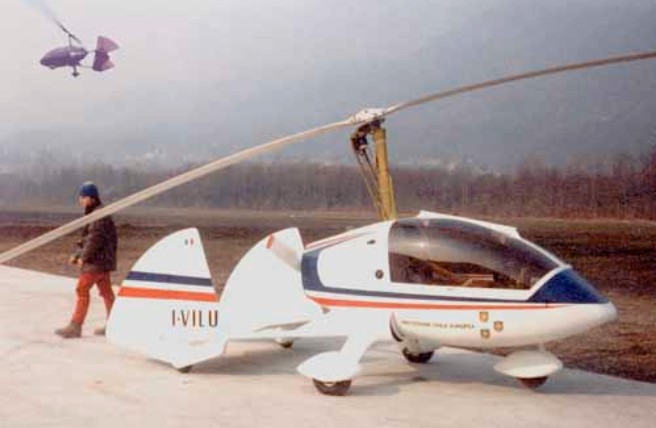
In 1980 Vittorio Magni of Italy had designed a new, two-seat autogyro with a 150 hp Lycoming engine. The machine got the project name MT-7 (Magni-Tervamaki). Vittorio later redesignated the machine as VPM S-2.

The calculations and general design blueprints were delivered to Vittorio, who was responsible for all the detail design. He also built the machine together with his son. The machine was completed in 1985, and it also flew well.

Some years later the machine was lost in an accident in France. The control rods had been bent in road transport by a truck.

Magni continued the development of autogyros and has designed a series of gyros which all seem to have the rotor head and blade design of JT-5 and MT-7.

Helmut Groβklaus Silent Racer

Silent Racer Chronos 12

The Silent Racer was originally marketed as a single seater with retractable undercarriage and folding prop. The later Silent Racer Chronos 12 two seater had a fixed undercarriage and prop, but retained the integral fairing.

Silent Racer Chronos 12
Empty weight: 185 kg
Wing span: 9.87 m
Wing area: 12.9 sq.m
Fuel capacity: 65 lt
Certification: Vz
Engine: Hirth 2704, 50 hp
MAUW: 450 kg
Seats: 2
Max speed: 140 kph
Cruise speed: 100 kph
Minimum speed: 65 kph
Climb rate: 2.5 m/s
Fuel consumption: 10 lt/hr
Price (1998): 19 900 DM

Helite Tsunami

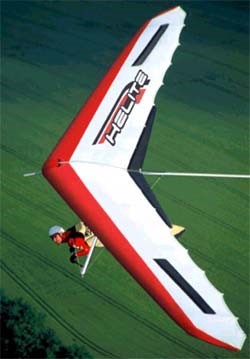
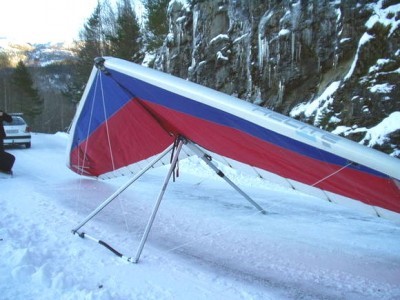
The 2003 Tsunami is an evolution of the Topsecret made by Lamouette for advanced pilots. Very straightforward transition from flex wing and easy to take off and land. Rigging is quick and easy, so is de-rigging.

A wing that didn’t receive commercial success for other reasons.

Wing area: 13.8 m²
Wing span: 12.87 m
Aspect ratio: 12
Hang glider weight: 35 kg
Minimum pilot weight: 55 kg
Maximum pilot weight: 105 kg
Packed length short: 5.6 m
Nose angle: 127°