HKS

HKS Co., Ltd. (株式会社エッチ・ケー・エス Kabushiki-gaisha Ecchi Kē Esu) was formed in 1973 by Hiroyuki Hasegawa, a former engineer for Yamaha Motor Company, and his partner Goichi Kitagawa, while the start up capital was supplied by Sigma Automotive (hence the name HKS). The company began operations by tuning gasoline-powered engines in a dairy-farming shed at the foot of Mount Fuji in Japan. Their goal was to design and build high performance engines and components that major OE (original equipment) manufacturers could not or would not produce. In July 1974, Hasegawa engineered and built the first commercialized turbocharger kit for passenger automobiles; since then developing turbocharger upgrades and bolt-on turbocharger kits that subsequently became the core business of HKS. Hasegawa also created the first commercially available electronic turbo timer and boost controller.

HKS is a publicly traded company with an international sales and distribution network spanning Asia, Europe, Australia and the Americas to support its customer base. The main manufacturing and R&D facility is at the foot of Mount Fuji. Subsidiary companies have been established in California (HKS USA), Cambridgeshire, England (HKS Europe), and Bangkok, Thailand (HKS Thailand). HKS USA, established in 1982, shut down operations in 2011 electing instead to use wholesale distributors to handle their supply chain in the USA. Motovicity Distribution was selected as the North American warehouse for HKS where a full inventory of products is maintained for HKS’ North American customers.

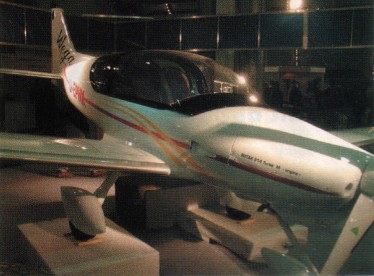
The company also produces the HKS 700E aircraft engine, under its subsidiary, HKS Aviation. And also produced a 600cc Speedway cycle engine.

1998:
226 Kamijde Fujinomiya-shi
418-0103 Shizuoka-ken
Japan
Highster

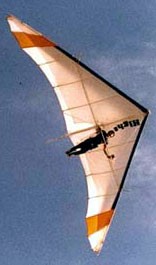
The Highster was built in Oakland Ca. by Mike Giles 1978. It was a 90% double surface glider with triple deflexers (wing truss wires). These wires where adjusted with out turnbuckles. They where adjusted by turning over the outer tangs which would tighten the winding of one cable and lossen the other. For increased strenth, the cross bar was inner sleeved with out pop rivets. Later versions had a floating cross bar. Highster used Manta hardware and was considered the flex wing side of Manta when Manta swithched over to making the Fledge. Highster was named after a fork lift because it was a “Heavy Lifter”.

The most common size was 190 square feet. During peak demand for the Highster, some where manufactured in Sacramento, Ca.

It was easy to set up, with all the Manta hardware, good static balance, but a bit stiff to fly. The floating cross bar helped the handling. Glide was poor for a 90% double surface glider due to the triple set of wires out in front of the leading edge. The glider could be easliy spun and this was an accepted thermalling practice when the pilot was tired.

Hirth LO-150

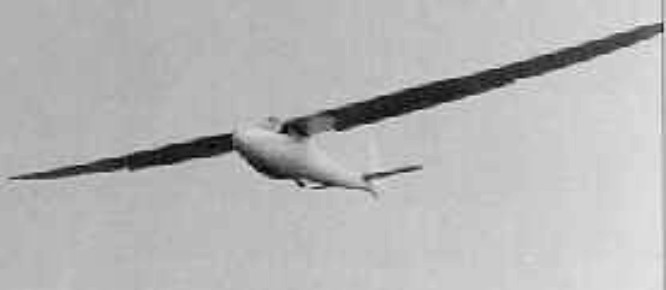
A development of the 10m straight wing LO-100 aerobatic glider, the LO-150 features a two- piece, plywood covered, single spar wing and uses flaps for glidepath control. Designed by Alfred Vogt, the fuselage is a wooden monocoque with a cantilever tail. Early models had a skid and jettisonable dolly instead of a fixed main wheel. A.J. Smith won the 1961 Nationals in a LO-150 and Harold Jensen flew another 700 km/ 435 miles to win the 1962 Barringer Trophy.

Wing span: 15 m / 49.2 ft
Wing area: 10.9 sq.m /117 sq.ft
Aspect ratio: 20.6
Airfoil: Clark Y
Empty Weight: 100 kg / 441 lb
Payload: 110 kg / 242 lb
Gross Weight: 310 kg / 683 lb
Wing Load: 28.44 kg/sq.m /5.8 lb/sq.ft
L/DMax: 34 105 kph / 57 kt / 65 mph
MinSink: 0.68 m/s / 2.2 fps / 1.24 kt
No. Built: 15
Seats: 1

Hirth, Wolf

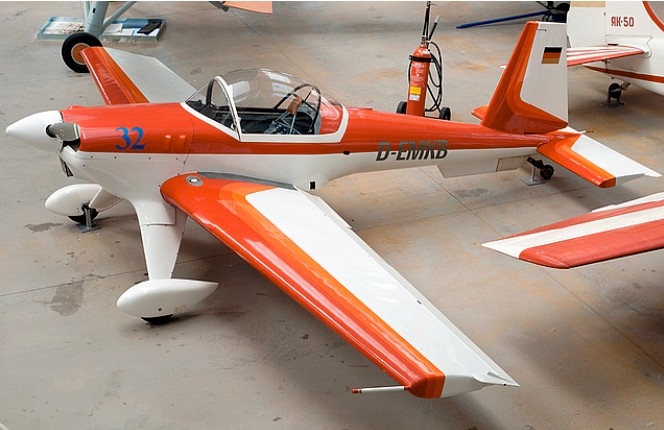
Wolf Hirth GmbH, a prewar manufacturer of sailplanes, made wooden subassemblies for Messerschmitt projects during the Second World War, including a high-speed glider-trainer for Me 163 Komet pilots, and components for the Me 321 and Me 323 Gigants. The re-established company, owned largely by Messerschmitt-Bölkow-Blohm, built Arnold Wagner’s Acrostar competition aerobatic aircraft in small numbers, and supported the Bolkow Bo 107, 207, 208, and 209 lightplanes.

Hirth Eindecker

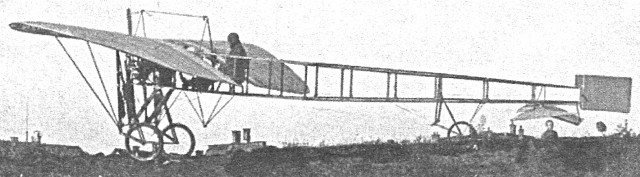
Hellmuth Hirth worked for a short time as a foreman at aviation pioneer August Euler in Darmstadt. However, since Euler had difficulties with his Voisin-type flying machine, Hirth returned to Stuttgart to build himself a Blériot machine in 1909. Because of the too weak engine, this did not go beyond small aerial jumps, causing Hirth to go to Vienna to fly the Etrich Taube together with Illner.