Icaro 2000

ICARO 2000, the first hang-glider factory in Europe, was founded in 1973 by Alfio Caronti & Peter Skaarup.

Alfio received his first glider from Bill Moyes, during a water-ski competition in 1969. He was the first Hang glider pilot in Europe, who took off from a mountain on the 4th November 1971. The glider used by Alfio Caronti was a kingpostless glider with square tubes.

Peter Skaarup was the technician of the factory and together they manufactured hang-gliders under the license of the Australian firm Moyes.

In 1981 Franco Garzia & Gianni Hotz, became the new owners of ICARO 2000 and continued to make Moyes hang-gliders. Their first glider was the Meteor 170.

Since 1983 ICARO has been using only tubes in Perunal (aluminium alloy 7075 for aeronautics) from the Swiss manufacturer Alumenziken.

Until 1991 ICARO sold, in Europe, more then 3,000 gliders (Moyes models like Mega II, Missile, Mars, GT, GTR and XS).

In 1992 Manfred Ruhmer becomes part of the staff and ICARO started to develop original designs with its own sailmakers and workshop with 20 employees and a 1,200+ sq m building. The development of new models was carried out by Manfred Ruhmer, one of the world’s best pilots and Franco Garzia, a former Italian champion. Since this time all ICARO hang glider models are certified by the DHV (Germany).

In 1992 the first ICARO’s original design appeared: the Brazil, followed in 1994 by the Laminar. With this wing ICARO started to reach competition results 1994 European Championship in Laragne (France): Manfred Ruhmer is 2nd 1995 World Championship in Ager (Spain): Manfred Ruhmer is 2nd. In 1995 the first prototype of kingpostless gliders appears.

In 1996 ICARO presented its first prototype of topless glider and with this wing, Manfred reached 2nd place in the European Championship in Hungary.

Since 1998 ICARO has its own landing area (more then 50.000sq m) with Club House, Camping facilities and Store of accessories for Sport Aviation: these facilities are located at Lago Maggiore (northern Italy), facing a mountain ideal for flying.

1998: Via Verdi, I-21038 Sangiano (VA), Italy.

In 1998 ICARO forms an agreement with Felix -A.I.R., by which ICARO will make keels and sails for the Atos (ICARO has made 550 so far) and obtains the option to sell the Atos in certain markets.

ICARO introduces on the paragliders’ scenery the Cyber, a new basic-intermediate wing, with the latest technology and construction methods and highest safety DHV 1. Also in 2000, on October 25th, ICARO reviewed its agreement with Felix; ICARO takes over the worldwide production and distribution of the Atos from the home base in Sangiano. Felix works exclusively on the development of the design.

After having sold more than 400 Atos in two years, a period in which ICARO took an active part in the manufacturing of sails, A-frames and keels, it was decided that henceforth A.I.R. would devote 100% to the development and technical support, whereas ICARO would become in charge of the production and distribution of the Atos.

In September 2001 Christian Ciech starts working for Icaro 2000 in the development team, and after six months comes into the scenery the new Icaro 2000’s rigid wing: the Stratos.
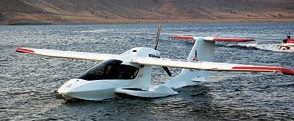
Icon A5

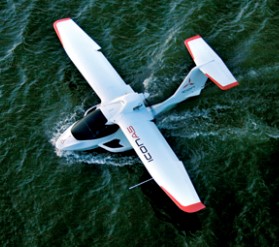
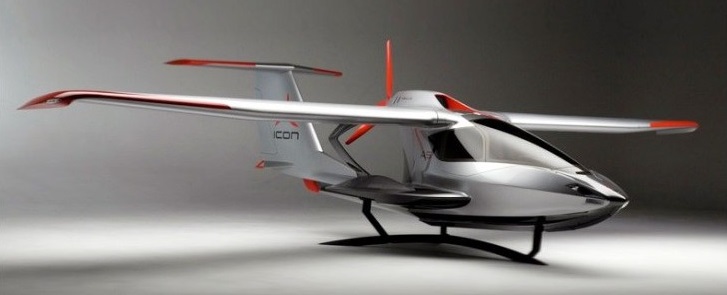
The Icon A5 amphibious LSA was unveiled at a very rock ’n’ roll premiere in Los Angeles in June 2008.

The ICON A5 has two seats and is made mostly of composite materials, with a high wing, T-tail, pusher prop, and tricycle landing gear. It is powered by a Rotax 912 flat-four engine, with hybrid air-water cooling and providing 75 kW (100 HP). All landing gear assemblies have single wheels, the nose gear hinging forward, the main gear retracting into sponsons that also provide flotation stability. Seating is side-by-side, the canopy hinging forward for access. The wings fold back along the rear of the aircraft for ease in handling.

Designed for recreation rather than transport and first flown in July 2008, the A5 is a sport plane available in 2008 for US$139,000.

The A5 received a lot of publicity but no production machine had flown yet.

The long-delayed amphibian could at last be nearing production after wrestling with overweight issues for years. In 2012 the manufacturer awaited FAA’s final decision on whether that agency would allow an additional 250 pounds beyond the LSA amphibious spec of 1,430 pounds or 1,680 pounds MTOW.

Icon’s stated grounds for exception: The extra weight is needed for its spin-resistant wing design. The ruling would only benefit the A5, not any other amphib or float plane.

Engine: Rotax 912, 75 kW
Wing span: 10.4m / 34 ft
Length: 6.7 m / 22 ft
Empty weight: 450 kg / 1,000 lb
Max speed: 192 kph
Stall: 80 kph

ICA BRASOV IS-30 / CNIAR IS-30

Built in Romania, a 17m sailplane with flaps, semi-retractable undercarriage and all metal construction. First year built 1975. No. of aircraft built to 6/30/81 450. 1982 Standard price $24,900.

Seats: 2.
Max useful load: 506 lb.
Length: 26.5 ft.
Height: 5.9 ft.
Wing loading: 6.5 lbs/sq.ft.
Wing span: 26.8 ft.
Minimum sink: 136 fpm at 43 kts.
Wing area: 196.3 sq.ft.
Max speed: 143 kts.
Wing aspect ratio: 15.8
Stalling speed: 38 kts.
Max wt: 1,300 lb.
Glide ratio (L/D): 36:1 at 54 kts.
Standard empty wt: 794 lb.
Rough-air airspeed: 124 kts.

ICA BRASOV IS-8

This two-seater design was intended to fill the roles of training, solo flying and aerobactic flying and first flew in prototype form on 14 September 1960, duly going into service with the Romanian gliding clubs.
The IS-8 is of very similar plywood- and fabric covered wooden construction to the IS-3, and is characterised by cantilever shoulder wings with a distinctive 7° forward sweep at the 25% chord line,and with a rectangular centre section and tapered outer panels. The wings are all-wood single spar structures with a leading edge torsion box, 70% fabric covered, and the slotted wooden ailerons are plywood- and fabric-covered. The fuselage is a metal and plywood monocoque and has an air brake on each side of it, instead of in the more usual wing mounted position. The wooden tail unit is also ply and fabric-covered and there is an unsprung nonretractable monowheel without a brake, and a rubber-mounted skid. The pilot and pupil sit in tandem under a moulded plastic canopy.

IS-8
Span: 43 ft 9.5 in
Length: 24 ft 1.5 in
Wing area: 166.3 sqft
Aspect ratio: 11.5
Empty weight: 463 lb
Max weight: 882 lb
Max speed: 112 mph (in smooth air)
Max aero-tow speed: 74.5 mph
Min sinking speed: 3.22 ft/sec at 43.5 mph
Best glide ratio: 23:1 at 53 mph

ICA BRASOV IS-3

The ICA-Brasov or Intreprinderea de Constructii Aeronautice Brasov (Aircraft Construction Factory Brasov) is responsible for all sailplane development and production in Romania, and their principal designer is Professor losif Silimon, who has created a long series of sailplanes that are widely used in the national clubs; these are prefixed by the letters ‘IS’ which form the Professor’s initials.

Among the earliest of these was the IS-3D training or Standard Class single-seater, the prototype of which, the IS-3 Traian Vuia, was built in 1956.

This design has a pointed top to the fin and rudder and is fitted with a drogue parachute for deployment in short-field landings. It is of conventional wooden construction with plywood and fabric covering, the single-spar high cantilever wings being plywood-covered from the leading edge to the spar and fabric covered aft of the spar to the trailing edge; there are air brakes in the wing upper and lower surfaces and wing tip ‘salmon’ fairings are fitted. The all-wood fuselage is of oval cross-section and the fin and tailplane are plywood covered, the elevators and rudder being fabric covered; there is a Flettner-type trim tab in the starboard elevator. The landing gear consists of a fixed monowheel forward of the eg with a pneumatic tyre and mechanical brake, and a short nose skid and tailskid. The pilot sits under a large sideways hinging cockpit canopy.

The IS-3D continued in production at Brasov until the early 1970s, being widely used in the Romanian clubs.

IS-3D
Span: 50 ft 3.5 in
Length: 23 ft 9.5 in
Height: 5 ft 3 in
Wing area: 164.6 sqft
Aspect ratio: 15.30
Empty weight: 485 lb
Max weight: 754 lb
Max speed: 150 mph
Max aero-tow speed: 75 mph
Min sinking speed: 2.23 ft/sec at 40 mph
Best glide ratio: 28:1 at 46 mph

Ibis Aircraft Magic GS-700

Option 1; kit completely assembled; Option. 2 ready to fly. 2009 Price: US$25900

Engine: Rotax 912 ULS
Propeller: Bolly 3 Blade ground adjustable
Empty Weight: 320 kg / 705 lbs
MTOW Weight: 569 kg / 1254 lbs
Fuel cap: 140 lt
Stall: 42 kt / 48 mph / 77 kmh
Cruise: 100 kt / 115 mph / 185 kmh
VNE: 113 kt / 130 mph / 209 kmh
Fuel burn: 16 lt/hr
Climb Ratio: 1000 ft/min / 5 m/s
Take-off distance (50ft obstacle): 262 ft / 80 m
Landing distance (50ft obstacle): 328 ft / 100 m

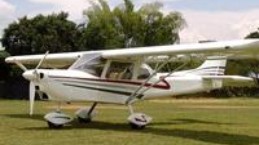
Ibis Aircraft GS240

The IBIS GS240 is an all-metal, high-wing aircraft manufactured by the IBIS Aircraft company in Colombia. The GS240 has specifications and performance that are within the limitations of the new Light Sport Aircraft category. The GS240 is available for the U.S. market as a “quick-build kit” that will still meet the requirements of the FAA “51% rule” and allow the GS 240 to be put into the Experimental (Amateur-Built) Category. The GS240 kit is intended to provide as short a building time as reasonably possible for the builder, with all difficult aspects of fabrication and assembly having been done at the factory to minimize complications and delay for the first-time builder.
The IBIS GS-240 has specifications and performance that allow it to fit within the new “Light Sport Aircraft” rules. With the GS240 in this category, it can be flown by existing Private and Recreational pilots (without them having to maintain an FAA Medical Certificate), but also by people holding the new “Sport Pilot” license.

Stall: 35 kt / 40 mph / 64 kmh
Cruise: 104 kt / 120 mph / 193 kmh
VNE: 122 kt / 140 mph / 225 kmh
Empty Weight: 341 kg / 752 lbs
MTOW Weight: 599 kg / 1320 lbs
Climb Ratio: 700 ft/min / 4 m/s
Glide Ratio: 14:1
Take-off distance (50ft obstacle): 300 ft / 91 m