Irwin 79 / X

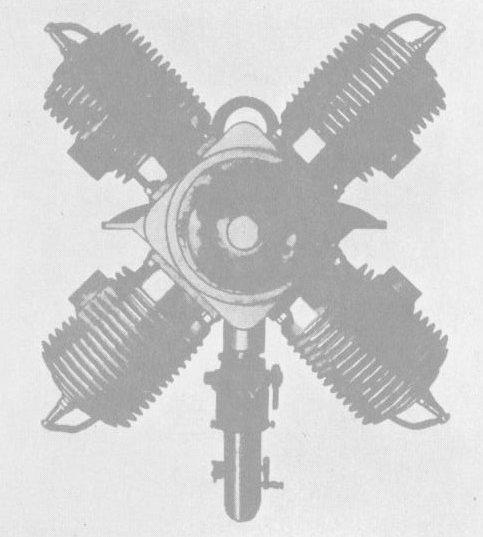
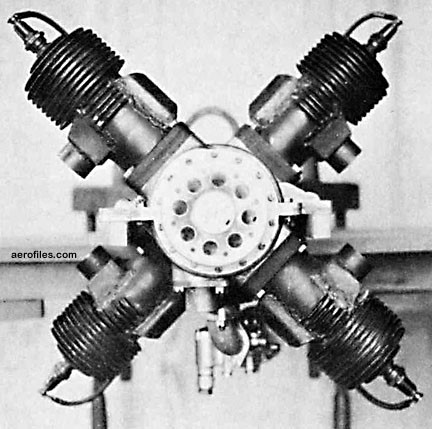
The Irwin 79 cylinders are composd of a nickel cast iron barrel over which an aluminium alloy cylinder is shrunk and doweled. Valve seats are of cast iron shrunk and doweled in place. The crankcase assembly is composed of two major castings of aluminium alloy.

Irwin Prototype

The crankshaft is made from special het treated chrome nickel seel, machined and ground from a solid billet weighing approximately 90 lb, while the finished shaft weighs 6 1/5 lb.

Alloy steel heat treated connecting rods of H section are fitted with bronze gudgeon pin bushings. Pistons of aluminium alloy are fitted with full floating nickel steel hollow gudgeon pins. The main bearings are ball race typ, lubricated under pressure.

Accessories available at extra cost were a propeller and tachometer.

Type: 4 cylinder air cooled radial
Commercial Rating: 20 hp at 1730 rpm
Displacement: 79 cu.in
Compression ratio: 4.9-1
Bore: 2 7/8 in
Stroke: 2 3/4 in
Length: 18 in
Diameter: 23 in
Weight: 58 lb
Fuel consumption: not more than .50 lb/hp/hr
Oil consumption: not more than .06 lb/hp/hr
Lubrication: Jet spray cylinder walls an pressure to main bearings
Ignition: 1 Bosch
Carburation: 1 Winfield
Spark plugs: 1 per cylinder Robert Bosch
Price: $625

Irvine Aerocycloid

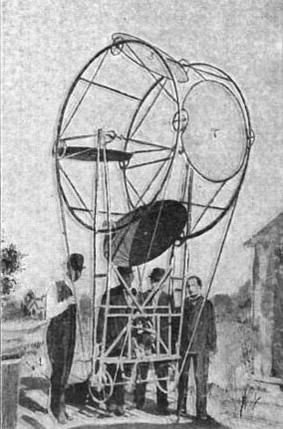
The photograph shows a quarter-size model of the Irvine Aerocycloid of 1908/1909 which was able to lift the weight of ninety pounds. The San Francisco based John C. Irvine (president of the Pacific Aero Club) had worked three years on the machine, which was driven by a 3 hp electrical engine, that could lift 30 pounds for each hp. Records do not show that the full-sized model was ever built, probably due to problems with financing of the project. The specialty of the machine was of course the two upright wheel construction, driven by cables, which carried four “propellers” which pivoted between the wheel and furnished the lifting power. With the propellers in the proper position the force would be upright, lifting the machine vertically. Pivoting the propellers at an angle would obtain a forward motion.

Irkut MC-21

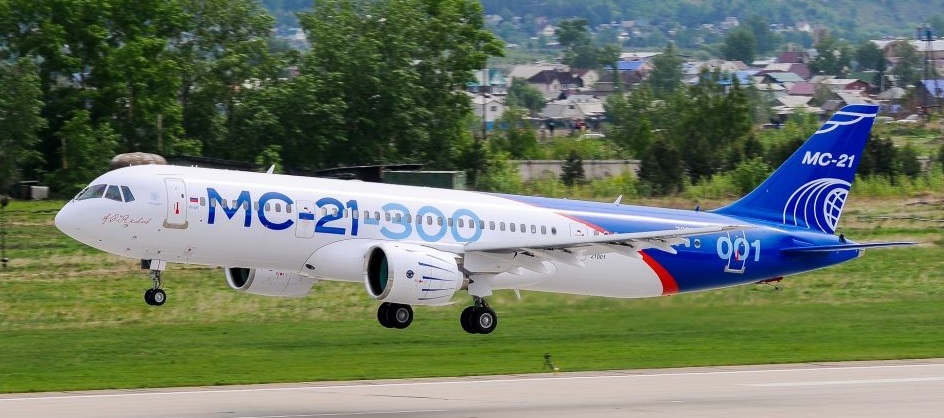
A project of Russian civil aviation was the new-generation narrow-body mid-range airliner MC-21-300. United Aircraft Corporation continued to work on the new civilian aircraft from the very beginning of the COVID-19 pandemic.

IT solutions have made it possible to transfer employees of engineering and corporate centres to remote workstations. The factories also did not stop, shift work was organised to support continuous production processes, on which the implementation of the SDO and MTC programs depended. Strict control over the health status of employees has been introduced, disinfection of territories and premises of UAC enterprises was carried out.

Due to the COVID-19 pandemic, there was a short break, but work resumed. As part of the certification program according to Russian and European standards MC-21-300, a large complex of ground, flight, bench tests was underway.

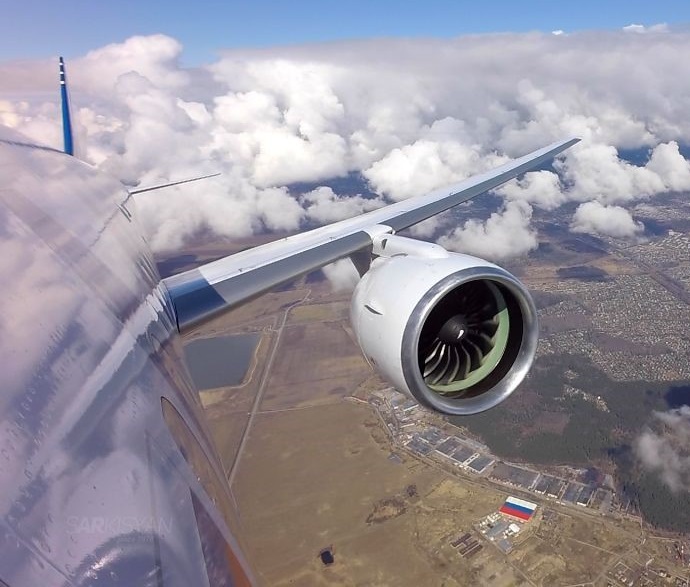
The MC-21-300 airliner is being created in a wide cooperation of Rostec enterprises. More than half of avionics was developed by the holdings of the State Corporation, and titanium and composite parts are supplied. The first MC-21-300 aircraft is under construction at the Irkutsk Aviation Plant, which will undergo flight tests with PD-14 engines developed by the United Engine Corporation.

Test flights of the MC-21-300 continued. The program involves four experimental aircraft. Two of them are equipped with passenger cabins. In the case, modifications are being checked with a two-class layout for 163 seats and an ultra-dense layout for 211 seats. Flights are performed by crews of the Irkut Corporation and joint crews: pilots of the corporation and representatives of certification centres. The pace of flight tests is increasing. Often, two aircraft are simultaneously in flight.

During flights, the testing equipment allows recording of about 40 thousand parameters. By 2021 the MC-21-300 was tested for resistance to flutter and at extreme angles of attack. The main engines and auxiliary power unit were tested, including during take-off and landing with a failed engine. The minimum separation speed of the aircraft is determined. The operability of the instrumental landing system and equipment for flying in the dark was confirmed.

The production of MC-21-300 aircraft for delivery to customers had begun by 2021. The start of mass production was allowed by the positive results of flight and ground tests, which proved the correctness of the basic design and technological solutions.
Irkut A-002

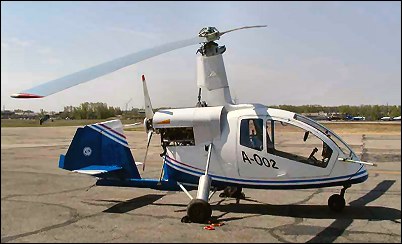
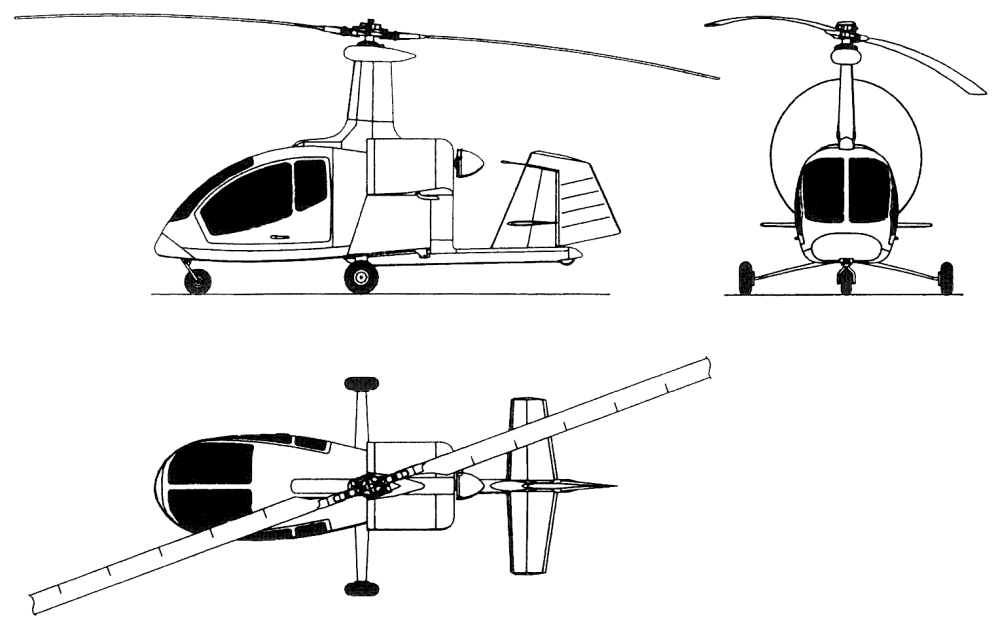
In October 2000, IAPO announced branching out into design and manufacture of its own products in the form of the prototype A-002 autogyro. A three-seat autogyro, an experimental version had been tested in 1998. The almost complete prototype was shown at Moscow in August 2001. First flight 21 April 2002.
The A-003 conforms to FAR Pt 27 and Russian AP-27. A streamlined, cabin autogyro, with pusher propeller, single, sweptback fin with large rudder, and broad track landing gear. It is equipped for engine-driven pre-rotation of rotor.
All flying controls are manual, an all-moving tailplane mounted at one-third of fin height, with a horn- and mass-balanced rudder. Generally built of metal, the rudder and elevator of composites. The landing gear is a tricycle type; fixed. Cantilever-spring mainwheels; rubber-in-compression shock-absorber on nosewheel. Mainwheel tyres 400×150; nose 100×125. Hydraulic disc brakes on mainwheels. Safety tail skid on prototype; auxiliary tailwheel on production version.
The prototype has one 157kW Teledyne Continental IO-320 flat-six driving a fixed-pitch, two-blade propeller. Alternative engines of 134 to 157kW and three-blade propeller can be installed. Subaru conversions were under consideration in April 2003.
The A-002 has two front seats, side by side, with dual controls, and a single rear seat. Upward-hinged doors are on each side. Heating and ventilation are provided.

A-002
Rotor diameter: 9.80m
Length of fuselage: 4.98m
Height, rotor removed: 3.17m
Propeller diameter: 1.90m
Max take-off weight: 800kg
Overload take-off weight: 850kg
Empty weight: 500kg
Max level speed: 210km/h
Min flying speed: 40km/h
Max rate of climb at sea level: 150m/min
Service ceiling: 3000m
Take-off run (jump start): 0m
Take-off run (normal start): 40m
Range with 200kg payload 500km
Endurance 6h

Irkut

Founded on 28 March 1932 and commissioned on 24 August 1934, as GAZ 125 (becoming GAZ 39 in 1941), Irkut has built some 6,500 aircraft of 16 types from Antonov, Ilyushin, MiG, Petlyakov, Sukhoi, Tupolev and Yakovlev bureaux and supplied them to 21 countries. In recent years, it has manufactured MiG-23UB trainers (1970-85); 165 kits for Indian-assembled MiG-27MLs; Su-27UB trainers (from 1986); and was responsible for producing the Su-30 fighter (since 1991) and Beriev Be-200 amphibian. Su-30 customers include China and India; offers Su-27UBM and Su-30KN upgrades to older aircraft. Series manufacture of the Yak-112 lightplane has been abandoned, although company has been allocated prospective manufacture of the Ilyushin/HAL IL-214 twin-jet transport. Also undertakes Su-30 upgrades.
Irkut is a member of AVPK Sukhoi. Known from April 1989 until 2002 as IAPO (Irkutsk Aviation Industrial Association), having become a joint stock company in October 1992, but on 19 December 2002: shareholders approved a company change of name to Irkut NPK, IAPO becoming a subsidiary.

IRGC Shahed 274 / X-5

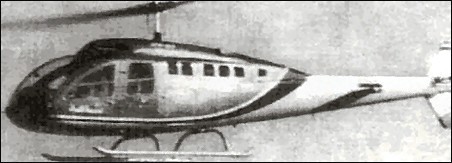
Development of the Shahed 274 light utility helicopter is reported to have been undertaken by the Pasdaran, or Revolutionary Guards. The organisation may also be responsible for a new transport helicopter.

Sponsored (as X-5) by the Institute ol Industrial Research and Development of the IRGC; reportedly due to have made its first flight in 1997.

Power is from one 313kW Roils-Royce 250-C20B turboshaft. Featuring a two-blade main and tail rotors; fully enclosed cabin and tailboom; upper and lower vertical fins. Landing gear is a twin-skid type. Seats for five persons including pilot. Forward-opening crew door and passenger door each side; baggage door aft of latter on port side.

First aircraft (71-832) handed over to IRGC 16 September 1999. International public debut, in Tehran, 30 December 2000. At least two more (74-001 and -002) in service by end of 2001. Further public appearance in air show on Kish Island, October/ November 2002.

A total of 20 (some sources suggest 30) were reportedly planned to be built by end of 2004.

Shahed 274
Engine: 1 x Rolls-Royce 250-C20B, 313kW
Main rotor diameter: 10m
Fuselage length: 9m
Height overall: 3m
Max. take-off weight: 1500kg
Empty weight: 1000kg
Max. level speed: 180km/h
Service ceiling: 5200m
Max range 600km

Ireland Meteor / Curtiss-Ireland Meteor

The Ireland Meteor is often refered to as the Curtiss-Ireland Meteor.

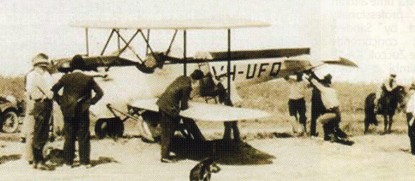
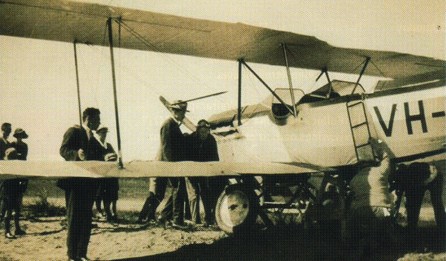
The Ireland Meteor, often referred to as the Curtiss-Ireland Meteor, was created by G. Sumner Ireland, who worked as a salesman for the Curtiss company.

With wings in production and the supply of Curtiss Oriole fuselages ended, G. Sunner Ireland created a new fuselage. Seating was for four in tandem open cockpits, each seating two side by side.
The Meteor never received a US Doc Type Certificate.
At least eight Meteors were built.

Engine: OX-5

Ireland Comet

G. S. Ireland founded his company to manufacture an aircraft known as the Ireland Comet, which combined surplus-Curtiss Oriole fuselages with new wings and tail unit.
With the closure of the Curtiss Oriole production line, a number of completed fuselages became available and Ireland was able to obtain them. With help from friends in the Curtiss design office new wings were created. These had a deeper rib section, and single bay bracing. Following initial flights in 1925, some 40 of these Comets are thought to have been produced before the fuselages ran out.