JetCat P200

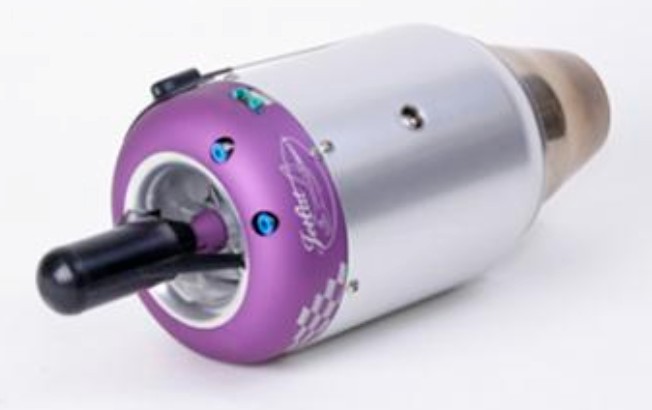
JetCat P200-SX

Jetcat produces a family of jet engines composed of several models whose powers between 2 and 23 pounds of thrust.

The JetCat P200 was put on the market in 2010.

Applications:
ACLA Sirocket
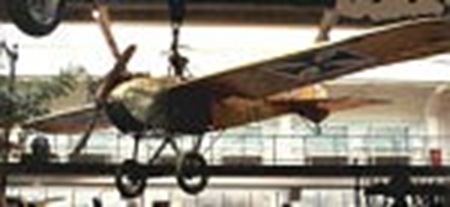
Colomban Cri-Cri

P200-SX
Thrust: 23 kg at 112 000 rpm
Weight: 2.370 kg
Diameter: 130 mm
Length: 350 mm
Engine speed: 33000-113000 rpm
EGT: 670° C
Specific consumption Full Throttle: 750 ml / min
Fuel: Kerosene, Jet A1

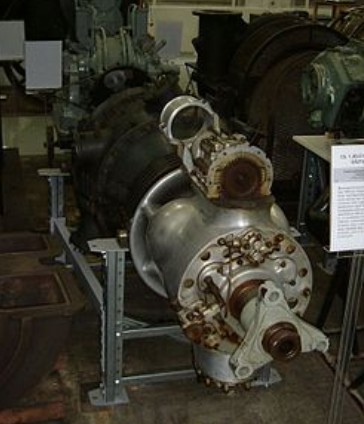
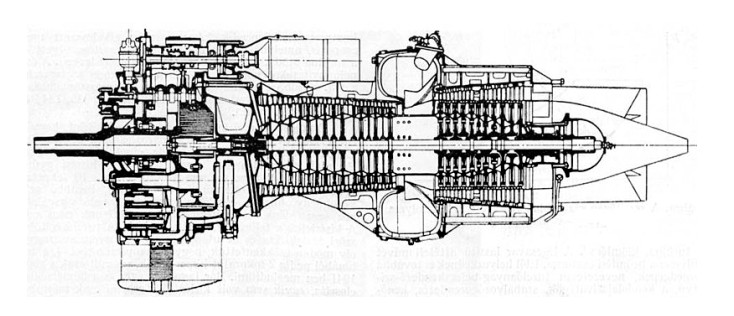
Jendrassik Cs-1

Cs-1

The Jendrassik Cs-1 was the world’s first working turboprop engine. It was designed by Hungarian engineer György Jendrassik in 1937, and was intended to power a Hungarian twin-engine heavy fighter, the RMI-1.

The engine was designed by György Jendrassik in 1937 and built at Ganz Works. It ran for the first time in 1940, but problems with combustion stability limited the power to 400 hp, from the design goal of 1,000 hp. There was nothing inherently wrong with the design, however, and continued work on the flame cans should have allowed it to develop to full power.

All work on the engine was later stopped when the Hungarian Air Force selected the Messerschmitt Me 210 for the heavy fighter role, and the engine factory converted over to the Daimler-Benz DB 605 to power it. The prototype RMI-1 was later fitted with these engines in 1944.

Jendrassik

György Jendrassik (1898 Budapest – 1954 London), Hungarian physicist and mechanical engineer.

Jendrassik completed his education at Budapest’s József Technical University, then at the University of Berlin attended lectures of the famous physicists Einstein and Planck. In 1922 he obtained his diploma in mechanical engineering in Budapest. From 1927 he worked at Ganz Rt, where he helped to develop diesel engines. He designed the world famous Jendrassik Cs-1 turboprop engine, of which the first few pieces were made with single and double cylinders; later, the 4- and 6-cylinder four-stroke versions were developed, without compression and with mixing chamber. The world’s first turboprop was the Jendrassik Cs-1, designed by the Hungarian mechanical engineer György Jendrassik. It was produced and tested in the Ganz factory in Budapest between 1939 and 1942. It was planned to fit to the Varga RMI-1 X/H twin-engined reconnaissance bomber in 1940, but the program was cancelled.

Later on he was active in improving gas turbines and in order to speed up research, he established the Invention Development and Marketing Co. Ltd. in 1936. His reputation continued to grow, and he became the factory’s managing director from 1942 to 1945. In recognition of his scientific work he was elected in 1943 corresponding member of the Hungarian Academy of Sciences. After the war he was not able to continue developing gas turbines. Political distrust surrounded him, and therefore he did not return from one of his travels abroad. He lived in Argentina for a while, then settled in England, where he established his own workshop, becoming in addition a consultant to the Power Jets company. The number of his inventions on record in Hungary is 77. His last invention of great importance was the pressure-compensating device.
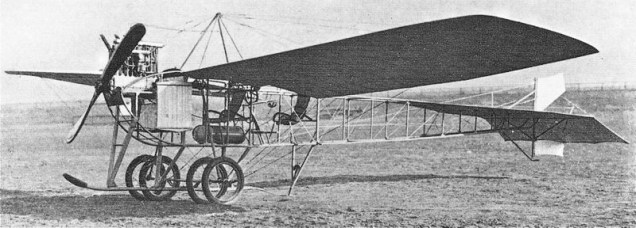
Jeannin Stahltaube

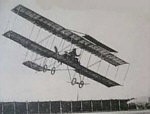
The Jeannin Stahltaube (Steel Pidgeon) of 1914 is a late model of the typical light reconnaisance and training aircraft common at the start of WW I. Unarmed, heavy engine and barely maneuverable.

Length : 31.791 ft / 9.69 m
Height : 9.744 ft / 2.97 m
Wingspan : 45.505 ft / 13.87 m
Wing area : 387.504 sq.ft / 36.0 sq.m
Max take off weight : 1885.3 lb / 855.0 kg
Weight empty : 1323.0 lb / 600.0 kg
Max. weight carried : 562.3 lb / 255.0 kg
Max. speed : 62 kt / 115 km/h
Cruising speed : 54 kt / 100 km/h
Wing load : 4.92 lb/sq.ft / 24.0 kg/sq.m
Range : 162 nm / 300 km
Engine : Daimler D I od. Argus As I, 99 hp
Crew : 2

Jeffair Barracuda

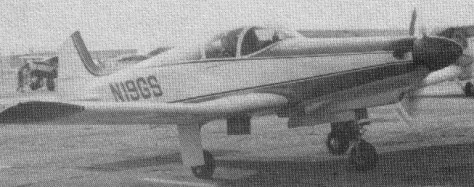
The Barracuda is a sophisticated enclosed-cabin two-seater in the im¬age of the Thorp T-18, with tricycle landing gear, all-wood construc¬tion, and a three-bladed, controllable-pitch propeller. Its designer was a former RAF fighter pilot, Geoffrey Siers, who founded Jeffair. The retractable landing gear features electro-hydraulic retraction. The cabin is fitted with dual controls, gull-wing doors and two armchair-type seats.

Engine 220-hp Lycoming.
Gross Wt. 2200 lb
Empty Wt. 1495 lb
Fuel capacity 44 USG.
Wingspan 24’9”
Length 21 ‘6”
Wing area: 128 sq.ft.
Top speed 218 mph.
Cruise 200 mph
Stall 62 mph.
Climb rate 2000 fpm
Seats: 2